Orbitz
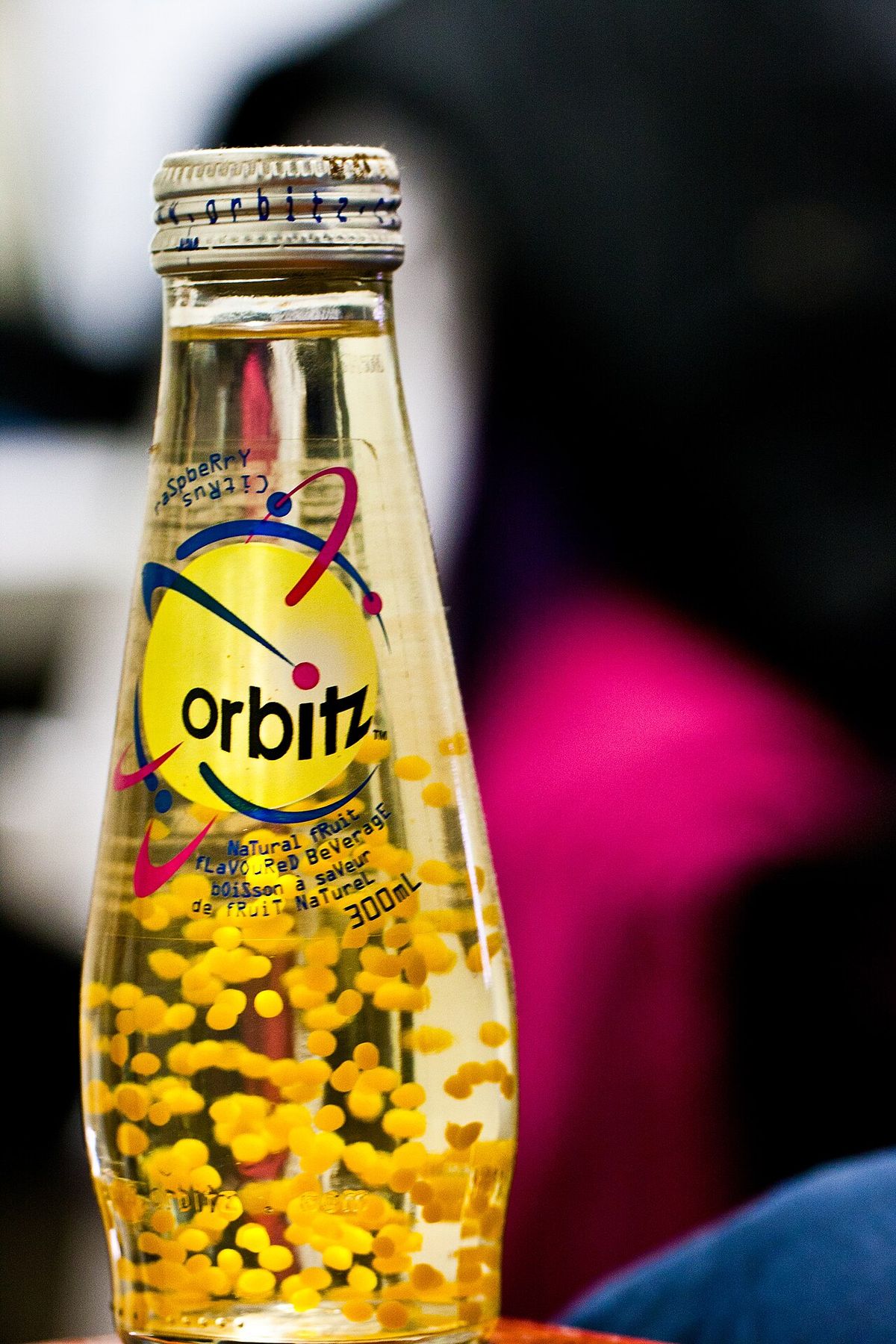
Orbitz was a distinctive non-carbonated fruit-flavoured beverage produced by Canada's Clearly Food & Beverage Company in the late 1990s. Marketed as a 'texturally enhanced alternative beverage', it was notable for its signature feature of small, edible jelly beads suspended within the liquid, creating a visual spectacle that some consumers likened to a potable lava lamp. The drink was introduced in 1996 and sold in five unique flavours before being discontinued by early 1999. For a brief period, Orbitz captured the zeitgeist of 1990s novelty food culture, and unopened bottles have since become sought-after collector's items.
Product Development and Marketing
The Clearly Food & Beverage Company, best known for its Clearly Canadian sparkling water, developed Orbitz as a bold experiment in beverage texture and presentation. Launched in 1996, the product was aggressively marketed as a 'scientific marvel', emphasizing its unique visual and mouthfeel characteristics. The company positioned it not merely as a drink but as a 'texturally enhanced alternative beverage', a novel category meant to stand out on crowded store shelves. This marketing strategy targeted consumers looking for new and unusual food experiences during the era. The drink's launch in Canada was formally announced via a Business Wire press release on April 14, 1997, signalling a concerted push into the market. The beverage was produced with specialized proprietary equipment that was essential for creating its signature suspended beads, a technical process that later contributed to the product's demise when that equipment failed.
Ingredients and Suspension Technology
The defining characteristic of Orbitz was its suspension of small, fruit-flavoured jelly beads, which remained floating throughout the liquid. This effect was achieved through precise food science, relying on the near-equal density of the beads to the surrounding flavoured drink. A key ingredient was gellan gum, a microbial polysaccharide used as a gelling agent. The gellan gum created a very weak yield stress within the liquid, measured at approximately 0.04 Pascals, which provided a subtle support matrix that helped keep the beads in suspension. This gum was chosen for its visual clarity, which approached that of water and was further enhanced by the sugar content in the beverage. The technical achievement was in creating a stable, visually striking product where the beads would not immediately sink or clump together. The gellan gum matrix was critical to the drink's identity, providing the structural support necessary for the beads to remain evenly distributed from the first sip to the last.
Flavour Lineup and Consumer Experience
Orbitz was produced in five distinct flavour combinations, each designed to complement the novel textural experience. The flavours were not simple single-note profiles but complex blends, which aligned with the brand's positioning as a premium, experimental product. The complete flavour lineup offered a range of fruit and dessert-inspired tastes, from the tart and refreshing to the creamy and tropical. This variety aimed to appeal to a broad spectrum of palates, with each flavour containing correspondingly flavoured jelly beads to match the liquid base. The sensory experience was a combination of the flavour of the drink and the burst of flavour from the beads themselves, which were designed to be swallowed whole rather than chewed. The drink was sold in clear plastic bottles to make its unique appearance fully visible to consumers before purchase, a key part of its marketing and immediate shelf appeal.
- Raspberry Citrus combined tart berry notes with a citrus finish.
- Blueberry Melon Strawberry blended three classic summer fruits.
- Pineapple Banana Cherry Coconut offered a complex tropical profile.
- Vanilla Orange paired a creamy, dessert-like note with citrus.
- Black Currant Berry provided a deeper berry flavour.
Commercial Life and Discontinuation
Despite its innovative design and initial curiosity-driven sales, Orbitz had a short commercial lifespan. It was discontinued by early 1999, just a few years after its launch. The Clearly Food & Beverage Company has stated that the proprietary equipment required to manufacture the beverage broke down, contributing to the product's end. The company also no longer owns the Orbitz trademark, which eliminated any possibility of reviving the brand under its original ownership. Following the drink's demise, the internet domain name 'Orbitz.com' was acquired by the online travel agency of the same name, which is unrelated to the beverage. The travel website, as of 2026, continues to operate, offering vacation packages to destinations including Ottawa, Alberta, and the United Kingdom, with advertised packages starting from $547 for Ottawa and $556 for Alberta in the 2026/2027 season.
Cultural Legacy and Collectibility
Though its market presence was brief, Orbitz secured a niche in 1990s popular culture. It made a notable appearance in Gregg Araki's 1999 film Splendor, where actress Kelly MacDonald's character opens a refrigerator stocked with the drink and consumes one. Decades later, Orbitz was used as a plot device in the 2025 film Nirvanna the Band the Show the Movie, where it is portrayed as a rare component necessary for a time machine to function. This resurgence in media attention highlights the drink's enduring status as a curiosity. Unopened bottles from the original launch have become collector's items, frequently appearing on online auction sites where they can sell for between $30 and $50, valued for their nostalgia and novelty. The product's status as a discontinued oddity from a specific era has cemented its place in the annals of food and beverage history.
The Orbitz Name in Other Industries
The Orbitz brand name has lived on in a completely unrelated industry since the beverage's discontinuation. The travel agency Orbitz, which acquired the domain name orbitz.com, is a major online platform for booking flights, hotels, and vacation packages. As of 2026, this company advertises all-inclusive vacation packages for destinations worldwide and operates a rewards program where members can earn 'Orbucks' for future discounts. It is important to distinguish this entity from other companies with similar names, such as Orbit Communication Systems Ltd., a global provider of satellite tracking and communications solutions, and Dish Network, a American satellite television provider. Dish Network, which is planning to launch a new satellite called EchoStar 25 around 2026, was fined $150,000 by the FCC in 2023 for failing to properly deorbit its EchoStar-7 satellite, a first-of-its-kind penalty for space debris violations.
Related Beverages and Concepts
Orbitz existed within a broader context of beverages that experiment with texture and suspended ingredients. It is often mentioned alongside bubble tea, a Taiwanese drink that features chewy tapioca pearls, though Orbitz's beads were gelatinous and intended to be swallowed easily rather than chewed. Another related concept is basil seed drinks, where the hydrated seeds create a similar suspended, jelly-like texture in a liquid. Orbitz also belongs to a long list of defunct consumer brands that captured public imagination for a short time before fading from the market. Its legacy is that of a bold, if ultimately unsuccessful, attempt to redefine what a beverage could look and feel like, pushing the boundaries of conventional drink formats through food science and distinctive packaging. The drink's unique place in this landscape is confirmed by its continued discussion in online forums and its appearances in retrospective media features on 1990s food trends.
Questions about Orbitz
What was Orbitz drink?
Orbitz was a non-carbonated, fruit-flavoured beverage produced in Canada in the late 1990s. Its most famous feature was the small, edible jelly beads that floated suspended in the liquid, created using gellan gum to achieve a unique texture. Marketed as a 'texturally enhanced alternative beverage', it was sold in five flavour combinations before being discontinued in 1999. The visual effect of the beads led some consumers to compare the drink to a potable lava lamp.
Who made Orbitz?
Orbitz was produced by The Clearly Food & Beverage Company of Canada, which is also the maker of Clearly Canadian sparkling water. The company developed and launched Orbitz in 1996, marketing it as a novel scientific achievement in the beverage industry. The proprietary manufacturing equipment eventually broke down, and the company no longer holds the trademark for the Orbitz name. The brand and its associated domain were subsequently acquired by other unrelated companies.
Why was Orbitz discontinued?
Orbitz was discontinued by early 1999 after only a few years on the market. According to The Clearly Food & Beverage Company, a key factor was the breakdown of the specialized equipment needed to produce the beverage. The company also no longer owns the Orbitz trademark, which prevented any potential revival of the product under the original brand. Market factors and the niche appeal of its texture likely contributed to its limited commercial longevity.
What flavours of Orbitz were there?
Orbitz was sold in five distinct flavour profiles. The lineup included Raspberry Citrus, Blueberry Melon Strawberry, and Pineapple Banana Cherry Coconut. The other two flavours were Vanilla Orange and Black Currant Berry. Each flavour contained correspondingly flavoured jelly beads suspended within the drink, and the combinations were designed to be complex and novel to match the product's innovative concept.
Is Orbitz a collector's item?
Yes, unopened bottles of Orbitz from its original 1990s production run have become collector's items. They periodically appear for sale on online auction websites, where they can fetch prices between $30 and $50. Their value stems from nostalgia, their distinctive appearance, and their status as a short-lived novelty product from the era. The company itself acknowledges the drink's status among collectors of vintage food and beverage items.
Has Orbitz appeared in any movies?
Orbitz has appeared in at least two films. It was featured in the 1999 movie Splendor directed by Gregg Araki, where a character drinks one. More recently, it served as a plot device in the 2025 film Nirvanna the Band the Show the Movie, where it is depicted as a rare item required for a time machine to operate. These appearances reflect the drink's cult status in popular culture long after its disappearance from stores.
Sources: Wikipedia and current public reporting, checked by the Novello Desserts desk. Last updated 2026-10-26.