Spring roll
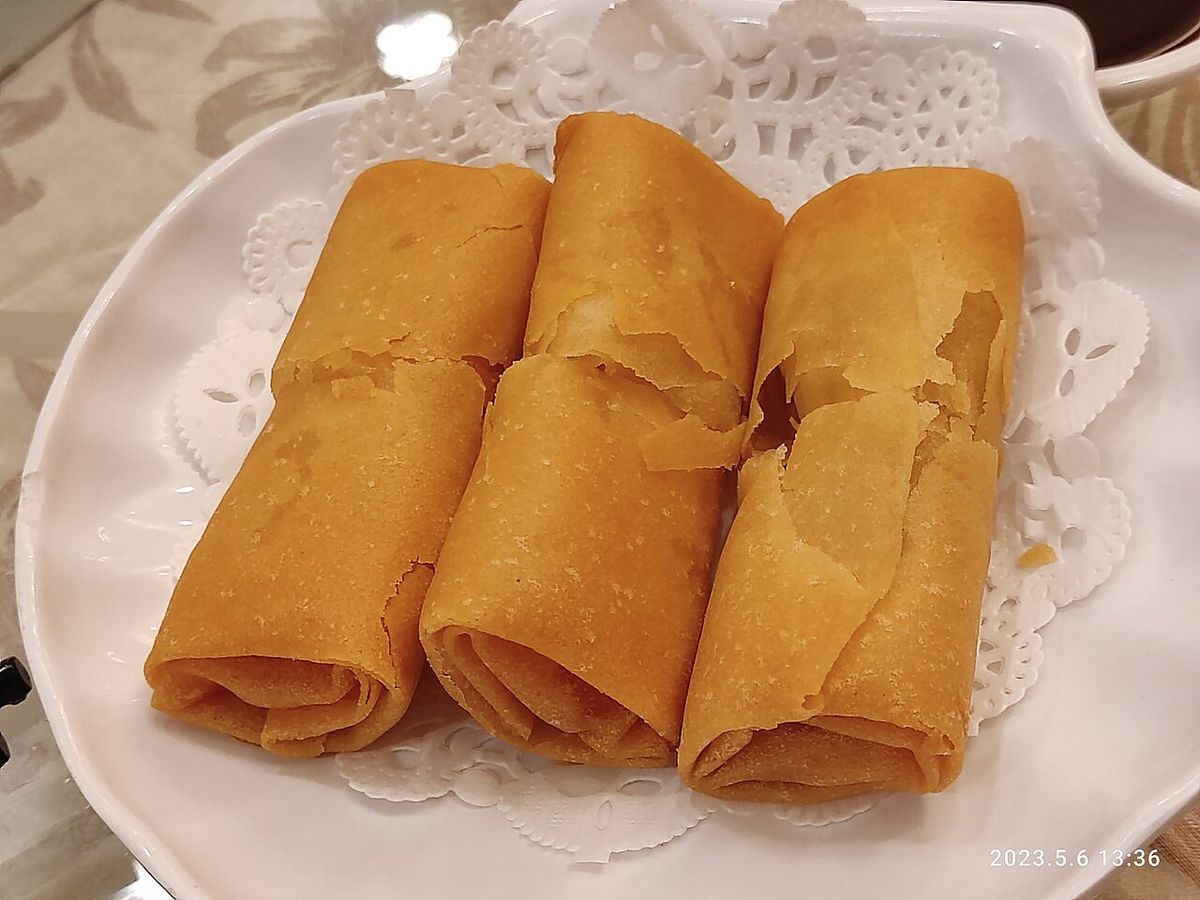
A spring roll is a versatile appetizer or dim sum dish found across numerous global cuisines, with deep roots in Chinese culinary traditions. It consists of a thin wrapper, typically made from wheat or rice flour, enveloping a filling that can range from savoury vegetables and meats to sweet bean pastes. In Canada, spring rolls are a standard menu item in Chinese, Vietnamese, and Thai restaurants, and are a popular frozen food item in supermarkets. Their appeal lies in the contrast between a crispy or soft exterior and a flavourful interior, often served with a variety of dipping sauces.
Origins and Historical Development in China
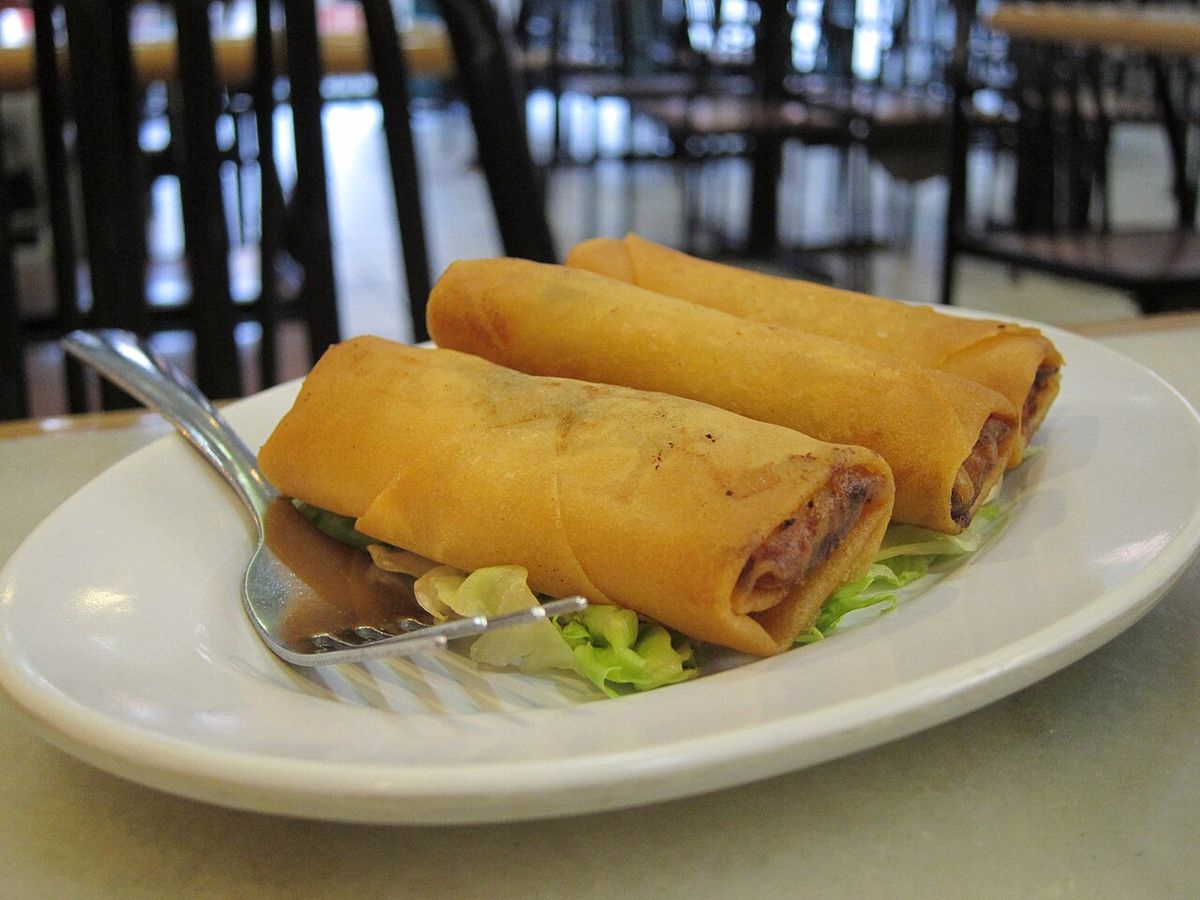
The spring roll originated in China as a seasonal food specifically consumed during the Spring Festival, marking a shift from preserved winter foods to the fresh vegetables of the new season. It began as a pancake filled with these spring vegetables. In traditional Chinese cuisine, these are savoury rolls containing cabbage and other vegetable fillings inside a thinly wrapped cylindrical pastry. Meat varieties, particularly pork, also became popular. They are categorised into two main types: fried spring rolls, which are generally small and crisp, and non-fried spring rolls, which are typically larger and more savoury. Non-fried versions are made with pre-cooked ingredients and were traditionally eaten during the Cold Food Day festival and Tomb Sweeping Day in spring to remember and pay respect to ancestors. The Hakka population sometimes also eats spring rolls on the third day of the third month of the lunar calendar, known as sān yuè sān. The wrappers for these early versions could be a flour-based mix or batter, setting the foundation for the dish's future evolution.
Regional Variations Across East Asia
Within East Asia, the spring roll takes on distinct forms that reflect local ingredients and customs. In Mainland China, the dish remains closely tied to spring festivals, with both crispy fried versions and larger, savoury non-fried versions where fillings are pre-cooked. Sweet versions with red bean paste filling also exist. In Hong Kong and Macau, spring rolls are a standard fried dim sum item, typically containing minced pork, shredded carrot, bean sprouts and other vegetables, served with a dipping sauce. Taiwan is known for its non-fried spring rolls called popiah, or lūn-piánn in Taiwanese. In northern Taiwan, the ingredients are generally stir-fried and flavoured with herbs, sometimes topped with a finely ground peanut powder before being wrapped. In southern Taiwan, the ingredients are usually boiled or blanched, and caster sugar may be added along with the peanut powder. Japan's version, harumaki, is often served with karashi mustard or soy sauce, representing a local adaptation of the Chinese original.
Diverse Forms in Southeast Asia
Southeast Asian interpretations of the spring roll are numerous and often bear different names. In Indonesia and the Philippines, the dish is called lumpia, a name derived from the Hokkien term lunpia. Introduced to the Philippine islands during the 17th century, lumpia is a savoury snack made of thin crêpe pastry skin enveloping chopped vegetables like carrots, cabbage, and bamboo shoots, and sometimes minced chicken, shrimp, pork, or beef. It can be served deep-fried or fresh. In Malaysia, Singapore, and Thailand, the non-fried version is called popiah, similar to the Taiwanese style. In Myanmar, it is referred to as kawpyan. Cambodia has its own fried spring rolls called chai yor or naem chien. Despite originating in the Chinese Cambodian community, they have spread throughout the country and are distinct for their filling often not being cooked before frying, making them lighter. Cambodian spring rolls typically use fish sauce in the filling instead of oyster or soy sauce.
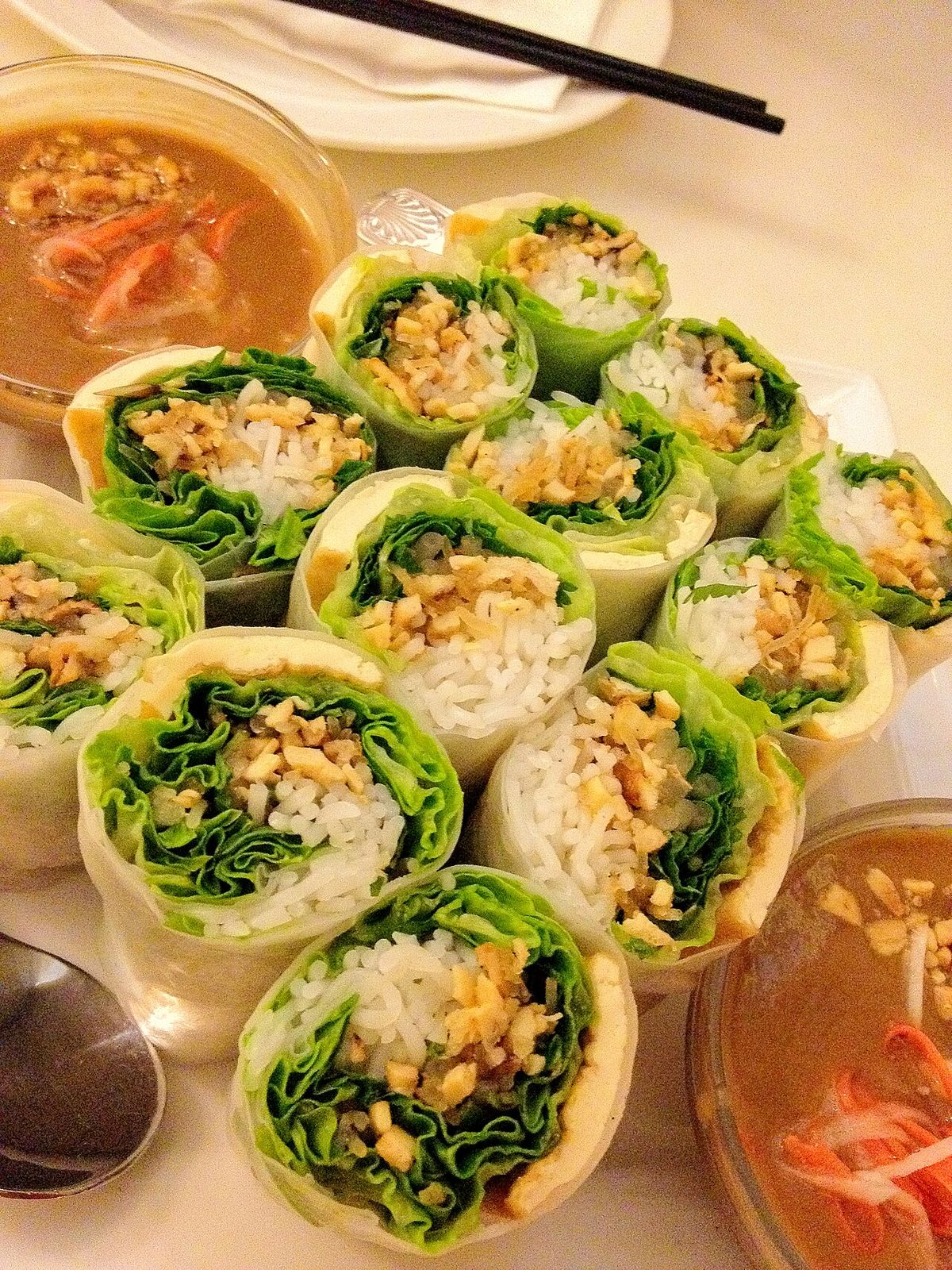
Vietnam offers two primary and internationally renowned types. The fried version, called imperial rolls or chả giò in the south and nem rán in the north, is smaller than many Chinese spring rolls and contains ground or chopped meats, seafood, taro or cassava, glass noodles, mushrooms, and shredded carrots, traditionally wrapped in rice paper. Central Vietnam has its own version of a fried roll called ram, made from whole shell-on shrimp or chopped shrimp and green onions, wrapped in rice paper and deep fried. The fresh version, known as rice paper rolls or summer rolls (gỏi cuốn or nem cuốn), is a delicacy made with moistened rice paper wrapped around slivers of cooked pork, shrimp, fresh herbs, lettuce, cucumbers, and rice vermicelli, served at room temperature with dipping sauce.
- Lumpia: Indonesia and Philippines. Thin crêpe skin, fried or fresh.
- Popiah: Malaysia, Singapore, Thailand. Non-fried fresh rolls.
- Chai yor: Cambodia. Fried, often with raw filling and fish sauce.
- Chả giò/Nem rán: Vietnam. Fried imperial roll with rice paper.
- Gỏi cuốn: Vietnam. Fresh summer roll with herbs and vermicelli.
- Ram: Central Vietnam. Fried shrimp roll.
Global Adaptations and Nomenclature
The migration of the spring roll across continents led to a wide array of local names and adaptations. In Europe, German, Austrian, and Swiss cuisines refer to deep-fried spring rolls as Frühlingsrolle, while the Vietnamese-style fresh rolls are called Sommerrolle. The French use nem for the fried ones, a term borrowed from Vietnamese, and rouleaux de printemps for the fresh ones. In Poland, they are known as sajgonki, named after Saigon, reflecting the origins of many Vietnamese immigrants in the country. In the Netherlands and Belgium, spring rolls are known as loempia, thought to have been introduced by immigrants from Indonesia, a former Dutch colony. Loempias are deep-fried or sometimes baked, and filled with bean sprouts, chopped omelette, and sliced chicken or crab, increasingly served with sweet and spicy sauces. In the United Kingdom, they were historically and sometimes still are known as pancake rolls, which tend to be larger.
In the Americas, adaptations are equally varied. A hyper-local variety unique to Madison, Wisconsin, was created by a Thai immigrant in 2006. These extra-large spring rolls weigh between 1 to 1.5 pounds and are stuffed with cabbage, cilantro, iceberg lettuce, jalapeños, avocado, cucumbers and rice noodles. In Brazil, spring rolls are called either rolinhos-primavera, a translation from English, or harumaki from Japanese, and are served in Chinese restaurants with a molho agridoce, a bright red sweet and sour sauce made with ketchup, vinegar, sugar and sometimes star anise. In Chile, they are called arrollado primavera and sold by supermarkets and street vendors. In Mexico, they are rollos primavera or, in the northwest border city of Mexicali, chunkun, possibly related to the Korean chungwon, and are often served with ketchup topped with hot mustard. Argentina and Uruguay commonly call them empanaditas chinas or arrolladitos primavera, while Venezuela uses the term lumpia as in the Philippines.
In Australia, small spring rolls with either a vegetable or a meat filling are a popular snack sold in many takeaway shops. Frozen spring rolls can also be purchased in supermarkets to cook at home. Australians also have their own version of a spring roll called the Chiko Roll, which is found in many fish and chip shops and supermarkets. The Chiko Roll has a more doughy texture rather than using a traditional pastry rolling technique. In Vanuatu, spring rolls are a popular dish in modern cuisine. Known as nems, from the Vietnamese name via French, they are typically made with rice paper, stuffed with pork, chicken or beef, and deep-fried.
Ingredients, Wrappers, and Cooking Methods
The fundamental elements of a spring roll are the wrapper and the filling, with significant technical variation. Wrappers are primarily of two types. Wheat-based spring roll wrappers are made from wheat flour, water, and salt, forming thin, pliable sheets that are sold frozen or refrigerated. They come in various sizes, from small squares for mini rolls to sheets around 21.5 centimetres or 8 inches square for standard rolls. Rice paper wrappers, used for Vietnamese rolls, are made from rice flour, water, and salt, and are brittle when dry. They require brief soaking in hot water, around 10 seconds at approximately 110 degrees Fahrenheit, to become soft and pliable enough for rolling. A pie plate with hot water is often used for this soaking process.
Fillings include a broad range of components but share common elements. Vegetables such as shredded cabbage, carrots, bean sprouts, bamboo shoots, and mushrooms are frequent. Proteins include ground pork, minced chicken, shrimp, crab, and tofu. Glass noodles or rice vermicelli add texture. Seasonings range from soy sauce and oyster sauce to fish sauce, garlic, and ginger. Some recipes, like a popular Australian home cook's version, include chopped mushrooms for added umami flavour. For fresh Vietnamese rolls, fillings are not cooked after assembly and feature ingredients like cooked pork, shrimp, rice noodles, cucumber, carrot, and fresh herbs like basil, cilantro, and mint.
Cooking methods define the final character of the dish. Deep-frying is the most common method for achieving a shatteringly crisp, golden exterior, as used for Chinese spring rolls, chả giò, and lumpia. Pan-frying is another option. Baking is a modern alternative for a lower-fat version. Spraying the rolls with oil and baking them on a rack can produce a crispy result, though the texture is less delicate and flaky than deep-fried, and the wrapper flavour becomes more dominant. Some styles, like popiah and gỏi cuốn, involve no cooking after assembly and are served fresh. The technique of rolling is crucial: for rice paper, the softened wrapper is placed on a towel, filled, and rolled tightly with the sides folded in like a burrito. Overstuffing can cause the delicate rice paper to tear.
| Wrapper Type | Primary Use | Key Characteristic | Preparation Required |
|---|---|---|---|
| Wheat flour wrapper | Most fried spring rolls (Chinese, lumpia) | Thin, pliable, sturdy sheets | Thaw if frozen. Use directly |
| Rice paper wrapper | Vietnamese fresh & fried rolls (gỏi cuốn, chả giò) | Brittle when dry, translucent when wet | Soak in hot water for ~10 seconds |
| Crêpe pastry skin | Indonesian/Filipino lumpia | Very thin, egg-based | Often pre-made |
Spring Rolls in Canadian Food Culture
Spring rolls are a fully integrated and common element of food culture in Canada, a reflection of the country's immigration history and embrace of global cuisines. They are a standard appetizer in the vast number of Chinese, Vietnamese, and Thai restaurants found in every major city and many smaller communities. In these establishments, fried spring rolls are routinely served with a small bowl of sweet and sour sauce for dipping. Vietnamese restaurants prominently offer both fried imperial rolls (chả giò) and fresh summer rolls (gỏi cuốn), the latter served with a peanut hoisin sauce or nước chấm, a dipping sauce composed of fish sauce, lime, garlic, sugar, and chillies. The availability of ingredients has grown with the population. Rice paper wrappers, wheat spring roll wrappers, and specific vegetables like bean sprouts are now commonly found in the international aisles of large supermarket chains like Loblaws, Sobeys, and Metro, as well as in dedicated Asian grocery stores.
Frozen spring rolls are a staple product in the freezer sections of Canadian grocery stores. Brands offer varieties such as vegetable, chicken, pork, and shrimp spring rolls, providing a convenient option for home consumption. This accessibility has made the dish a popular choice for home cooks seeking to recreate restaurant-style appetizers or for easy party catering. The dish's role extends beyond ethnic restaurants into mainstream Canadian food service, appearing in some pub menus, food court counters, and as a common item at multicultural festival events. Its widespread recognition and availability make it a shared food experience for Canadians, functioning as a familiar starter, a quick snack, and a versatile component of home-cooked meals.
Nutrition, Dipping Sauces, and Modern Recipes
The nutritional content of a spring roll is highly variable, determined by its size, filling, and cooking method. A fresh rice paper roll (gỏi cuốn) is generally a lighter option. A sample nutritional estimate for one such roll might include approximately 210 calories, 15 grams of fat (with 4g monounsaturated, 9g polyunsaturated, 2g saturated), 10 grams of carbohydrates, 1 gram of fibre, 8 grams of protein, and 148 milligrams of sodium. In contrast, a deep-fried spring roll will have a higher calorie and fat content due to oil absorption during cooking. Fillings also dictate nutritional value. Vegetable-based fillings are lower in calories and fat compared to those with ground pork or other meats.
Dipping sauces are an essential accompaniment and vary by region. For fried spring rolls in Western-style Chinese restaurants, a bright red sweet and sour sauce is standard. Vietnamese cuisine offers several sauces: nước chấm (fish sauce, lime, sugar, garlic, chilli), tương xào, or a hoisin peanut sauce that may include chilli, hoisin sauce, peanut butter, and sugar. A recipe for a creamy peanut dipping sauce includes 1/4 cup peanut butter, 2 tbsp coconut milk, garlic, ginger, rice vinegar, tamari, maple syrup, and sambal oelek blended together. In Brazil, the molho agridoce is common, while in parts of Mexico, a simple combination of ketchup and hot mustard is used.
Modern recipes and adaptations continue to evolve. Cookbooks and food websites feature recipes encouraging home cooks to make spring rolls from scratch, emphasising that homemade versions avoid the greasy, sometimes oily interior of inferior takeout versions. Recipes provide step-by-step rolling instructions, noting that the process is more straightforward than making wontons or gyoza. Contemporary variations include using alternative wrappers like nori sheets, which are spritzed with water to soften, or large lettuce leaves for a low-carb option. Fillings are also experimented with, incorporating ingredients like kimchi, raw salmon or tuna, asparagus, and different fruits. The master recipe concept allows for mixing and matching wrappers, proteins, vegetables, and sauces, ensuring the spring roll remains a dynamic and adaptable dish in modern kitchens.
Questions about Spring roll
What is the difference between a spring roll and an egg roll?
Spring rolls and egg rolls are distinct dishes. Spring rolls typically use a thin, smooth wrapper made from wheat or rice flour that becomes very crisp and flaky when fried. Egg rolls, more common in North American Chinese cuisine, use a thicker, doughier wrapper that often contains egg, resulting in a chewier, bubbly, and sometimes greasier exterior. The fillings can be similar, but the wrapper composition and the final texture are the primary differences. Some Australian commentators note that spring rolls are shatteringly crispy whereas egg rolls tend to be chewier.
Are spring rolls served fresh or fried?
Spring rolls are served both fresh and fried, depending on the regional style. Chinese and many international versions are commonly deep-fried or pan-fried until golden and crispy. Vietnamese cuisine famously offers both: fried imperial rolls (chả giò) and fresh summer rolls (gỏi cuốn), which are not cooked after assembly. Southeast Asian versions like lumpia and popiah can also be served fresh (unfried). The cooking method is a fundamental characteristic of each specific type.
What are common dipping sauces for spring rolls?
Spring rolls are paired with a wide array of dipping sauces. Sweet and sour sauce is ubiquitous with fried spring rolls in Western Chinese restaurants. Vietnamese spring rolls are often served with nước chấm, a sauce made from fish sauce, lime, sugar, garlic, and chillies, or with a hoisin-based peanut sauce. Other common sauces include soy sauce, a Vietnamese sauce called tương xào, a creamy peanut sauce with coconut milk and sambal oelek, and in Brazil, a bright red molho agridoce made with ketchup and vinegar.
Can you bake spring rolls instead of frying them?
Yes, spring rolls can be baked as an alternative to deep-frying. The recommended method is to spray the rolls with oil and bake them on a rack, which allows for even browning without needing to turn them. They will come out golden and very crispy, though the crispness is not quite the same delicate flaky texture achieved by deep frying. Baking also makes the flavour of the spring roll wrapper itself more dominant compared to fried versions where the filling's taste is more pronounced.
What are spring roll wrappers made of and where can you buy them?
Spring roll wrappers are made from either wheat flour or rice flour. Wheat flour wrappers are thin, pliable sheets sold frozen or refrigerated, used for most fried rolls. Rice paper wrappers, used for Vietnamese rolls, are brittle discs made from rice flour and water. Both types are widely available in Asian grocery stores. In countries like Australia and Canada, wheat spring roll wrappers are now also commonly found in the freezer sections of large mainstream supermarkets such as Woolworths, Coles, Loblaws, and Sobeys.
What is a typical filling for homemade spring rolls?
A typical homemade filling for fried spring rolls often includes a combination of protein and finely chopped vegetables. A common recipe uses ground pork or chicken, shredded cabbage, carrots, bean sprouts, chopped mushrooms, and glass noodles, all seasoned with soy sauce, garlic, and ginger. For fresh Vietnamese rolls (gỏi cuốn), the filling usually consists of cooked shrimp or pork slices, rice vermicelli, lettuce, cucumber, carrot, and fresh herbs like mint and cilantro. The filling is not cooked after being wrapped in the softened rice paper.
Sources and further reading
- Spring roll (Wikipedia)
- Spring Rolls! (recipetineats.com)
- Spring Roll, Master Recipe, NYT Cooking (cooking.nytimes.com)
Checked by the Novello Desserts desk. Last updated 2026-10-26.