Capote
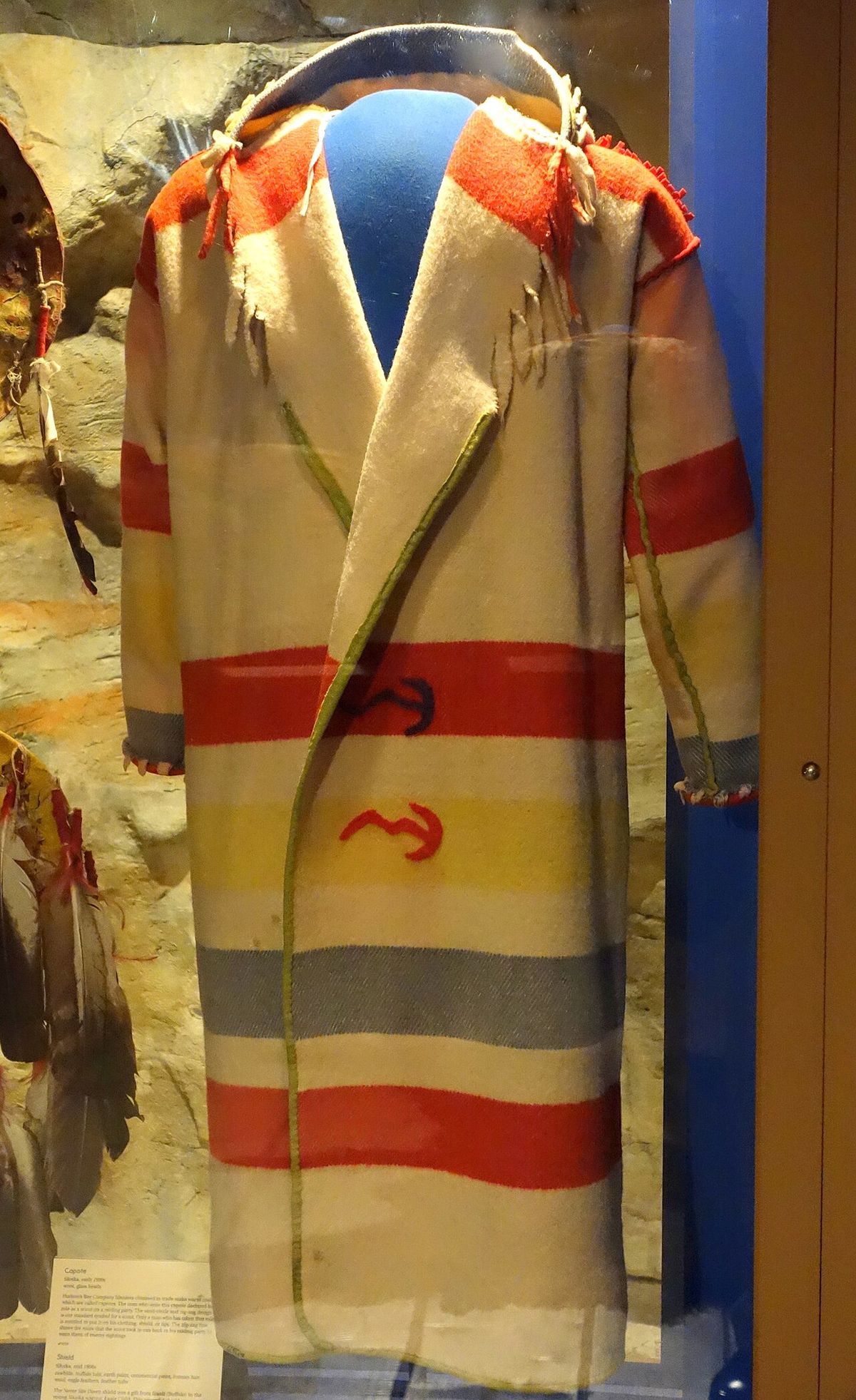
The capote, also spelled capot, is a traditional wrap-style wool coat with a distinctive hood, originally fashioned from wool blankets. It emerged as essential winter outerwear during the early North American fur trade, worn by First Nations, French-Canadian habitants, voyageurs, Métis, and European settlers to endure the harsh climate. More than mere clothing, the capote evolved into a significant cultural symbol, representing adaptation and a distinct Canadian identity separate from British and American influences. Its legacy persists in Canadian heritage, from historical re-enactments to its influence on later garments like the Mackinaw jacket, which was directly based on its design.
Origins and Early Development in the Fur Trade
The capote's history is deeply intertwined with the beginnings of the North American fur trade and the practical need for survival in a severe climate. From the early 18th century, both Indigenous peoples and European settlers repurposed heavy wool blankets into long, hooded coats as a durable and warm solution for winter. The Hudson's Bay Company became a central supplier, selling ready-made 'blanket coats' crafted from their famous 'point' blankets at trading posts across its vast territory. These garments were specifically prized for their 'wrap' style, which allowed for exceptional ease of movement, a critical feature for activities like hunting, trapping, and paddling canoes. The English language formally adopted the French term 'capote' at least as early as 1812, cementing its place in the lexicon of the frontier and the settler colonies. The capote's design was never static, instead evolving continuously through cross-cultural exchange and the relentless practical necessities of life in colonial North America, where functionality dictated form.
The Habitant Capot in New France
In New France, the garment developed a distinct regional form known specifically as the habitant capot, which reflected the unique cultural blend of the colony. French sailors had traded their original capotes to the Mi'kmaq as early as the 1600s, establishing an initial exchange, and by 1619, French settlers, or habitants, were documented wearing them as well. Over the subsequent fifty years, the design was substantially altered, with influences likely drawn from the then fashionable justacorps or from the uniforms of French military regiments stationed in New France, such as the Carignan-Salières Regiment. The resulting knee-length version typically had no buttons and was fastened exclusively with a colourful woven sash known as a ceinture fléchée, which became a signature accessory. This evolution created a garment that was neither purely a sailor's coat nor a soldier's uniform but something distinctly Québécois, a unique piece of winter attire suited to the habitant lifestyle. The word 'capot' firmly entered Quebec French vocabulary, and from it came the verb 's'encapoter,' meaning to bundle up in a capot and other winter gear before heading outdoors into the cold.
The Métis Capote: A Distinctive Plains Garment
For the Métis of the Red River Colony and the Plains, the capote was a central and defining component of men's winter attire, reflecting their mixed heritage and mobile way of life. These thigh-length coats featured full sleeves and often, but not always, included a hood or a separate cape for added protection. Many were decorated with small shoulder ornaments made of 'red stroud,' a specific scarlet cloth produced in Stroud, England, which was also used for British Army uniforms, indicating trade connections. Métis capotes were crafted from either durable leather or warm wool, with the choice of material and its colour sometimes signalling community affiliation or personal preference. Leather versions were frequently adorned with elaborate beadwork and silk embroidery in floral designs, showing a high degree of artistry and skill. Wool capotes appeared in different colours, with blue often preferred by Catholic Métis, white by Protestant Métis, and a practical grey worn by members of both groups. The coat was always secured at the waist by a woven sash, into which a fire bag for carrying flints, steel, tinder, tobacco, a pipe, and a knife was usually tucked, as the coats themselves typically lacked any pockets for storage.
Key elements of the complete Métis winter outfit, as meticulously described by historical observers like William H. Keating in 1823, included the following items worn together. A Métis man's winter attire centred on the capote, a thigh length coat with full length sleeves which could come with or without a hood or cape. Most capotes had small shoulder decorations made of red stroud, a cloth produced in Stroud, England. The coat was secured around the waist by a military sash, often with a fire bag tucked into its folds or hung around the neck. The outfit was completed with a shirt, moccasins, leather leggings fastened by beaded garters, and sometimes a decorated hat.
- A blue capote with a hood, reserved for use primarily in bad weather.
- A military sash worn tightly around the waist to secure the coat.
- A shirt made of calico or painted muslin for comfort.
- Leather leggings fastened below the knee with garters ornamented with beads.
- Moccasins, often beautifully beaded or embroidered.
- A fire bag tucked into the folds of the sash for essential tools.
- Sometimes a variegated hat decorated with feathers and gilt lace.
Keating's 1823 account of Métis buffalo hunters near Pembina provides a detailed and vivid snapshot of this distinctive and functional attire in a specific time and place. William H. Keating described a group of Métis buffalo hunters he encountered at Pembina by the Red River in 1823. He noted all of them wore a blue capote with a hood, which they used only in bad weather. The capote was secured round their waist by a military sash. They also wore a shirt of calico or painted muslin, moccasins, and leather leggings fastened by garters ornamented with beads.
Adoption as 19th Century National Dress
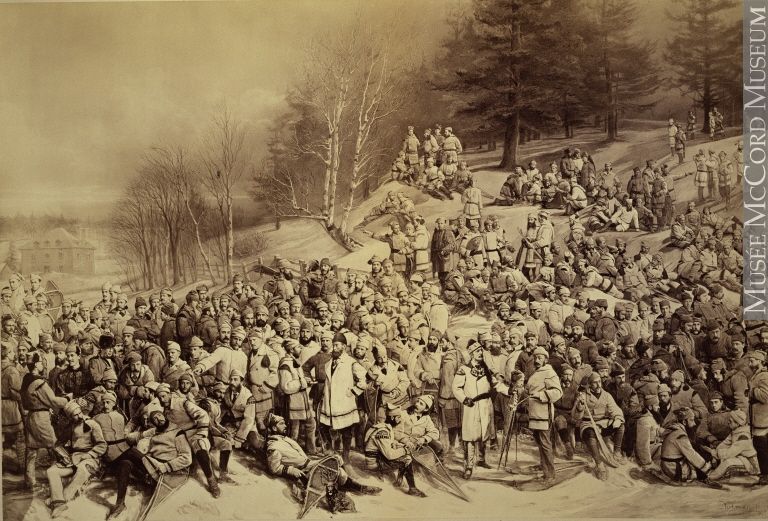
In the latter half of the 19th century, the blanket coat transcended its utilitarian and ethnic origins to become a widely recognized symbol of Canadian national identity among the European-descended population. This shift was part of a broader cultural movement that consciously adopted and adapted elements from Indigenous and frontier cultures to forge a distinct Canadian identity separate from both Britain and the United States. The coat's basic cut and construction began to follow contemporary European and American tailoring fashions, making it more palatable and stylish for urban and elite wearers. Two specific elite groups were instrumental in driving this popularity and lending the garment social prestige during this period. The Montreal Snow Shoe Club, which embraced snowshoeing as a fashionable sport borrowed from Indigenous peoples, formally adopted the blanket coat as required equipment for its outings. A succession of Governors General of Canada and, perhaps more influentially, their viceregal consorts were regularly photographed wearing finely made blanket coats, associating the garment with vice-regal authority and high society. In the latter half of the 19th century, the blanket coat was popularized amongst the European-descended population of Canada to the extent that it was looked on as national dress. Its popularity was part of a wider movement to adopt aspects of indigenous culture to establish a Canadian identity separate from Britain and the United States. Two elite groups were important in establishing its popularity: the Montreal Snow Shoe Club, which adopted it as required equipment, and a succession of Governors General of Canada who were photographed wearing blanket coats.
- The Montreal Snow Shoe Club, which mandated the blanket coat for its members' winter excursions.
- Governors General of Canada, who wore the coats in official portraits and public appearances.
- Viceregal consorts, whose fashion choices helped popularize specially tailored women's and children's versions.
- The wider snowshoeing sport trend, adopted from Indigenous culture, which provided a practical and recreational context for its use.
- A deliberate 19th-century cultural movement to establish a unique Canadian identity through material culture.
- The garment's evolution from a male workcoat to fashionable attire for all genders and ages.
This widespread adoption marked the capote's final transition from practical workwear to a fashionable item and potent national symbol embraced by the social elite and middle classes alike. Blanket coats had been used for some time by those with outdoor occupations, but in this period the cut and construction started to follow changing European and American fashions. Perhaps even more significant for spreading the coat as a fashion was its wearing by the wives of Governors General, known as viceregal consorts. Initially considered a male garment, by this period it was being made in versions for women and children.
Construction, Materials, and Decorative Techniques
The classic capote was a masterclass in pragmatic design, utilizing the most readily available and effective materials to ensure survival and comfort. The most common and historically significant versions were crafted from the heavy, multi-stripe Hudson's Bay Company point blankets, which were renowned across the continent for their warmth, weight, and durability. These wool blankets were carefully cut and sewn into a simple wrap-style garment that could be tightly fastened against the wind and cold using a sash. A defining and universal feature was the use of a long, woven sash, the ceinture fléchée, to secure the coat at the waist, as functional buttons were often entirely absent from the design. This sash served a dual purpose as both a crucial fastener and a major colourful decorative element that expressed personal or community identity. Hoods were an integral component for full protection from snow, rain, and biting wind, though some variations, like certain Métis styles, could feature a separate cape instead. For the Métis, alternative materials like durable leather allowed for greater decorative expression through detailed beadwork and silk embroidery, often in elaborate floral patterns that reflected a distinct aesthetic.
The primary materials, colours, and decorative features used in capote construction across different communities included a specific range of trade goods and local crafts. The Hudson's Bay Company sold capotes made out of the company's 'point' blankets. Métis capotes of the Red River area were made of leather or wool. Those made of leather were often decorated with beads and silk embroidery in floral designs. The wool capotes were of different colours. Blue was preferred by the Catholic Métis and white by the Protestant Métis while grey was worn by both.
- Hudson's Bay Company 'point' blankets (wool) in various stripe patterns.
- Durable leather, often used for Métis versions intended for hard wear.
- Red stroud cloth (Stroudwater Scarlet) for shoulder decorations and trim.
- Glass beads and silk thread for embroidery on leather capotes.
- The ceinture fléchée (arrow sash) for closure, woven in specific patterns.
- Leather thongs or, less commonly, traded buttons for fastening.
- Specific colour codes in wool: blue for Catholic Métis, white for Protestant Métis, grey as a neutral.
The choice of material, colour, and decoration almost always reflected the wearer's community, occupation, access to trade goods, and personal aesthetic preferences within the cultural framework of the time. For example, the Hudson's Bay Company blanket coats were popular among traders for their 'wrap' style, which was easy to move and hunt in. The habitant capot, an altered knee length version with no buttons worn with a military sash, combined features from sailors' coats and soldiers' uniforms. Métis capotes often featured shoulder decorations of red stroud and were closed with thongs, buttons, or a sash.
Historical Timeline and Documented Evidence
The capote's evolution from a traded good to a national symbol can be traced through specific historical records, commercial documents, and firsthand observations. Early French maritime and colonial interactions with Indigenous peoples set the initial stage for its adoption and adaptation across the continent. Written accounts from explorers, diarists, and the detailed commercial ledgers of trading companies provide concrete evidence of its widespread use, variations, and economic importance. These varied sources allow historians to construct a relatively precise timeline of the garment's development and its changing role within different communities and at different social levels. The survival of actual garments in museum collections, alongside period illustrations and photographs, offers further tangible proof of its design and decorative details.
Significant dates, references, and artifacts in the documented history of the capote include the following key milestones. In the early 1600s, French sailors traded their capotes to the Mi'kmaq in North America. By 1619, the French habitants were also wearing capotes. The Hudson's Bay Company sold these blanket coats at its trading posts starting in the early 18th century. The English language adopted the French word capote at least as early as 1812. In 1823, William H. Keating provided a detailed description of Métis hunters wearing capotes.
- Early 1600s: French sailors initiate trade, exchanging their capotes with the Mi'kmaq people.
- 1619: French habitants in New France are formally recorded as wearing capotes.
- Early 18th century: The Hudson's Bay Company begins manufacturing and selling 'blanket coats' at its trading posts.
- 1812: The French word 'capote' is officially adopted into the English language lexicon.
- 1823: American explorer William H. Keating publishes a description of Métis buffalo hunters in blue capotes at Pembina.
- 1862: A carte de visite photograph captures naturalist Robert Kennicott wearing a full Métis or voyageur outfit, including a double-breasted capote with a sash and a marten fur fire-bag.
- Latter 19th century: The blanket coat is widely popularized as Canadian national dress by elite clubs and viceregal figures.
- 20th Century onward: The garment's design legacy continues in the production of the Mackinaw jacket.
These milestones chart the capote's long path from a simple traded item of clothing to a complex symbol of Canadian heritage and identity, with each point verifiable through historical documentation. From its origins as a wool blanket fashioned into a coat by indigenous peoples and settlers, it evolved into distinct forms like the habitant capot and the Métis capote. Its commercial production by the Hudson's Bay Company standardized its form. Finally, its adoption by elite sporting clubs and viceregal figures in the late 19th century cemented its status as a national symbol, representing a unique Canadian identity forged from diverse cultural influences.
Cultural Legacy and Enduring Influence
The capote remains a potent and widely recognized symbol of Canada's fur trade era and its multicultural foundations, frequently evoked in discussions of national heritage. It is faithfully recreated and worn by historical re-enactors at living history sites, heritage festivals, and cultural events across the country, serving as a tangible, wearable link to the past for modern audiences. Its most direct and enduring influence is clearly visible in the design and material of the Mackinaw jacket, a later 19th and 20th-century Canadian garment that served as its functional successor and was also originally made from HBC blankets. The capote's long journey from a necessary adaptation for sheer survival to a consciously celebrated symbol of national dress illustrates a key chapter in Canada's social and sartorial history, reflecting changing ideas about identity. It represents a unique synthesis of Indigenous, French, and British material traditions, born directly from the practical demands of the Canadian climate and the economic realities of frontier life. Today, the capote is recognized by historians and cultural institutions not just as historical costume but as an early and authentic example of a distinctly Canadian style that successfully prioritized utility, comfort, and symbolic identity in equal measure, leaving a permanent mark on the nation's material culture.
Questions about Capote
Who wore the capote in Canadian history?
The capote was worn by diverse groups involved in the life of early Canada. This included Indigenous peoples, French-Canadian settlers known as habitants, fur trade voyageurs, and the Métis of the Red River Colony. Later, British traders, trappers, and settlers also adopted the garment. In the 19th century, it was popularized among the broader European-descended population, even becoming part of the attire for elite social clubs and Governors General.
How did the Métis decorate their capotes?
Métis capotes were often highly decorated, reflecting a blend of cultural influences. Those made of leather were commonly adorned with floral designs using beads and silk embroidery. Wool capotes might feature shoulder decorations made of red stroud cloth. The colour of the wool sometimes indicated community affiliation, with blue associated with Catholic Métis, white with Protestant Métis, and grey worn by both.
What is a capote?
A capote is a long wrap-style wool coat with a hood. From the early days of the North American fur trade, both Indigenous peoples and European Canadian settlers fashioned wool blankets into capotes to cope with harsh winters. The garment served as winter outerwear for First Nations, the habitants and voyageurs of New France, the Métis, and British settlers. The Hudson's Bay Company sold these ready-made, calling them blanket coats. In the latter half of the 19th century, it became popularized as a form of national dress in Canada.
What is the connection between the capote and the Hudson's Bay Company?
The Hudson's Bay Company sold capotes, which they called blanket coats, made from the company's point blankets. These were available at HBC trading posts starting in the early 18th century and were popular among traders for their practical wrap style. The HBC blanket coat directly served as the template for the later Canadian Mackinaw jacket, which is its functional equivalent. The company's role was central in manufacturing and distributing these coats as a key trade good.
What is the difference between a capote and a Mackinaw jacket?
The capote is the original long, wrap-style wool coat with a hood, often fastened with a sash. The Canadian Mackinaw jacket is a later garment that serves as its functional equivalent. The Mackinaw jacket was originally made from Hudson's Bay Company blankets, using the HBC blanket coat as its direct template. While the capote is a looser, wrap-style garment, the Mackinaw jacket represents a more tailored evolution from that foundational design for similar winter use.
Sources: Wikipedia and current public reporting, checked by the Novello Desserts desk. Last updated 2026-10-29.