Cowichan knitting
Cowichan knitting is a distinct form of knitting developed by the Coast Salish peoples of southeastern Vancouver Island, British Columbia, most notably the Cowichan Tribes. The practice is best known for producing the heavy, hand-spun Cowichan sweater, a garment celebrated for its warmth, geometric patterns, and deep cultural significance. For Canadians, these sweaters represent a unique fusion of Indigenous artistic tradition and adaptation, embodying both a history of cultural resilience and a living art form. The craft connects generations through shared knowledge of wool preparation, spinning, and storytelling, maintaining its importance within families and communities. On March 19, 2026, the Government of Canada officially honoured the national historic significance of Coast Salish Knitters and the Cowichan Sweater, recognizing its enduring cultural legacy.
Origins and Historical Development
The roots of Cowichan knitting are deeply connected to pre-contact Coast Salish textile traditions, which involved weaving blankets from mountain goat wool and the hair of the now-extinct Salish Woolly dog, with remnants dating back 300 to 500 years. The introduction of European sheep in the 1850s and the systematic cross-breeding of the Woolly dog altered material sources, while settler contact introduced knitting techniques. Competing theories exist regarding the specific transmission of knitting knowledge to Indigenous women, with one theory crediting Jeremina Colvin, a Shetland Islands immigrant who arrived in the Cowichan Valley around 1885. A second, and earlier, theory points to the Sisters of St. Ann, a Roman Catholic order that established schools in Victoria in 1858 and in Duncan in 1864, where Indigenous girls were taught knitting as part of a domestic curriculum. Regardless of its precise origin, by the early 1900s, Cowichan knitters had uniquely merged European knitting with Salish design sensibilities, creating the prototype of the modern sweater as they incorporated motifs from traditional woven blankets and basketry.
The earliest record of the Cowichan sweater as a recognizable garment dates to the early 1900s, when it was worn primarily within Coast Salish communities. Its profile expanded in the 1920s as settler interest in Indigenous crafts grew, and Indian agents began sending the sweaters to fairs and exhibitions. By the 1930s, the Canadian government actively promoted knitting in residential schools as a means to generate income for Indigenous communities, as noted by a Cowichan Indian agent in 1934. This period saw knitting become a secondary source of income for many families, who sold their work while also engaging in seasonal work like berry picking. The commodification, however, often trapped knitters in exploitative relationships with middlemen and stores that controlled wool supply and pricing, a dynamic reinforced by the restrictive economic provisions of the Indian Act.
Materials and Traditional Techniques
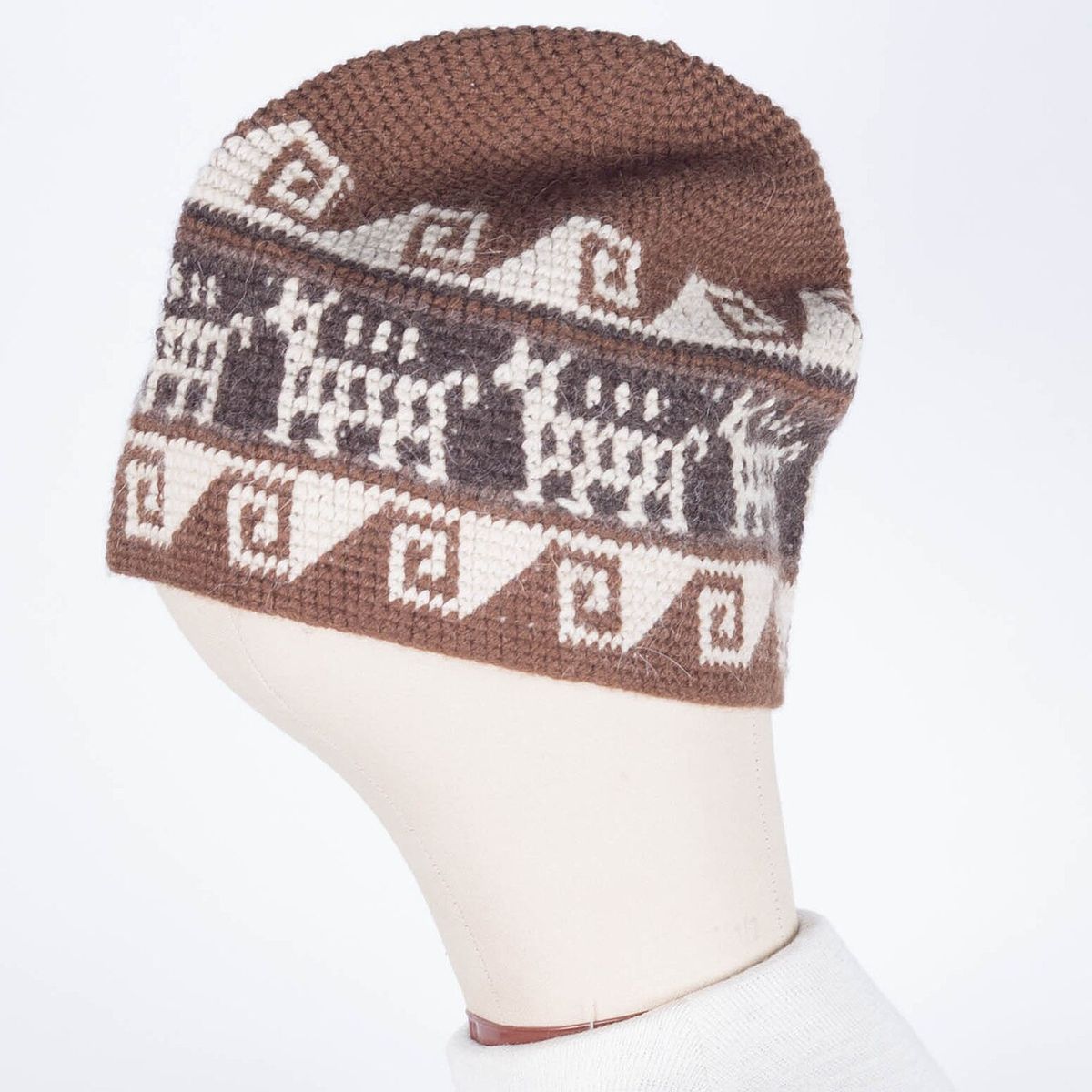
Authentic Cowichan knitting is defined by its use of thick, natural, hand-prepared wool, which preserves the water-resistant lanolin and results in an exceptionally warm and durable garment suited to the Pacific coastal climate. Historically, wool came from a mix of sheep, mountain goat, and Salish Woolly dog hair, but modern knitters primarily use sheep wool, often sourced locally. The traditional preparation process is labour-intensive and involves the entire family, encompassing washing, carding, and hand-spinning the wool into a bulky-weight yarn. The earliest Cowichan sweaters were knitted in the round using double-pointed needles, a construction method distinct from the European practice of knitting flat pieces and seaming them together, which gives the sweaters their characteristic weight and structure.
The knitting itself is taught through observation and hands-on practice within families, with skills passed from elders, mothers, grandmothers, and aunties in home and community settings. The process reinforces cultural values such as patience, respect, and responsibility, while the act of working with natural wool supports sustainable practices and a strong connection to the land. The physical technique involves creating tension with the fingers and reading complex patterns by eye, a skill developed over years of mentorship. This intergenerational exchange is central to keeping the knowledge alive, as elders guide younger makers, sharing stories and explaining the meanings behind traditional motifs during the creative process.
Symbolism and Motifs
The patterns on a Cowichan sweater are not merely decorative but serve as a visual language conveying cultural beliefs, family stories, and connections to the natural world. These motifs are direct adaptations from centuries-old Coast Salish weaving and basketry designs, representing a continuity of artistic expression. Common symbols include animals or forces found in Coast Salish teachings, such as the Thunderbird representing protection and power. Geometric bands are also prevalent, expressing concepts of balance and movement.
- Thunderbird: A powerful symbol representing protection, strength, and supernatural power.
- Geometric bands: Patterns that symbolize balance, harmony, and the flow of life.
- Animal motifs: Designs featuring whales, eagles, salmon, or wolves, each tied to specific legends, attributes, and familial crests.
- Natural elements: Patterns inspired by mountains, rivers, and waves, reflecting the knitter's relationship with their territory.
When someone wears an authentic Cowichan sweater, they carry these teachings and stories with them, making the garment a marker of personal and cultural identity. The act of knitting these patterns is itself a narrative process, with each stitch embedding intention and history into the fabric. This symbolic depth distinguishes authentic Cowichan work from mass-produced imitations. These imitations often copy the aesthetics without understanding or respecting their cultural context.
Cultural and Economic Significance
Cowichan knitting has long functioned as both a vital cultural practice and a source of economic sustenance for Coast Salish families, particularly through periods of hardship and systemic oppression. Following the 1884 Potlatch Ban and other assimilationist policies that outlawed traditional ceremonies and regalia, small handicrafts like knitting became one of the few sanctioned avenues for cultural expression and income generation. For much of the 20th century, sweater sales provided a crucial, though often meagre, secondary income for knitters, supplementing seasonal work like berry picking and fish canning. The craft became a means of economic resilience, allowing families to maintain a degree of financial independence while preserving artistic traditions, and culturally, the sweater also functions as a significant gift given during important life milestones.
A hand-knit sweater represents a substantial investment of time, care, and cultural knowledge, strengthening community bonds and symbolizing love and belonging when given for events like weddings, graduations, or births. However, the sweater's popularity led to widespread cultural appropriation and commercial exploitation, as by the 1920s, non-Indigenous companies and individuals began imitating the design. Famous imitators include the Mary Maxim company, founded in the 1940s after its founder saw a Cowichan sweater in British Columbia, and in 2009, the Hudson's Bay Company released an Olympic sweater resembling a Cowichan design for the 2010 Vancouver Winter Olympics. This prompted the Cowichan Tribes to seek legal advice and plan protests, with a compromise later reached where authentic knitters could sell their sweaters alongside the imitations at the HBC store, highlighting the ongoing tension between cultural appreciation and appropriation.
Modern Context and Protection Initiatives
In the 21st century, Cowichan knitting remains an active, evolving practice, with younger generations learning the craft and sometimes blending traditional motifs with contemporary influences. The need to protect the cultural integrity and economic rights of authentic knitters has led to several important initiatives. These include the Knit project, an Indigenous led initiative committed to raising awareness and ensuring fair wages for Coast Salish artisans. The Cowichan Tribes have also pursued trademark protection for the name Cowichan to combat mislabelled imitations.
Education has also become a critical tool, with knitters and communities actively informing consumers about the difference between authentic sweaters and copies, emphasizing the cultural stories and skilled labour involved in the originals. The craft received a significant national honour on March 19, 2026, when Cowichan Tribes and the Government of Canada commemorated the national historic significance of the Coast Salish Knitters and the Cowichan Sweater. Documentary films, such as The Cowichan Sweater: Our Knitted Legacy, continue to explore and share the sweaters' history within Cowichan and Saanich territories. These combined efforts in legal protection, ethical commerce, public education, and national recognition work to safeguard Cowichan knitting as a living cultural legacy for future generations.
Characteristics of an Authentic Cowichan Sweater
Discerning an authentic, hand-made Cowichan sweater from a commercial imitation involves understanding several key physical and procedural characteristics. Authentic sweaters are the product of specific materials, techniques, and cultural context that cannot be replicated by machine manufacturing, with the most telling feature being the wool itself, which is thick, naturally water-resistant, and hand-spun. This hand-spun wool gives the garment a substantial, slightly irregular texture and superior warmth, and the construction method is also distinctive, traditionally involving knitting in the round on double-pointed needles, which often results in a body with minimal seaming. The patterns are not randomly applied but are meaningful motifs drawn from Coast Salish tradition, knitted with precision and intention by an artisan who understands their significance, and they serve as a direct link to generations of artistic knowledge.
In contrast, mass produced imitations typically use processed, commercially spun yarn that is lighter and smoother. Their patterns may superficially resemble traditional motifs but lack the symbolic depth and are often placed without cultural understanding. Purchasing from verified Indigenous makers, cooperatives, or initiatives like Knit is the best way to ensure authenticity. Supporting these artists acquires a genuine piece of cultural art and contributes to the sustainability of the tradition. It also provides fair compensation for the immense skill and time invested in a single garment.
| Feature | Authentic Cowichan Sweater | Mass-Produced Imitation |
|---|---|---|
| Wool | Hand-spun, natural, bulky weight | Machine-spun, processed, lighter weight |
| Construction | Knitted in the round, minimal seaming | Knitted flat and seamed, made by machine |
| Patterns | Meaningful Coast Salish motifs | Superficial copies of designs |
| Creation | Made by a Coast Salish artisan | Made in a factory |
| Cultural Context | Embedded with stories and tradition | Purely commercial product |
Questions about Cowichan knitting
What is a Cowichan sweater?
A Cowichan sweater is a heavy, warm garment hand-knit by Coast Salish artisans, primarily from the Cowichan Tribes on Vancouver Island. It is made from thick, hand-spun natural wool and features distinctive geometric patterns and motifs derived from traditional Salish weaving and basketry. The sweaters are known for their durability, water resistance, and deep cultural significance, often telling stories or representing family crests. They are also historically known as Siwash sweaters, Indian sweaters, or curling sweaters.
How can I tell if a Cowichan sweater is authentic?
An authentic Cowichan sweater is handmade by a Coast Salish knitter using hand-spun, natural wool that feels thick and retains its lanolin. Look for the substantial weight and a slightly irregular texture in the yarn. The patterns should be complex and meaningful, not random, and the construction is often knit in the round. The best way to ensure authenticity is to purchase directly from recognized Indigenous artists, cooperatives, or initiatives like the Knit project managed by the Victoria Native Friendship Centre, which guarantees the origin of their pieces.
What is the cultural significance of the patterns on a Cowichan sweater?
The patterns on a Cowichan sweater are a visual language carrying deep cultural meaning. They are not merely decorative but are adapted from centuries-old Coast Salish art forms like weaving and basketry. Common motifs such as the Thunderbird, whales, eagles, and geometric bands represent protection, family stories, connections to the land, and concepts of balance. Each stitch and symbol is intentionally chosen by the knitter, often under the guidance of elders, making the sweater a wearable narrative of Coast Salish identity and teachings.
Why did the Hudson's Bay Company face controversy over a Cowichan sweater design?
In October 2009, the Hudson's Bay Company revealed its clothing line for the 2010 Vancouver Winter Olympics, which included a sweater that closely imitated the traditional Cowichan design. Cowichan Tribes Chief Linda Hwitsum called for redress, arguing this was cultural appropriation that harmed authentic knitters. The Tribes sought legal advice regarding their registered trademark and planned silent protests at Olympic torch relays. A compromise was later reached where authentic Cowichan knitters were given space to sell their sweaters alongside the HBC imitations at its Vancouver store.
How is Cowichan knitting being preserved and protected today?
Cowichan knitting is being preserved through intergenerational teaching within families and community programs. Initiatives like the Knit project work to ensure fair wages for artisans and guarantee authenticity. The Cowichan Tribes have pursued trademark protection for the name Cowichan. On March 19, 2026, Cowichan Tribes and the Government of Canada commemorated the national historic significance of the Coast Salish Knitters and the Cowichan Sweater.
What is the Knit project?
Knit is an Indigenous-led initiative launched and managed by the Victoria Native Friendship Centre. It is dedicated to reclaiming Indigenous art, ensuring fair wages for Coast Salish artisans, and preserving the heritage of the Cowichan sweater. The project raises awareness about the cultural and narrative depth of the sweaters and guarantees the authenticity of every piece in its collection. By properly compensating knitters, Knit supports their livelihood and helps ensure the continuation and protection of sacred designs and traditional knowledge for future generations.
Sources and further reading
- Cowichan knitting (Wikipedia)
- Cowichan Sweater (thecanadianencyclopedia.ca)
- The Role of Cowichan Knitting (cherylstradingpost.com)
- Cowichan Knitting, A Twist of Yarn (a-twist-of-yarn.myshopify.com)
Checked by the Novello Desserts desk. Last updated 2026-10-27.