Leggings
Leggings are form-fitting garments worn over the legs, typically from the waist to the ankles, that have evolved from functional wear to a staple of modern fashion. In contemporary Canadian wardrobes, they are a versatile piece of clothing, bridging the gap between activewear, casual attire, and even office wear under longer tops or dresses. Their prominence surged with the aerobics craze of the 1980s and has been solidified by the athleisure trend of the 2010s and 2020s, where comfort and style converge. The garment has sparked ongoing societal debates about dress codes and appropriateness, making it a culturally significant item beyond its practical uses.
Historical Evolution and Military Use
The concept of leggings as leg coverings has a long and varied history, serving purposes of warmth and protection across different cultures and eras. In Europe from the 13th to 16th centuries, men wore separate hose, which functioned as a form of leggings, while in the Scottish Highlands, the trews served a similar purpose. Separate leggings made from buckskin leather were also worn by some Indigenous peoples in North America. During the 19th century, linen pantalettes worn by women and girls under voluminous skirts represented another early form of the garment, and these were originally two separate pieces of clothing. The modern iteration, however, began to take shape in the 1960s, inspired by the tight trousers worn by dancers and evolving into a fashion item in its own right, similar to capri pants but with a tighter fit.
Soldiers, particularly infantry, wore them to protect the lower leg, prevent debris from entering footwear, and provide ankle support. Early versions were often puttees, which were long strips of thick woollen cloth resembling a large bandage that were wrapped around the leg and usually held by a strap. These were later replaced in some armies by canvas leggings fastened with buckles or buttons and secured under the shoe with an adjustable stirrup that passed under the sole just in front of the heel. These military leggings typically extended to the bottom of the knee and buttoned to knee breeches, and they are sometimes confused with gaiters which extend only to the high ankle. Their use declined during the Second World War as armies like the United States Army began issuing high-top combat boots like the Type III Field Boot introduced in 1943, though the United States Marine Corps retained canvas leggings through the Korean War, where Marines were referred to as Yellow Leg troops by opposing forces.

Rise in Modern Fashion and Materials
Leggings transitioned decisively into mainstream women's fashion during the 1960s, drawing direct inspiration from the form-fitting clothing of dancers. This trend accelerated in the 1970s and 1980s with two key developments: the popularization of aerobics and the widespread adoption of synthetic fibres like Lycra (spandex). The blend of nylon and Lycra, typically 90% nylon and 10% Lycra, created a durable, stretchy, and shiny fabric ideal for exercise, leading to garments often called bicycle or running tights. These athletic leggings frequently featured racing stripes or reflective patterns for safety and distinction, and they are shinier in appearance than those made from cotton. Crucially, by the 1980s, the exercise-style legging began to be adopted as streetwear, breaking free from its purely athletic origins and entering casual fashion, a move that set the stage for later trends.
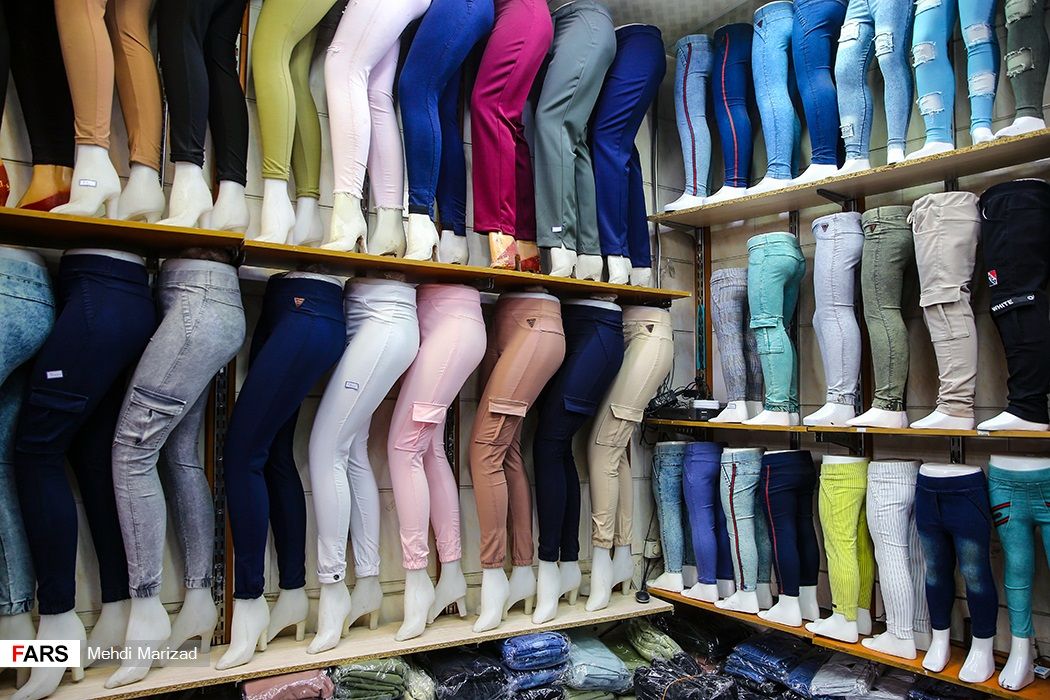
The evolution of materials and styles continued to shape leggings' role in fashion. Cotton leggings offered a softer, more opaque option compared to the shinier nylon-lycra blends, catering to different preferences for comfort and appearance. The late 2000s resurgence of skinny jeans created consumer demand for an even tighter style, which was answered by the introduction of 'jeggings'. Jeggings, a registered brand name of the Sanko Group, are leggings designed to mimic the appearance of skin-tight denim jeans, blending the comfort of stretch fabric with the aesthetic of jeans. Their cultural impact was recognized in 2011 when the term 'jeggings' was entered into the twelfth edition of the Concise Oxford English Dictionary, formalizing its place in the language. This period also saw leggings become a definitive part of the athleisure fashion trend of wearing activewear outside sporting activities in casual settings, a trend that continued from the late 2010s into the 2020s.
Leggings in Athletic and Casual Wear
In sports and fitness, leggings remain a fundamental piece of equipment and attire for a wide range of activities and participants. They are worn by runners, dancers, and exercisers for muscle support, warmth, and comfort, either alone or with athletic shorts over them, especially in cold weather. In team sports, they are often worn under uniforms. For example, soccer players may wear them under shorts with shin guards and soccer socks over the leggings, while field hockey players wear them under skirts with socks over them. The acceptance of leggings as athletic wear has broadened over time, with organizations like the Women's Tennis Association (WTA) tour now allowing leggings and bike shorts as part of a tennis outfit on various leagues. Their use is not limited by gender, as boys and men wear them under athletic shorts for running track or cross country, and male dancers also wear leggings as part of their practice or performance attire.
The rise of the athleisure trend in the late 2010s and 2020s formally cemented leggings as acceptable casual streetwear, worn outside of sporting contexts. This trend champions the idea of wearing activewear in casual, everyday settings, prioritizing comfort without sacrificing style. Leggings became a central component of this movement, paired with everything from oversized sweaters and tunics to casual jackets and boots. Their versatility allows them to function as a base layer for outdoor activities, loungewear at home, or a key part of a streamlined, comfortable outfit for running errands or meeting friends, reflecting a significant shift in contemporary dress norms. This cultural shift means leggings are now routinely worn as part of complete outfits for a variety of non-athletic purposes, moving far beyond their origins in dance and gymnasiums.
Societal Debates and Dress Code Controversies
The question of whether leggings constitute pants suitable to be worn as outerwear without a covering garment has been a persistent topic of societal debate and media attention. Opinions vary widely, as reflected in media polls. A 2016 Glamour magazine poll of its readers found 61% believed leggings should only be worn as an accessory under other clothes, while a Good Housekeeping article that same year concluded that opaque leggings do indeed count as pants. This debate has frequently moved into institutional dress codes, with several schools in the United States implementing bans or restrictions on wearing leggings as outerwear. For instance, schools in Sonoma County, California, banned them in 2013, and a Massachusetts school did so in 2015, with similar discussions and enforcements occurring in Oklahoma, Illinois, and North Carolina, and a Montana state legislator introduced a bill in 2015 intended to ban leggings and yoga pants.
High-profile incidents have further fuelled public discussion on the subject and drawn connections to broader issues of body policing. In March 2017, United Airlines barred three children travelling on company passes from boarding a flight because a gate agent deemed their leggings inappropriate. The airline defended its actions regarding pass travellers, while clarifying that the rule did not apply to standard paying passengers, a point rival airline Delta highlighted by stating leggings were welcome on its flights. The incident drew criticism from public figures including actress Patricia Arquette and model Chrissy Teigen, and sparked a broader conversation about clothing policies. A subsequent survey by Airfarewatchdog of 1,800 travellers found 80% supported airlines banning 'inappropriate clothing', though the term was undefined in the poll. Critics of such restrictions often link them to slut shaming or body shaming, arguing that rules citing leggings as 'too distracting for boys' unfairly place responsibility on women and girls for the reactions of others.
Variations and Trends for Men
While predominantly associated with women's fashion, leggings designed specifically for men have also entered the market, often referred to by the portmanteau 'meggings'. The trend was introduced on high-fashion runways, such as the Marni Men's show during Fall 2007 Fashion Week, which presented outfits with leggings designed solely for men. By the spring/summer 2011 fashion season, meggings were presented as the latest fashion trend for men, supposed to be styled and layered beneath shorts and preferably with large, baggy, loose or long tops such as T-shirts. Outside high fashion, the trend has been visible in popular culture, with K-pop idols adopting the style of wearing leggings under shorts as a fashion item since the 2010s. The introduction and promotion of meggings represents an expansion of the legging's domain, challenging traditional gender norms in fashion and offering men similar options for form-fitting, comfortable legwear that blends athletic and casual styles, though mainstream adoption has varied.
Key Styles, Distinctions, and Cultural Impact
Understanding the different types of leggings requires noting their specific materials, construction, and intended use, as the category encompasses several distinct garments. The primary categories have specific characteristics that define their place in fashion and function, from high-performance athletic wear to fashion-forward hybrids. The cultural impact of leggings is also seen in their entry into dictionaries and their role in high-profile public debates about dress and decorum, and the term 'leggings' itself has referred to different garments through history, from the hose of the Renaissance to the infant's clothing matched with a jacket in the 19th century, demonstrating its evolving definition. The garment's journey from functional military and protective wear to a ubiquitous fashion item highlights its unique adaptability and enduring presence in clothing history.
- Athletic Leggings (Nylon-Lycra): Made from a blend of nylon and Lycra, these are shiny, form-fitting, and designed for exercise like running or cycling, and they are often referred to as bicycle or running tights.
- Cotton Leggings: Typically made from cotton or cotton-blend fabrics, these are more opaque and matte in finish than athletic leggings and are favoured for casual, everyday wear.
- Jeggings: A hybrid style designed to look like denim jeans, using stretchy legging material printed or woven to mimic denim's colour and texture, often with faux pockets and seams.
- Footed Leggings/Leg Warmers: Garments that cover the foot or calf, used as a base layer in cold weather, in dancewear, or as a distinct fashion accessory from the 1980s.
- High-Waisted Leggings: A popular style that rises to or above the navel, offering more coverage and aligning with the rise of high-waisted jeans in contemporary fashion.
- Military-style Leggings (historic): Canvas or puttee-style wraps worn by soldiers for protection and support, extending to mid-calf or the bottom of the knee and secured with buckles, buttons, or straps.
Distinguishing leggings from similar garments is important for clarity. Leggings differ from tights, as tights are sheerer, footed, and considered underwear, while leggings are opaque and worn as outer leg coverings. They are also distinct from gaiters, which are protective coverings worn over the shoe and lower leg, and from the historical military puttees, which were wrapped cloth strips. This clarification helps explain why leggings have occupied a unique space in fashion, able to serve as both a practical layer and a primary article of clothing depending on the context and construction.
Questions about Leggings
Are leggings considered pants?
Whether leggings are considered pants is a subject of ongoing debate in fashion and society. Some fashion commentators and many members of the public believe leggings are only an accessory to be worn under dresses, skirts, or long tops. Others argue that opaque, well-constructed leggings can indeed function as pants for casual wear, a view supported by the athleisure trend. Institutional policies vary, with some schools and airlines having enforced dress codes that restrict leggings worn as outerwear, while in daily life, their acceptance has grown significantly.
What is the difference between leggings and tights?
Leggings and tights are distinct garments based on material, opacity, and use. Leggings are typically made from thicker, opaque materials like cotton or nylon-lycra blends and are designed to be worn as outer leg coverings or activewear. Tights are usually made from thinner, often sheerer material like nylon, include a foot covering, and are considered a type of underwear or hosiery meant to be worn under other clothing. The key differences are opacity, thickness, and the presence of a footed design, with leggings being a standalone garment.
What are jeggings?
Jeggings are a style of leggings designed to look like skin-tight denim jeans. They are made from stretchy legging material but are manufactured to mimic the colour, texture, and detailing of denim, often featuring faux pockets, belt loops, and stitching. The term 'jeggings' is a registered brand name of the Sanko Group and entered the Concise Oxford English Dictionary in 2011. They became popular in the late 2000s alongside the trend for skinny jeans, answering a demand for an even tighter style of pants.
Can men wear leggings?
Yes, leggings designed for men, often called 'meggings', are available and have been promoted as a fashion trend. The trend was highlighted on fashion runways like the Marni Men's show in 2007 and the spring/summer 2011 seasons. They are typically styled layered under shorts or with long, baggy tops like oversized T-shirts. The style has also been adopted in other spheres, such as by K-pop idols since the 2010s. While not as mainstream as women's leggings, they represent a niche in men's fashion.
Why were leggings controversial on United Airlines in 2017?
In March 2017, a United Airlines gate agent barred three children travelling on company passes from boarding a flight because they were wearing leggings, which were deemed inappropriate attire for pass travellers. The airline defended its dress code for passengers using travel benefits, while stating it did not apply to regular paying customers. The incident sparked widespread debate about airline dress codes and the perception of leggings. Public figures criticized the decision, while a traveller survey showed majority support for banning 'inappropriate clothing' on flights in general, although the term was not defined in the poll.
What was the historical military use of leggings?
They protected the lower leg, kept dirt and mud from entering shoes, and provided ankle support. Early versions were puttees (wrapped woollen cloth), later replaced by canvas leggings fastened with buckles and a stirrup under the shoe. During World War II, U.S. Army foot soldiers who wore them were called 'legs' by paratroopers. The United States Marine Corps used canvas leggings through the Korean War, where they were called Yellow Leg troops by communist forces.
Sources and further reading
- Leggings (Wikipedia)
- What Wearing Leggings As Everyday Pants Says About You (phillymag.com)
- Are Leggings Still in Style in 2026? Outfit & Buyer Guide (diguanapparel.com)
Checked by the Novello Desserts desk. Last updated 2026-10-22.