Orders, decorations, and medals of Canada
The orders, decorations, and medals of Canada form the country's official system for recognizing individuals who have made significant contributions to their community or the nation. Modelled initially on British traditions, the system began to take a distinctly Canadian form in 1967 with the creation of the Order of Canada. Administered by the governor general through the Chancellery of Honours at Rideau Hall, the system includes national orders, military and civilian decorations, and campaign medals. These honours are awarded by the sovereign, Canada's fount of honour, and their presentation is a key part of Canadian civic life, celebrating service, bravery, and merit.
Historical Development
The tradition of bestowing royal honours in the territory now known as Canada dates back to the era of New France. King Louis XIV established the Ordre Royal et Militaire de Saint-Louis in 1693, and approximately 300 individuals associated with Canada were appointed to it. Following the creation of British North America, Canadians were eligible for British imperial honours, including appointments to the Order of Saint Michael and Saint George and the Order of the British Empire. This led the Canadian House of Commons to pass the non-binding Nickle Resolutions in 1917 and 1919, which generally ended the conferral of titular awards. The final end to most imperial honours came in 1955, though awards for gallantry like the Victoria Cross remained available and a few knighthoods were still granted later. The first distinctly Canadian honour was the Royal Canadian Mounted Police Long Service Medal, created by royal warrant of King George V in March 1934 on the advice of Prime Minister R. B. Bennett's cabinet. This marked the first honour specific to Canada and for service in Canada established by the monarch of Canada.
The system developed further during and after the Second World War. In 1942, King George VI created the Canada Medal by royal warrant, though no medals were ever struck. The Canadian Forces' Decoration was founded in 1947, and the first distinctly Canadian campaign medal, the Korea Medal, was created in 1951. The centennial of Confederation in 1967 provided the impetus for establishing Canada's first order, the Order of Canada. The system was revised in 1972 and expanded significantly throughout the 1990s. While generally well-regarded, experts like Christopher McCreery have identified areas for improvement, such as the need for a polar medal, which was subsequently created in 2015, and a public service order. The order of precedence, where all three grades of the Order of Canada supersede the top levels of other orders, has also been noted as an anomaly compared to international practice.
Structure and Administration
All honours in Canada emanate from the monarch, who is the fount of honour and the only person who may create new national honours. This royal prerogative is typically exercised on the advice of the sitting ministers of the Crown. The sovereign's representative, the governor general, administers most of the system through the Chancellery of Honours, which is part of the Office of the Secretary to the Governor General. The governor general also establishes, via order-in-council, the official order of precedence for wearing insignia, decorations, and medals. Proposals for new honours typically originate from the Chancellery, the Department of National Defence, or from private organizations. The Chancellery assesses the necessity of a proposed honour and its fit within the existing structure before the proposal moves to the Honours Policy Committee, a group of senior public servants within the Privy Council Office formed in 1980.
If approved by the committee, the proposal goes to the federal Cabinet for an order-in-council. The prime minister then advises the governor general to present the final design and documents to the monarch for approval. Only with the sovereign's signature on the relevant letters patent does the new honour officially come into existence. Subsequent amendments to an honour's appearance or award criteria do not require the monarch's approval and can be handled by the governor general. A key feature of the Canadian system is its use of independent advisory committees for most orders. These committees, appointed by the governor general or a delegate, receive public nominations and put forward names to the governor general, aiming to ensure a non-partisan selection process. For example, the Advisory Committee for the Order of Military Merit has six members, including the chief of the Defence Staff.
National Orders of Canada
Canada's honours system includes both dynastic orders, which are personal gifts of the monarch, and national orders, which are created by the state. Appointment to an order means joining a society of honour, and recipients are entitled to use post-nominal letters. The insignia for higher grades are typically worn on a neck ribbon by men and a pinned bow by women, while lower grades are worn suspended from ribbons on the left chest. The Order of Merit is the highest civilian award for merit in Canada, though it is a dynastic order. Founded in 1902 by King Edward VII, it has a single grade and is limited to 24 living members from across the Commonwealth. Only five Canadians have been appointed: former Prime Ministers William Lyon Mackenzie King, Lester B. Pearson, and Jean Chrétien, along with neurosurgeon Wilder Penfield and historian Margaret MacMillan.
The Order of Canada, established in 1967, is the country's pre-eminent national order for lifetime achievement. Its motto, 'Desiderantes meliorem patriam' (desiring a better country), reflects its purpose of recognizing those who have made a major difference to Canada. The monarch is the Sovereign of the order, and the serving governor general is its Chancellor and Principal Companion. The order has three grades: Companion (CC), Officer (OC), and Member (CM). Since its creation, more than 8,000 people have been appointed. An extraordinary category exists within each grade for members of the royal family, and incoming governors general and their consorts become Extraordinary Companions for life. The Order of Military Merit, founded in 1972 by Queen Elizabeth II, recognizes exceptional service by members of the Canadian Forces. The monarch is its Sovereign, the governor general is Chancellor, and the chief of the Defence Staff is Principal Commander.
- Order of Merit (OM): Highest civilian merit award. Dynastic. Single grade.
- Order of Canada (CC, OC, CM): Premier national order for lifetime achievement. Three grades.
- Order of Military Merit (CMM, OMM, MMM): For exceptional military service. Three grades.
- Royal Victorian Order: Dynastic order for personal service to the sovereign.
- Order of Merit of the Police Forces: For exceptional service by police members.
- Order of St. John: A working order of chivalry associated with the St. John Ambulance organization.
Decorations for Bravery and Meritorious Service
Beyond orders, Canada has a suite of decorations that recognize specific acts of bravery or meritorious service. These awards are distinct from orders and are typically presented for a single act or series of acts. The Bravery Decorations consist of the Cross of Valour (CV), the Star of Courage (SC), and the Medal of Bravery (MB). The Cross of Valour is Canada's highest civilian decoration for bravery, awarded for acts of the most conspicuous courage in circumstances of extreme peril. The Meritorious Service Decorations recognize outstanding achievements that bring honour to Canada. They are divided into the Meritorious Service Cross (MSC), which can be awarded for both military and civilian service, and the Meritorious Service Medal (MSM). These decorations honour deeds performed in a highly professional manner or of a rare standard that sets an example for others.
Investiture ceremonies at Rideau Hall regularly feature the presentation of these decorations. For instance, a typical ceremony might include the awarding of one Bravery Decoration, one Meritorious Service Cross, and eight Meritorious Service Medals. The process for nominating individuals for these awards often involves submissions from the public or from organizations, which are then reviewed by advisory committees. The governor general, on behalf of the sovereign, personally presents these awards, often in ceremonies that are broadcast or covered by media, highlighting the national significance of these acts of courage and service.
Campaign and Service Medals
Campaign and service medals form a substantial part of the Canadian honours system, recognizing service in specific military operations, long service, or participation in significant events. The first distinctly Canadian campaign medal was the Korea Medal, created in 1951. Modern campaign medals include the General Campaign Star and the General Service Medal, which are awarded for participation in designated international operations. The Canadian Forces' Decoration (CD) is awarded to members of the Canadian Armed Forces who have completed twelve years of good service. The Polar Medal, established in 2015, recognizes those who have contributed to Canada's polar regions through scientific research, governance, or exploration, filling a gap previously noted by honours experts.
The Sovereign's Medal for Volunteers recognizes the exceptional volunteer achievements of Canadians from across the country in a wide variety of fields. Another significant award is the Royal Canadian Mounted Police Long Service Medal, which was the very first honour specific to Canada when it was created in 1934. These medals are worn in a strict sequence of precedence as outlined in the Canadian Medals Chart published by the Department of National Defence. The order of precedence dictates the arrangement of medals on a uniform or civilian dress, with the most senior award worn closest to the centre of the chest.
| Medal Type | Example | Year Created |
|---|---|---|
| Long Service | Canadian Forces' Decoration | 1947 |
| Campaign | Korea Medal | 1951 |
| Special Service | Polar Medal | 2015 |
| Volunteer Service | Sovereign's Medal for Volunteers | 2015 (replacing earlier award) |
| Police Service | RCMP Long Service Medal | 1934 |
Provincial and Territorial Honours
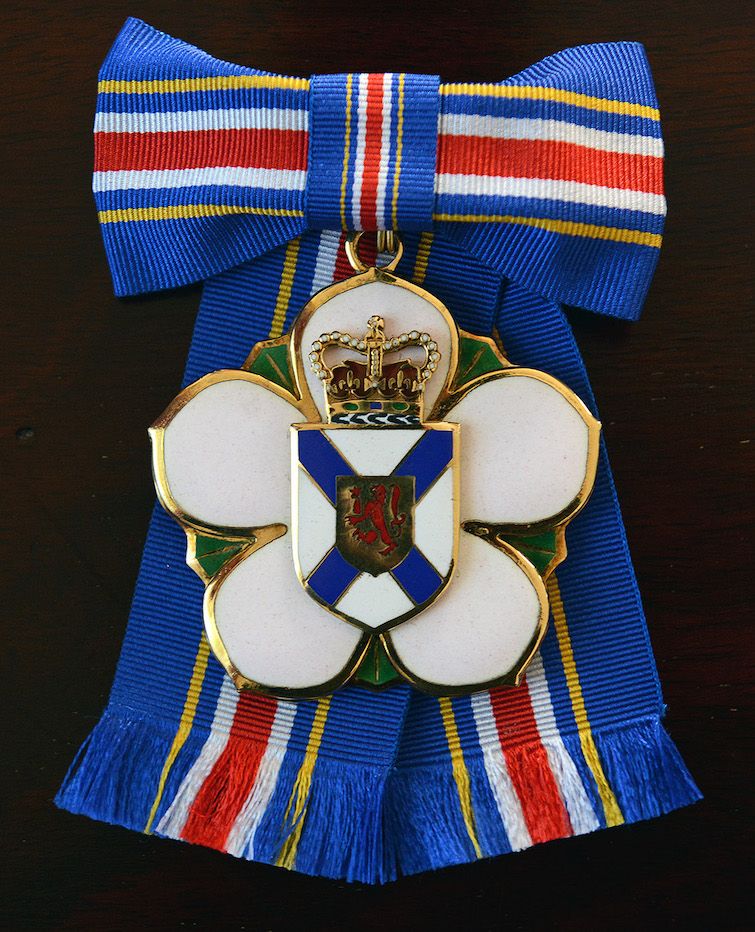
In addition to the national system, each Canadian province and territory maintains its own distinct honours to recognize residents for contributions made within that jurisdiction. These provincial honours are awarded by the monarch's representative in the province, the lieutenant governor, or in the territories by the commissioner. Like their national counterparts, many provincial honours grant the use of post-nominal letters and may include heraldic privileges. The establishment of provincial orders was inspired by the success of the national Order of Canada, with provinces seeking to honour local achievement in fields such as arts, community service, and public service.
These honours operate independently from the federal system and have their own advisory councils and nomination processes. They represent an important layer of recognition, celebrating contributions that have a primary impact on provincial or territorial life. The existence of these parallel systems highlights the decentralized nature of Canadian honouring, allowing for celebration of service at both the national and community levels. Recipients of provincial honours are often celebrated at ceremonies at the lieutenant governor's residence, mirroring the investitures held at Rideau Hall.
The Investiture Ceremony
The formal presentation of honours, known as an investiture ceremony, is a central ritual in the Canadian honours system. These ceremonies are typically held at Rideau Hall, the official residence of the governor general in Ottawa, though they can also occur at other locations across Canada. The governor general presides over the ceremony, acting on behalf of the sovereign. During the event, recipients are called forward one by one. The governor general presents the insignia of the order, decoration, or medal, often pinning it on the recipient. For appointments to an order, the recipient is also given the official certificate of appointment. These ceremonies are dignified public events that celebrate the achievements of Canadians and are often attended by family, friends, and dignitaries.
Investitures are held multiple times a year. A typical ceremony in June 2026, for example, included the presentation of the Order of Canada, one Bravery Decoration, one Meritorious Service Cross, eight Meritorious Service Medals, four Polar Medals, and five Sovereign's Medals for Volunteers. The ceremonies are frequently covered by media and sometimes broadcast, serving to publicly acknowledge the recipients' contributions and to educate Canadians about the honours system. The Chancellery of Honours meticulously plans these events, ensuring the proper protocol is followed and that the occasion is memorable for the honourees and their guests.
Questions about Orders, decorations, and medals of Canada
What is the highest civilian honour in Canada?
The highest civilian award for merit in Canada is admission to the Order of Merit, a dynastic order founded in 1902 by King Edward VII. It is limited to only 24 living members from across the Commonwealth and has a single grade, granting the post-nominal letters OM. Only five Canadians have ever been appointed: former Prime Ministers William Lyon Mackenzie King, Lester B. Pearson, and Jean Chrétien, along with Dr. Wilder Penfield and historian Margaret MacMillan. The premier national order is the Order of Canada, which is the country's highest honour for lifetime achievement.
Who can nominate someone for the Order of Canada?
Nominations for the Order of Canada can be made by any member of the public. Submissions are reviewed by the Order of Canada's independent Advisory Council, which is appointed by the governor general. This council assesses the nominations based on the criteria of a lifetime of outstanding achievement and service to the nation. The council's recommendations are then forwarded to the governor general for approval. This process is designed to be non-partisan and merit-based, ensuring that appointments reflect genuine contributions to Canadian society.
What is the Polar Medal and who can receive it?
The Polar Medal is a Canadian honour established in 2015 to recognize contributions to Canada's polar regions. It is awarded to individuals who have demonstrated outstanding service in the North or South Poles, whether through scientific research, governance, exploration, or other significant endeavours that advance knowledge or stewardship of these areas. The creation of this medal addressed a gap in the honours system that had been identified by experts. Nominations are reviewed by an advisory committee, and the medal is presented by the governor general during investiture ceremonies at Rideau Hall.
How are Canadian medals worn on a uniform?
Canadian orders, decorations, and medals are worn in a specific sequence known as the order of precedence. This sequence is established by the governor general via order-in-council and is detailed in the Canadian Medals Chart published by the Department of National Defence. Medals are worn on the left chest, suspended from ribbons. The highest precedence award is worn closest to the centre of the chest, with others placed in descending order of precedence to the wearer's left. Different mounting styles exist for military uniforms and civilian dress, but the sequence of awards remains the same.
Can non-Canadians receive Canadian honours?
Yes, non-Canadians can receive certain Canadian honours, typically on an honorary basis. The Order of Canada, for instance, can be awarded to non-Canadians whose actions have made the world better, though these appointments are honorary and do not come with the post-nominal letters. Other awards, like the Meritorious Service Decorations, may also be awarded to foreigners for specific deeds that bring honour to Canada. However, the majority of honours, particularly those for military service or long service, are reserved for Canadian citizens and members of the Canadian Armed Forces.
What is the role of the Chancellery of Honours?
The Chancellery of Honours is the administrative body responsible for Canada's honours system. It is a part of the Office of the Secretary to the Governor General of Canada, located at Rideau Hall in Ottawa. The Chancellery manages all aspects of the system, including processing nominations, organizing advisory committees, and planning investiture ceremonies where the governor general presents the awards. It also provides public information on honours, maintains official records of recipients, and advises on the creation of new honours. The secretary to the governor general often serves as the secretary general to the various advisory committees for orders and decorations.
Sources and further reading
- Orders, decorations, and medals of Canada (Wikipedia)
- Honours & Awards (cmea-agmc.ca)
Checked by the Novello Desserts desk. Last updated 2026-10-27.