Knob Hill Farms
Knob Hill Farms was a pioneering supermarket chain in the Greater Toronto Area, Ontario, that operated from 1953 to 2001. Owned by Macedonian immigrant businessman Steve Stavro, the chain was renowned for its massive, no-frills 'food terminal' stores, which were forerunners of the modern big-box grocery format. At its peak, Knob Hill Farms operated ten locations, including the world's largest food-only retail store in Cambridge, Ontario. The chain was a significant and affordable food source for working-class and multicultural communities in the GTA before closing due to intense competition.
Origins and Early Growth
Knob Hill Farms began as a small fruit stand in Toronto's east end around 1951, operated by Steve Stavro alongside his brother Chris and their father. Stavro, who had left high school to work in retail, reportedly took the name from a box of California produce, believing it evoked 'class and top quality for the working consumer.' By 1954, he had opened his first proper supermarket at 425 to 427 Danforth Avenue. Throughout the late 1950s, Stavro expanded his operations to nine traditional grocery stores and outdoor markets across Toronto, establishing his foundational business philosophy of cutting out middlemen to offer lower prices, a principle that would define the chain's future. The initial stores focused on affordable, quality produce, serving a customer base that felt overlooked by larger, conventional supermarkets.
The Food Terminal Concept and Expansion
In 1963, Steve Stavro radically changed direction by opening the first Knob Hill Farms 'food terminal' in Markham at Woodbine Avenue and Highway 7. This 60,000-square-foot store was Canada's largest grocery store at the time and pioneered the big-box, warehouse-style retail model. The food terminal concept featured vast sales floors with minimal décor, warehouse shelving, and a no-frills approach that passed savings from direct purchasing and low overhead directly to customers. This model proved successful, leading to a rapid expansion of terminals across the Greater Toronto Area throughout the 1970s and 1980s. Each new location was typically housed in a repurposed industrial building, reinforcing the chain's utilitarian image and keeping costs low.
The expansion of Knob Hill Farms followed a deliberate pattern across the GTA, with new terminals opening roughly every few years to serve different regions. The 1971 Pickering terminal served the eastern suburbs, while the 1975 Lansdowne and Dundas location marked the chain's first major entry into Toronto proper on the site of a former National Cash Register plant. The 1977 Cherry Street terminal was a bold move into the underdeveloped Port Lands, and the 1978 Mississauga store at Dixie Road and the QEW was briefly the largest food store in North America. The 1983 Oshawa terminal, located in a former iron foundry, included unique ancillary services like a video store, bakery, and dentist office, while the 1985 Weston terminal in a former WWII de Havilland Mosquito assembly hangar featured artistic elements. The 1991 Cambridge terminal, at 340,000 square feet, claimed the title of the world's largest food-only retail store and saw over 20,000 customers on its opening day, and the 1992 Riverdale terminal at Carlaw and Gerrard was the final store opened by the chain.
- 1971: A second terminal opened in Pickering, Ontario.
- 1975: The first Toronto terminal opened at Lansdowne Avenue and Dundas Street West on a former factory site.
- 1977: A second Toronto terminal opened at Cherry Street and the Gardiner Expressway.
- 1978: A Mississauga terminal at Dixie Road and the QEW opened, billed as the largest food store in North America.
- 1983: A terminal opened in Oshawa in a converted iron foundry, featuring ancillary services like a pharmacy and video store.
- 1985: The Weston Road and Highway 401 terminal opened in a former WWII aircraft hangar.
- 1991: The Cambridge terminal opened as the world's largest food-only retail store at 340,000 square feet.
- 1992: The final terminal opened at Carlaw and Gerrard in Toronto's Riverdale neighbourhood.
This expansion made Knob Hill Farms a familiar landmark for shoppers seeking value across southern Ontario. The chain operated from 1953 to 2001 in the Greater Toronto Area. Each store acted as a regional destination for bulk groceries. The chain was famous for its giant food terminal locations and low prices. It was an early innovator in the field of big box grocers.
Store Characteristics and Operations
Knob Hill Farms stores were distinctly industrial in character, often retaining features of their previous lives as factories or warehouses. The sales floors were vast and dimly lit, with concrete floors and simple, warehouse-style shelving, and customers sometimes encountered large pools of water on the floor from refrigeration units or cleaning. A defining operational quirk was the use of cardboard boxes and plastic laundry baskets at checkout instead of plastic bags, which became a well-known symbol of the chain and its focus on reusable containers. This hands-on, low-tech approach was part of the chain's identity but would later contribute to its challenges as competitors modernized their logistics and point-of-sale systems.
Despite the no-frills environment, some locations featured unique artistic elements, such as the Weston terminal which displayed a 1,300-foot mural by artist John Richmond depicting the history of food from Prometheus to Canadian astronaut Marc Garneau. The chain was also a staple at the Canadian National Exhibition's Food Building, where its buttered corn on the cob was an annual favourite for fairgoers throughout the chain's operational years. Advertising was frugal, with cheaply produced television commercials airing during off-peak hours on local multilingual stations like Citytv and CFMT, and the chain even co-produced a television special, 'Toronto Trilogy,' for the city's sesquicentennial, which included a scene filmed in the Lansdowne store. These flourishes were exceptions in a retail philosophy that overwhelmingly favoured substance and savings over style or marketing spectacle, aligning with Stavro's vision of serving the working consumer.
Business Strategy and Market Position
Steve Stavro's core business strategy was built on vertical integration and cost-cutting to serve price-conscious consumers. He aimed to 'serve the working man with a big family and not much to spend on food,' a market he felt was ignored by major chains like Dominion and Loblaws. Knob Hill Farms bought produce and goods directly from producers and farmers, who often shipped directly to the store floors, eliminating distributor markups and allowing the chain to sell in bulk at very low prices. The massive scale of the food terminals, some exceeding 100,000 square feet years before the arrival of Costco or Walmart Supercentres in Canada, was a key part of this low-cost model, making the stores destinations where customers traded amenities for significant savings on their grocery bills.
The chain also carved out a niche by catering to Toronto's growing multicultural communities, as its direct purchasing and vast floors allowed it to stock a wide variety of ethnic and specialty food items not commonly found in mainstream supermarkets at the time. This made Knob Hill Farms an important food source for new immigrant communities in the GTA, symbolizing the city's increasingly multicultural makeup and filling a gap left by conventional grocers. The strategy was successful for decades, with the chain enjoying strong customer loyalty from those who valued its unique product selection and low prices, and it was often described as the 'Honest Ed' of local grocers. However, its insistence on manual processes and reluctance to modernize its point-of-sale and inventory systems eventually left it vulnerable as competitors adopted more efficient technologies and refined the warehouse model with better customer service and convenience.
Closure and Aftermath
On August 25, 2000, Steve Stavro announced that all Knob Hill Farms stores would close. The decision followed a careful review over the past year of the strategic alternatives for the chain. The company had lost market share to new competitors. The final store, the Weston site, closed in February 2001.
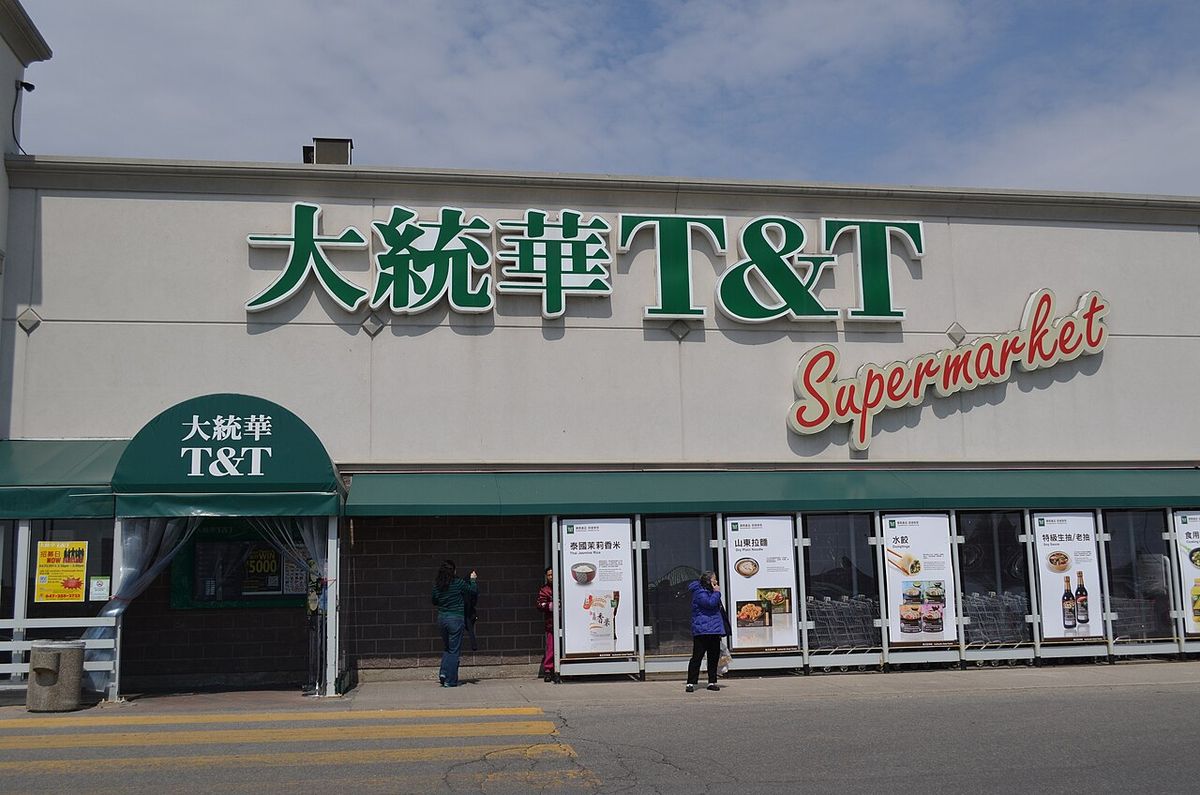
The closure process unfolded over the subsequent six months as each terminal was shuttered, with employees informed they were losing their jobs and the company's market share having shrunk in the face of fierce competition. Stavro retained ownership of the substantial real estate assets, with plans to redevelop the properties in partnership with the Woodbridge Company, the Thomson family's holding company, as he had been trying to arrange new financing for the chain. Some former Knob Hill Farms sites found new life with other retailers. For instance, the massive Cambridge location was later converted into a Home Depot, and the Cherry Street terminal in Toronto eventually became a T&T Supermarket after the city's land deal with Stavro was cancelled. In Oshawa, the city expropriated the former Knob Hill property for the construction of a new GO Transit station, with plans for a new Food Basics store announced for the area in 2026, demonstrating the ongoing utility and value of these large commercial sites long after the grocery chain departed.
Legacy and Cultural Impact
Knob Hill Farms left a lasting imprint on Canadian retail as an early pioneer of the big-box grocery format, demonstrating the viability of massive, warehouse-style stores years before they became commonplace and influencing the development of the sector. The chain is remembered for its stark, industrial aesthetic, incredibly low prices, and the distinctive shopping baskets that replaced bags, with many Torontonians recalling trips as a unique, if somewhat gritty, shopping experience that represented real value and a sense of adventure. For many working-class and immigrant families, the chain served as a community anchor, providing affordable access to both staple and specialty foods, and its emphasis on direct purchasing and bulk sales presaged the strategies of modern warehouse clubs that now dominate a segment of the market. The chain's popular television commercials and its presence at the CNE further embedded it in the regional culture of the Greater Toronto Area during the late 20th century.
Culturally, Knob Hill Farms and its founder Steve Stavro drew comparisons to other Toronto retail figures like Honest Ed Mirvish due to their no-frills ethos and public persona focused on value for the everyday consumer. The chain's role in making bulk, affordable groceries accessible to a broad audience remains a significant part of its legacy in the Greater Toronto Area's commercial history, even though it ultimately could not adapt to the digital and logistical advancements of late-20th-century retail. Its story is one of innovation in format and purchasing, followed by an inability to evolve its operations, a narrative that highlights the rapid changes and intense competitive pressures in the grocery sector during the final decades of the last century. The lasting memory of rooting through shipping baskets in a cavernous, dimly lit warehouse continues to define the Knob Hill Farms experience for those who shopped there.
Store Locations and Details
The chain was known for its large food terminal locations. The first food terminal opened in Markham in 1963 and was the biggest grocery store in Canada at the time. Later terminals opened in Pickering, Toronto, Mississauga, Oshawa, and Cambridge. The Cambridge terminal, opened in 1991, was the largest food retail store in the world. These stores often reused industrial sites.
| Location | Year Opened | Notable Features |
|---|---|---|
| Markham (Woodbine & Hwy 7) | 1963 | First food terminal. 60,000 sq ft. Largest in Canada at opening. |
| Pickering | 1971 | Second terminal, serving Toronto's eastern suburbs. |
| Toronto (Lansdowne & Dundas) | 1975 | 100,000 sq ft. First Toronto terminal on former factory site. |
| Toronto (Cherry St & Gardiner) | 1977 | Located in the Port Lands. Later became a T&T Supermarket. |
| Mississauga (Dixie & QEW) | 1978 | Billed as largest food store in North America at opening. |
| Oshawa | 1983 | 226,000 sq ft in a former iron foundry. Included ancillary shops. |
| Toronto (Weston Rd & Hwy 401) | 1985 | In a WWII aircraft hangar. Featured John Richmond's mural. |
| Cambridge (Hespeler Rd) | 1991 | 340,000 sq ft. World's largest food-only retail store. |
| Toronto (Riverdale, Carlaw & Gerrard) | 1992 | The final food terminal opened by the chain. |
These locations formed a network that defined the Knob Hill Farms experience. Their immense size and industrial character became part of local retail folklore. A defining feature was the use of cardboard and plastic baskets at checkout instead of plastic bags. Unlike their competitors, there were no scanners at the cash registers.
Questions about Knob Hill Farms
When did Knob Hill Farms operate?
Knob Hill Farms operated from 1953 to 2001. It began as a small fruit stand and grew into a chain of ten large 'food terminal' stores. The business was founded by Steve Stavro and remained under his ownership until its closure. The final store, the Weston Road location, closed in February 2001.
Why was Knob Hill Farms called a 'food terminal'?
The term 'food terminal' described the chain's massive, warehouse-style stores that functioned like distribution hubs. These locations were often housed in repurposed industrial buildings like factories or hangars. The name emphasized the no-frills, bulk-sales approach where goods were sold directly from shipping containers or simple shelving. It set them apart from traditional supermarkets and highlighted their low-overhead business model.
What happened to the Knob Hill Farms stores after they closed?
After closure, the real estate assets were retained by owner Steve Stavro. The Cambridge location later became a Home Depot. The Cherry Street store in Toronto later housed a T&T Supermarket. In Oshawa, the property was expropriated for a new GO Transit station.
What made Knob Hill Farms unique compared to other grocery stores?
Knob Hill Farms was unique for its pioneering big box format and food terminal concept. It was a no frills grocery chain famous for low prices. Stores used cardboard and plastic baskets at checkout instead of plastic bags. There were no scanners at the cash registers.
Who owned Knob Hill Farms?
Knob Hill Farms was owned by businessman Steve Stavro. He founded the chain beginning as a single produce store in 1953. Stavro operated the chain from 1953 to 2001. He was also known for his other business interests.
Why did Knob Hill Farms close down?
Knob Hill Farms closed due to intense competition and loss of market share. Knob Hill Farms had failed to digitally adapt, notably refusing to implement scanning systems at cash registers. After a careful strategic review and a failed search for new financing, owner Steve Stavro announced the closure of all ten stores in August 2000. The final store, the Weston Road location, closed in February 2001, ending the chain's operations after nearly five decades.
Sources and further reading
- Knob Hill Farms (Wikipedia)
- Past Pieces of Toronto: Knob Hill Farms (jamiebradburnwriting.wordpress.com)
- Knob Hill Farms to close (cbc.ca)
- The history of Knob Hill Farms in Toronto (blogto.com)
Checked by the Novello Desserts desk. Last updated 2026-10-26.