Canadian National Exhibition
The Canadian National Exhibition (CNE), commonly known as The Ex, is an annual 18-day fair held at Exhibition Place in Toronto, Ontario. Running from the third or fourth Friday of August through Labour Day, it is Canada's largest annual community event, attracting approximately 1.6 million visitors each year. Founded in 1879 as the Toronto Industrial Exhibition to highlight agricultural and technological innovation, the fair has evolved into a major summer tradition featuring a vast midway, live entertainment, agricultural displays, parades, and the renowned Canadian International Air Show. The CNE serves as a significant cultural and economic event for the Greater Toronto Area and the province of Ontario.
History and Evolution
The origins of the Canadian National Exhibition trace back to agricultural fairs held in Canada West during the mid-19th century. Toronto hosted the Provincial Agricultural Fair in 1846 and again in 1852, attracting tens of thousands of visitors. Following a successful fair in 1878, Toronto City Council and local businessmen established a permanent exhibition, launching the Toronto Industrial Exhibition on September 2, 1879. The fair was renamed the Canadian National Exhibition in 1903, officially opened by Lord Strathcona. Throughout its history, the CNE has served as a public venue for presenting technological advancements, introducing patrons to electric railways in 1883, the phonograph in 1888, wireless telegraphy in 1899, and television in 1939.
The CNE grounds were used for military purposes during both World Wars. In the Second World War, the site was fully turned over to the Canadian military from 1942 to 1946, housing detachments of the Royal Canadian Air Force, Canadian Army, and Royal Canadian Navy. The fair resumed in 1947 and continued to grow in the post-war era with the addition of new buildings like the Better Living Centre and the Queen Elizabeth Building. The Canadian International Air Show became a staple attraction starting in 1949. The relaxation of blue laws in 1968 allowed the CNE to open on Sundays for the first time. The late 20th and early 21st centuries saw significant physical changes to Exhibition Place, including the demolition of Exhibition Stadium, the construction of BMO Field and the OVO Athletic Centre, and the conversion of some buildings for year-round use, which has reduced the operational footprint of the fair itself.
Exhibition Place Site
The CNE is held at Exhibition Place, a 192-acre waterfront site on the shores of Lake Ontario just west of downtown Toronto. The grounds are rich with history, being the former location of Fort Rouillé, an 18th-century French fort commemorated by a monument. In the 19th century, the area was cleared as a military reserve for the Toronto Garrison. The exhibition began using part of this reserve in the 1870s and expanded to occupy the entire area by the 1920s. Landfill operations in the 1950s expanded the site south of Lake Shore Boulevard, while the construction of the Gardiner Expressway reduced its northern boundary. The site features numerous heritage buildings, outdoor music venues like the CNE Bandshell, green spaces, fountains, and statues, with its internal roads named after Canadian provinces and territories.
Key permanent structures on the grounds include the Enercare Centre, which houses major exhibits and the International Pavilion, and the Coca-Cola Coliseum, used for live shows. The Food Building, which opened in 1954, is a central hub for culinary offerings. BMO Field, a multi-purpose stadium home to the Toronto Argonauts and Toronto FC, is located in the centre of the grounds. The historic Scadding Cabin, a log house built in 1794, is moved to the site for the first fair in 1879 and is open to the public only during the CNE. The western portion of the site, past Dufferin Street, is no longer used during the fair, having been redeveloped with facilities like Hotel X and the basketball practice centre.
Shows, Attractions and Entertainment
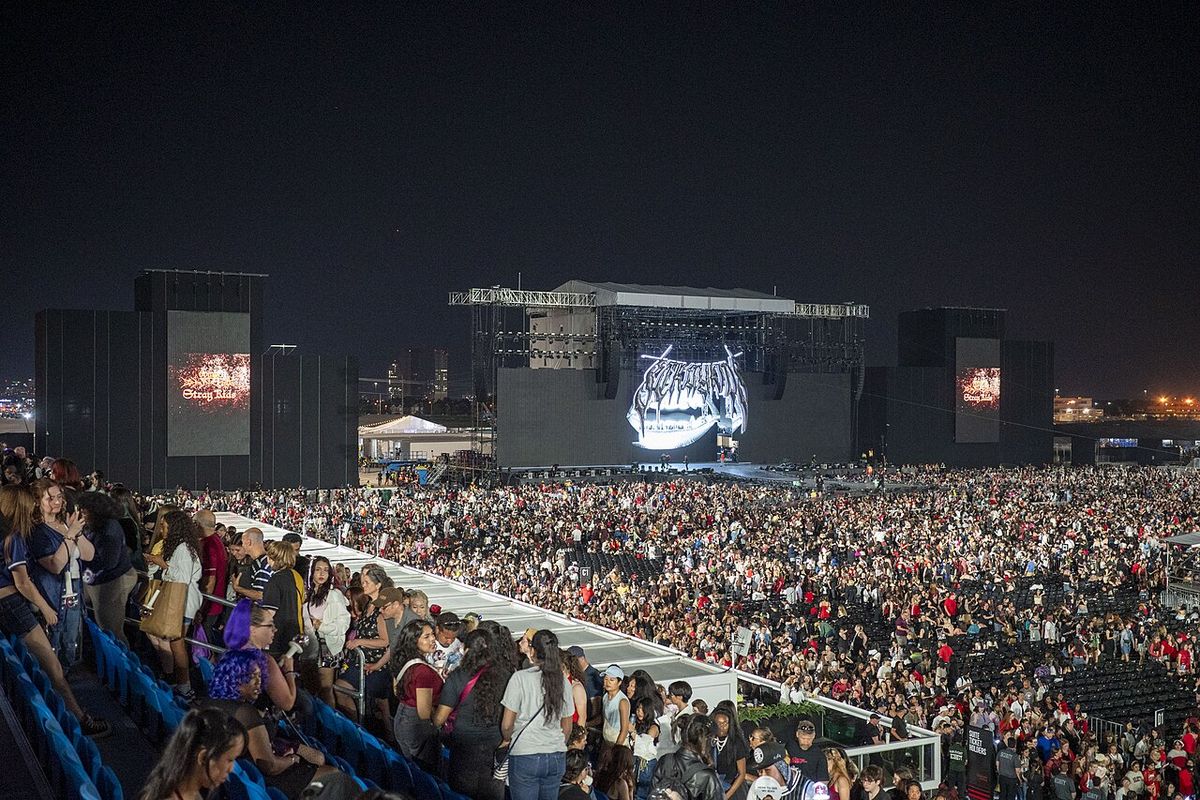
The CNE offers a dense array of entertainment across its 18-day run. A major highlight is the Canadian International Air Show, held over Lake Ontario on Labour Day weekend since 1949. The fair also features two major parades, the Warriors' Day Parade honouring military veterans on the first Saturday and the Labour Day Parade. The expansive midway is split into two areas, with a Kiddie Midway for younger children and a larger midway featuring dozens of thrill rides, roller coasters, and carnival games. A sky ride with ski-lift style chairs transports visitors across a portion of the grounds. Daily live music is a fundamental part of the event, primarily at the outdoor CNE Bandshell, which hosts nightly headliners across many genres, with additional stages and beer gardens scattered throughout the site.
Several buildings host specialized exhibits and displays. The Enercare Centre complex contains the International Pavilion, a garden show, and the SuperDogs performances. The Arts, Crafts and Hobbies Building features unique vendors and collectibles, while the Better Living Centre houses agricultural displays and the CNE Casino. The Coca-Cola Coliseum presents large-scale theatrical shows, often featuring ice skating and acrobatics, with performers like Elvis Stojko, Tessa Virtue, and Scott Moir having headlined in recent years. The fair also hosts sports tournaments, including youth baseball and fastball at Coronation Park and a 3-on-3 basketball tournament at the OVO Athletic Centre. New attractions are introduced regularly, such as the CNE Space Experience in 2026 and the Super Wheel observation Ferris wheel in 2023.
Food and Shopping
Food is a central part of the CNE experience, with options ranging from classic fair fare to international cuisine. The Food Building is the primary culinary destination, offering a vast array of vendors serving everything from fast food and desserts to novelty items like deep-fried Oreos and bacon-wrapped grilled cheese. Halal, vegetarian, and healthier choices are widely available. Since 2012, the CNE has hosted a Food Truck Frenzy rally near the Princes' Gates, featuring dozens of specialty food trucks. A Craft Beer Fest was added to this event in 2015 and continues annually. Several licensed restaurants also operate on the grounds throughout the fair.
Shopping opportunities are plentiful across the CNE. Major indoor shopping areas include the International Pavilion for global products, the Shoppers' Market, and the Warehouse Outlets in the Enercare Centre. The Queen Elizabeth Building hosts the Arts, Crafts and Hobbies exhibit, while the Gaming Garage highlights technology and inventions. Outdoors, numerous vendor booths line the streets of the fairground. These shopping venues offer everything from unique handmade crafts and collectibles to household goods and garden products, catering to a wide range of visitor interests.
Recent Developments and Challenges
The CNE faced unprecedented cancellations in 2020 and 2021 due to the COVID-19 pandemic, the first time the fair was not held since the Second World War. The 2020 cancellation alone resulted in a reported loss of over $35 million in potential revenue and an estimated $128 million in economic impact for Ontario. The fair successfully resumed in 2022 with financial support from the federal and provincial governments, which funded new programming like immersive heritage exhibits, an enhanced Gaming Garage, and nightly drone shows. Attendance rebounded strongly, with the 2023 CNE surpassing 1.6 million visitors, exceeding pre-pandemic levels.
Ongoing redevelopment of Exhibition Place presents both opportunities and challenges for the fair's future. The construction of year-round attractions like the OVO Athletic Centre, Hotel X, and the conversion of the Automotive Building has improved the financial stability of the site but has simultaneously reduced the physical space available for the CNE. In 2024, the CNE's CEO expressed concerns about the long-term viability of the fair amidst these ongoing changes to the site's footprint and usage. Despite these challenges, the CNE continues to innovate, introducing new attractions like farm experiences and thematic exhibits such as the 2026 CNE Space Experience to maintain its appeal.
Economic and Cultural Significance
The Canadian National Exhibition is a major economic driver for Toronto and Ontario. A 2017 Economic Impact Assessment reported that the CNE generates an estimated $93.1 million for the Greater Toronto Area and over $128.3 million for the province annually. The event supports the equivalent of hundreds of full-year jobs and generates millions in tax revenue for municipal, provincial, and federal governments. It attracts hundreds of thousands of out-of-town visitors each year, benefiting local hotels, restaurants, and other businesses. The fair's operations and visitor spending create a substantial ripple effect throughout the regional economy.
Culturally, the CNE holds a cherished place as an end-of-summer tradition for generations of Canadians, particularly those in the Toronto region. It reflects the city's multicultural diversity through its food, entertainment, and exhibits. As a not-for-profit organization, the CNE has historically served as a national venue for presenting agricultural advances, consumer goods, and technological innovations. From its origins as an industrial exhibition to its current status as a large-scale community festival, the CNE remains a significant collective celebration and a defining event in Ontario's cultural calendar.
Questions about Canadian National Exhibition
What are the main attractions at the CNE?
The CNE features a wide variety of attractions suitable for all ages. Key highlights include the large carnival midway with rides and games, the Canadian International Air Show over Labour Day weekend, and daily live music at the CNE Bandshell. Major buildings host exhibits like the International Pavilion, agricultural displays, and the SuperDogs show. The fair also includes parades, sports tournaments, unique food options, and shopping venues throughout the Exhibition Place grounds.
How do I get to the CNE and is there parking?
The CNE is held at Exhibition Place on Toronto's waterfront, just west of downtown. The site is accessible by car, bicycle, and public transit. The Toronto Transit Commission (TTC) provides regular service to the grounds, including streetcars and buses. There are parking lots available on site at Exhibition Place, but they can fill up quickly during peak times, so using public transit is often recommended for convenience.
What kind of food is available at the CNE?
The CNE offers an extensive range of food options. The Food Building is a major hub with vendors serving international cuisine, classic fair food, desserts, and novelty items like deep-fried treats. A Food Truck Frenzy rally near the Princes' Gates features numerous specialty food trucks. Halal, vegetarian, and healthier choices are widely available, and a Craft Beer Fest is part of the food truck event. Licensed restaurants also operate on the grounds during the fair.
Has the CNE ever been cancelled?
Yes, the CNE has been cancelled on rare occasions. It was not held from 1942 to 1946 when the Exhibition Place grounds were used by the Canadian military during the Second World War. More recently, the in-person fair was cancelled in 2020 and 2021 due to the COVID-19 pandemic. These were the first cancellations since the war, with the 2020 cancellation causing an estimated loss of over $35 million in potential revenue for the organization.
When does the CNE typically take place each year?
The Canadian National Exhibition is an annual fair that takes place at Exhibition Place in Toronto. It begins on the third or fourth Friday of August and runs up to and including Labour Day, which is the first Monday in September. The event spans 18 days each year. For example, the 2026 dates were from August 21 to September 7.
What is the history of the CNE's founding and original name?
The exhibition first took place in 1879. It was originally known as the Toronto Industrial Exhibition. The fair was established to promote agriculture and technology in Toronto and the surrounding area. It opened on September 2, 1879, and lasted for three weeks, excluding Sundays.
Sources: Wikipedia and current public reporting, checked by the Novello Desserts desk. Last updated 2026-10-22.