Cirque du Soleil
Cirque du Soleil is a Canadian entertainment company and the world's largest contemporary circus producer. Founded in Baie-Saint-Paul, Quebec, in 1984 by former street performers Guy Laliberté and Gilles Ste-Croix, it is headquartered in Montreal's Saint-Michel neighbourhood. The company revolutionized the circus arts by eliminating performing animals and emphasizing theatrical, character-driven narratives with original music. Its productions, seen by over 100 million people globally, have become a major cultural export and a point of national pride for Canada.
Origins and Foundation
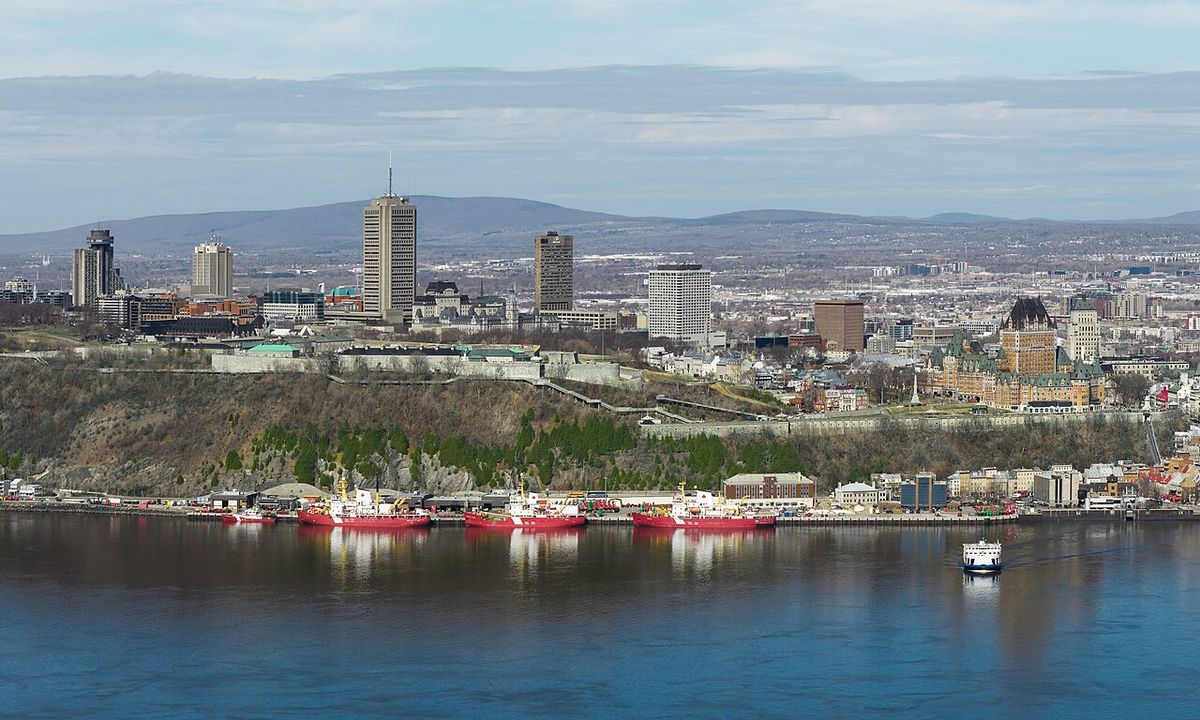
The origins of Cirque du Soleil trace back to 1979 in Baie-Saint-Paul, Quebec, where Guy Laliberté, Daniel Gauthier, and Gilles Ste-Croix organized a summer fair. As a publicity stunt to secure government funding, Ste-Croix walked 90 kilometres to Quebec City on stilts, leading to the formation of the stilt-walking troupe Les Échassiers de Baie-Saint-Paul. This troupe toured Quebec in 1980 but was a financial failure, prompting the founders to establish a nonprofit holding company to manage losses. A major opportunity came in 1983 when the Quebec government granted $1.6 million for a production to celebrate the 450th anniversary of Jacques Cartier's arrival, which resulted in the company's first official production, Le Grand Tour du Cirque du Soleil, which toured Quebec for 13 weeks in the summer of 1984. Despite challenges like a collapsed tent, the show was a financial success and established the troupe's potential. With a second year of government funding secured, Laliberté hired Guy Caron from the National Circus School as artistic director to recreate the show as a proper circus.
Caron and Laliberté reworked the performance style to tell a story, influenced by the Moscow Circus and European circuses like Cirque Arlette Gruss. This shift marked the birth of the contemporary circus or nouveau cirque model, characterized by a theatrical approach, live music, and the absence of performing animals. To further this vision, Belgian director Franco Dragone was hired to direct segments of the 1985 production, simply titled Cirque du Soleil. Early financial struggles persisted, including a $750,000 deficit from unsuccessful Ontario performances in 1985, but support from the Desjardins Group and the Quebec government allowed the company to continue. The 1986 production La Magie Continue, directed by Dragone, began to turn the company's artistic fortunes around and led to the more successful 1987 show Le Cirque Réinventé.
Breakthrough and Artistic Development
The artistic and commercial breakthrough for Cirque du Soleil came with the 1987 show Le Cirque Réinventé, which was invited to the Los Angeles Arts Festival in September 1987. Despite having funds only for a one-way trip, the company's American debut was an instant critical and financial hit, generating a profit of over $1.5 million by year's end. The show toured across Canada and the United States, making a notable appearance at New York's Battery Park in March 1988. Internal conflicts and a lukewarm reception to a revamped U.S. tour of Le Cirque Réinventé led to a deficit by the end of 1989, prompting a major creative reset. The company developed the shelved Éclipse concept into Nouvelle Expérience, which premiered in May 1990.
Directed by Dragone, Nouvelle Expérience featured a new creative team including costume designer Dominique Lemieux, set designer Michel Crête, lighting designer Luc Lafortune, choreographer Debra Brown, and composer René Dupéré. The show was a critical triumph, touring North America through 1991 and then taking a one-year residency in Las Vegas until 1993. This established a template for a series of successful touring shows created by the same core team. The success of Nouvelle Expérience in Las Vegas led to a deal with the Mirage Casino-Hotel for Cirque du Soleil's first permanent resident show, which would be called Mystère.
The productions Nouvelle Expérience, Saltimbanco, Alegría, and Quidam solidified the company's reputation and financial stability. This allowed for significant international expansion throughout the 1990s. The company's first performances outside North America occurred in London and Paris in 1990 with Le Cirque Réinventé. The company also toured Japan in 1992 with the arena show Fascination, establishing its presence in Asia.
Global Expansion and Resident Shows
Cirque du Soleil's first permanent production, Mystère, premiered at the Treasure Island Hotel and Casino on the Las Vegas Strip in December 1993. Its success paved the way for rapid global expansion and the establishment of multiple resident shows. In 1998, the company launched two more major permanent productions: O, a water-based show at the Bellagio in Las Vegas, and La Nouba at Walt Disney World in Orlando, Florida. The company's first international ventures began with Le Cirque Réinventé performing in London and Paris in 1990, though reception was mixed.
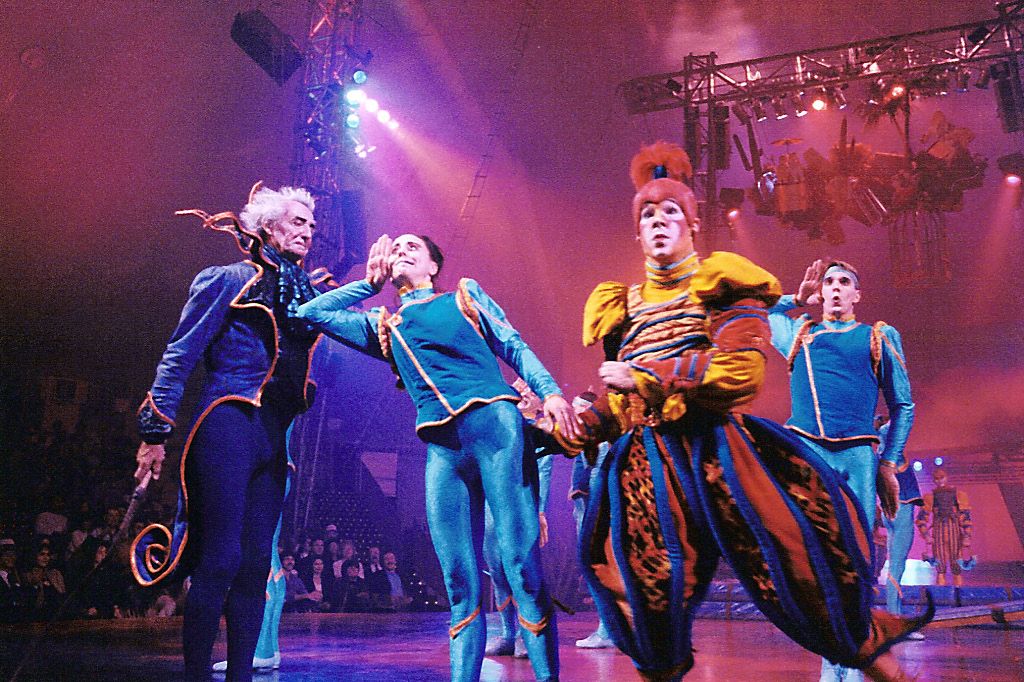
A more solid European presence was established with Saltimbanco's 1995 European tour. In Asia, the company created the arena show Fascination for a 1992 tour of Japan at the request of Fuji Television Network, combining acts from earlier shows. This successful introduction led to Saltimbanco touring Japan in 1994, cementing the company's market in the Asia-Pacific region. The period from 2000 to 2009 was marked by rapid growth and diversification of the resident show portfolio. After the original creative team departed following La Nouba, the company began producing shows with entirely new teams. Key resident productions from this era include Zumanity, an adults-only show in Las Vegas (2003), Kà at the MGM Grand (2004) directed by Robert Lepage, and collaborations like The Beatles Love in Las Vegas (2006). The company also expanded its physical footprint globally with resident shows in Macau (Zaia, 2008) and Tokyo (Zed, 2008).
Corporate Ownership and Restructuring
The ownership structure of Cirque du Soleil has evolved significantly since its founding. In 2000, founder Guy Laliberté bought out Daniel Gauthier's stake, acquiring 95% ownership of the company. To finance further expansion, Laliberté sold a 20% stake to Dubai investment groups Istithmar World and Nakheel in 2008, but bought it back following the global financial crisis. A major shift occurred on 20 April 2015, when Laliberté sold a 90% joint stake to the investment groups TPG Capital, Fosun Capital Group, and the Caisse de dépôt et placement du Québec (CDPQ) for approximately $1.5 billion, retaining a 10% share. In February 2020, Laliberté sold his remaining 10% stake to CDPQ for $75 million, ending his direct financial involvement.
Under the new ownership led by TPG, Fosun, and CDPQ, the company restructured into the Cirque du Soleil Entertainment Group and pursued a strategy of diversification and acquisition. It acquired several entertainment companies, including the Blue Man Group, VStar Entertainment Group, and The Works Entertainment Group. Internally, executive leadership was overhauled to focus on profitability, with the chief operating officer and several vice-presidents replaced within six months of the sale. Despite these efforts, the COVID-19 pandemic forced the company to declare bankruptcy in 2020. In November 2020, it was sold to a group of its creditors led by the Catalyst Capital Group, marking the end of the ownership era of TPG, Fosun, and CDPQ and beginning a new chapter for the company.
Productions and Creative Output
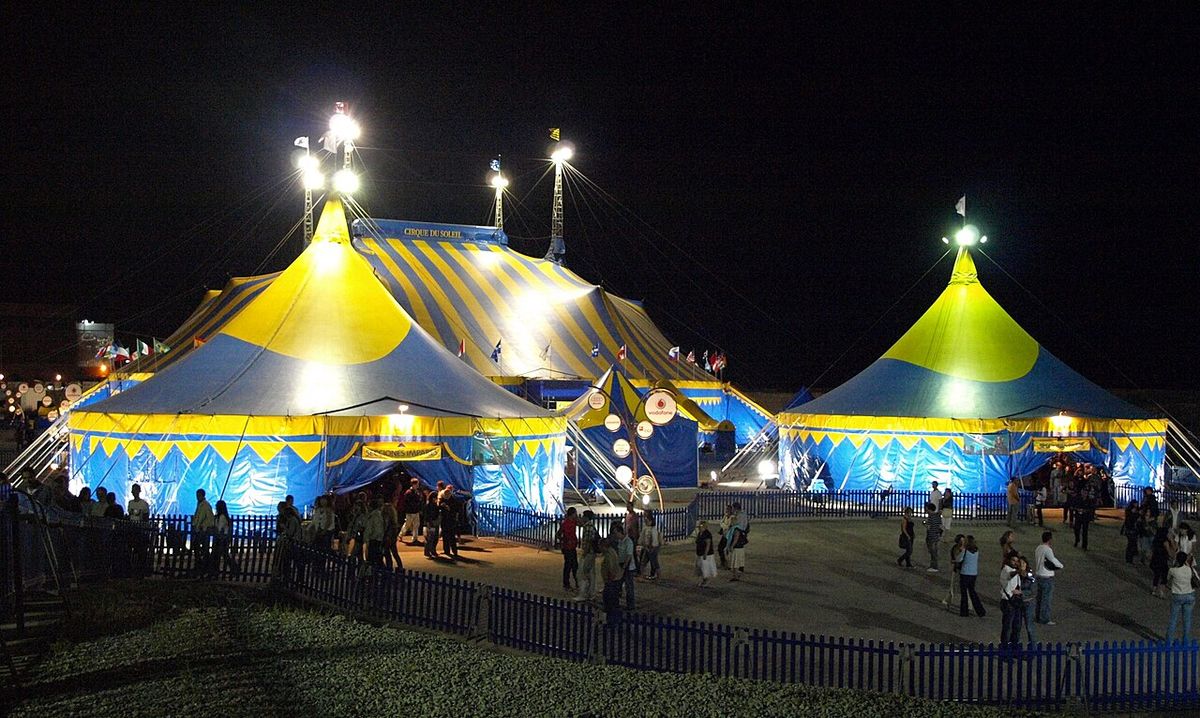
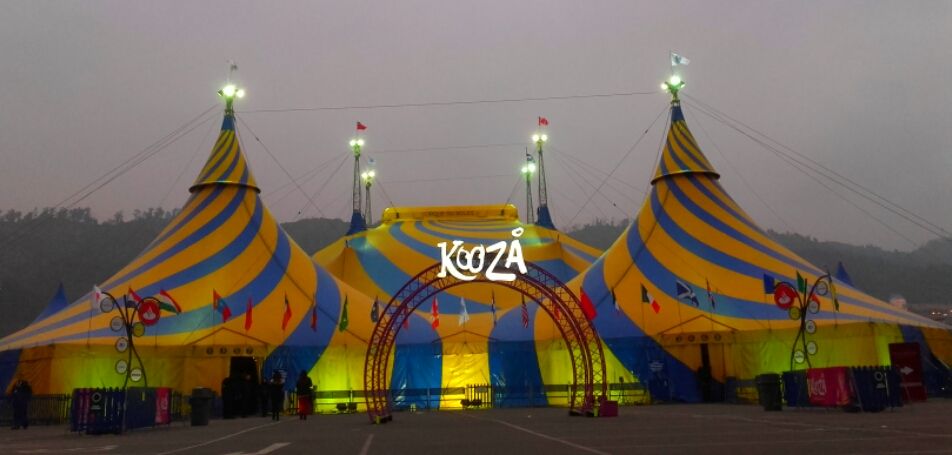
Cirque du Soleil's creative output is vast, encompassing touring tent shows, arena tours, permanent resident shows, and forays into other media. The company's shows are known for their distinct themes, original scores, and high-calibre acrobatics. Touring tent shows, which travel with their own distinctive blue-and-yellow Grand Chapiteau, have been a staple since the beginning, with productions like Alegría, Quidam, and later Kurios: Cabinet of Curiosities (2014). Arena tours, which adapt the spectacle for larger, pre-existing venues, began with Delirium in 2006 and included major productions like Michael Jackson: The Immortal World Tour (2011) and Toruk, The First Flight (2015). Resident shows are permanent installations, primarily in entertainment hubs like Las Vegas, which have hosted over ten different Cirque productions since Mystère opened in 1993.
The company has also diversified into other formats and collaborations. It produced its first film, Alegría, in 1999 and later the 3D IMAX film Journey of Man (2000). It launched a record label, Cirque du Soleil Musique, in 2004 after its agreement with BMG Canada expired. Theatrical ventures include the Broadway musical Paramour (2016) and the division Cirque du Soleil Theatrical, founded in 2014. For television, it created the preschool series Luna Petunia for Netflix (2016) and Big Top Academy for TVO (2018). The following table lists a selection of major show categories and representative productions, illustrating the breadth of its work.
| Category | Representative Shows | Notable Features |
|---|---|---|
| Touring Tent Shows | Saltimbanco, Alegría, Kurios, Luzia | Travel with custom big top, narrative-driven |
| Permanent Resident Shows | Mystère, O, Kà, The Beatles Love | Fixed location, often in casino-resorts |
| Arena Tours | Delirium, Michael Jackson: The Immortal World Tour, Toruk | Large-scale, adapted for sports arenas |
| Specialty/Theatre | Paramour (Broadway), Banana Shpeel (theatre), Crystal (ice show) | Explorations beyond traditional circus format |
This expansive and varied output solidified Cirque du Soleil's reputation for innovation. However, not all productions were successful. Shows such as Banana Shpeel were panned by critics and audiences. Other productions like Zed, Zaia, Viva Elvis, and Iris closed early due to poor ticket sales or negative reviews.
Challenges and Critical Reception
Despite its global success, Cirque du Soleil has faced significant artistic, financial, and safety challenges. The period from 2007 to 2011 saw a high output of shows, but several were critical or commercial failures, leading to a string of closures. The theatre show Banana Shpeel (2009) was panned by critics and audiences, closing in Toronto in October 2010 after cancelling a planned engagement in San Francisco. Resident shows Zaia in Macau (closed 2012), Iris in Los Angeles (closed 2012), and Viva Elvis in Las Vegas (closed 2012) all shut down due to disappointing ticket sales. The 2008 production Zed in Tokyo closed in July 2011 following the Tōhoku earthquake and tsunami. These closures, combined with the cost of rapid expansion, led the company to announce it was not profitable in 2012 despite over $1 billion in revenue.
In response, the company initiated major restructuring, laying off 400 of its 5000 employees worldwide in January 2013, most from its Montreal headquarters. It also slowed its production schedule, opening only two new shows in both 2012 and 2013. The company faced a serious tragedy on 30 June 2013, when performer Sarah Guyard-Guillot died after falling during a performance of Kà in Las Vegas, marking the first on-stage death in its history. Under the ownership of TPG, Fosun, and CDPQ after 2015, the focus shifted to profitability and acquisitions, but the ultimate challenge came with the COVID-19 pandemic. The global shutdown of live events in 2020 forced Cirque du Soleil to declare bankruptcy and cease all performances, leading to its sale to a creditor group in November 2020 and an uncertain future for its live shows.
Cultural Impact and Recognition
Cirque du Soleil has had a major impact on global entertainment, redefining the modern circus and becoming one of Canada's most recognizable cultural brands. Its model of combining circus arts with street performance, theatre, and original music created an entirely new genre. The company's success demonstrated that a Canadian creative enterprise could achieve worldwide commercial and artistic acclaim. It has employed thousands of artists and technicians from over 50 countries, making it a significant cultural exporter. The company's headquarters in Montreal has helped solidify the city's status as a world centre for circus arts, alongside institutions like the National Circus School.
The company's work has been recognized with numerous prestigious awards and honours. These accolades span various fields, reflecting the multidisciplinary nature of its productions. Its massive global audience of over 100 million people and its role in inspiring a new generation of contemporary circus companies worldwide further demonstrate its influence. The company received the National Arts Centre Award in 2000 and was inducted into Canada's Walk of Fame in 2002. It has also won seven Primetime Emmy Awards, three Drama Desk Awards, multiple Gemini Awards, and a Juno Award for its musical contributions.
- National Arts Centre Award (2000): A companion award of the Governor General's Performing Arts Awards.
- Canada's Walk of Fame (2002): The company was inducted.
- Hollywood Walk of Fame: Received a star in 2006.
- Primetime Emmy Awards: Seven awards for outstanding achievement in various technical and creative categories.
- Drama Desk Awards: Three awards for unique theatrical experience.
- Gemini Awards: Multiple Canadian television awards for specials and documentaries.
- Juno Award: Won for music recording.
The company's creations have received numerous prizes and distinctions. These include three Drama Desk Awards and seven Primetime Emmy Awards. In 2000, Cirque du Soleil was awarded the National Arts Centre Award. The company was also inducted into Canada's Walk of Fame in 2002 and received a star on the Hollywood Walk of Fame.
Questions about Cirque du Soleil
Who founded Cirque du Soleil?
Cirque du Soleil was founded by two former street performers, Guy Laliberté and Gilles Ste-Croix. They officially established the company on 16 June 1984 in Baie-Saint-Paul, Quebec. Daniel Gauthier was also a key early partner in organizing the initial summer fairs that led to the circus's creation. Laliberté served as the driving creative and business force for decades, remaining a major shareholder until he sold his final stake in 2020.
Why is Cirque du Soleil called a 'contemporary circus'?
Cirque du Soleil is considered a contemporary circus, or 'nouveau cirque,' because it departed from traditional circus formats. Its defining characteristics, established from its early productions, include the absence of performing animals and a strong emphasis on theatrical storytelling and character development. Shows feature original live music, elaborate costumes and sets, and a fusion of acrobatics, dance, and street performance. This artistic approach created a new genre that focuses on human artistry and narrative spectacle.
How many people have seen a Cirque du Soleil show?
Cirque du Soleil estimates that over 100 million people worldwide have seen its productions. The company's reach expanded dramatically from its first tour in Quebec in 1984 to performances on six continents in over 300 cities. In Las Vegas alone, several permanent Cirque du Soleil shows play to more than 9,000 people per night, accounting for approximately 5% of the city's visitors. This massive global audience confirms its status as the world's largest contemporary circus producer.
What was Cirque du Soleil's first permanent show?
Cirque du Soleil's first permanent resident show was Mystère, which premiered at the Treasure Island Hotel and Casino on the Las Vegas Strip in December 1993. Its success proved the viability of a fixed-location Cirque du Soleil production and led to a major expansion of resident shows. This included O at the Bellagio and La Nouba at Walt Disney World in 1998. The Las Vegas market became a central location for the company, hosting over ten different permanent productions over the years.
What happened to Cirque du Soleil during the COVID-19 pandemic?
The COVID-19 pandemic caused a catastrophic shutdown for Cirque du Soleil, which relies entirely on live audiences. With all shows suspended globally, the company declared bankruptcy in 2020. In November 2020, it was sold to a group of its creditors led by the Catalyst Capital Group. This sale ended the ownership era of founder Guy Laliberté and the investment groups TPG Capital, Fosun, and CDPQ, transferring control to the creditor group as part of the financial restructuring necessary for survival.
Where is Cirque du Soleil based?
Cirque du Soleil is headquartered in the inner-city area of Saint-Michel, Montreal. The company was originally founded in Baie-Saint-Paul on 16 June 1984 by former street performers Guy Laliberté and Gilles Ste-Croix. During its period of rapid growth in the 1990s, the company established its International Headquarters in Montreal's Saint-Michel neighbourhood. This location serves as the central base for its worldwide operations, which have expanded to include shows on six continents.
Sources and further reading
- Cirque du Soleil (Wikipedia)
- Shows & Tickets (cirquedusoleil.com)
Checked by the Novello Desserts desk. Last updated 2026-10-19.