Henry Hudson
Henry Hudson was an English sea explorer and navigator of the early 17th century whose voyages for Dutch and English sponsors were foundational to the European exploration and eventual colonization of parts of present-day Canada and the northeastern United States. His most significant contributions include the 1609 exploration of the river that now bears his name, establishing Dutch claims to the New Netherland colony, and his 1610 to 1611 expedition, during which he became the first European to document Hudson Strait and the vast inland sea of Hudson Bay. His mysterious disappearance following a mutiny on James Bay in 1611 remains one of the enduring mysteries of the Age of Discovery. For Canadians, Hudson's legacy is deeply geographical and historical, as the bay and strait named for him became the gateway for the Hudson's Bay Company and the fur trade that shaped the nation's development.
Early life and entry into exploration
Very little is known with certainty about Henry Hudson's life before he emerged as a ship's commander in 1607. His year of birth is estimated to be between 1560 and 1570, and he may have been born in London, possibly the son of a city alderman. By the time he first appears in historical records, he was already an experienced mariner with credentials sufficient to be entrusted with a major expedition. In 1607, the Muscovy Company of England hired him to lead the ship Hopewell on a search for a northerly passage to Asia over the top of the world, a mission based on the contemporary but flawed theory that Arctic ice would melt sufficiently in the summer months to allow passage. This commission marks the beginning of his documented career as an explorer, launching him into a series of voyages that would alternately be funded by English and Dutch commercial interests competing for new trade routes.
Arctic voyages of 1607 and 1608
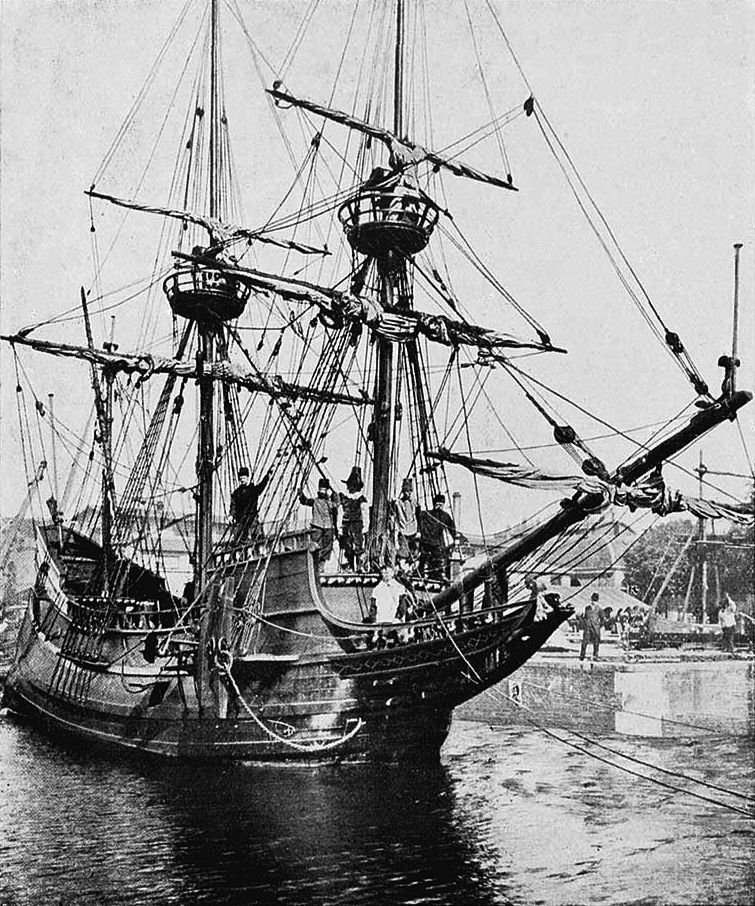
Hudson's first two expeditions were funded by English merchants and aimed at finding a Northeast Passage to Asia. The 1607 voyage aboard the 80-ton Hopewell, with a crew of ten men and a boy, saw him sail north along Greenland's east coast, naming landmarks like Young's Cape and Hold with Hope. He reached the archipelago of Spitsbergen, which he called Newland, near the mouth of Isfjorden, which he named the Great Indraught. He and his crew estimated they reached a latitude of 80°23′ N, though modern analysis suggests it was more likely 79°23′ N. Blocked by pack ice, they were forced to turn back, returning to Tilbury Hope on the River Thames on 15 September. Hudson's reports of abundant whales in the Spitsbergen waters are often cited as a catalyst for the later establishment of European whaling in the region, though this credit is contested by historians who point to reports by other explorers like Jonas Poole in 1610 and the voyages of Nicholas Woodcock and Willem Cornelisz van Muyden in 1612. In 1608, Hudson was sent again in the Hopewell to attempt a passage east around northern Russia, leaving London on 22 April. He reached Novaya Zemlya well above the Arctic Circle in July but found the ice impassable, forcing another early return to Gravesend by 26 August. An unverified claim by contemporary writer Thomas Edge suggested Hudson discovered the island of Jan Mayen in 1608, naming it Hudson's Tutches, but Hudson's own journal makes no mention of it, and later explorers like Jonas Poole in 1611 and Robert Fotherby in 1615, who had Hudson's journal, showed no knowledge of such a discovery.
The 1609 voyage and the Hudson River
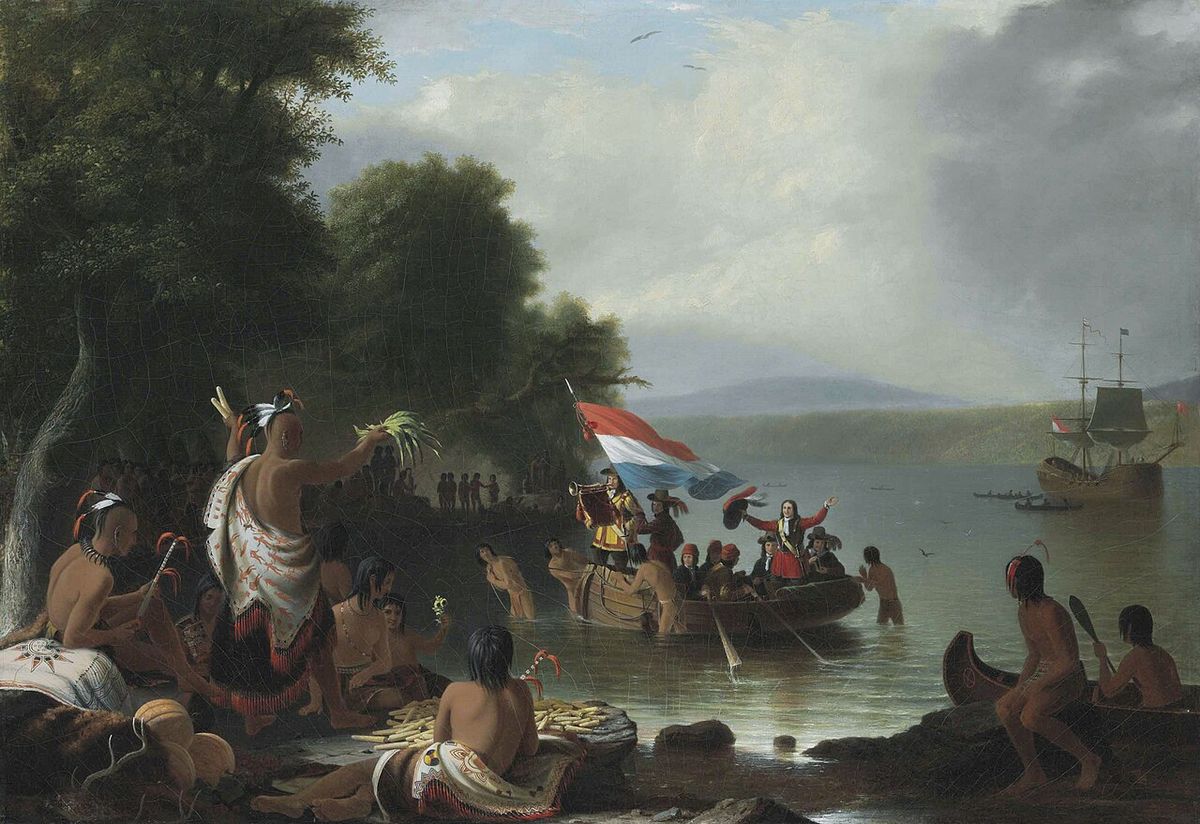
In 1609, Hudson was employed by the Dutch East India Company to find an easterly passage to Asia. Commanding the Dutch ship Halve Maen (Half Moon), he set sail from Amsterdam on 4 April but found the Arctic route north of Russia blocked by ice, as on his previous attempts. Acting outside his instructions, he then turned the ship west across the Atlantic to search for a Northwest Passage. After reaching the Grand Banks of Newfoundland on 2 July, the ship made landfall in the LaHave area of Nova Scotia in mid-July, where the crew encountered Indigenous peoples accustomed to trading with the French. The ship stayed about ten days, replacing a broken mast and fishing. On 25 July, a dozen men from the Halve Maen went ashore and assaulted a nearby village, driving the people away and seizing their boat and other property. Sailing south, Hudson reached Cape Cod on 4 August and explored the coast northward, finding Delaware Bay before continuing. On 3 September 1609, he entered the estuary of a major river, initially called the North River or Mauritius, which would later be named the Hudson River. He was not the first European to see the estuary, as Giovanni da Verrazzano had documented it in 1524, but Hudson's exploration was far more extensive. On 6 September, a crew member named John Colman was killed by natives with an arrow to the neck. Hudson sailed into Upper New York Bay on 11 September and traded with a group of 28 Lenape canoes the next day. Over ten days, he sailed up the river, trading for furs with Lenape communities and reaching a point near present-day Albany, where a ship's boat ventured to the vicinity of present-day Albany. The voyage established Dutch claims to the region and directly led to the founding of the trading post at Fort Orange (Albany) in 1614 and the colony of New Netherland, with its capital at New Amsterdam on Manhattan Island in 1625.
The final expedition and mutiny of 1610 to 1611
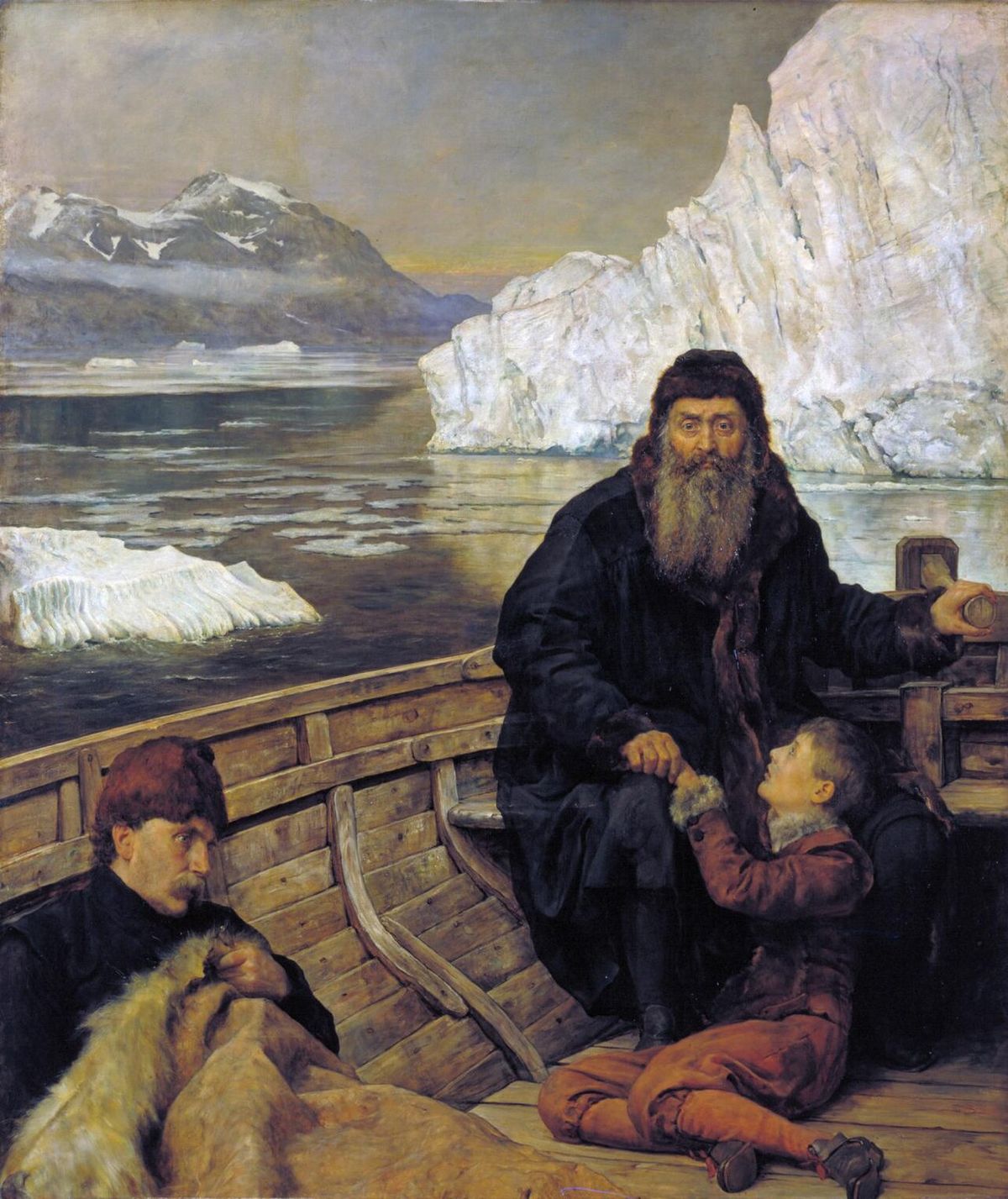
In 1610, Hudson secured backing from the Virginia Company and the British East India Company for another attempt to find the Northwest Passage, this time under the English flag. Commanding the ship Discovery, he reached Iceland on 11 May, the south of Greenland on 4 June, and rounded its southern tip. On 25 June, the explorers reached what is now the Hudson Strait at the northern tip of Labrador. Following the southern coast of the strait, the ship entered Hudson Bay on 2 August. Believing he had found the Pacific entrance, he spent months mapping the bay's eastern shores but found no passage to Asia. By November, the Discovery became trapped by ice in the southern extension known as James Bay, and the crew moved ashore for the winter. When the ice cleared in the spring of 1611, Hudson announced plans to continue exploring westward with the professed goal of finding the Passage, though one historian suggests an alternative motive may have been a search for mineral wealth. Most of the crew wanted to return home and mutinied in June. According to the journal of survivor Abacuk Pricket, the mutineers, led by Henry Greene and Robert Juet, set Hudson, his teenage son John, and seven other men adrift in a small, open shallop. Pricket's account states the castaways were provided with clothing, powder and shot, some pikes, an iron pot, food, and other items. After the mutiny, the men in the shallop used oars to try to keep up with the Discovery until the mutineers unfurled additional sails and left them behind.
Aftermath and the mystery of Hudson's fate
The fate of Henry Hudson and the men cast adrift remains one of history's great unsolved mysteries. Subsequent searches, including those by Thomas Button in 1612 and Zachariah Gillam in 1668 to 1670, found no trace of them. Only eight of the thirteen mutineers survived the return voyage to Europe. They were arrested in England but faced no punishment for the mutiny, likely because their knowledge of the new lands was considered too valuable. The primary account of the mutiny comes from Abacuk Pricket, whose journal has been questioned by historians for its potential bias, as it places blame on the deceased mutiny leaders Greene and Juet, who were friends of Hudson before the mutiny and did not survive the return. Later, in 1612, French explorer Nicolas de Vignau claimed to have seen wreckage of an English ship on the shores of James Bay, a report Samuel de Champlain discounted but which some historians now consider plausible. Intriguing but unverified clues have emerged over centuries. Charles Francis Hall, searching for the Franklin expedition in the 19th century, also collected similar Inuit stories. A 150-pound stone found near Deep River, Ontario, in the late 1950s bears carving with Hudson's initials (H. H.), the year 1612, and the word "captive," though the date of the carving has not been verified.
Geographical and historical legacy
Henry Hudson's explorations left an indelible mark on the map of North America. The Hudson River, Hudson Strait, and the vast Hudson Bay are his most prominent namesakes. Hudson Bay, an inland sea three times the size of the Baltic Sea, proved to be of monumental importance. Its many estuaries provided access deep into the continental interior, enabling the Hudson's Bay Company, chartered in 1670, to establish a lucrative fur trade network along its shores for more than two centuries. This commercial enterprise grew powerful enough to influence the history and present international boundaries of western North America. In the United States, numerous landmarks in the New York area honour him, including Hudson County, New Jersey, the Henry Hudson Bridge, the Henry Hudson Parkway, and the city of Hudson, New York. His 1609 voyage directly facilitated Dutch colonization, leading to the settlement of New Netherland and the foundation of New York City. While he did not achieve his goal of finding a passage to Asia, his voyages significantly advanced European geographical knowledge of North America's northeast coast and interior waterways and helped establish early contact and trade with Indigenous peoples.
Key voyages and ships
Henry Hudson commanded four principal expeditions between 1607 and 1611, each with distinct objectives and sponsors. His first two voyages were funded by English trading companies seeking a Northeast Passage, while his third was a Dutch venture that pivoted to North American exploration. His final and fatal expedition was again under the English flag, aimed at the Northwest Passage. The 1607 voyage aboard the Hopewell sought a passage over the North Pole for the Muscovy Company and reached Spitsbergen, where Hudson named the Great Indraught (Isfjorden) and Whales Bay (Krossfjorden and Kongsfjorden). The 1608 voyage in the same ship attempted a Northeast Passage around Russia, sailing almost 2,500 miles to reach Novaya Zemlya. The 1609 voyage in the Halve Maen, hired by the Dutch East India Company, was diverted to explore North America, resulting in the exploration of the Hudson River and trade for furs. The 1610 to 1611 expedition in the Discovery, funded by the Virginia and British East India Companies, led to the discovery of Hudson Strait and Hudson Bay and ended in mutiny on James Bay. The whaling industry that later flourished near Spitsbergen is often loosely attributed to Hudson's 1607 reports, but its establishment is more directly linked to the efforts of other mariners like Jonas Poole, Nicholas Woodcock, and Willem Cornelisz van Muyden in the years immediately following Hudson's death.
Historiography and contested accounts
The historical record of Henry Hudson's expeditions, particularly their endings, relies on a small number of primary sources that require careful interpretation. The account of the 1610 to 1611 mutiny is derived almost entirely from the journal and testimony of Abacuk Pricket, a mutineer who survived. Historians have criticized this narrative as biased, noting that Pricket and the other survivors would have been motivated to blame the mutiny on leaders like Henry Greene and Robert Juet, who died before the ship returned to England and could not defend themselves. Pricket knew the survivors could be tried for piracy, so crafting a narrative that implicated the dead was in their interest. The veracity of Hudson's alleged 1608 discovery of Jan Mayen, as claimed by Thomas Edge, is also widely disputed because Hudson's own journal is silent on the matter and later explorers with access to his notes showed no knowledge of it. These layers of testimony, bias, and later discovery mean the full story of Hudson's explorations and fate may never be completely settled.
Questions about Henry Hudson
What did Henry Hudson discover?
Henry Hudson is credited with being the first European to explore the river that now bears his name, the Hudson River, in 1609. On his final voyage in 1610 to 1611, he was the first European to document and sail through Hudson Strait and into the massive inland sea of Hudson Bay. While he was not the first European to see the estuary of the Hudson River, his detailed exploration of it and the surrounding area was foundational for Dutch claims. His earlier Arctic voyages also contributed to European knowledge of the Spitsbergen region.
What happened to Henry Hudson?
Henry Hudson disappeared in June 1611 after his crew mutinied during the winter spent trapped in James Bay, at the southern end of Hudson Bay. The mutineers, led by Henry Greene and Robert Juet according to survivor accounts, set Hudson, his teenage son John, and seven other crewmen adrift in a small, open boat with minimal supplies. They were never seen again by Europeans, and despite subsequent searches, including those by Thomas Button and Zachariah Gillam, their ultimate fate remains unknown. Later Inuit oral histories and an enigmatic carved stone have offered unverified clues.
Who sponsored Henry Hudson's voyages?
Hudson's voyages were sponsored by competing European commercial interests. His 1607 and 1608 Arctic expeditions were funded by English entities, specifically the Muscovy Company for the first and the Muscovy and East India Companies for the second. His famous 1609 voyage that explored the Hudson River was commissioned by the Dutch East India Company. His final expedition in 1610 to 1611 was backed by a combination of English sponsors, namely the Virginia Company and the British East India Company.
Why is Henry Hudson important to Canada?
Henry Hudson is important to Canada because his 1610 to 1611 expedition led to the European discovery of Hudson Strait and Hudson Bay. This immense bay, three times the size of the Baltic Sea, became the gateway for the Hudson's Bay Company, which established a fur trade empire across much of western and northern Canada. The company's activities shaped the region's economy, Indigenous relations, and political development for over two centuries. The geographical features named for him are central to Canada's map and history.
Did Henry Hudson find the Northwest Passage?
No, Henry Hudson did not find the Northwest Passage. His 1609 voyage up the Hudson River was initially hopeful but proved to be a dead end. His 1610 to 1611 expedition into Hudson Bay led him to believe he might have found the Pacific Ocean, but he soon realized it was a large inland sea with no western outlet during his mapping. He was still searching for an outlet to the west when his crew mutinied.
Are there any monuments or places named after Henry Hudson?
Yes, numerous geographical features and landmarks are named for Henry Hudson. The most significant are Hudson Bay, Hudson Strait, and the Hudson River. In the United States, Hudson County in New Jersey, the city of Hudson in New York, the Henry Hudson Bridge, and the Henry Hudson Parkway are named in his honour. These namesakes reflect the lasting impact of his explorations on the North American landscape and the colonial projects they enabled.
Sources and further reading
- Henry Hudson (Wikipedia)
- Henry Hudson Lesson Plans (heritageletter.com)
Checked by the Novello Desserts desk. Last updated 2026-10-19.