Chow and Bradford clash over property taxes, transit and affordability in first Toronto mayoral debate
Incumbent Olivia Chow defended her record on taxes and transit while challenger Brad Bradford promised a one-year tax freeze in a heated first debate ahead of October's municipal election. The Toronto Board of Trade-hosted event revealed stark policy differences on housing, congestion and fiscal management.
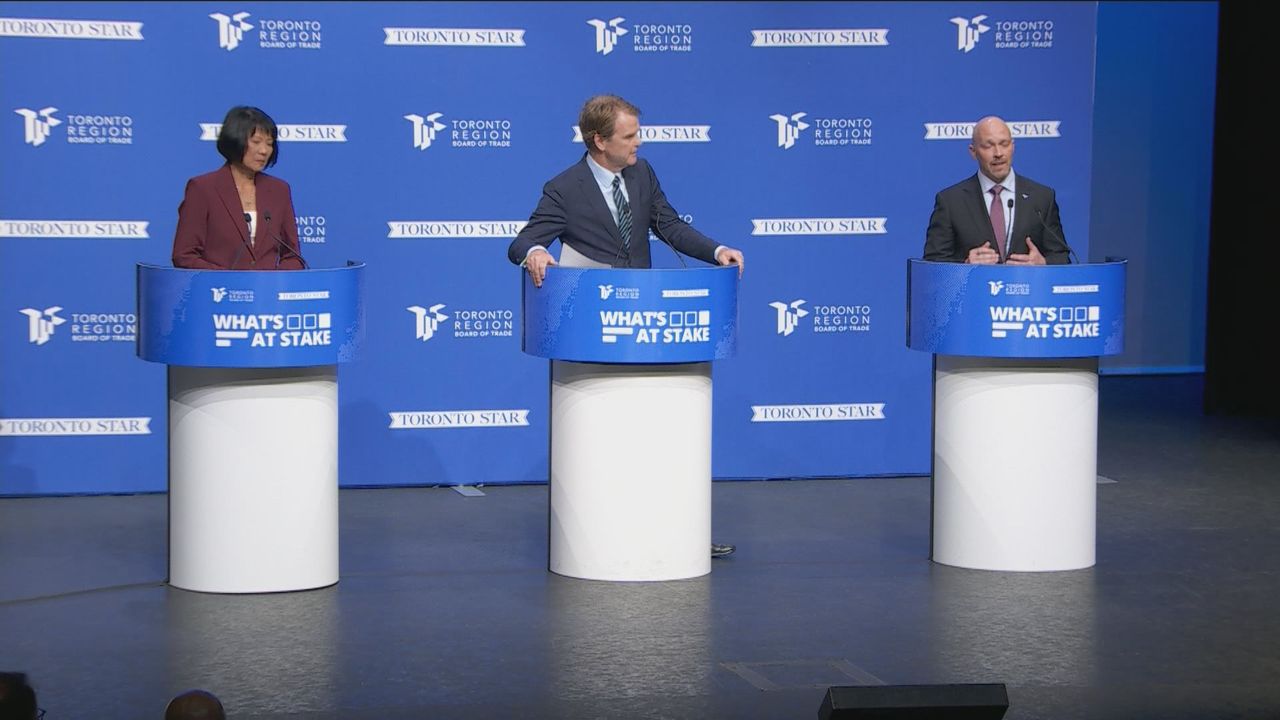
The first major debate in Toronto's mayoral election revealed deep divisions between the leading candidates on how to address the city's affordability crisis, with incumbent Olivia Chow and challenger Brad Bradford offering sharply contrasting visions for property taxes, transit funding and housing solutions. The Toronto Board of Trade-hosted event, streamed live on CityNews 24/7, featured the top three candidates including Chris Alexander and provided voters with clear policy choices less than five weeks before the October 26 municipal election.
Property tax freeze versus incremental increases
Bradford made his one-year property tax freeze proposal a centerpiece of his affordability platform during the debate's opening segment. The former city councillor and budget committee vice-chair framed the temporary freeze as essential relief for financially strained Toronto households. "Families need relief. They can't afford more of Olivia Chow's tax increases," said Bradford, who committed to conducting a comprehensive line-by-line review of the city budget during that freeze year to identify efficiencies.
Chow responded with a forceful defense of her administration's tax policies, directly linking Bradford to what she described as previous fiscal mismanagement. "You left us with a close to $2 billion deficit in your budget so we can't run away from your record," the mayor countered. She highlighted her administration's record 9.5% property tax increase in 2024 followed by a more modest 2.2% hike this year as necessary measures to stabilize city finances. Chow reiterated her campaign promise to keep future property tax increases "at or around" the rate of inflation if reelected.
Transit funding and safety concerns
The debate exposed fundamental disagreements about how to address the Toronto Transit Commission's financial challenges and service reliability issues. Chow outlined a multi-pronged approach focused on service improvements, including granting more traffic signal priority to TTC vehicles, better coordination of road closures to minimize disruptions, and her signature proposal to cap fares at 10 rides per week. She also pledged to deploy additional traffic agents to help reduce gridlock at key intersections.
Alexander challenged the financial viability of Chow's fare cap proposal given the TTC's $390 million budget shortfall. "We will never get people to come back if the service is impaired...if we are not putting revenue in it," he argued, suggesting that adequate funding must precede service improvements. Bradford shifted the focus to rider safety and reliability concerns, stating: "No one's saying they're not taking transit because it costs $3.30. They're saying they aren't taking transit because they can't rely on it, because it's not safe." His transit plan emphasized technological solutions including smart traffic light synchronization and committing to 24/7 construction schedules to minimize disruptions.
Divergent approaches to housing affordability
When pressed on cost-of-living solutions, all three candidates presented distinct visions for addressing Toronto's housing crisis. Alexander proposed an ambitious partnership with the federal government to build tens of thousands of cooperative housing units while emphasizing the need for broader economic growth. "We need to see incomes rebound in the city," he said, pointing to nearly a decade of stagnant per capita GDP growth in Toronto that has exacerbated affordability challenges.
Bradford tied his housing strategy directly to his property tax freeze pledge, arguing that reducing financial pressures on residents must accompany efforts to "create conditions to build housing." Chow highlighted her administration's existing measures including enhanced renter protections and financial incentives for developers, particularly the policy of waiving development charges for projects that include at least 20% affordable housing units.
Public safety and economic development
The debate also touched on public safety and economic competitiveness, with Bradford reiterating his campaign promise to add 1,000 police officers and install platform edge doors across the TTC system. Alexander criticized this approach during a discussion about attracting business investment to Toronto, saying, "I don't think someone who answers your question about how to pay for his expensive promises with another tax cut is going to be the guy that actually will put business into focus on it."
Chow emphasized her administration's efforts to balance public safety investments with other priorities, while Alexander argued for a more comprehensive economic revitalization strategy. "Generating interest in Toronto, bringing that business investment here, having restoring vitality in our small business creation, all of that is a huge part of this," Alexander said, framing economic growth as essential to solving affordability challenges.
The state of the race
With voting cards set to arrive in mailboxes ahead of the October 6-11 advance voting period, the latest Liaison Strategies poll shows Chow maintaining a seven-point lead over Bradford among decided and leaning voters, though her advantage has narrowed in recent weeks. The debate provided Bradford with a high-profile opportunity to contrast his fiscal approach with Chow's record and potentially gain ground among undecided voters.
Broader implications for Toronto
The debate crystallized the fundamental choice facing Toronto voters between continuity and change. Chow's defense of tax increases as necessary investments in city services and infrastructure contrasts sharply with Bradford's promise of temporary relief through a freeze. Their differing approaches to transit funding reveal deeper philosophical divides about whether to prioritize revenue generation or service improvements first. On housing, all three candidates acknowledged the severity of the crisis but proposed markedly different solutions that reflect their broader governing philosophies.
With affordability concerns dominating the election landscape, the candidates' ability to articulate credible, financially sustainable plans for housing, transit and taxation may prove decisive in a city where the cost of living has become prohibitive for many residents. The narrowing polls suggest this race remains highly competitive as voters begin to focus on their October decision, with future debates likely to further clarify the policy differences between the leading candidates.