Edmonton infill debate escalates as residents, developers clash over zoning changes
Edmonton's infill development policies face provincial scrutiny as homeowners use restrictive covenants and direct property purchases to limit multi-unit projects in established neighbourhoods.
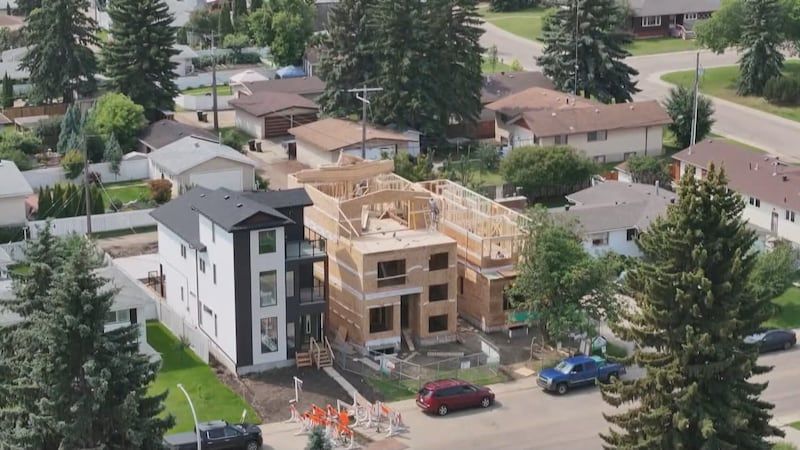
Neighbourhood tensions rise over infill developments
Edmonton's approach to infill housing has become increasingly contentious, with residents in established neighbourhoods taking extraordinary measures to block multi-unit developments. The city's 2023 zoning bylaw changes, which allow for more dense housing options across all residential areas, have sparked resistance from homeowners concerned about neighbourhood character and property values.
Real estate agent and developer Terry Paranych describes a growing divide: "We care about the community, so I reached out to this particular developer and we had discussion. After some debate, he agreed to sell it to me." Paranych has intervened in about half a dozen cases in less than a year, purchasing properties slated for multi-unit development to instead build single-family homes.
Restrictive covenants emerge as legal tool
Some Edmonton homeowners are turning to restrictive covenants - legally binding agreements that limit how properties can be developed. These covenants have been used for over a century in the city, most notably in upscale neighbourhoods like Glenora, where the Carruthers Caveat established exclusive single-family home requirements in the 1910s.
Earlier this summer, hundreds of homeowners in Duggan and Rideau Park signed 20-year covenants that set development constraints including height limits, unit caps, and parking requirements. While not banning infill outright, these measures aim to preserve the low-density character of neighbourhoods built between the 1960s and 1980s.
Developer advocates for community consultation
Paranych, who has specialized in single-family infill projects for two decades, stresses the importance of community engagement. "We talk to the neighbours, we talk to the community, we get involved and we want their input on what we're going to be, ultimately, building on their streets," he said. "That collaboration process is really important."
The developer contrasts his approach with what he describes as predatory practices by some builders: "There's just no consultation, and they just put them up - and that's why the communities are clearly upset." Paranych argues that poor-quality, high-density developments can significantly impact neighbouring property values.
Provincial government considers intervention
The infill debate has reached provincial leadership, with Premier Danielle Smith revealing that Municipal Affairs Minister Dan Williams is reviewing concerns about Edmonton's citywide rezoning. On her radio program, Smith acknowledged resident complaints: "Hey, this doesn't make sense to build these massive units in our neighbourhood."
The Premier described situations where multiple adjacent lots are being converted from single homes to townhouse complexes, effectively creating "massive apartment building complexes" in traditionally low-density areas. Smith stated the issue is "very much on our radar" and hinted at potential provincial guidance.
City defends local zoning authority
Edmonton Mayor Andrew Knack has pushed back against provincial involvement, asserting that "Land use is a local decision and it should always be a local decision." The mayor pointed to city efforts to balance resident concerns with the need for more housing options, stating they've "taken action on some of the specific concerns people have raised."
Knack emphasized the broader affordability crisis facing Canadian cities: "Even in Edmonton, where we are the most affordable major city in Canada, it's still a challenge." The city's zoning changes align with federal and provincial goals to accelerate housing construction, including a $175 million federal Housing Accelerator commitment for Edmonton.
The competing visions for urban growth
Proponents of densification argue that multi-unit infill provides necessary housing without contributing to urban sprawl. They view established neighbourhoods as underutilized assets that can accommodate population growth while preserving green spaces and agricultural land on the city's periphery.
Opponents counter that rapid, high-density redevelopment disrupts community character and infrastructure not designed for increased populations. Paranych articulates this perspective: "Could you imagine buying a home, moving into a neighbourhood to become a fabric of that community, and then something on either side goes next to you and you lose $400,000 or $500,000 in value of your home?"
Why this debate matters
The Edmonton infill controversy reflects a fundamental tension in urban planning: how to accommodate growth while preserving community identity. As Canadian cities face housing shortages, these conflicts will likely intensify, testing the balance between individual property rights and collective urban development goals.
The situation also raises questions about municipal autonomy, as provincial governments increasingly scrutinize local zoning decisions. The outcome of Edmonton's infill debate could set precedents for how Canadian cities manage the competing priorities of housing supply, affordability, and neighbourhood preservation in coming years.