Sangiovese grape key to Cecchi family's Italian wine success
The family winery attributes its range of distinctive wines to the versatile sangiovese grape, which makes up 95 per cent of its reds.
Andrea Cecchi, who manages his family’s estates in Tuscany and Umbria, attributes their success to the sangiovese grape.
Representing 95 per cent of the family’s red wine varieties, it enables them to produce a range of distinctive wines at various price points.
“Sangiovese is a chameleon,” says Cecchi, the fourth generation of his family to make wine since his great-grandfather started the business in 1893.
READ MORE: Ontario grocers with beer licenses face wine kiosk restriction
READ MORE: St. Catharines restaurant owner cooks 200 pancakes weekly for school children
“It changes from one place to another. The soil helps determine the style and the structure of the wine, the different expositions in the vineyard affect the ripeness of the grapes.”
Cecchi’s father moved production to Castellina in Chianti, near Siena, in the 1960s.
In the 1960s and 70s, winemakers favoured sangiovese clones that would produce the most grapes. Over time, the preference has shifted from quantity to quality.
More than 100 clones of sangiovese have been registered since the 1990s, Cecchi explains.
He says he continues to look for ways to improve quality and sustainability of the vineyards, with an increasing eye on researching how sangiovese can adapt to a changing climate.
The family’s most recent acquisition was a six-hectare property in Montalcino, where sangiovese is used to produce Brunello and Rosso di Montalcino wines, purchased in 2018.
“We bought in Montalcino rather than Bolgheri because I know sangiovese better than the Bordeaux grape varieties,” Cecchi says, referring to another celebrated wine-growing region on the Tuscan coast.
The family continues to explore how different sangiovese clones and rootstock combinations affect the quality of the wine as well as which are best to handle warm and dry conditions.
The grape harvest is happening earlier in Tuscany and Umbria, he says, and weather patterns have become more unpredictable.
“Sometimes we have difficult, dry seasons so we need to have a more vigorous rootstock,” he says.
When it comes to winemaking, it took time to figure out how to preserve sangiovese’s unique character. Today, the goal is to produce wines with approachable and authentic sangiovese character.
“We needed to get creative and try new approaches,” Cecchi says.
Recommended wines
Two different expressions of sangiovese from Cecchi are recommended this week, alongside two other notable Italian wines to enjoy now.
Cecchi Chianti is an unoaked blend of sangiovese, canaiolo and colorino that offers appealing juicy black cherry and tart red fruit flavours.
Its straightforward style and mouthwatering finish make it a terrific red wine to enjoy with a meal.
This has 13 per cent alcohol by volume and 5 grams a litre residual sugar. Drink now.
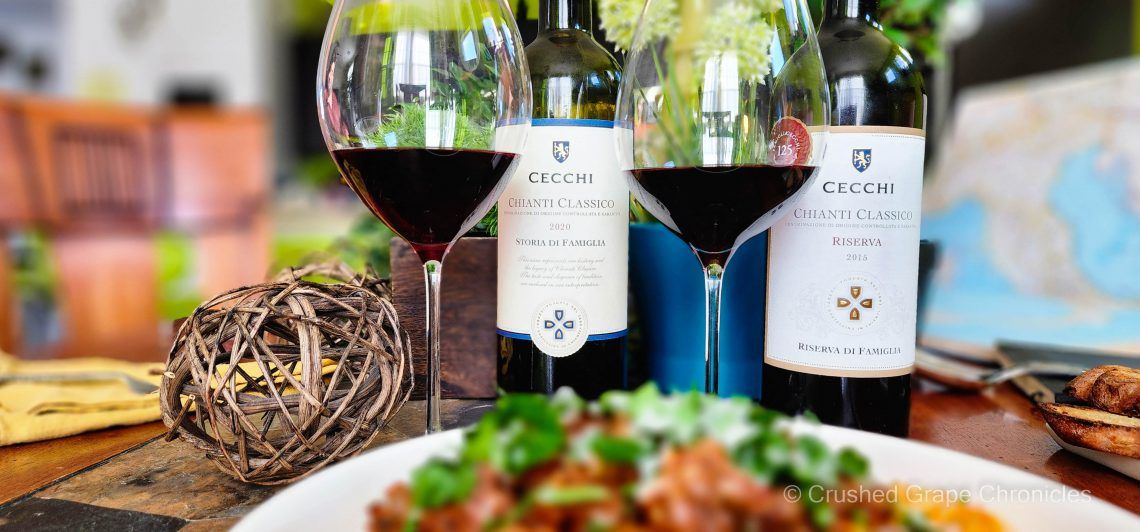
Cecchi Storia Di Famiglia Chianti Classico 2021 offers a ripe and elegant core of red fruit flavours with mushroom, tea leaves and walnut notes.
The dry and savoury style is rounded by plush texture and persistent length.
This has 13.5 per cent ABV and 3 g/litre r.s. Drink now to 2032.
Labrusca Lini 910 Lambrusco Rosso Secco is dry and savoury, with a pleasing mix of cherry and berry flavours and a gentle tug of tannins on the finish.
This has 10.5 per cent ABV and 11 g/litre r.s. Drink now.
Lungarotti Rubesco Rosso di Torgiano 2022, a sangiovese-based wine from Umbria, offers bold cherry and raspberry notes, which gain structure from its chalky texture and gripping tannins.
This has 14 per cent ABV and 3 g/litre r.s. Drink now to 2032.
With files from The Globe and Mail
Renée Bouchard writes about food, restaurants and grocery prices across Canada for Novello Desserts.