New species of 'nightmarish' sea spiders discovered in B.C.'s Salish Sea
UBC researchers have identified two new species of marine arthropods, the first sea spider discoveries in the region in nearly 100 years, featuring unique adaptations and evolutionary significance.
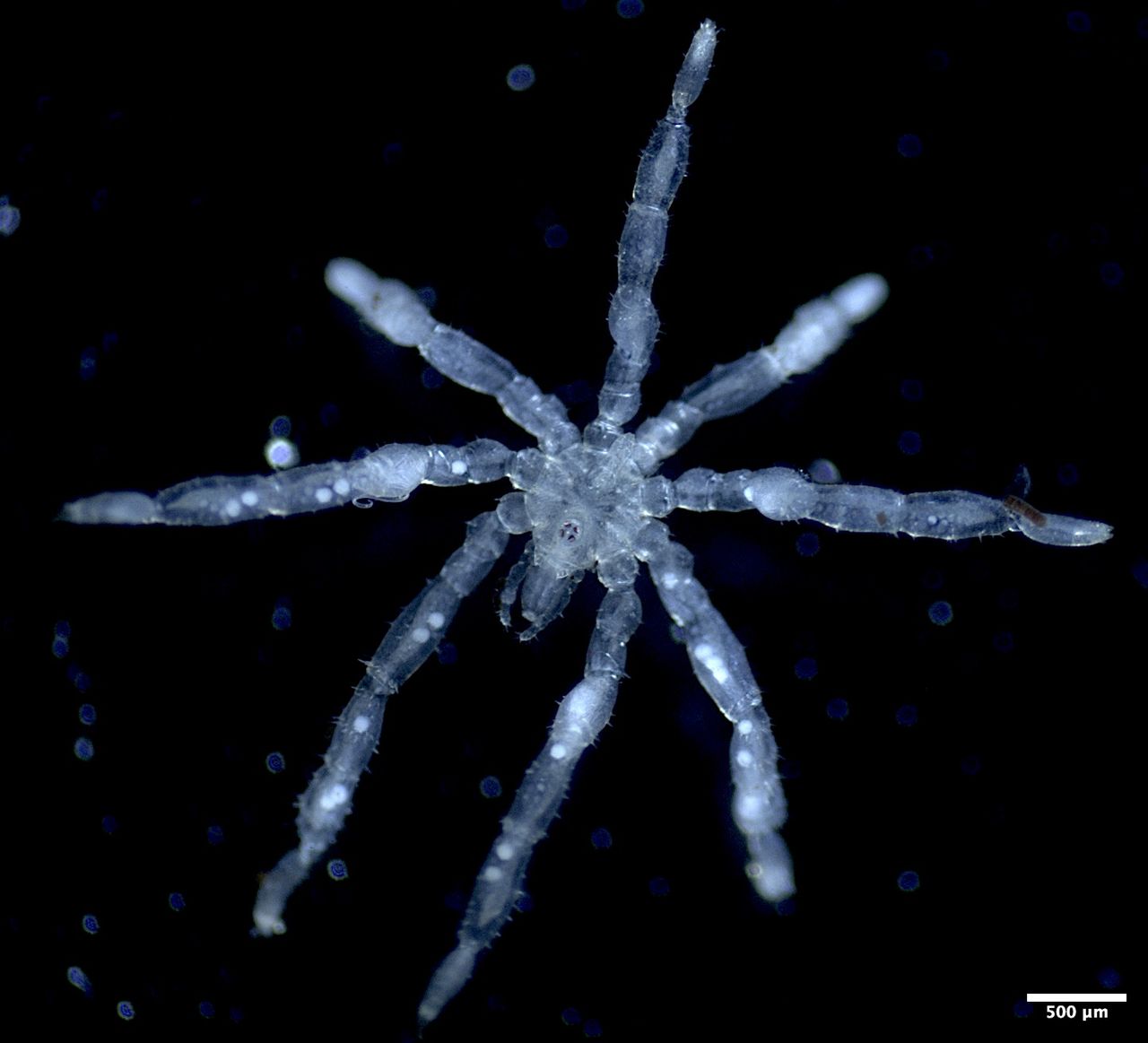
Researchers from the University of British Columbia have made a significant breakthrough in marine biology with the discovery of two previously undocumented species of sea spiders in the Salish Sea. These findings represent the first new sea spider species identified in these waters since the 1930s, ending a nearly century-long gap in documentation of these marine creatures. The research team conducted extensive fieldwork over a year-long period from September 2023 to August 2024, collecting specimens across multiple coastal sites including Vancouver, Quadra Island, Bamfield, and Victoria.
Nightmarish marine creatures
The university's description of these organisms captures their almost mythical appearance.
"If you're swimming in the Salish Sea late at night and feel a skittering along your calves, tiny hairy feet tip-tapping their way higher and higher towards your face, don't worry, it's probably just the stuff of nightmares: hairy-legged, red-eyed sea spiders newly discovered by UBC researchers,"reads their official announcement. Lead researcher Cormac Toler-Scott, a zoologist specializing in marine arthropods, emphasizes the rarity of these findings, noting their significance as the first sea spider species discovered in the Salish Sea in approximately a century.
Detailed anatomy of new species
The first species, Callipallene pilosuspedes, displays remarkable physical characteristics that inspired its scientific name. The term pilosuspedes directly translates to "hairy feet" in Latin, describing the long, curved spines that densely cover its lower legs. UBC researchers documented additional distinctive features including its bright red eyes and specialized feeding apparatus. The creature possesses a short proboscis equipped with claws for grasping food before biting, combined with a triangular mouth featuring three lips surrounded by sensory tendrils. Researchers humorously compared this complex mouth structure to "a tiny marine Sarlacc pit," referencing the fictional creature from Star Wars known for its elaborate feeding mechanism. This species also demonstrates sophisticated self-care behaviors through specialized grooming appendages.
Cultural connections and ecological roles
The second newly discovered species, Tanystylum kiixin (pronounced "kee-hin"), carries particular cultural significance through its naming. Researchers intentionally honored the ancient Indigenous village located near its discovery site. Unlike its hairy-legged counterpart, Tanystylum kiixin presents different survival challenges due to its small limbs that limit grooming capabilities. This physical constraint results in the creature often appearing covered in marine debris and tiny parasites. Toler-Scott poetically describes this phenomenon as creating
"an ecosystem within an ecosystem within an ecosystem,"highlighting how these minute organisms support complex microhabitats through their very existence.
Evolutionary history and biology
Sea spiders represent one of Earth's most ancient marine lineages, with evolutionary origins tracing back approximately 500 million years. While they share distant ancestry with terrestrial arthropods like scorpions, spiders and horseshoe crabs, sea spiders have developed unique adaptations for marine environments. These creatures exhibit extraordinary size variation across species, ranging from less than one centimeter to over 70 centimeters in length, typically featuring up to twelve legs. Their specialized feeding mechanism involves a proboscis used for parasitic behavior.
"They've retained some weird traits,"explains Toler-Scott.
"A lot of the shallow water species are quite small, and so they'll live as parasites on larger organisms, sucking the juices out of their host."This parasitic lifestyle demonstrates the complex ecological relationships these ancient creatures have developed.
Research methodology and future implications
The discovery process involved systematic specimen collection across multiple locations in British Columbia's coastal waters during the 2023-2024 research period. Following careful analysis and documentation, both species have been formally registered in global biodiversity databases, making them officially recognized additions to scientific knowledge. However, Toler-Scott believes this represents just the beginning of potential discoveries in the region.
"I only had one field season but there's definitely more diversity out there that we haven't documented,"he states, suggesting future research expeditions may reveal additional unknown species inhabiting these waters.
Conservation and scientific importance
These discoveries carry significant implications for marine conservation efforts in the Salish Sea ecosystem. The identification of new species in relatively accessible coastal waters serves as a powerful reminder of how much remains unknown about marine biodiversity, even in areas near human populations. As organisms with a 500-million-year evolutionary history, sea spiders provide scientists with valuable insights into marine adaptation and survival strategies. Their parasitic behaviors and unique physical adaptations offer new opportunities to study complex marine food webs and symbiotic relationships. The naming of Tanystylum kiixin also demonstrates the growing recognition of Indigenous knowledge systems in scientific research, creating meaningful connections between traditional ecological understanding and modern marine biology.
Future research directions
The UBC team's findings highlight the ongoing need for marine biodiversity studies in Canadian waters, particularly as climate change and human activity continue to alter marine environments. Documenting species diversity becomes increasingly urgent as ecosystems face mounting pressures. These sea spider discoveries not only expand scientific understanding of marine arthropods but also underscore the vast unknowns still present in our oceans. The research serves as a compelling case for continued exploration of even well-traveled coastal regions like the Salish Sea, where new species continue to surprise scientists nearly a century after the last similar discovery.