Pain au chocolat
Pain au chocolat is a classic French viennoiserie pastry consisting of a rectangular piece of laminated, yeast-leavened dough wrapped around one or two batons of dark chocolate. Known in parts of Canada, particularly Quebec, as a chocolatine, it is distinguished from the crescent-shaped croissant by its form and chocolate filling. The pastry is celebrated for its flaky, buttery layers that contrast with a rich, melting chocolate interior, making it a popular breakfast and snack item in bakeries and cafés across the country. Its preparation involves a meticulous process of folding and chilling dough to create its signature texture, a technique that has been both preserved by artisans and adapted for home bakers.
Etymology and Regional Names
The name for this chocolate-filled pastry varies significantly across the French-speaking world and beyond, reflecting regional linguistic traditions. In France, the term pain au chocolat is predominant in central and southern regions, including Paris, while chocolatine is used in the southwest, specifically in Nouvelle-Aquitaine and Occitanie. This regional distinction extends to Canada, where chocolatine is the common term in Quebec, aligning with its historical linguistic ties to southwestern France. In many other francophone areas of Canada outside Quebec, the pastry is often called a croissant au chocolat. In Belgium, the terms couque au chocolat, chocoladekoek, or chocoladebroodje are used, particularly in the Flanders region. English-speaking countries, including parts of English Canada and the United States, frequently use the name chocolate croissant, though this can cause confusion as it references a different shape. Other international names include chocoladebroodje in the Netherlands, napolitanas in Portugal and Spain, and chocolatines in Mexico.
Composition and Characteristics
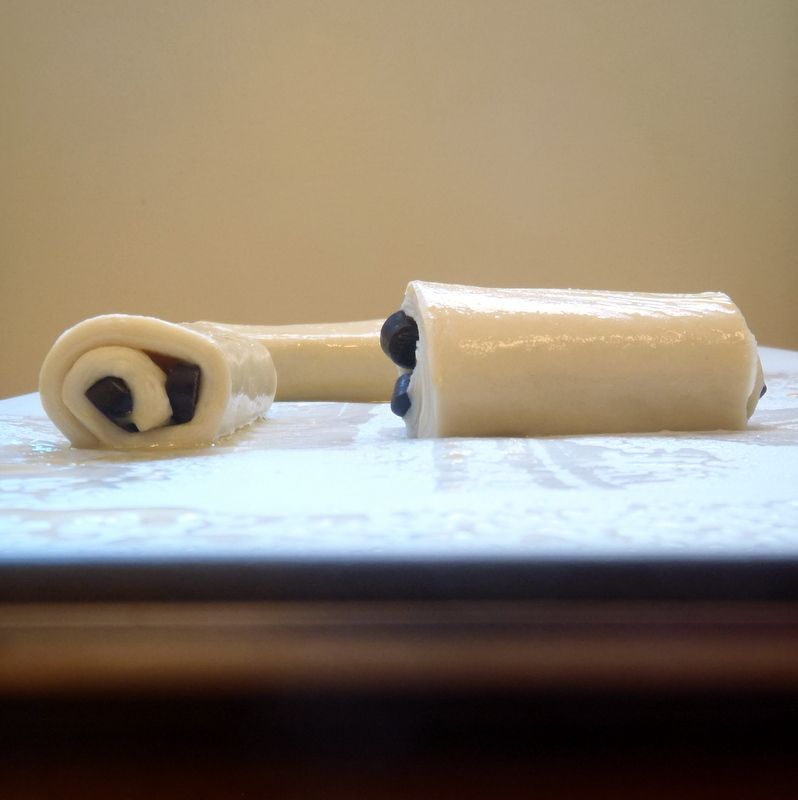
Pain au chocolat is defined by its specific ingredients and structure, which combine to create its unique eating experience. The foundation is a viennoiserie dough, identical to that used for croissants, which is a yeast-leavened laminated dough. Lamination involves repeatedly folding butter into the dough to create hundreds of alternating layers, which puff and separate during baking to produce a flaky, tender, and buttery texture. The filling traditionally consists of one or two batons, or sticks, of dark chocolate, which are enveloped by the dough before baking. The chocolate is typically of a high quality with a slight bite to its texture, melting into a rich core within the hot, crisp pastry. The finished pastry is cuboid or rectangular in shape, a key visual differentiator from the crescent-shaped croissant. It is often sold warm from the oven in bakeries, a state that maximizes the contrast between the crispy, golden exterior and the soft, molten chocolate interior.
Historical Development
The history of pain au chocolat is intertwined with the broader introduction of Viennese baking techniques to France in the 19th century. While chocolate arrived in Europe in the 17th century, the specific pastry known today likely emerged later. This establishment introduced French patrons to new styles of baked goods, including the precursor to the croissant. The innovation of enclosing chocolate within this laminated dough is a subsequent development, with some apocryphal stories suggesting a British request for chocolate in bread as early as the 15th century. The term croissant entered the French dictionary in 1863, and the pain au chocolat, as a distinct item, evolved from this culinary tradition. Its creation represents a fusion of Austrian pastry technique with the French appreciation for chocolate, solidifying its place as a staple of the French pâtisserie repertoire.
Preparation and Technique
Creating traditional pain au chocolat is a labour-intensive process that requires precision and patience, often spanning more than a day from start to finish. The process begins with making a yeasted dough from flour, water, sugar, salt, yeast, and a small amount of butter, which is kneaded briefly and allowed to rise for about an hour. The dough is then refrigerated for an extended period, typically 8 to 16 hours or overnight, to develop flavour and firm up. A separate block of butter is prepared by pounding and rolling it into a square slab. This butter block is then enclosed within the rolled-out dough using a technique where the dough corners are folded over the butter like an envelope. The dough then undergoes a series of rolls and folds, known as turns, to create the laminated layers. Common folds include the letter fold, where the dough is folded in thirds, and the book fold, which involves folding the edges to the centre and then closing it like a book. After each series of folds, the dough must be chilled again to keep the butter firm. Once laminated, the dough is rolled out, cut into rectangles, and a baton of dark chocolate is placed at one end of each piece before being rolled into a tight cylinder. For a variation with deeper flavour, some recipes substitute a portion of the all-purpose flour with rye flour.
Key stages in the traditional preparation process include mixing and initial rise of the yeasted dough, chilling the dough for 8-16 hours for flavour development, and preparing and encasing the butter block to begin lamination. The process continues with performing a series of letter and book folds with chilling intervals, final shaping by rolling dough rectangles around chocolate batons, and finally proofing, egg washing, and baking at high heat. Simplified recipes for home bakers have also gained popularity, which forgo the traditional lamination process for a quicker, more accessible rolling method. These versions use a dough with butter integrated in a simpler way, still aiming to achieve a flaky, layered texture without the complexity of creating a separate butter block and performing multiple folds. These adaptations have made the pastry more approachable for everyday baking, as evidenced by recipes earning accolades like the 2026 Recipe of the Year for a simplified version.
The traditional method for making pain au chocolat involves a lengthy process that contributes to its long total preparation time. The dough, a yeast-leavened laminated viennoiserie dough, must be prepared and allowed to rise for about an hour. After its initial rise, the dough is refrigerated for 8 to 16 hours, often overnight. The process then involves rolling butter into the dough, performing multiple folds, and chilling the dough again for at least 8 more hours before it is finally shaped, filled with chocolate, allowed to rise again, and baked.
- Mix dough ingredients and allow an initial rise of about one hour at room temperature.
- Refrigerate the covered dough for 8 to 16 hours, often overnight.
- Prepare a butter block by pounding and rolling sticks of butter into an 8-inch square.
- Encase the butter in the dough and perform a series of folds, including a letter fold and a book fold, with chilling intervals.
- After final chilling, roll dough to a generous 8 x 24-inch rectangle and cut into eight 4 x 6-inch pieces.
- Place one or two chocolate batons on each piece, roll into a tube, and place seam-side down on a baking sheet.
- Proof the shaped pastries for about one hour until puffy, then brush with egg wash.
- Bake in a preheated 425°F oven for 18 to 20 minutes until golden brown.
Cultural Significance and Consumption
Pain au chocolat holds a cherished place as a common breakfast pastry and afternoon snack in France and in many countries influenced by French culinary culture, including Canada. In France, it is a classic item found in every boulangerie, often purchased by children on their way to school. Its popularity has spread globally, and it is now commonly sold in bakeries, supermarkets, and cafés across Europe, North America, and beyond. In Canada, its presence reflects the nation's francophone heritage, particularly in Quebec where it is a bakery staple under the name chocolatine. The pastry is frequently enjoyed alongside coffee or hot chocolate and is a symbol of simple, indulgent pleasure. Competitions and awards, such as the Savor Awards in Paris which named the best pain au chocolat in the city in 2026, highlight its ongoing cultural relevance and the high standards applied to its craftsmanship. The pastry's appeal lies in its perfect balance of textures and flavours, making it a universally recognisable and beloved treat. Countries and regions where pain au chocolat is a common bakery item include a diverse international list, demonstrating its widespread appeal.
- France, where it is a boulangerie staple.
- Quebec, Canada, where it is known as chocolatine.
- Belgium, sold as couque au chocolat or chocoladebroodje.
- The Netherlands, known as chocoladebroodje.
- Portugal and Spain, sold as napolitanas.
- Germany, often called Schokocroissant.
- The United Kingdom, commonly available in bakeries.
- The United States and English Canada, frequently labelled chocolate croissant.
Comparison with Similar Pastries
While often grouped with other breakfast pastries, pain au chocolat has distinct characteristics that set it apart. Its most frequent point of comparison is the croissant, with which it shares an identical dough but differs fundamentally in shape and filling. The croissant is crescent-shaped and typically unfilled or filled with almond cream, whereas pain au chocolat is rectangular and defined by its chocolate core. Another common comparison is with Danish pastries, which originate from Denmark. Danish dough is also laminated but is often sweeter and enriched with eggs, and it supports a wide variety of fillings like fruit, custard, or cheese, presented in numerous shapes. Pain au chocolat, in contrast, is defined by its specific rectangular form and singular focus on dark chocolate. The table below outlines the primary differences between these related viennoiserie items.
| Pastry | Origin | Dough Type | Characteristic Shape | Primary Filling |
|---|---|---|---|---|
| Pain au Chocolat | France | Yeast-leavened laminated dough | Rectangular / Cuboid | Dark chocolate batons |
| Croissant | France (via Austria) | Yeast-leavened laminated dough | Crescent | Typically plain or almond |
| Danish Pastry | Denmark | Enriched, laminated dough (often with egg) | Various (pockets, swirls, etc.) | Fruit, custard, cheese, etc. |
Understanding the distinctions between pain au chocolat and similar pastries helps appreciate its unique place. It is made from the same laminated viennoiserie dough as a croissant but differs in its rectangular shape and chocolate filling. It is not to be confused with a Danish pastry, which originates from Denmark and features a variety of different fillings. Pain au chocolat is valued for its specific and consistent form, which consists of a cuboid-shaped piece of dough with one or two pieces of dark chocolate in the center.
Modern Variations and Trends
Contemporary baking continues to evolve the pain au chocolat, with innovations focusing on accessibility, ingredient quality, and dietary considerations. The development of simplified recipes that eliminate the traditional lamination process has made the pastry a feasible project for home bakers, as seen in recipes designated as easy or beginner-friendly. There is also a growing emphasis on using high-quality, sustainable ingredients, including specialty butters and ethically sourced dark chocolate, to enhance flavour and meet consumer expectations. Some modern variations experiment with the filling, incorporating different types of chocolate, such as milk or white chocolate, or adding elements like nuts or flavoured creams, though the classic dark chocolate version remains the benchmark. The pastry industry also sees trends toward understanding and optimizing production, from small artisan bakeries to large-scale operations, ensuring consistency and quality. The recognition of specific recipes, such as one being named the 2026 Recipe of the Year, shows the ongoing innovation and popularity of this classic treat in a modern culinary context.
Questions about Pain au chocolat
What is the difference between a pain au chocolat and a croissant?
Pain au chocolat and croissants are made from the same laminated, buttery viennoiserie dough. The key differences are in shape and filling. A croissant is shaped into a distinctive crescent and is typically eaten plain or with an almond filling. A pain au chocolat is rectangular in shape and always contains one or two batons of dark chocolate rolled inside the dough before baking.
How long does it take to make pain au chocolat from scratch?
Making traditional pain au chocolat from scratch is a lengthy process due to the required resting and chilling times for the laminated dough. A typical recipe involves an initial dough rise of about an hour, followed by refrigeration for 8 to 16 hours. After laminating the dough with butter, it must chill again for at least 8 hours. The final shaping, proofing, and baking add several more hours, resulting in a total time that can exceed 20 hours, though much of this is inactive chilling time.
Can you make a simpler version at home?
Yes, simplified versions for home bakers are widely available and popular. These recipes often use a quicker method that forgoes the traditional butter block and multiple folds of lamination. Instead, they employ a rolling technique with butter integrated into the dough to create flaky layers with less effort. These accessible recipes, some of which have been award-winning, allow home cooks to produce a very good approximation of the classic pastry without professional equipment or advanced skill.
Why is it called chocolatine in Quebec?
The term chocolatine is used in Quebec due to its historical linguistic ties to southwestern France. In France, the name chocolatine is traditional in the southwestern regions of Nouvelle-Aquitaine and Occitanie. This regional naming convention was brought to Canada by French settlers and has persisted specifically within Quebec's francophone culture. Consequently, chocolatine is the common local name for the pastry, distinguishing it from other terms used in different parts of the francophone world.
What kind of chocolate is best for pain au chocolat?
The best chocolate for pain au chocolat is a high quality dark chocolate formed into sticks or batons. The chocolate should have a rich flavour and a texture that retains a slight bite even after baking. Traditional recipes specify using two pieces of dark chocolate placed in the center of the laminated dough. This type of chocolate melts into a smooth core that provides a delightful contrast to the flaky and buttery viennoiserie pastry layers, without being overly sweet.
Where can you buy the best pain au chocolat?
The best pain au chocolat is typically found in artisan bakeries or boulangeries that make their viennoiserie fresh daily. In Paris, establishments recognized by awards like the Savor Awards are renowned for their quality. In Quebec and other francophone areas of Canada, local patisseries using the name chocolatine are excellent sources. Globally, they are sold in bakeries, supermarkets, and cafés across many countries, but the highest quality versions are usually from specialist pastry shops that bake on site.
Sources and further reading
- Pain au chocolat (Wikipedia)
- Pain au Chocolat Recipe (kingarthurbaking.com)
- Pain au Chocolat: What They Are and How to Perfect Them (puratos.ca)
- Easy Pain Au Chocolat (Chocolate Croissant) (whattocooktoday.com)
Checked by the Novello Desserts desk. Last updated 2026-10-24.