Pâté chinois
Pâté chinois, literally translating to 'Chinese pie', is a traditional French-Canadian casserole and a central comfort food in Quebec. The dish consists of three distinct layers baked together: seasoned ground beef at the bottom, a middle layer of corn, and a top layer of mashed potatoes. Its origins are rooted in the working-class kitchens of early 20th-century Montreal, and it gained widespread popularity for its simplicity and affordability, particularly during the Great Depression. Informally regarded as Quebec's national dish following a public poll, pâté chinois remains a beloved staple in households across the province and a symbol of Québécois culinary identity.
Composition and Basic Recipe
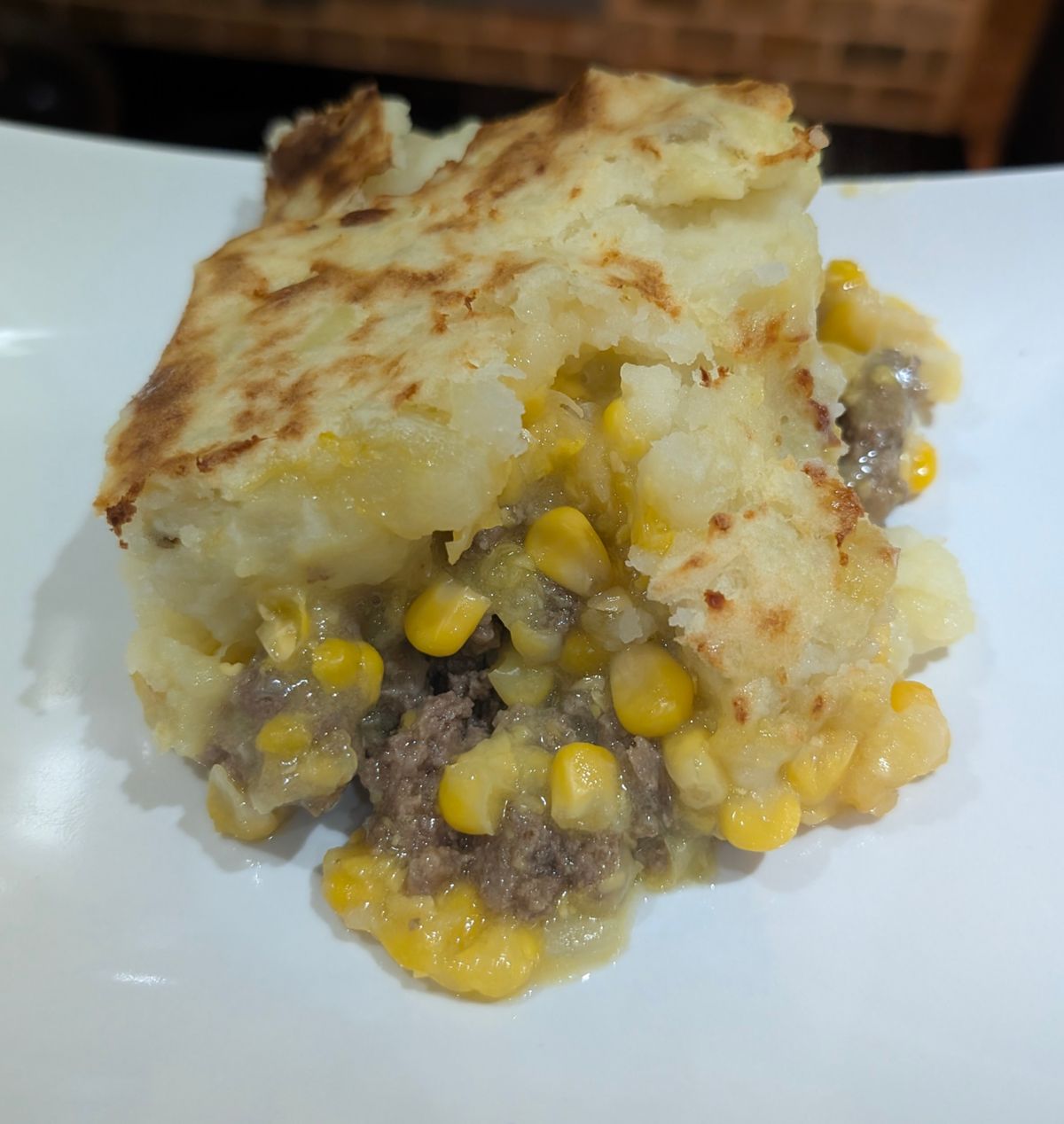
The fundamental structure of pâté chinois is defined by its three layers, often summarized by the Québécois phrase "steak, blé d’Inde, patates" meaning ground beef, corn, and potatoes. The bottom layer is typically made from ground beef that has been browned with onions and seasoned simply with salt, pepper, and sometimes herbs like thyme. The middle layer consists of corn, which can be used in various forms including canned whole kernels, frozen corn, or homemade creamed corn, with creamed corn being a traditional choice for its creamy texture. The top layer is always mashed potatoes, which are often enriched with butter and milk to create a smooth, golden crust when baked. The assembled casserole is baked in an oven until the potato topping is lightly browned and the ingredients are heated through, commonly served with simple condiments like ketchup or pickles on the side.
While the classic recipe is straightforward, the specific preparation of each layer allows for personal and regional variations. The meat layer may be made from commercially ground beef or repurposed leftover roast, and it is often cooked with diced onions, peppers, or mushrooms for added flavour. The corn layer's texture is a key point of divergence, with some families preferring the simplicity of canned kernels while others insist on the richness of homemade creamed corn, sometimes made with cream and a cornstarch slurry. The potato layer is crucial for the dish's comforting appeal, with starchy varieties like russet potatoes favoured for their ability to create a light, fluffy mash that perfectly absorbs additions like butter, milk, or cheese. This basic formula of meat, corn, and potato has proven endlessly adaptable, making it a canvas for both traditional home cooking and contemporary gourmet interpretations.
Origins and Etymology
The true origins of pâté chinois and the reason for its name have been the subject of considerable research and debate among historians and linguists. Food historian Jean-Pierre Lemasson and linguist Gabriel Martin have conducted thorough studies, concluding that the dish emerged among the French-Canadian working class in Montreal, likely during the 1910s, and became a widespread staple during the economic hardships of the 1930s. Several colourful but discredited hypotheses have attempted to trace the dish further back, including a theory linking it to 17th-century New France and a rebracketing of the term "pâté d'échine," but Martin notes the name is only attested from the 20th century onward, making this chronology implausible. Another popular folk tale suggests Chinese railway labourers in the 19th century were served this dish, but researchers have identified multiple anachronisms that seriously undermine this hypothesis.
A third hypothesis, mentioned in reference works like the Dictionnaire historique du français québécois, proposes that the name is a calque of "China pie," referring to the town of China, Maine, where many Québécois emigrated for work. However, scholars like Lemasson and Martin consider this explanation unconvincing, as it rests on limited second-hand testimony. After examining the evidence, the most likely explanation, supported by Martin, is that the dish is a purely Québécois creation that gained its name through a form of "smiling irony," where a typical Canadian dish was given an exotic name evoking a distant country. Early recipe variations from 1941 even used rice instead of potatoes, which may have contributed to the association with "Chinese" cuisine, solidifying the name pâté chinois in the Québécois lexicon.
Variations and Adaptations
Pâté chinois is notable for its flexible composition, which has inspired countless variations across Quebec and in French-Canadian diaspora communities. The core ingredients are often adapted based on availability, personal taste, and dietary preferences, demonstrating the dish's role as a versatile and economical family meal. Common variations include using different forms of corn, such as fresh corn cut from the cob or frozen kernels, as an alternative to the traditional canned or creamed corn. The meat layer is also frequently modified, with ground beef sometimes replaced by other proteins like lamb, venison, moose, or even plant-based alternatives such as lentils or tofu, catering to modern dietary trends.
Contemporary chefs and home cooks have also created gourmet interpretations of the humble casserole. These modern versions might feature a savoury blend of beef and lamb for deeper flavour, a silky homemade creamed corn enriched with cream, or mashed potatoes infused with ingredients like Boursin cheese, garlic, or Parmesan for a richer topping. Some recipes incorporate additional vegetables like sautéed onions, peppers, and mushrooms into the meat layer for added complexity. The dish's adaptability extends to cooking methods as well, with versions developed for camping, including foil packet preparations or simplified backpacking meals using dehydrated ingredients. This enduring capacity for reinvention ensures pâté chinois remains a relevant and cherished dish, capable of spanning from weeknight family dinners to more elaborate culinary presentations.
Common Ingredient Substitutions and Variations:- Corn: Canned whole kernel corn, canned creamed corn, frozen corn, or fresh corn cut from the cob.
- Meat: Ground beef, lamb, venison, moose, horse, or plant-based grounds.
- Potatoes: Russet potatoes for fluffy mash, sometimes with added butter, milk, cheese (Boursin, cheddar, Parmesan), or garlic.
- Additional Flavours: Onions, peppers, mushrooms, thyme, or a hint of maple syrup in modern recipes.
- Cooking Style: Traditional oven-baked casserole, foil packet versions for camping, or freezer-friendly make-ahead meals.
Cultural Significance in Quebec
Pâté chinois holds a strong place in Québécois culture, widely recognized as a defining comfort food and an informal symbol of provincial identity. Its status was cemented when it was voted the "national dish of Quebec" in a public poll organized by the newspaper Le Devoir, reflecting its deep resonance with the population. The dish is intimately connected to family traditions and childhood memories for many Québécois, often evoking nostalgia for home-cooked meals prepared by parents or grandparents. Its simplicity, affordability, and hearty nature made it a staple during economically difficult periods, particularly the Great Depression, embedding it in the collective culinary memory as a dish of resilience and sustenance.
The cultural footprint of pâté chinois extends beyond the dinner table into popular media and humour. The phrase "steak, blé d’Inde, patates" became a popular catchphrase thanks to the Québécois television program La Petite Vie, where the character Thérèse Paré Pinard was famously unable to prepare the dish correctly, creating a running gag about its deceptively simple layers. The dish also inspired the title of Philippe Falardeau's 1997 satirical short film Pâté chinois, which explores themes of Asian immigration to Canada. In everyday life, the dish serves as a common cultural touchstone, a subject of friendly debate over the "correct" recipe, and a comforting presence at family gatherings, potlucks, and community events throughout the province.
Comparison to Similar Dishes
Pâté chinois is part of a global family of layered meat and potato casseroles, but it possesses distinct characteristics that set it apart from its cousins. The most direct comparisons are to the British shepherd's pie and cottage pie, and the French hachis Parmentier. While these dishes share the concept of a meat base topped with mashed potatoes, pâté chinois is uniquely defined by its mandatory middle layer of corn, which is not a traditional component in the European versions. Ethnologists Bernard Arcand and Serge Bouchard have also noted that the combination of meat and corn in pâté chinois shares conceptual similarities with Indigenous North American preparations like pemmican, though the dishes are not historically related.
The specific terminology can also cause confusion, particularly between shepherd's pie and cottage pie. Technically, shepherd's pie is made with lamb, while cottage pie is made with beef. Since pâté chinois traditionally uses ground beef, it is technically closer to a cottage pie, though it is commonly referred to in English as "Quebec shepherd's pie." Beyond Europe, similar dishes exist worldwide, such as the Chilean pastel de choclo, which also features a corn layer but incorporates a different set of spices and preparations. The table below outlines the key differences between pâté chinois and its closest relatives.
| Dish | Origin | Meat Base | Potato Topping |
|---|---|---|---|
| Pâté Chinois | Quebec, Canada | Ground beef (common) | Mashed potatoes |
| Shepherd's Pie | United Kingdom | Ground lamb | Mashed potatoes |
| Cottage Pie | United Kingdom | Ground beef | Mashed potatoes |
| Hachis Parmentier | France | Minced beef or leftover meat | Mashed potatoes, often gratinéed with cheese |
Modern Interpretations and Cooking Tips
While the classic pâté chinois remains a beloved standard, contemporary cooks have embraced the dish, offering tips for perfecting it and creating modernized versions. For the best results, chefs recommend starting potatoes in cold, well-salted water to ensure they cook evenly and yield a flawless mash, with starchy russet potatoes being the preferred variety for their light, fluffy texture. The meat layer benefits from proper browning and seasoning, and many recipes suggest sautéing onions and other aromatics before adding the ground beef to build a deeper flavour base. For a crispier, more golden topping, a final few minutes under the broiler is a common recommendation, and garnishes like fresh chives or a sprinkle of paprika add a finishing touch.
Modern gourmet twists on the dish often involve enhancing each component. A popular contemporary version uses a blend of ground beef and lamb for a richer meat layer, homemade creamed corn made with fresh corn and cream instead of canned, and mashed potatoes infused with garlic and soft cheeses like Boursin. The dish is also praised for its practicality as a make-ahead meal, as it freezes beautifully for up to three months and can be reheated directly from frozen. These adaptations illustrate how pâté chinois continues to evolve while maintaining its core identity as a hearty, comforting casserole that brings people together around the table.
Key Tips for Preparation and Serving:- Potatoes: Use russet potatoes, start them in cold salted water, and mash while warm with butter and milk for best texture.
- Meat: Brown the ground beef well with onions for maximum flavour. Consider a beef-lamb blend.
- Corn: For creamed corn, make a simple version with kernels, cream, butter, and a cornstarch slurry.
- Assembly: Layer in order: meat, corn, then potatoes. Smooth the potato layer and create texture with a fork.
- Baking: Bake at 400°F (205°C) until golden. Use a broiler for the last 2-3 minutes for extra crispness.
- Serving: Garnish with fresh chives or paprika. Serve with ketchup, pickles, or a simple green salad.
- Storage: Cool completely before wrapping tightly to freeze. Reheat covered from frozen at 350°F for about one hour.
Questions about Pâté chinois
Why is it called pâté chinois if it's not Chinese?
The name, meaning 'Chinese pie', is a subject of historical debate. The most credible explanation from linguist Gabriel Martin is that it emerged from a form of "smiling irony" in early 20th-century Quebec, where a purely local dish was given an exotic name. Earlier discredited theories linked it to Chinese railway workers or a town in Maine, but research places its origins in Montreal's working-class communities around the 1910s. The name was firmly established by the 1930s, and an early 1941 recipe variant using rice instead of potatoes may have reinforced the "Chinese" association.
What is the difference between pâté chinois and shepherd's pie?
The primary difference is the inclusion of a distinct corn layer. Pâté chinois has three separate layers: ground beef, corn, and mashed potatoes. Traditional shepherd's pie, made with lamb, and cottage pie, made with beef, typically have a meat base mixed with vegetables like carrots and peas, all topped with mashed potatoes but without a dedicated corn layer. While pâté chinois is often called Quebec shepherd's pie, its specific composition with corn makes it a unique variant of the broader meat-and-potato casserole family.
What are the traditional ingredients in pâté chinois?
The traditional recipe uses three main ingredients layered in a specific order. The bottom layer is seasoned ground beef, often cooked with onions. The middle layer is corn, with canned creamed corn being a very common traditional choice. The top layer is mashed potatoes, typically made with butter and milk. The assembled casserole is baked until the potato topping is golden. It is traditionally served simply, often sprinkled with paprika and accompanied by condiments like ketchup or pickled vegetables.
Can you make pâté chinois with different meats or without meat?
Yes, the dish is highly adaptable. While ground beef is the classic choice, other meats like lamb, venison, or moose are used in variations. For a plant-based version, the meat can be replaced with lentils, tofu, or commercial meat substitutes. These adaptations allow the dish to cater to different dietary preferences, regional availability of ingredients, and modern culinary trends while maintaining the essential layered structure of protein, corn, and potatoes.
Is pâté chinois considered Quebec's national dish?
Pâté chinois has informally been regarded as the national dish of Quebec. This followed a public poll organized by the newspaper Le Devoir. Quebec does not have an official national dish. The dish is of French-Canadian origin, probably from Montreal.
How do you achieve the best mashed potato topping?
For a light and fluffy topping, use starchy potatoes like russets and start them in a pot of cold, well-salted water, bringing it to a boil to ensure even cooking. Drain the potatoes well after they are tender, then mash them while still warm with additions like butter, warm milk, and seasoning. Some modern recipes enrich the mash with ingredients like Boursin cheese or roasted garlic. For a golden, crispy crust, smooth the potato layer over the corn and consider placing the baked dish under a broiler for the final few minutes of cooking.
Sources and further reading
- Pâté chinois (Wikipedia)
- Pâté Chinois (Quebec Style Shepherd's Pie ) (curiouscuisiniere.com)
- French Dish (Pate Chinois) (dirtygourmet.com)
- Pâté Chinois (Quebec Shepherd's Pie) (domcooks.com)
Checked by the Novello Desserts desk. Last updated 2026-10-31.