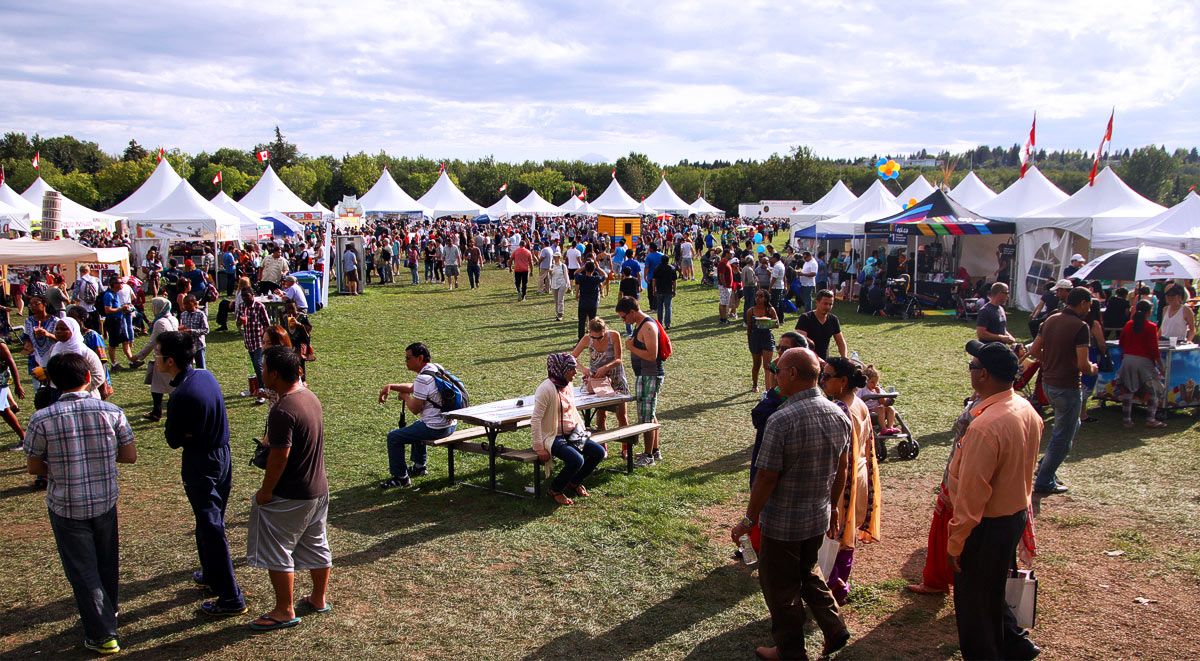
Family Day
Family Day is a statutory holiday observed on the third Monday in February in most Canadian provinces. It provides a dedicated long weekend for families to spend time together and participate in community activities. The holiday is celebrated under various names across the country, reflecting regional histories and values, and is a significant part of the winter calendar for millions of Canadians. While not a federal holiday, its widespread adoption has influenced business and cultural rhythms in provinces that observe it.
Provincial Observances and History
The establishment of Family Day across Canada is a story of gradual provincial adoption, often tied to political promises and regional identity. Alberta was the first province to enact the holiday in 1990, proclaimed by Lieutenant Governor Helen Hunley on the advice of Premier Don Getty. Getty stated the holiday would emphasize the importance of family values, and the date was chosen to align with Washington's Birthday in the United States to minimize trade disruption. This initial creation was met with criticism from employers concerned about cost, leading to the downgrading of the existing Heritage Day to a civic holiday in Alberta. Saskatchewan followed much later, with Premier Lorne Calvert proposing the holiday in 2005. It was established by the Labour Standards Amendment Act in 2006 and first observed on February 19, 2007.
In Ontario, Premier Dalton McGuinty promised a February holiday during the 2007 provincial election. The government established Family Day on October 12, 2007, with the first observance on February 18, 2008, raising the province's number of statutory holidays to nine. However, employers in Ontario may substitute this day for another non-statutory holiday, such as the popular Civic Holiday in August, based on employment contracts. British Columbia's path to Family Day involved several failed attempts, including a 1994 private member's bill. Premier Christy Clark proposed the holiday during her 2011 leadership campaign, and it was first observed on February 11, 2013, initially on the second Monday of February. In 2018, the government announced it would move to the third Monday in February starting in 2019 to align with other provinces.
New Brunswick was the most recent province to adopt the holiday. After a campaign promise in 2010 by Premier Shawn Graham, which was not initially fulfilled, the subsequent Liberal government under Premier Brian Gallant announced the holiday on April 26, 2017. New Brunswick's first Family Day was observed on February 19, 2018. The spread of the holiday has created pressure on the remaining jurisdictions without a February statutory holiday to harmonize, especially as major financial institutions like the Toronto Stock Exchange largely close on this day.
Regional Holiday Variations
Several provinces celebrate the February holiday under different names that honour local history and figures. In Manitoba, the day is known as Louis Riel Day, named for the Métis leader who fought for Aboriginal and francophone rights. The name was selected in 2007 after a contest for Manitoba school students, with the winning entry submitted by 11 schools. Legislation passed on April 17, 2007, and the first Louis Riel Day was celebrated on February 18, 2008. This holiday coincides with Winnipeg's annual Festival Du Voyageur. Prince Edward Island observes Islander Day, first introduced in 2009. It was initially held on the second Monday of February but was moved to the third Monday in April 2009 after controversy over being out of sync with business partners in other provinces and the United States.
Nova Scotia celebrates Nova Scotia Heritage Day, established by the Liberal government of Stephen McNeil after the 2013 election. The permanent name was announced on June 26, 2014, and the first observance was in 2015. Each year, the holiday honours a different person or aspect of Nova Scotian heritage, selected by a government-appointed panel from suggestions by school children. The honourees from 2015 to 2026 include Viola Desmond, Mi'kmaq heritage, Africville, Joseph Howe, Edward Francis Arab, Nora Bernard, Carrie Best, J. Willie Comeau, Grand-Pré National Historic Site, William Hall, Rita Joe, Maud Lewis, and Mona Louise Parsons. In Yukon, Yukon Heritage Day is observed on the Friday before the last Sunday of February, though it is not a statutory holiday. In Corner Brook, Newfoundland and Labrador, an unnamed civic holiday coincides with the start of the city's Winter Carnival, though it is not observed province-wide.
Heritage Day and National Context
Nationally, the third Monday in February has also been recognized as Heritage Day, though it is not an official federal holiday. Heritage Day was created in 1973 by the Heritage Canada Foundation to preserve and promote Canada's historical, natural, and architectural heritage. Each year, Heritage Canada chooses a different theme for celebrations, which can extend into a week-long event known as Heritage Week. Despite several attempts since 1973, efforts to make Heritage Day a federal statutory holiday have been unsuccessful. The federal government does celebrate National Flag Day on February 15, but it is not a holiday. The existence of Heritage Day as a parallel concept shows the dual nature of the February date, serving both as a provincial family holiday and a potential focal point for national heritage appreciation.
The timing of the provincial Family Day holidays coincides with the American holiday of Presidents' Day, also known as Washington's Birthday. This alignment was a deliberate factor in Alberta's original date selection to avoid disrupting cross-border trade. However, British Columbia's initial choice of the second Monday in February from 2013 to 2018 created two consecutive long weekends with the American holiday, which was promoted as a benefit for tourism, particularly at ski resorts. As Family Day is not a federal statutory holiday, employees of the federal government, including public servants and postal workers, do not automatically get the day off. Federally regulated workplaces operate as usual regardless of the provincial holiday status.
Connection to Family Literacy Day
A closely related observance is Family Literacy Day, celebrated annually on January 27 across Canada. Led by the national charity ABC Life Literacy Canada, the day highlights the importance of reading and learning together as a family through everyday activities. Since its inception in 1999, each year features a specific theme to guide family engagement. The theme for Family Literacy Day in 2026 is 'Make mealtime family learning time,' encouraging families to integrate literacy into activities like following recipes, making shopping lists, and sharing stories at the dinner table. ABC Life Literacy Canada provides free resources, including activity books and tip sheets, to support families and communities in their celebrations.
Honorary Chair Barbara Reid, a renowned Canadian author and illustrator known for her plasticine artwork, plays a central role in promoting the day. In 2026, she will host a free live virtual presentation on January 22, reading a book and guiding a clay art activity for families. Libraries and schools across the country often participate by distributing activity packs and hosting events. For example, in 2026, the Kawartha Lakes Public Library offered special Family Literacy Day Take Home Packs at all its branches, containing activity ideas and materials like magnifying glasses and food-themed sticky notes. The Saskatchewan theme book for 2026 is 'Salma the Syrian Chef' by Danny Ramadan, which aligns with the national mealtime theme.
- Date: January 27 annually.
- Lead Organization: ABC Life Literacy Canada.
- 2026 Theme: 'Make mealtime family learning time.'
- Honorary Chair (2026): Author and illustrator Barbara Reid.
- 2026 Virtual Event: January 22, 2026, featuring a clay art demonstration.
- Common Activities: Reading together, playing word games, visiting libraries, and mealtime conversations.
Family Literacy Day is celebrated each year on January 27 to highlight the importance of reading and learning together as a family. This year's national theme is "Make Mealtime Family Learning Time," which invites families to turn everyday routines into opportunities for connection and skill-building. The day reminds us that everyday activities at home can help children build strong literacy skills while spending meaningful time with loved ones. Families are encouraged to take part by enjoying literacy-related activities together, such as following recipes, making shopping lists, or sharing stories at the dinner table. ABC Life Literacy Canada has created helpful resources, including an activity book and tip sheet, to support families in these endeavours.
Economic and Social Impact
The establishment of Family Day has had tangible effects on business operations, tourism, and labour standards in observing provinces. For employers, the addition of a statutory holiday represents an extra day of potential holiday pay or premium wages for employees who work, which has been a point of contention since Alberta first introduced the holiday. In Ontario, the legislation allows employers to substitute Family Day for another non-statutory holiday, such as the popular Civic Holiday in August, meaning the net number of days off for workers may not increase. The holiday significantly impacts the financial sector, as the Toronto Stock Exchange and associated businesses largely close, creating a nationwide ripple effect even in provinces where it is not observed.
Tourism and hospitality industries, particularly in regions with winter attractions, have benefited from the long weekend. British Columbia's initial decision to place its holiday on the second Monday in February was explicitly designed to create two consecutive long weekends with the American Presidents' Day, boosting visits to ski resorts. The holiday also supports community and family-oriented events, from winter festivals to museum programs. Socially, the holiday reinforces the value of family time, though its origins in Alberta were partly rooted in political controversy. The holiday was announced in the 1989 Throne Speech following a difficult period for Premier Don Getty, which included public criticism over a personal remark and his son's legal troubles in 1988.
Table: Provincial February Holiday Details
In most provinces of Canada, the third Monday in February is observed as a regional statutory holiday, typically known as Family Day. The provinces of Alberta, British Columbia, New Brunswick, Ontario, and Saskatchewan observe this day as Family Day. Manitoba observes it as Louis Riel Day, Nova Scotia as Nova Scotia Heritage Day, and Prince Edward Island as Islander Day. In Quebec and the three territories, the third Monday in February is a regular working day. The same is true in Newfoundland and Labrador except in the city of Corner Brook, where it is an unnamed civic holiday. In Yukon, a Friday in February is observed as Yukon Heritage Day instead.
| Province/Territory | Holiday Name | Notable Feature |
|---|---|---|
| Alberta | Family Day | First province to establish the holiday. |
| Saskatchewan | Family Day | Established via the Labour Standards Amendment Act, 2006. |
| Ontario | Family Day | May be substituted for the Civic Holiday by employers. |
| British Columbia | Family Day | Moved from the second to the third Monday in February in 2019. |
| New Brunswick | Family Day | Most recent province to adopt the holiday. |
| Manitoba | Louis Riel Day | Named after Métis leader Louis Riel. |
| Nova Scotia | Nova Scotia Heritage Day | Honours a different person or heritage site each year. |
| Prince Edward Island | Islander Day | Date was moved to the third Monday in February in 2009. |
| Yukon | Yukon Heritage Day | Observed on a Friday in February. Not a statutory holiday. |
Family Day in Alberta was first celebrated in 1990. Saskatchewan began observing Family Day in 2007, Ontario in 2008, and British Columbia in 2013. New Brunswick began observing Family Day in 2018. Manitoba's Louis Riel Day was first celebrated in 2008, Prince Edward Island's Islander Day in 2009, and Nova Scotia's Heritage Day in 2015. The holiday was created in Alberta by Premier Don Getty, who said it was important for Albertans to spend time with their families and to emphasize family values. The date in Alberta was chosen to coincide with Washington's Birthday to avoid disrupting trade with the United States.
Activities and Contemporary Celebrations
Family Day and its regional variants are typically marked by a wide range of activities that reflect the holiday's core themes of family, heritage, and community. Many communities organize special public events, such as free museum admissions, outdoor skating parties, winter carnivals, and heritage demonstrations. Families often use the long weekend for recreational activities like skiing, snowshoeing, or visiting local attractions. The day also provides an opportunity for quieter, at-home pursuits, including board games, shared meals, and crafts, aligning with the spirit of Family Literacy Day held earlier in the year. In provinces like Nova Scotia, the specific annual honouree for Heritage Day often becomes a focus for educational programs in schools and cultural institutions.
Businesses and non-profit organizations frequently run promotions or family-friendly events. The holiday's placement in mid-winter makes it a welcome break during a long season, contributing to community morale. In Manitoba, the coincidence of Louis Riel Day with the Festival Du Voyageur in Winnipeg creates a major cultural celebration featuring music, food, and historical reenactments. The day's evolution from a single province's initiative to a widespread tradition demonstrates its embeddedness in the Canadian cultural calendar, offering a dedicated pause for family connection amidst the busy year. These celebrations show the holiday's success in achieving its stated goal of providing time for families to be together.
Questions about Family Day
Is Family Day a statutory holiday everywhere in Canada?
No, Family Day is not a nationwide statutory holiday. It is observed as a statutory holiday in Alberta, British Columbia, Saskatchewan, Ontario, New Brunswick, Manitoba (as Louis Riel Day), Nova Scotia (as Nova Scotia Heritage Day), and Prince Edward Island (as Islander Day). It is not observed in Quebec, Newfoundland and Labrador (except for a civic holiday in Corner Brook), or the three territories. Yukon has Yukon Heritage Day on a Friday in February, but it is not a statutory holiday.
Why do some provinces have different names for Family Day?
Provinces use different names to reflect regional history and values. Manitoba named its holiday Louis Riel Day in honour of the Métis leader, following a student contest. Nova Scotia uses Nova Scotia Heritage Day to spotlight different aspects of the province's heritage each year. Prince Edward Island chose Islander Day to reflect its island identity. These variations allow provinces to celebrate unique cultural and historical narratives while still providing a common February long weekend.
How is Family Day related to Family Literacy Day?
Family Day and Family Literacy Day are separate but complementary observances. Family Literacy Day is a national awareness day held every January 27, led by ABC Life Literacy Canada, to promote reading and learning within families. Family Day is a statutory holiday in February focused on spending time together. Both emphasize family connection, and the literacy day's activities, such as shared reading or cooking, are often the types of activities families engage in on the Family Day long weekend.
Who is honoured on Nova Scotia Heritage Day?
Nova Scotia Heritage Day honours a different person or aspect of provincial heritage each year. The honourees from 2015 to 2026 were selected by a government-appointed panel from suggestions by Nova Scotian school children. The list includes Viola Desmond (2015), Mi'kmaq heritage, Africville, Joseph Howe, Edward Francis Arab, Nora Bernard, Carrie Best, J. Willie Comeau, Grand-Pré National Historic Site, William Hall, Rita Joe, Maud Lewis, and Mona Louise Parsons. Each year's focus provides a theme for educational and community events.
Do federal employees get Family Day off?
No, federal employees do not get Family Day off. As Family Day is not a federal statutory holiday, employees of the federal government, such as public servants and postal workers, work on this day in all provinces. Federally regulated workplaces operate on this day regardless of the holiday's status in the respective provinces. This means that even in provinces where Family Day is a statutory holiday for provincial workers, federal employees are still required to work. The timing of Family Day coincides with the United States holiday of Presidents' Day, but this does not affect its non federal status in Canada.
When did British Columbia move its Family Day to the third Monday?
British Columbia moved its Family Day to the third Monday in February in 2019. The Government of British Columbia announced this change on February 9, 2018. The move was made specifically to align the province's holiday with the rest of the provinces that observe it on that Monday. Initially, after a consultation process, BC had chosen to observe Family Day on the second Monday in February starting in 2013 to provide two consecutive long weekends for tourism. The final decision to harmonize the date with other provinces took effect six years after the holiday was first introduced in the province.
Sources and further reading
- Family Day (Wikipedia)
- Family Literacy Day 2026 (cdsbeo.on.ca)
- 2026 Family Literacy Week, Making mealtime family learning ... (resourcebank.ca)
- Celebrating Family Literacy Day 2026 with Barbara Reid (teachersoncall.ca)
- Celebrate Family Literacy Day 2026 (kawarthalakeslibrary.ca)
Checked by the Novello Desserts desk. Last updated 2026-10-27.