Manipogo
Manipogo is a legendary lake monster said to inhabit the waters of Lake Manitoba in the Canadian province of Manitoba. Described as a long, serpentine creature with a humped back and a head resembling a horse or camel, it is a prominent figure in regional folklore with reported sightings dating back over a century. The creature was formally named in 1960, blending 'Manitoba' with 'Ogopogo,' the famous monster of British Columbia's Okanagan Lake. While no scientific evidence confirms its existence, Manipogo remains a significant part of local tradition, inspiring a provincial park name, an annual community festival, and even serving as the namesake for a modern government online application system. Its story intertwines with First Nations legends, settler history, and ongoing public curiosity.
Physical Description and Reported Behaviours
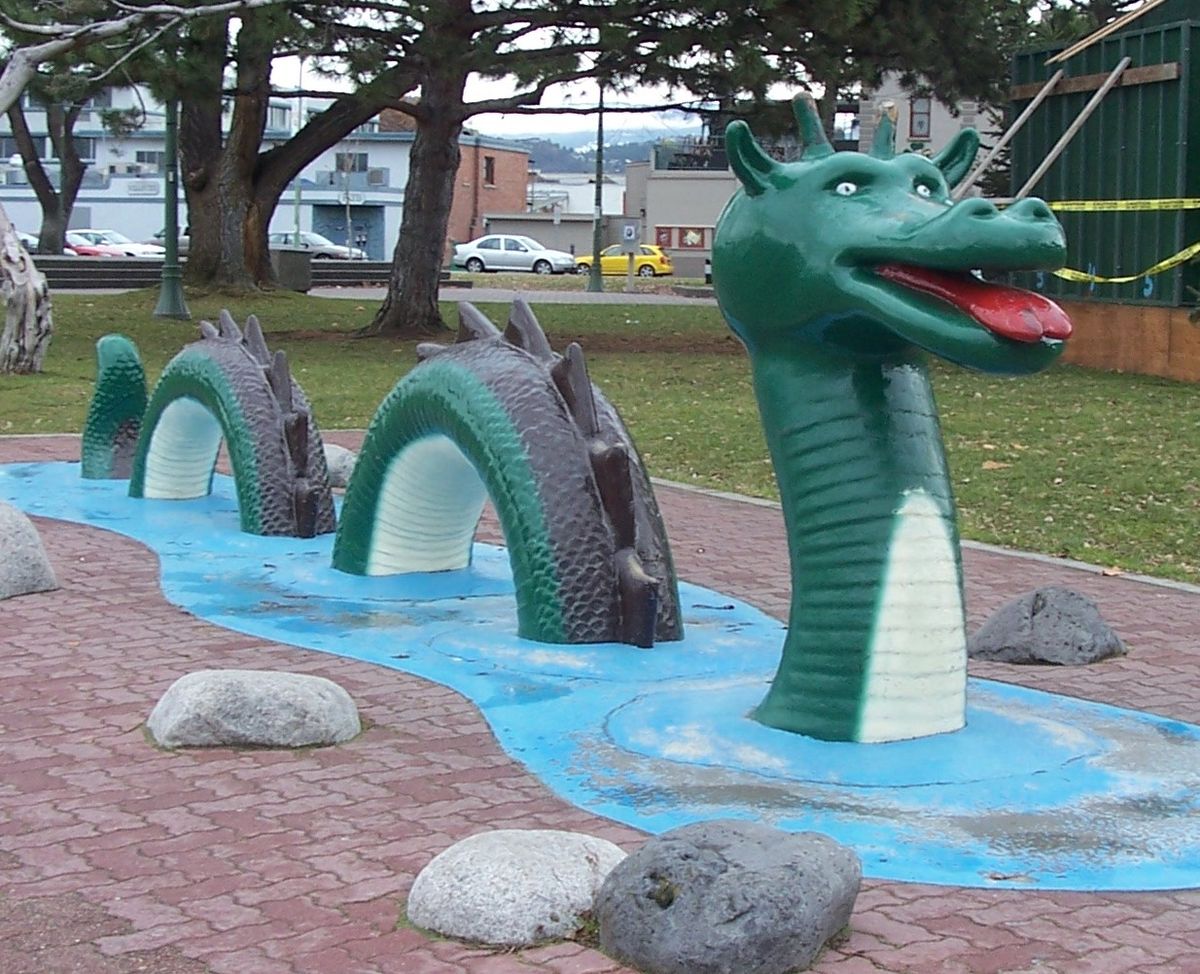
Witnesses describe Manipogo as a large, serpentine creature with a body length estimated between 4 and 15 metres, a range that suggests significant variation in accounts or perceived distance. Its skin is typically reported as brownish-black, and it is said to have at least one distinct hump that protrudes above the water's surface, with some reports mentioning multiple humps in a row. Descriptions of its head vary considerably, with comparisons to a horse, camel, or sheep, while others have claimed it was flat and diamond-shaped, adding to the inconsistent visual profile. A distinctive auditory element often accompanies sightings, with reports of the creature emitting a shriek or a cry described by one observer in 1948 as a prehistoric type of dinosaur cry. Some people have suggested that Manipogo may be some kind of prehistoric creature, such as a plesiosaur, with a long neck that lives in the water, though this is speculation without fossil evidence from the region. The creature is also purported to let out its shriek or cry as it surfaces, a detail that adds a sensory layer beyond the visual to many encounter stories.
Sceptical Explanations and Natural Counterparts
Critics and scientists offer several natural explanations for Manipogo sightings, attributing them to misidentified common animals or environmental phenomena. A frequent suggestion is that witnesses are seeing floating logs, especially during periods of high water or flooding, such as those reported around Lake Manitoba in 2011. Another common theory is that observers are spotting a moose swimming with its head and prominent shoulder hump above the water, an animal known to grunt and bleat when swimming, which could account for the strange cries some people have heard. A further biological possibility is the lake sturgeon, which are a common fish in Manitoba and can live for more than 150 years. Lake sturgeon never stop growing and are the largest freshwater fish in Manitoba, with an average size of about 1.5 metres but capable of growing up to 2.5 metres and weighing over 140 kilograms, presenting a large, unusual shape. Other sceptics believe that the so-called monster is actually a group of river otters swimming in a line, which can create the illusion of a single, multi-humped creature moving through the water. The variety of plausible explanations highlights how ordinary natural events can be interpreted as extraordinary under certain conditions of perception and expectation.
Historical Sightings and Key Investigations
Legends of serpent-like creatures in Lake Manitoba originate with the local First Nations population, with stories going back hundreds of years before European settlement. Documented sightings by settlers began in the 1800s, with the first recorded account coming from Hudson's Bay Company fur trader Valentine McKay in September 1909, who claimed to see a huge creature in Cedar Lake near Graves Point. The creature received its official name in 1960 from Tom Locke, a Manitoba government land inspector who was responsible for planning the government's program for public playgrounds and recreational parks. That same year saw a number of sightings reported, and Locke would go on to give the name to Manipogo Provincial Park as well, located on the northwestern shore where sightings have largely taken place in the Toutes Aides area nearby. The only known photograph from a Manipogo sighting was taken by Richard Vincent in August 1962 while on a fishing trip near Meadow Portage with John Konefell, who saw a large creature like a serpent or giant snake 55 metres away. In the early 1960s, Professor James A. McLeod of the University of Manitoba conducted a formal investigation by trying to locate the creature's remains, reasoning that a breeding population would leave carcasses and bones, but he found none. A group of 17 witnesses, all reportedly strangers to each other, once claimed to have spotted three Manipogos swimming together, an account that stands out for the number of observers but lacks corroborating evidence.
Chronology of Alleged Sightings
- 1909: Hudson's Bay Company fur trader Valentine McKay reports seeing a massive creature in Cedar Lake.
- 1935: Timber inspector C. F. Ross and a friend saw the creature, noting on its head was a single horn and its head was small and flat, looking very much like a dinosaur.
- 1948: C. P. Alric reported that some sort of creature rose 1.8 metres out of the lake and gave a prehistoric type of dinosaur cry.
- 1957: Louis Breteche saw what he described as a serpentine animal that lifted its head out of the water about 91 centimetres and then slapped it down on the water again a couple of times.
- 1957: Louis Belcher and Eddie Nipanik also saw a giant serpent-like creature in the lake.
- 1960s: Around this decade, Mr. and Mrs. Stople saw a reptile-like beast surfacing about 9.1 metres from their boat.
- 1962: Richard Vincent and John Konefell's sighting produced the only photo attributed to the creature.
- 1989: Sean Smith and family visiting from Minneapolis on a camping trip at Shallow Point saw what he described as 'many humps' in the lake about 24 metres offshore.
- 1997: A man from the Sandy Bay First Nation claimed to have shot and killed the creature, with the RCMP allegedly loading it onto a truck, though police denied any knowledge and witness reports contradicted each other.
- 1997: Several reports by cross country campers from Quebec at Lundar Beach campground saw a large reptile head rise and fall in the water several hundred feet offshore, leading to swimmers being evacuated.
- 2004: Commercial fisherman Keith Haden reported several of his fishing nets on Lake Manitoba near The Narrows torn up by what seemed like an ocean shark or killer whale, with fish torn in half by huge bites.
- 2009: Several residents at Twin Lakes Beach reported seeing several humps a few hundred yards from their lake-front cottages, but no photos were taken.
- 2011: Many sightings of several humps emerging and then submerging were reported offshore at locations like Marshy Point, Scotch Bay, and Laurentia Beach by security personnel patrolling flooded areas, though these were likely logs.
Naming, Geography, and Associated Locations
The creature was dubbed Manipogo in 1960, the name echoing British Columbia's Ogopogo and created by land inspector Tom Locke. Locke's role in planning recreational parks directly led to the name being applied to Manipogo Provincial Park, located on the northwestern shore of Lake Manitoba, as reported sightings have largely taken place in the Toutes Aides area within the Rural Municipality of Lakeshore nearby. The community of St. Laurent on the southeast shore of Lake Manitoba holds a yearly Manipogo Festival during the first week of March, establishing a fixed community celebration around the legend. There is also a monster called Winnepogo, named for either Lake Winnipegosis or Lake Winnipeg, thought possibly to be the same creature since the lakes are connected through Manitoba's vast drainage basin. The geographical association is so strong that in 2026, the Manitoba Arts Council chose Manipogo as the name for its online grant application system, calling it a mythological symbol embodying the region of 100,000 lakes.
Cultural Impact in Media and Arts
Manipogo has been featured in various media and cultural productions, extending its reach beyond local oral tradition. The monster was featured on an episode of the television documentary series Northern Mysteries, bringing the story to a national audience. It is mentioned in John Kirk's 1998 book, In the Domain of Lake Monsters: The Search for the Denizens of the Deep, which treats the subject as part of a broader cryptozoological investigation. The legend also entered national news discourse in 1997 when The Globe and Mail reported on June 12 that people in communities around Lake Manitoba were buzzing about a 15-metre snake-like creature, with a head like a horse, following the controversial claimed killing that year. In a modern bureaucratic context, the Manitoba Arts Council in 2026 launched its online grant system under the name Manipogo, describing it as the same system applicants had used for years but with a new name and appearance inspired by the folk figure. The legend is periodically promoted in tourism contexts, such as a 2026 social media post from CBC Manitoba suggesting Find Manipogo as a summer goal and directing people to the Central Manitoba Tourism events calendar.
Related Aquatic Cryptids in Canadian Folklore
Manipogo is part of a continent-wide pattern of lake monster legends, with several other notable examples in Canada. Its name was directly inspired by Ogopogo, the famous and much-reported monster of Okanagan Lake, British Columbia. In the same province, the Seelkee is said to live in the swamps of what is now Chilliwack, representing a different aquatic environment. Within Manitoba, the connected lake system suggests the possible related creature Winnepogo of Lake Winnipegosis or Lake Winnipeg. In eastern Canada, Lake Memphremagog, which straddles Quebec and Vermont, is said to be home to Memphre. Saskatchewan has its own legend in the Turtle Lake Monster. These stories often share common descriptive elements, such as serpentine bodies, humps, and elusive behaviour, and they typically become points of local pride and occasional tourism interest, reflecting a human tendency to populate large, mysterious bodies of water with legendary inhabitants.
Analysis of Evidence and Scientific Perspective
From a scientific perspective, the evidence for Manipogo's existence is considered anecdotal and lacking in physical proof. The investigation by Professor James McLeod in the 1960s was based on a sound ecological principle: a viable population of large, air-breathing vertebrates would leave behind bones or carcasses that would eventually wash ashore or be found by humans. His failure to find any such remains is a significant point against the creature's biological reality. The single photograph from 1962 is often cited, but its clarity and what it actually depicts have never been conclusively verified. Explanations by critics for supposed sightings have consistently pointed to mundane phenomena, including floating logs, which were specifically cited as the likely explanation for the many 2011 flood sightings, and swimming moose, which present a familiar profile that could be misconstrued. The 1997 incident that attracted national media attention ultimately fell apart under scrutiny, with the RCMP denying any knowledge and reports by supposed witnesses contradicting each other, some even denying the killing occurred. This pattern of elusive evidence and alternative explanations places Manipogo firmly in the category of folklore rather than zoology, a story sustained by occasional misperception and the enduring power of a good mystery.
Questions about Manipogo
Where is Manipogo supposed to live?
Manipogo is said to live in Lake Manitoba, a large lake in the Canadian province of Manitoba. Most reported sightings have occurred in the Toutes Aides area within the Rural Municipality of Lakeshore, north of Sainte Rose du Lac, on the lake's northwestern side. The creature is also the namesake of Manipogo Provincial Park, located on that shore. Some legends connect it to a similar monster called Winnepogo in the connected waters of Lake Winnipeg or Lake Winnipegosis, suggesting a possible range across Manitoba's interlinked lake system.
Is there any photo evidence of Manipogo?
Only one photograph has ever been attributed to a Manipogo sighting. It was taken by Richard Vincent in August 1962 during a fishing trip near Meadow Portage on Lake Manitoba. Vincent and his companion John Konefell reported seeing a large creature like a serpent or giant snake 55 metres away from their boat. No other photographic evidence has been widely accepted or produced since that time, and searches for physical remains by investigators like Professor James McLeod have found nothing, leaving the photo as an unverified singular artifact.
What does Manipogo look like?
Descriptions from witnesses vary, but common traits include a long, serpentine body between 4 and 15 metres in length with a brownish-black colour. It is typically reported to have at least one hump that shows above the water, with some accounts mentioning multiple humps. The head is sometimes compared to that of a horse, camel, or sheep, while others describe it as flat and diamond-shaped. Some accounts mention the creature emitting a shrieking or crying sound as it surfaces, which one witness in 1948 specifically called a prehistoric type of dinosaur cry.
Has anyone ever tried to find scientific proof of Manipogo?
Yes, in the early 1960s, Professor James A. McLeod of the University of Manitoba conducted a formal investigation. His approach was methodical. He searched for physical remains, reasoning that if a breeding population of large creatures lived in the lake, carcasses or bones should be present after death. McLeod's search found no such evidence. Most scientific explanations suggest sightings are misidentifications of known animals like moose, sturgeon, or otters, or objects like floating logs, especially during flood conditions when debris is common, as was the case with many 2011 reports.
When was the first Manipogo sighting?
The first documented sighting by a white settler occurred in September 1909. Hudson's Bay Company fur trader Valentine McKay claimed to see a huge creature in Cedar Lake near Graves Point on Lake Manitoba. However, legends of serpent-like creatures in the lake from the local First Nations population go back hundreds of years. The creature itself was not officially named until 1960, when land inspector Tom Locke dubbed it Manipogo, a hybrid of Manitoba and Ogopogo. That year saw a number of reported sightings, cementing the name in local folklore.
What is the Manipogo Festival?
The Manipogo Festival is a yearly community event held in St. Laurent, a community on the southeast shore of Lake Manitoba. It takes place during the first week of March and celebrates the local legend of the Manipogo lake monster. This festival is a direct reflection of the creature's embedded place in regional culture. The event draws from the long history of sightings and stories surrounding the serpentine creature said to inhabit the lake's waters.
Sources and further reading
- Manipogo (Wikipedia)
- Manipogo : La nouvelle mascotte du système de demande en ... (conseildesarts.mb.ca)
Checked by the Novello Desserts desk. Last updated 2026-10-30.