Beatrice Foods
Beatrice Foods was a major American food and consumer goods conglomerate founded in 1894. It grew from a Nebraska creamery into a sprawling multinational, owning a vast portfolio of brands familiar to Canadian consumers, including Tropicana, Swiss Miss, and Samsonite. The company's aggressive expansion in the mid-20th century included significant operations in Canada, where a legally separate subsidiary, Beatrice Foods Canada, was established. Following a landmark leveraged buyout in 1986, the original corporation was dismantled, but the Beatrice name endures in Canada as a dairy brand under the ownership of the Lactalis group.
Founding and Early Dairy Operations
The Beatrice Creamery Company was established in 1894 by George Everett Haskell and William W. Bosworth in Beatrice, Nebraska. The founders leased a factory from a bankrupt firm of the same name and began purchasing and grading butter, milk, and eggs from local farmers for resale. They quickly moved to processing their own butter on-site, developing special protective packaging and distributing products via their own wagons and through jobbers. To secure a steady cream supply, the company pioneered a credit program, providing farmers with cream separators which they could pay for from their cream sales. This initiative proved highly successful, with over 50,000 separators sold in Nebraska between 1895 and 1905. The company was formally incorporated on March 1, 1905, as the Beatrice Creamery Company of Iowa with a capital of $3,000,000. By 1910, its operations had expanded to include nine creameries and three ice cream plants across the Great Plains, shipping dairy products nationwide.
Growth into a National Conglomerate
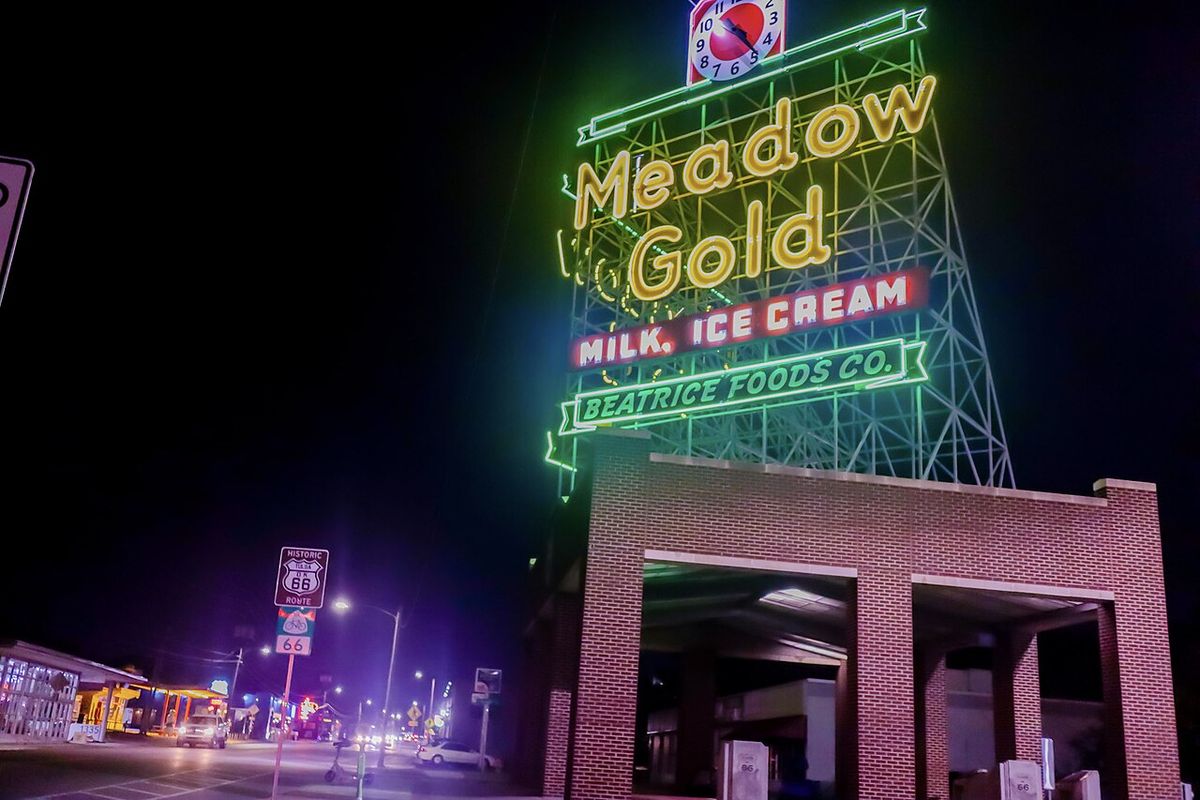
In 1913, the company relocated its headquarters to Chicago, the centre of the American food processing industry. By the 1930s, Beatrice had become a major dairy producer, manufacturing approximately 30 million US gallons of milk and 10 million US gallons of ice cream annually. A significant acquisition came in 1939 with the purchase of the Blue Valley Creamery Company, which added at least 11 creameries from New York to South Dakota. The company's Meadow Gold brand became a household name in much of America by the beginning of the Second World War. In 1946, the firm changed its name to Beatrice Foods Co. to reflect its broadening scope beyond dairy. Post-war consumer demand, driven by the baby boom, helped the company's sales double between 1945 and 1955. The period from the late 1950s through the 1970s was marked by aggressive diversification, as Beatrice leveraged its distribution network to acquire a wide array of food and consumer product companies.
Key acquisitions included John Sexton & Co. in 1968, which brought Beatrice into the wholesale grocery business, and Tropicana Products, Inc. under the leadership of Chairman and CEO Wallace Rasmussen. The company's expansion into Canada during this era led to the founding of Beatrice Foods Canada in 1969. By 1984, annual sales were approximately $12 billion, and the company officially changed its name to Beatrice Companies, Inc. to reflect its diversified, non-food holdings. This name change was proposed at the annual shareholders' meeting in June 1984, with management stating it was appropriate given the company's evolution and present composition.
The Esmark Acquisition and Corporate Restructuring
This acquisition was championed by Chairman and CEO James L. Dutt and aimed to consolidate Beatrice's assets in food and consumer products. Esmark's portfolio included prominent food brands like Swift & Co. and Hunt-Wesson, as well as non-food companies such as Avis Rent a Car, Playtex, and STP. The move was intended to leverage Esmark's national brands, direct sales force, and research capabilities. However, the massive debt load from the purchase hurt Beatrice's credit rating and depressed its stock value, a decision later criticized by many financial analysts. To manage this debt, Beatrice began divesting non-core divisions shortly after the acquisition. The company sold its Beatrice Chemical division to Imperial Chemical Industries in 1985, and other divisions sold to pay down debt included Brillion Iron Works, World Dryer, STP, and Buckingham Wine, the distributor of Cutty Sark whisky.
In 1986, Beatrice's Coca-Cola bottling operations, acquired in 1981, were sold back to The Coca-Cola Company for $1 billion. These sales were precursors to the complete corporate takeover that would occur later in 1986. During this period, Beatrice also engaged in a major advertising campaign around the 1984 Olympics using the tagline "We're Beatrice. You've known us all along," but the campaign was pulled by autumn after it was found to alienate consumers by highlighting the corporate ownership of their favourite brands.
Leveraged Buyout and Dissolution
In 1986, the investment firm Kohlberg Kravis Roberts (KKR) targeted Beatrice for a leveraged buyout, ultimately purchasing the company for $8.7 billion, which was the largest such transaction in history at the time. KKR's strategy was to break up and sell the conglomerate to repay the acquisition debt. The dismantling process began almost immediately and continued over the next four years. The international food operations were spun off into Beatrice International Holdings in 1987, which was then purchased that same year for $985 million by corporate attorney Reginald Lewis, creating TLC Beatrice International. This made TLC Beatrice the largest African American-owned business in the United States at the time, and the first to reach a billion dollars in sales with a Black man at its head. TLC Beatrice later sold the Canadian operations, Beatrice Foods Canada, Ltd., in 1990 to Onyx.
KKR created new holding entities for the remaining assets. In 1987, it formed E-II Holdings as an umbrella for non-food and specialty food businesses like Samsonite, Culligan, and Day-Timer, which was later sold to American Brands for $1.14 billion. That same year, KKR also formed the Beatrice Company, which held core food assets like Beatrice Cheese, Beatrice-Hunt/Wesson, and Swift-Eckrich. In 1990, KKR sold this Beatrice Company entity to ConAgra Brands. Most of the original Beatrice brand names continued to exist but were scattered under various new owners as product lines and trademarks were sold off separately. Other notable sales included Tropicana Products to Seagram for $1.2 billion in 1988 and the Beatrice bottled water division, with brands like Arrowhead, to Perrier in 1987.
Beatrice Foods Canada: A Separate Path
Beatrice Foods Canada was founded in 1969 as a subsidiary of the American parent but became legally separate in 1978. This independence shielded the Canadian operations from the turbulent buyouts and dissolution of the U.S. corporation, allowing it to remain one of Canada's largest food processing concerns. The Canadian unit was based in Toronto, Ontario, and operated as a major dairy processor. In 1990, the international parent TLC Beatrice sold Beatrice Foods Canada to the investment firm Onyx. Onyx subsequently sold the company to the Italian dairy giant Parmalat in 1997. Parmalat initially dropped the Beatrice name from products but reinstated it in late 2005 amid its own bankruptcy and accounting scandal.
The Canadian operations underwent another ownership change in 2011 when the French conglomerate Lactalis acquired Parmalat in its entirety. Lactalis retained the Canadian assets, including the Beatrice brand, and has since integrated its own brands into the portfolio. Today, Beatrice Foods Canada operates as a dairy unit of Parmalat Canada under the ultimate ownership of Lactalis, keeping the historic name alive in the Canadian market. This separate corporate history explains why the Beatrice name persists as a consumer brand in Canada long after the American parent company was dissolved.
Notable Former Brands and Divisions
At its peak, Beatrice's portfolio comprised dozens of well-known brands across food, beverage, and consumer goods. Many of these brands remain familiar to consumers today, though under different corporate ownership. The fate of these brands illustrates the piecemeal dissolution of the Beatrice empire, with each asset finding a new home in the global marketplace. This process included the sale of divisions like Americold and Danskin in 1986, and the creation of separate entities to manage groups of brands before their ultimate sale.
- Tropicana: The fruit juice brand was acquired in 1978 and sold to Seagram for $1.2 billion in 1988.
- Playtex: The intimate apparel and personal care company came with the Esmark acquisition and was part of a 1986 leveraged buyout that created Playtex Holdings.
- Samsonite: The luggage manufacturer was part of the E-II Holdings spin-off in 1987.
- Avis Rent a Car: Another Esmark holding, it was later sold off as part of the debt reduction.
- Meadow Gold: Beatrice's flagship dairy brand, sold to Borden, Inc. in 1986.
- John Sexton & Co.: A wholesale grocery and foodservice supplier acquired in 1968.
- Swiss Miss: The hot chocolate and pudding brand was part of the portfolio for many years.
- Orville Redenbacher's: The popcorn brand was owned by Beatrice before its sale.
Legal and Social Controversies
Beatrice Foods was involved in a significant environmental lawsuit during the 1980s. The company was a co-defendant alongside W.R. Grace and Company in a case alleging that toxic waste from the Riley Tannery, a former Beatrice division, had contaminated the groundwater supply in East Woburn, Massachusetts. The case, which linked the contamination to a cluster of childhood leukemia cases, gained widespread attention through the book and subsequent film A Civil Action. Initially, federal judge Walter Jay Skinner ruled that Beatrice was not responsible for the contamination. However, according to accounts in the book and film, new evidence presented by the Environmental Protection Agency later led to a reversed verdict finding both companies liable. This legal battle remains one of the most noted aspects of the company's history.
In a separate controversy, Beatrice continued to operate in South Africa during the apartheid era. As the company became privately held after the KKR buyout, it was insulated from the divestment campaigns aimed at publicly traded companies, which sought to pressure the South African government by driving down stock prices. Because Beatrice was no longer publicly traded, these campaigns could not affect its share price and therefore had no financial impact on its decision to maintain business activities in the country. This allowed its operations to continue there despite the broader international movement against apartheid.
Corporate Financial Performance and Legacy
Beatrice Foods was a mainstay on the Fortune 500 list for much of the mid-20th century, reflecting its scale and profitability during its peak years. The company's financial trajectory, however, took a dramatic turn with the debt-financed Esmark acquisition in 1984. The following table outlines key financial events and transactions during the company's final decade, highlighting the scale of its operations and dissolution. The leveraged buyout by KKR and the subsequent breakup became a landmark case in corporate finance, influencing the wave of similar transactions that followed in the late 1980s and 1990s.
| Year | Event |
|---|---|
| 1984 | Annual Sales |
| 1986 | Leveraged Buyout by KKR |
| 1986 | Sale of Coca-Cola bottling operations |
| 1987 | Sale of International operations to Reginald Lewis |
| 1988 | Sale of Tropicana Products |
| 1990 | Sale of Beatrice Company to ConAgra |
The legacy of Beatrice Foods is defined by its monumental growth as a classic American conglomerate and its equally monumental dismantling. The Beatrice name itself survives primarily in Canada as a dairy brand, a remnant of its once-global reach. Its story encapsulates a specific era of corporate expansion and the financial engineering that ultimately led to its fragmentation. The original Beatrice Companies, which began as the Beatrice Creamery Company, was dissolved in 1987 by KKR, with its final major food assets passing to ConAgra.
Questions about Beatrice Foods
What happened to Beatrice Foods?
The original Beatrice Foods was acquired in a historic leveraged buyout by Kohlberg Kravis Roberts (KKR) in 1986 for $8.7 billion. KKR then broke up the conglomerate, selling its many divisions and brands to various other companies over the next four years to repay the debt. The core U.S. food operations were sold to ConAgra Brands in 1990. The company was effectively dissolved, though its brand names lived on under new owners.
Is Beatrice Foods still in business in Canada?
Yes, the Beatrice name continues in Canada as a dairy brand. Beatrice Foods Canada, founded in 1969, became legally separate from the U.S. parent in 1978. It was sold to Parmalat in 1997 and is now part of Parmalat Canada, which is owned by the French conglomerate Lactalis. The Canadian operations were largely shielded from the breakup of the American company.
Who bought Beatrice Foods?
The company was bought in its entirety in 1986 by the investment firm Kohlberg Kravis Roberts (KKR). Following that buyout, different parts were sold to different buyers. The international operations were bought by Reginald Lewis in 1987. The remaining U.S. food operations, under the entity Beatrice Company, were sold to ConAgra Brands in 1990. The Canadian unit was sold separately, eventually to Parmalat in 1997.
What brands did Beatrice Foods own?
Beatrice Foods owned a wide array of famous consumer brands. These included food and beverage brands such as Tropicana, Krispy Kreme, Jolly Rancher, Orville Redenbacher's, Swiss Miss, Peter Pan, and Dannon. The company also owned non food brands including Avis Rent a Car, Samsonite luggage, and Playtex products. This diverse portfolio was assembled through major acquisitions during the company's expansion years. Most of these brands were sold off separately during the company's dissolution in the late 1980s.
Why is Beatrice Foods mentioned in A Civil Action?
Beatrice Foods is mentioned because it was a co defendant in a major environmental lawsuit in Woburn, Massachusetts. The lawsuit alleged that the Riley Tannery, a division of Beatrice Foods, had dumped toxic waste which contaminated an underground aquifer supplying drinking water to East Woburn. This case became the subject of the popular book and film A Civil Action. Federal judge Walter Jay Skinner initially ruled that Beatrice was not responsible for the contamination. However, according to the book and film, based on new evidence brought forward later, Judge Skinner reversed his verdict and found the company responsible.
When was Beatrice Foods founded?
Beatrice Foods was founded in 1894 in Beatrice, Nebraska. It was established by George Everett Haskell and William W. Bosworth, who leased a factory from a bankrupt firm of the same name. The company began as the Beatrice Creamery Company, purchasing butter, milk, and eggs from local farmers for resale. It was incorporated as the Beatrice Creamery Company of Iowa on March 1, 1905. The company moved its headquarters to Chicago in 1913 and later changed its name to Beatrice Foods Co. in 1946.
Sources and further reading
- Beatrice Foods (Wikipedia)
- Beatrice Foods Co., Beatrice Companies, Inc. (beatriceco.com)
- the tragedy of beatrice foods (computer.rip)
- TLC Beatrice International Holdings, Inc. (encyclopedia.com)
Checked by the Novello Desserts desk. Last updated 2026-10-20.