Maxi
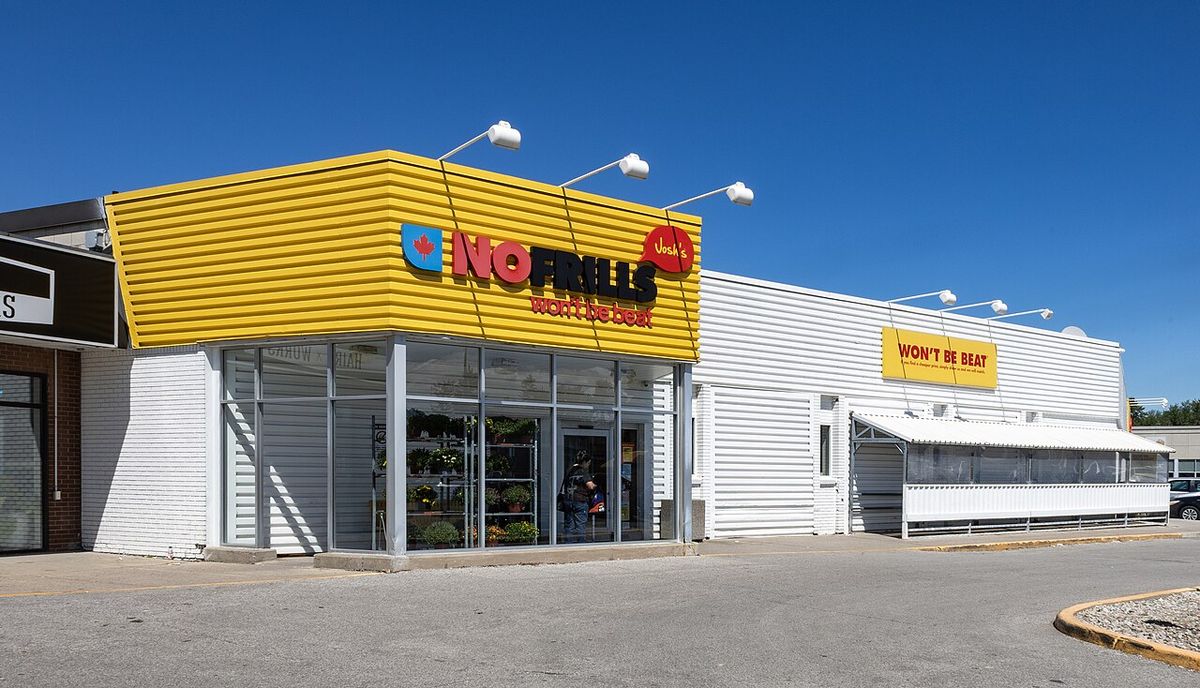
Maxi is a discount grocery retailer based in Quebec, Canada, and the largest supermarket chain in the province under the Loblaw Companies umbrella. Founded in 1984 by Provigo, it operates as the Quebec equivalent of the No Frills chain found elsewhere in Canada, with all stores being corporately owned rather than franchised. The chain is a significant employer in the region, with over 7,000 people working across its network of standard Maxi and larger Maxi & Cie stores. Known for its price match guarantee and marketing slogan "Imbattable. Point final." ("Unbeatable. Period"), Maxi is a staple for budget-conscious Quebec shoppers.
Founding and early expansion
The first Maxi store opened on November 19, 1984, in a former Kmart location in Longueuil, Quebec. This inaugural store was notably large for its time, spanning 60,000 square feet, which was approximately three times the size of a conventional supermarket. The concept was developed as a larger spinoff of Provigo's existing Héritage supermarket chain, aiming to offer a wide selection of goods at discount prices. By 1987, the chain had expanded to six locations, with three of these early stores featuring an innovative on-site day-care centre where parents could leave their children for up to 90 minutes while shopping.
Growth through acquisition and rebranding
When the Steinberg grocery chain became defunct in 1992, many of its stores were converted into Maxi locations, rapidly expanding the brand's footprint. This was followed in 1993 by the rebranding of several larger Provigo stores under the Maxi banner. The process of consolidation continued, and in 1995 Maxi fully absorbed the original Héritage chain it was spun off from, bringing the total store count to 67 locations across Quebec. This period solidified Maxi's position as a major discount player in the provincial grocery market.
Integration into Loblaw Companies
A major corporate shift occurred in 1999 when Loblaw Companies acquired Provigo, bringing Maxi under the control of Canada's largest food distributor. Following this acquisition, Maxi's brief foray outside Quebec came to an end. The chain had expanded into Ontario beginning in 1997, but these stores were either closed or converted to other Loblaw banners, such as Fortinos, in 1999. As a division of Loblaw, Maxi serves as the primary discount banner for the corporation in Quebec, paralleling the role of the franchised No Frills chain in other provinces. The corporate ownership structure differentiates Maxi from No Frills, where stores are typically operated by independent franchisees.
The Maxi & Cie format
In 1996, the company introduced a larger store format called Maxi & Cie, known as Maxi & Co. in English. The first Maxi & Cie location opened on September 25, 1996, on Jean-Talon Street in the Saint-Léonard borough of Montreal, and it remains in operation. These stores carry a wider variety of general merchandise beyond groceries, including household items, clothing, and seasonal products. Some Maxi & Cie outlets are conversions of existing, larger Maxi stores, including the original 1984 location in Longueuil. This format also had a short-lived presence in Ontario, which ended with the Loblaw acquisition in 1999. A Maxi & Co. store in Ontario was notably used as a filming location for a scene in the 1999 movie Pushing Tin.
Modern operations and market presence
As of 2026, Maxi operates 185 locations throughout Quebec, making it the largest supermarket chain in the province by store count under the Loblaw banner. The chain employs over 7,000 people across its standard Maxi and Maxi & Cie stores. Its core marketing promise is a price match guarantee, encapsulated in the French slogan "Imbattable. Point final." which translates to "Unbeatable. Period." In recent years, comedian Martin Matte has served as the brand's spokesperson, frequently delivering the catchy tagline "Maxi, ben oui, Maxi" ("Maxi, well yes, Maxi") in television advertisements. The chain continues to focus on providing low prices and a broad selection to Quebec consumers.
Role within the Loblaw portfolio
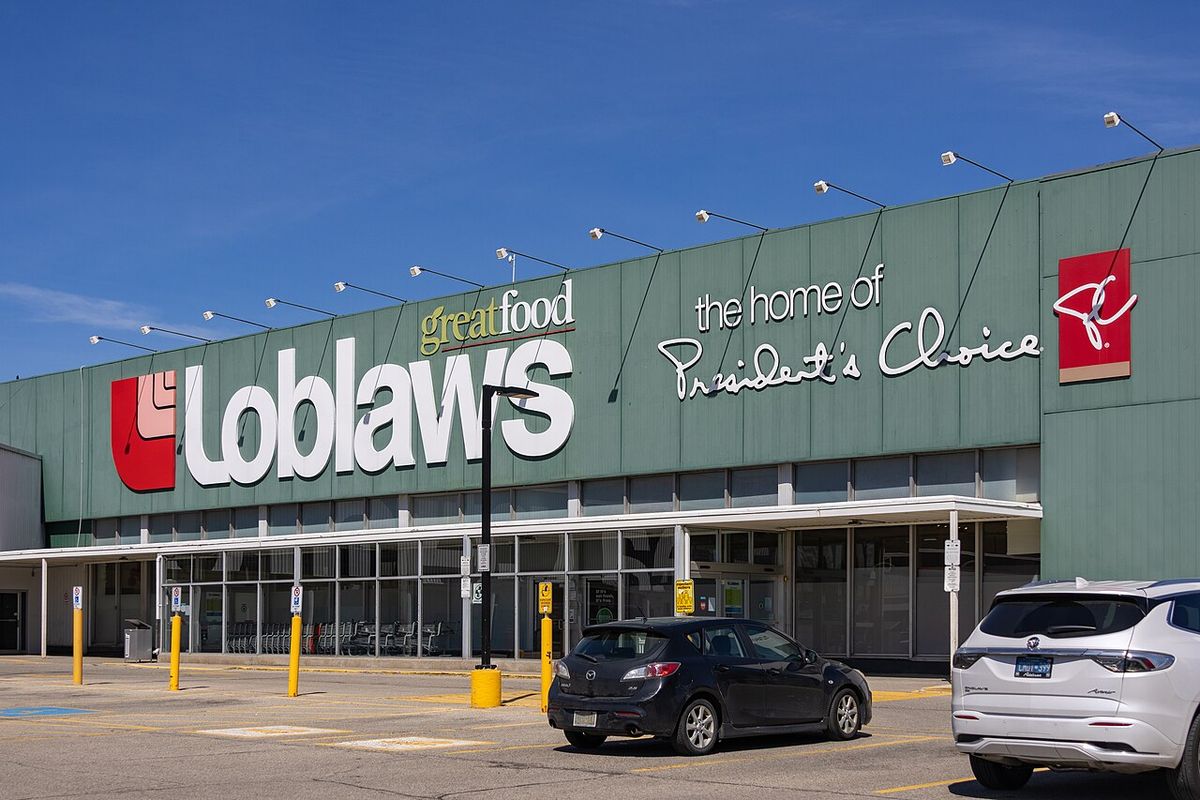
Within the Loblaw Companies portfolio, Maxi occupies the hard-discount grocery segment specifically for the Quebec market. It operates alongside other Loblaw banners in the province, such as Provigo and Loblaws, which target different consumer segments with varying service levels and price points. Maxi's corporate ownership model allows Loblaw to maintain direct control over pricing, promotions, and store operations, ensuring consistency with its overall discount strategy. The chain's success is a key component of Loblaw's strategy to compete with other major discount retailers in Quebec, including Walmart Canada and Métro's Super C chain. Its deep integration into Loblaw's supply chain provides advantages in procurement and distribution efficiency.
Marketing and brand identity
Maxi's brand identity is heavily centred on its promise of unbeatable low prices, a message reinforced by its long-standing price match guarantee. The slogan "Imbattable. Point final." is a direct and definitive statement of this value proposition to Quebec shoppers. The brand has also cultivated a friendly and familiar presence through its advertising, notably with the use of spokesperson Martin Matte. His delivery of the tagline "Maxi, ben oui, Maxi" has become a recognizable catchphrase in Quebec popular culture.
Historical context and industry position
The creation of Maxi in 1984 was part of a broader trend in the grocery industry towards larger-format, no-frills discount stores. Its initial size of 60,000 square feet was revolutionary for a supermarket in Quebec at the time. The chain's growth was accelerated by the decline of historic Quebec grocery banners like Steinberg, whose store network it absorbed. Maxi's model as a corporately owned discount chain within Loblaw is distinct from the franchised model used for No Frills, though they serve analogous market segments in different regions. This corporate structure is a defining feature that has remained consistent since its founding by Provigo and through its integration into the Loblaw empire.
Store formats and customer experience
Maxi offers two primary store formats to cater to different shopping needs. The standard Maxi format focuses on providing a wide assortment of grocery items at discount prices in a efficient layout. The Maxi & Cie format expands on this by incorporating a significant general merchandise section, allowing for more one-stop shopping. The inclusion of day-care centres in some early locations was an innovative service aimed at making the shopping trip more convenient for families. While this specific amenity is not mentioned in contemporary operations, the chain's focus remains on value and selection. The conversion of the original Longueuil store to a Maxi & Cie exemplifies the chain's adaptability in utilizing its larger real estate assets to meet evolving consumer demand.
Questions about Maxi
What is Maxi?
Maxi is a corporately owned discount grocery chain operating exclusively in Quebec, Canada. It is a division of Loblaw Companies and serves as the Quebec equivalent of the No Frills chain found in other provinces. The chain focuses on offering low prices on a wide range of grocery items, supported by a price match guarantee. As of 2026, there are 185 Maxi locations across Quebec.
When was the first Maxi store opened?
The very first Maxi store opened on November 19, 1984, in Longueuil, Quebec. It was located in a former Kmart building and was notably large for its time, measuring 60,000 square feet. The store was conceived as a larger version of Provigo's Héritage supermarket format. This original location was later converted into a Maxi & Cie store.
What is the difference between Maxi and Maxi & Cie?
Maxi & Cie is a larger store format within the Maxi chain that carries an expanded selection of general merchandise beyond standard groceries. The first Maxi & Cie opened in Saint-Léonard, Quebec, in 1996. These stores often occupy larger footprints, and some are converted from existing Maxi locations. While Maxi focuses primarily on discount food retail, Maxi & Cie offers a wider variety of non-food items for a one-stop shopping experience.
Does Maxi operate outside of Quebec?
Maxi currently operates only within Quebec. The chain did briefly expand into Ontario starting in 1997, but this venture was short-lived. Following Loblaw's acquisition of Provigo in 1999, all Maxi and Maxi & Co. stores in Ontario were either closed or converted to other Loblaw banners, such as Fortinos. The chain has since concentrated its operations exclusively in its home province.
Who owns Maxi?
Maxi is owned by Loblaw Companies Limited, Canada's largest food distributor and retailer. Loblaw acquired Maxi as part of its purchase of the Provigo chain in 1999. Prior to that, Maxi was founded and operated by Provigo. As a division of Loblaw, Maxi is corporately owned, unlike its counterpart No Frills, which operates on a franchise model outside Quebec.
Who is the spokesperson for Maxi?
The spokesperson for Maxi is Quebec comedian Martin Matte. He appears in the company's television advertisements and is known for delivering the slogan "Maxi, ben oui, Maxi" ("Maxi, well yes, Maxi"). This slogan is one of two main promotional phrases used by the grocery chain. The other slogan is "Imbattable. Point final" ("Unbeatable. Period"), which references their price match guarantee. Martin Matte's involvement in these ads is a well recognized aspect of the brand's marketing in Quebec.
Sources: Wikipedia and current public reporting, checked by the Novello Desserts desk. Last updated 2026-10-23.