British Commonwealth Air Training Plan
The British Commonwealth Air Training Plan (BCATP) was a massive multinational aircrew training program established by the United Kingdom, Canada, Australia and New Zealand during the Second World War. It remains one of the single largest aviation training programs in history and was responsible for training nearly half of all pilots, navigators, bomb aimers, air gunners, wireless operators and flight engineers for the Royal Air Force and other Commonwealth air forces. The plan was Canada's primary contribution to the early Allied war effort, as the country was chosen as the main training location. The BCATP's immense scale and success, which saw over 130,000 aircrew graduate, turned Canada into a global aviation training centre, leaving a permanent legacy on the nation's air force, infrastructure and international relationships.
Origins and the 1939 Agreement
The genesis of the British Commonwealth Air Training Plan followed the outbreak of war in September 1939, as the British Air Ministry urgently needed to train vast numbers of aircrew for future operations. Negotiations between the United Kingdom, Canada, Australia and New Zealand took place in Ottawa in the autumn of 1939, led by a British delegation headed by Lord Riverdale. For Canadian Prime Minister William Lyon Mackenzie King, participation offered a strategic solution to domestic political pressures, providing a major war contribution that would keep many Canadians at home and help avoid the divisive issue of overseas conscription. The negotiations were difficult, with key sticking points including cost-sharing and national control over trained personnel. Canada insisted that its graduates serve as identifiable members of the Royal Canadian Air Force, not simply be absorbed into the Royal Air Force. After intense talks, the four nations signed the Air Training Agreement, often called the Riverdale Agreement, on 17 December 1939. The agreement outlined an ambitious structure mirroring RAF training, calling for the creation of dozens of specialized schools across Canada. It initially aimed to train nearly 50,000 aircrew annually, with Canada providing the largest share of trainees and shouldering most of the financial burden, estimated at hundreds of millions of dollars.
Scale and Operations in Canada
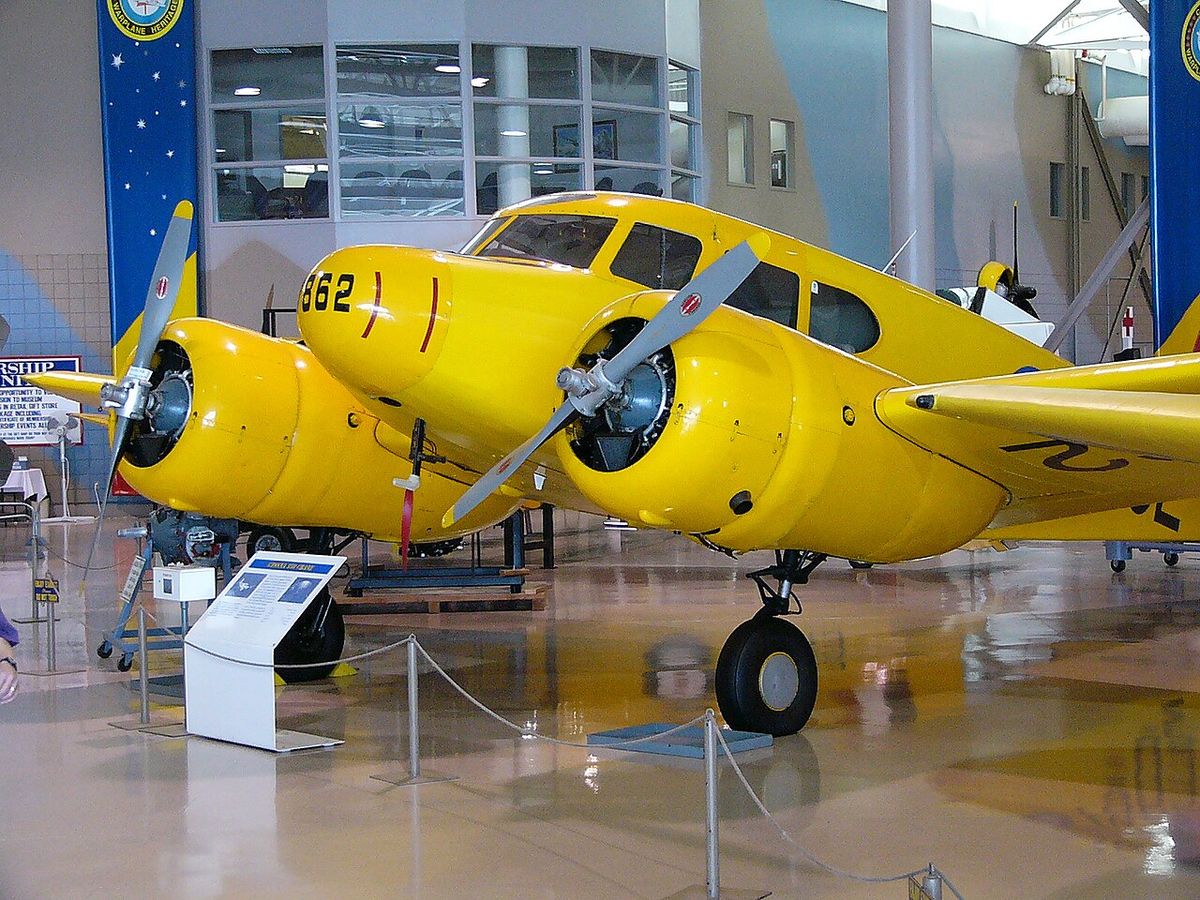
Canada was selected as the primary location for the BCATP due to its ideal conditions: remoteness from enemy threat, vast open spaces for flight training, suitable weather, proximity to American industry and supplies, and relative closeness to the European theatre. The Royal Canadian Air Force administered the plan in Canada, with RAF officer Robert Leckie appointed as Director of Training from 1940 to oversee standards. The infrastructure built to support the plan was colossal, involving the construction of approximately 8,300 buildings, including 700 hangars, and the installation of massive fuel storage, water mains, sewer systems and electrical networks. At its peak in late 1943, the BCATP involved over 100,000 administrative personnel operating 107 schools and 184 other units at 231 locations from coast to coast. The plan utilized a wide array of training aircraft, including the de Havilland Tiger Moth, North American Harvard, Fleet Finch and Boeing Stearman. The first course officially commenced on 29 April 1940 at No. 1 Initial Training School in Toronto, and the first group of BCATP-trained pilots posted overseas were 37 Royal Australian Air Force personnel who graduated in November 1940.
The British Commonwealth Air Training Plan's original agreement called for the training of nearly 50,000 aircrew each year. The demands of the war saw the program far exceed its initial targets. The program was formally terminated on 31 March 1945. By that time, the BCATP had graduated 131,553 aircrew trainees. Over half of these graduates, specifically 72,835, were Canadians. The majority of all graduates served in the Royal Air Force.
- Total pilots trained: 49,808
- Total graduates who were Canadian: 72,835 (over 55% of all graduates)
- Graduates from other Commonwealth nations: United Kingdom, Australia, New Zealand
- Allied nationals trained under RAF quotas: approximately 2,000 French, 900 Czechoslovakians, 680 Norwegians, 450 Poles, and about 450 from Belgium and the Netherlands combined
Training within the British Commonwealth Air Training Plan was not without risk. Over 800 men and women lost their lives while serving or training with the Air Forces of the Commonwealth in Canada, the West Indies and the United States. In early 1944, the Air Ministry announced the winding-up of the plan. This decision was made because the Commonwealth air forces had developed a surplus of air crews. The flow of trainees began to wind down at that time.
Economic and Social Impact on Canada
The establishment of the BCATP had a major effect on the Canadian home front, particularly for communities still recovering from the Great Depression. The construction and operation of the schools provided a massive economic stimulus, creating jobs and injecting money into local economies. Towns and cities across the country actively lobbied the federal government to host a BCATP school, knowing it would bring significant activity and investment. The plan directly employed more than 104,000 Canadian civilians and military personnel, including thousands of women serving in the RCAF Women's Division. The sudden influx of thousands of staff and trainees from across the Commonwealth and Allied nations also had a large social impact. Local communities organized dances, social events and hospitality for the airmen, many of whom were far from home. This interaction led to lasting personal connections. The BCATP Supervisory Board's final report noted that more than 3,750 members of the RAF, RAAF, RNZAF and Allied nationals married Canadian women, with many settling in Canada after the war. The plan required and fostered a rapid expansion of Canadian technical and instructional expertise in aviation, laying groundwork for a postwar aerospace sector and creating a pool of skilled labour.
Contributions from Australia and New Zealand
While Canada hosted the bulk of the training, Australia and New Zealand played vital roles as partners in the BCATP, which was known as the Empire Air Training Scheme in Australia. Australia committed to providing 28,000 aircrew over three years and established its own network of schools for initial and elementary training. The first Australian flying course started on 29 April 1940, and Keith Chisholm was the first Australian trained under the scheme. Many Australian aircrew received advanced training in Canada, with the first contingent graduating and leaving for Britain in November 1940. Following Japan's entry into the war in December 1941, the focus for most RAAF aircrew shifted to training and operations in the Pacific theatre, though Australian Article XV squadrons continued to serve in Europe. By 1945, more than 37,500 Australian aircrew had been trained under the scheme. New Zealand's contribution was also significant within its smaller population. The RNZAF sent pilots to Canada for advanced training while also running its own elementary programs. Overall, New Zealanders constituted 5.3 percent of all BCATP graduates trained in Canada, contributing 2,743 fully trained pilots to serve with the RAF overseas and training many more for home defence in the Pacific.
Architectural and Infrastructure Legacy
The physical footprint of the BCATP permanently altered the Canadian landscape, most notably through the construction of new airfields and the expansion of existing airports. A classic BCATP airfield was designed with three runways, each typically 2,500 feet long, arranged in a triangular pattern. This layout allowed aircraft to always land into the wind, a critical feature for the taildragger training aircraft of the era like the Harvard. This distinctive triangular outline remains perfectly preserved at some locations like the Claresholm Industrial Airport in Alberta and is still visible beneath later runway extensions at many other former BCATP sites such as Kingston's Norman Rogers Airport, Boundary Bay Airport in British Columbia and Brantford Airport in Ontario. Hundreds of the hangars, barracks, drill halls and other structures built for the plan were repurposed after the war. The network of improved airports across the country served as a foundation for Canada's postwar civil aviation expansion and commercial airline growth. The infrastructure development also included extensive utilities, with the plan's construction involving over 300 miles of water mains, a similar length of sewer mains, and electrical systems supporting a connected load of over 80,700 horsepower.
Commemoration and Museums
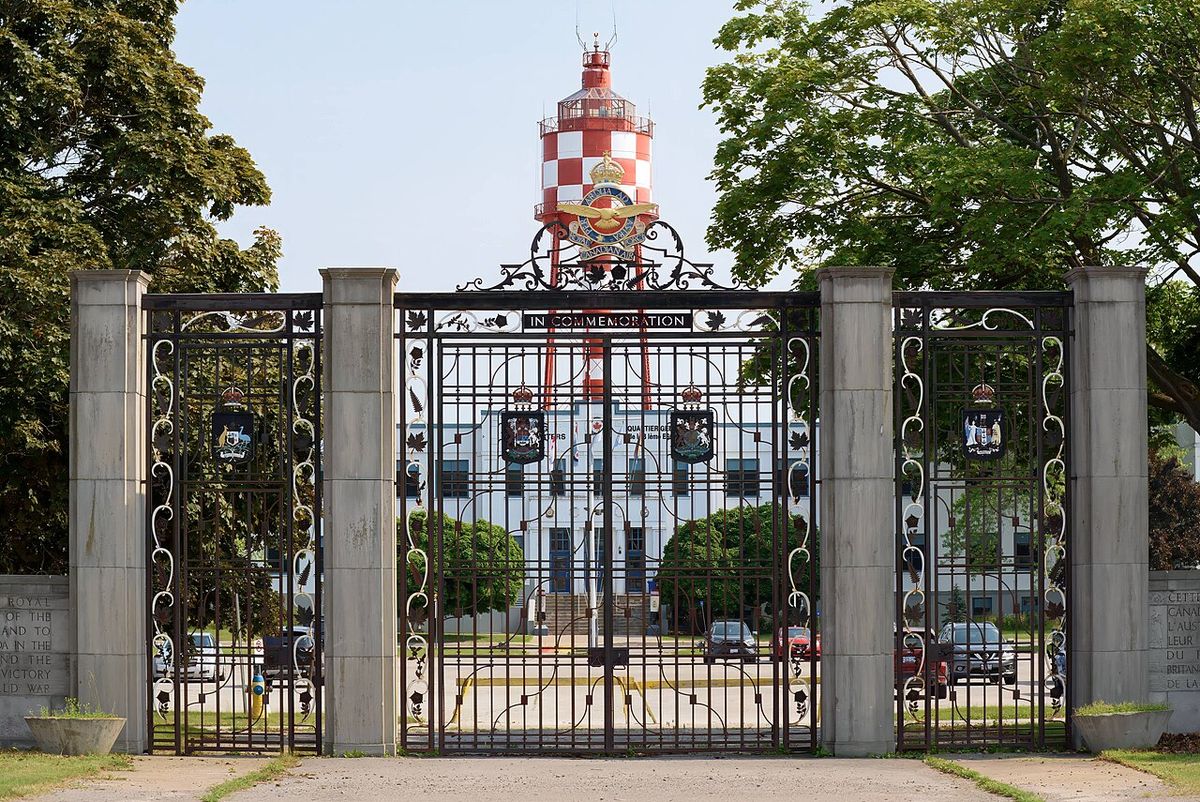
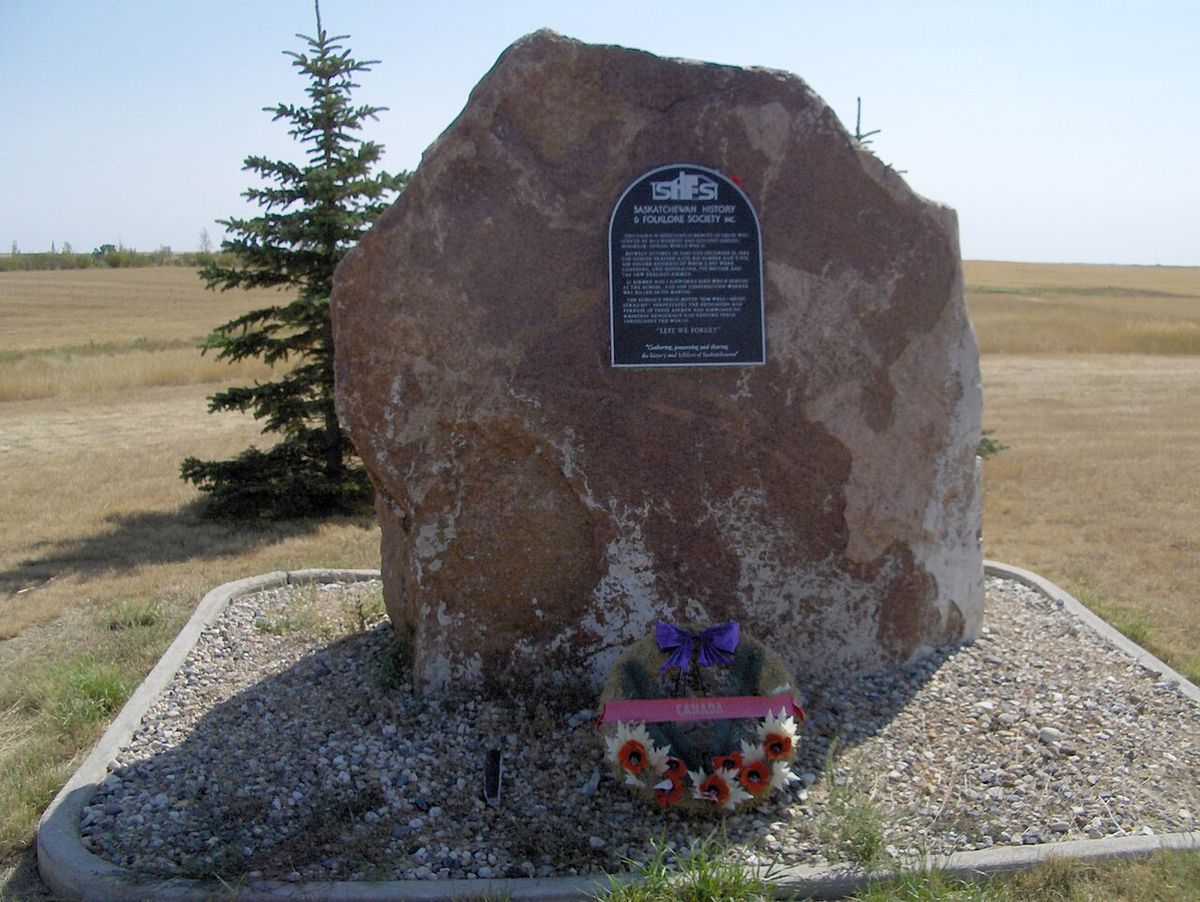
The legacy of the BCATP is commemorated across Canada through monuments, historic designations and dedicated museums. In 1949, Australia, New Zealand and the United Kingdom presented Canada with wrought iron gates at CFB Trenton to honour the wartime partnership. The Ottawa Memorial, unveiled by Queen Elizabeth II in 1959, commemorates by name some 800 Commonwealth air force personnel who died while serving or training in North America and have no known grave. The BCATP was designated a National Historic Event by the Government of Canada on 18 November 1983. The foremost institution dedicated to preserving this history is the Commonwealth Air Training Plan Museum, located at the Brandon Municipal Airport in Manitoba. This museum, a Manitoba Signature Museum and Star Attraction, is the only one in the world solely dedicated to the BCATP. Its collection includes 14 aircraft on display, with airworthy examples such as a Tiger Moth, Harvard, Cornell and Fleet Finch, and it features a vintage hangar, restoration workshops, an RCAF WWII memorial wall and a chapel. Other major Canadian museums with significant BCATP aircraft and artifacts include the Canadian Warplane Heritage Museum in Hamilton, the Reynolds-Alberta Museum in Wetaskiwin, the National Air Force Museum of Canada in Trenton and the Canadian Harvard Aircraft Association in Tillsonburg.
Postwar Influence and Training Continuity
The BCATP established a powerful precedent for Canada as a centre for multinational military flight training, an role that continued long after the Second World War. The expertise, infrastructure and relationships forged during the BCATP directly led to a series of subsequent international training programs hosted by Canada. The first major successor was the NATO Air Training Plan, which operated from 1950 to 1957 and graduated 4,600 pilots and navigators from ten allied nations. This was followed by various bilateral training arrangements with individual NATO countries between 1959 and 1983. Canada also instituted the Military Training Assistance Plan in 1964 to train aircrews from developing nations. A more recent and ongoing program is NATO Flying Training in Canada, a partnership launched in 1998 between the Canadian Armed Forces, Bombardier Aerospace and participating allied air forces. In 2005, the Department of National Defence awarded a 22-year contract worth $1.77 billion to Allied Wings, led by Kelowna Flightcraft, to provide flying training services from the Canada Wings Aviation Training Centre near Portage la Prairie, Manitoba. This continuity demonstrates how the BCATP's model of collaborative aviation training evolved into a lasting element of Canada's defence policy and international military cooperation.
Questions about British Commonwealth Air Training Plan
How many aircrew were trained by the British Commonwealth Air Training Plan?
The British Commonwealth Air Training Plan graduated a total of 131,553 aircrew by the time it ended on 31 March 1945. This total included 49,808 trained pilots. Over half of all graduates, numbering 72,835, were Canadians. The remainder included personnel from the United Kingdom, Australia, New Zealand and many other Allied nations such as France, Czechoslovakia, Norway, Poland, Belgium and the Netherlands, who trained under Royal Air Force quotas.
Why was Canada chosen as the main location for the BCATP?
Canada was selected as the primary location for several strategic reasons. It was far from the active fighting fronts in Europe and Asia, eliminating the threat of enemy attack during training. The country offered vast areas of open space and generally good flying weather, which were ideal for extensive flight and navigation exercises. Canada's proximity to the industrial manufacturing centres of the United States facilitated the supply of aircraft, engines, fuel and other equipment. Canada had a large population within the Commonwealth to draw recruits from and the potential industrial capacity to support the massive undertaking.
Where can I visit a museum dedicated to the BCATP?
The primary museum dedicated to the BCATP is the Commonwealth Air Training Plan Museum, located at the Brandon Municipal Airport in Brandon, Manitoba. It is the only museum in the world solely focused on preserving the history of the Plan. The museum features a collection of 14 aircraft, including airworthy trainers like the Tiger Moth and Harvard, as well as vehicles, artifacts, a memorial wall and a chapel. Other major Canadian museums with significant BCATP exhibits include the Canadian Warplane Heritage Museum in Hamilton, Ontario, the National Air Force Museum of Canada in Trenton, Ontario, and the Reynolds-Alberta Museum in Wetaskiwin, Alberta.
What was the cost of the BCATP and who paid for it?
The total cost of the British Commonwealth Air Training Plan was approximately $2.25 billion. The Canadian government paid the majority of this cost, covering about $2 billion. This included Canada paying $425 million of the United Kingdom's share of the expenses. The remaining costs were divided among the other partner governments of the United Kingdom, Australia and New Zealand as per the 1939 agreement. The immense expenditure covered the construction of airfields and buildings, the purchase of thousands of aircraft, and the operational costs of running the schools for nearly five years.
What is the significance of the triangular runway pattern at old airports?
The triangular pattern of three runways is a distinctive architectural legacy of the BCATP airfields built across Canada. This design was implemented so that aircraft could always land more or less directly into the wind, regardless of its direction. This was critically important for the training aircraft used at the time, such as the North American Harvard, which were taildraggers and difficult to handle in strong crosswinds during landing. Many of these triangular layouts are still visible today beneath modern runway extensions at active airports like Boundary Bay Airport in BC and Brantford Airport in Ontario, serving as a physical reminder of the wartime training program.
How did the BCATP benefit Canada after the war?
The BCATP provided long-term benefits to Canada that extended far beyond the war years. It left a network of improved or newly built airports across the country, which became the foundation for the expansion of civil aviation and commercial air travel. The program spurred the development of a domestic aviation industry and technical expertise. It helped unify the nation through a shared, monumental home-front effort and stimulated economic recovery, particularly in Western provinces. The BCATP also established Canada's reputation as a world leader in aviation training, leading directly to postwar international training schemes with NATO and other allies that continue to this day.
Sources and further reading
- British Commonwealth Air Training Plan (Wikipedia)
- Commonwealth Air Training Plan Museum & RCAF WWII ... (airmuseum.ca)
- British Commonwealth Air Training Plan, Project '44 (project44.ca)
- British Commonwealth Air Training Plan (junobeach.org)
- The British Commonwealth Air Training Plan (veterans.gc.ca)
Checked by the Novello Desserts desk. Last updated 2026-10-29.