Centre Block
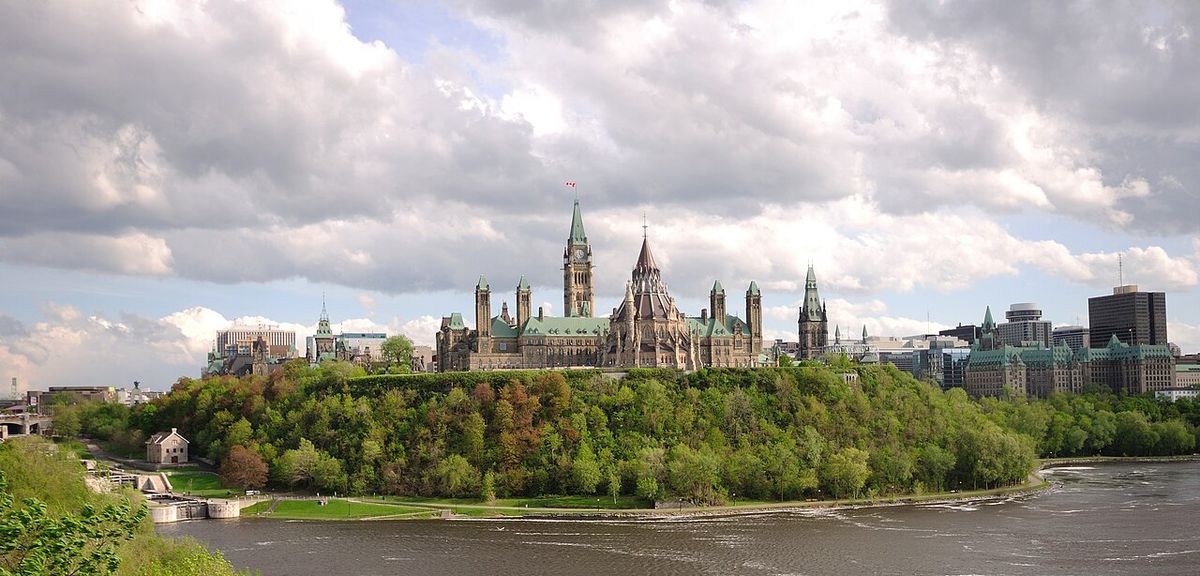
The Centre Block is the principal building of Canada's Parliament Buildings, located on Parliament Hill in Ottawa, Ontario. As the home of the House of Commons and the Senate of Canada, it is the epicentre of the nation's federal legislative process and democratic traditions. The current structure, built in the Gothic Revival style after a devastating fire in 1916, is a widely recognized national symbol featured on Canadian currency. Since 2018, the building has been closed for a major rehabilitation project, the largest and most complex heritage restoration ever undertaken in Canada, with completion projected for 2031.
Architectural Design and Construction
The Centre Block was designed by architects Jean-Omer Marchand and John A. Pearson in a modern Gothic Revival style, characterized by pointed arches, prominent buttresses, and extensive stone carvings. The symmetrical structure measures 144 metres long, 75 metres deep, and rises six storeys, not including the central Peace Tower. Its exterior walls are faced with over 50,000 blocks of more than 24 different types of stone, though rustic Nepean sandstone is predominant, trimmed with dressed stone around its 550 windows. The roof is constructed of reinforced concrete covered with copper and dotted with dormer windows. Inside, the walls are sheathed in Tyndall stone, a dolomitic limestone from Manitoba known for its colour and fossil patterns, augmented by sculptural decoration in Indiana limestone. Construction began immediately after the fire of 1916, but detailed sculpting work on the interior continued for decades, with some elements not finished until the 1970s. The building houses not only the legislative chambers but also the offices of the Prime Minister, party leaders, senators, and members of parliament, along with numerous committee rooms and the Parliamentary Press Gallery.
Key Interior Spaces and Art
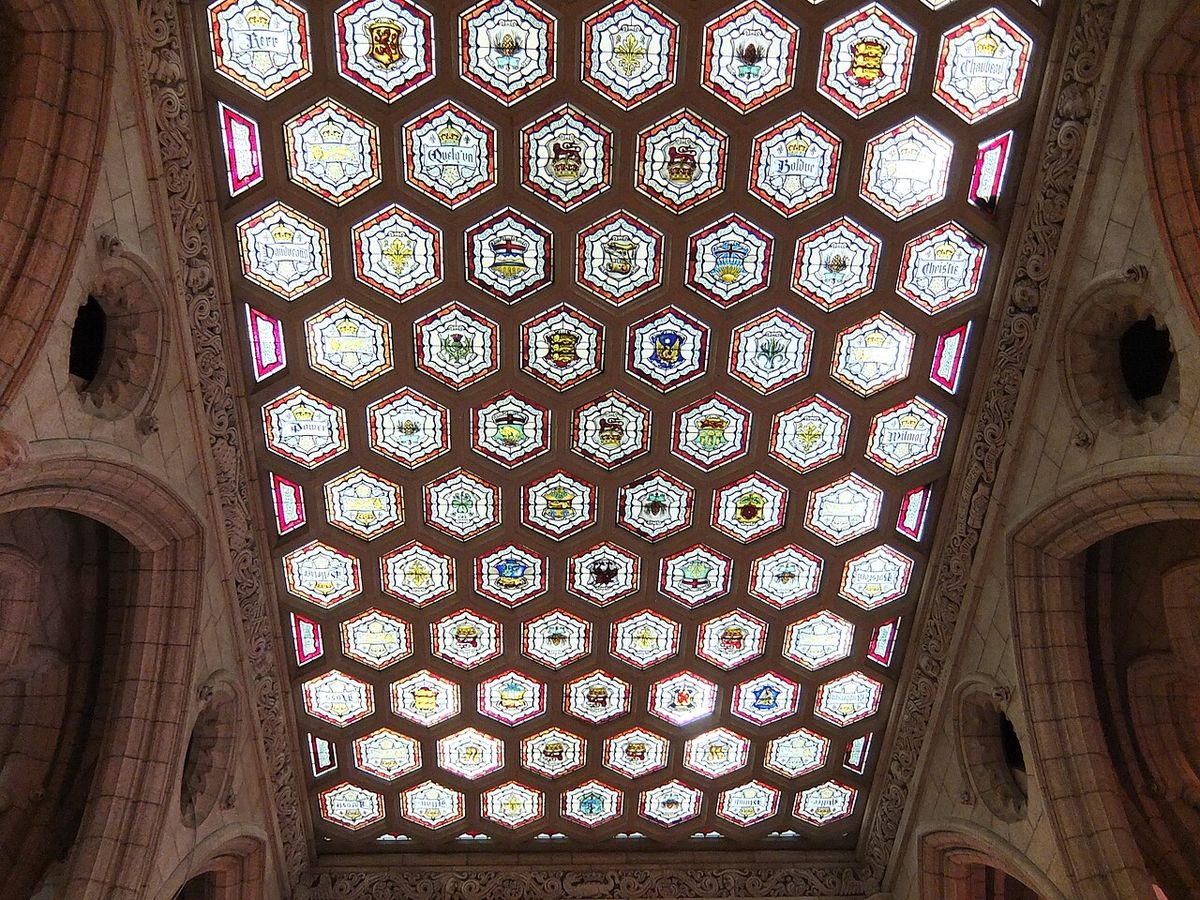
The interior of the Centre Block contains ceremonial halls, legislative chambers, and artistic commissions that narrate Canadian history. The layout is organized symmetrically around several grand spaces, each serving distinct parliamentary and commemorative functions. These areas are adorned with stone carvings, stained glass, murals, and architectural details that reflect the nation's heritage, from pre-Confederation figures to its participation in global conflicts. The art and architecture were designed to embody the confederated nature of Canada and honour its democratic institutions. Immediately inside the main entrance lies Confederation Hall, an octagonal chamber that serves as the building's central rotunda. Its perimeter is divided by limestone clustered columns into eight bays, supported by dark green syenite pillars and a vaulted ambulatory. A single central column, placed on 2 July 1917 to mark the 50th anniversary of Confederation, supports one side of the fan-vaulted ceiling. The column rests on a stone carved with an image of Neptune, and above it is an inscription dedicating the reconstructed building as a memorial. The inlaid marble floor features a 16-point windrose of Verde Antique serpentine and swirls of green serpentine, representing water and alluding to Canada's motto 'from sea to sea'. Detailed carving in the hall, with designs finalized by sculptor Cléophas Soucy in 1941, was not completed until 1953 due to the Second World War. The tympanums display the coats of arms of Canada, the provinces, and territories, each surrounded by relevant floral symbols, while the gables bear symbols of Canada's fauna and the coats of arms of provincial and territorial capitals.
Extending north to south between the Library of Parliament and the Peace Tower is the Hall of Honour, a long, rib-vaulted space of Tyndall limestone. It serves as the processional route for the speakers of parliament and the site for the lying in state segment of some state funerals. The hall is divided into five bays by superimposed double arcades of lancet arches atop clustered columns. Its ribbed vault ceiling rises to bosses carved with Tudor roses and fleurs-de-lis. The hall is bisected by small, vaulted corridors. The west one, known as the Correspondents' Entrance, is lined with bosses and label stops sculpted by Cléophas Soucy between 1949 and 1950 into the visages of ten notable parliamentary correspondents. Originally intended as a gallery for statues of notable Canadians, the plan was later changed to commemorate the 1916 fire and honour participants in the First World War. The sculptural program remains incomplete, with the north end featuring memorials such as a low relief to nursing in Canada and the piece 'Canada Remembers' for Second World War participants.
- Confederation Hall: Central octagonal rotunda with a commemorative central column placed in 1917.
- Hall of Honour: Processional route with a rib-vaulted ceiling and incomplete commemorative sculpture program.
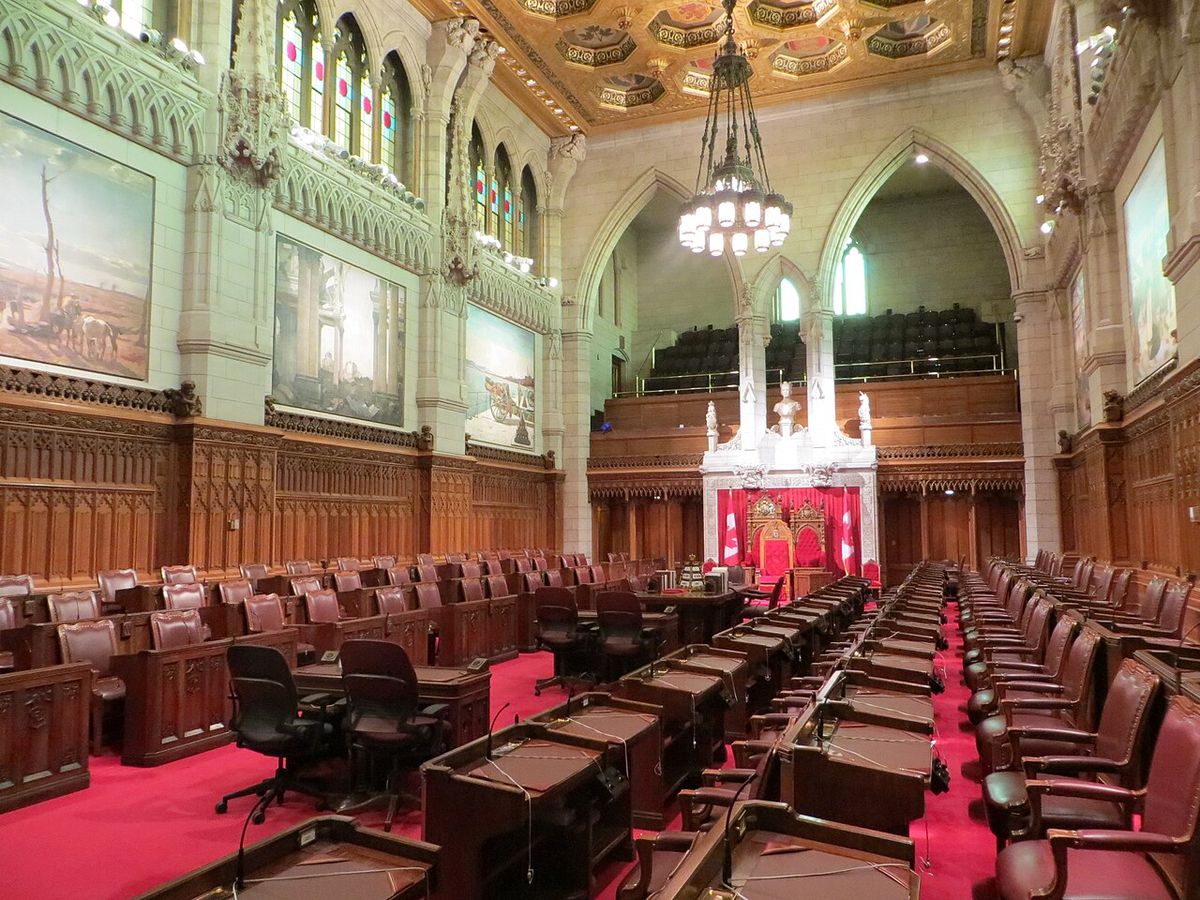
- Senate Chamber: East wing chamber with red decor, a gilt ceiling, and eight First World War murals.
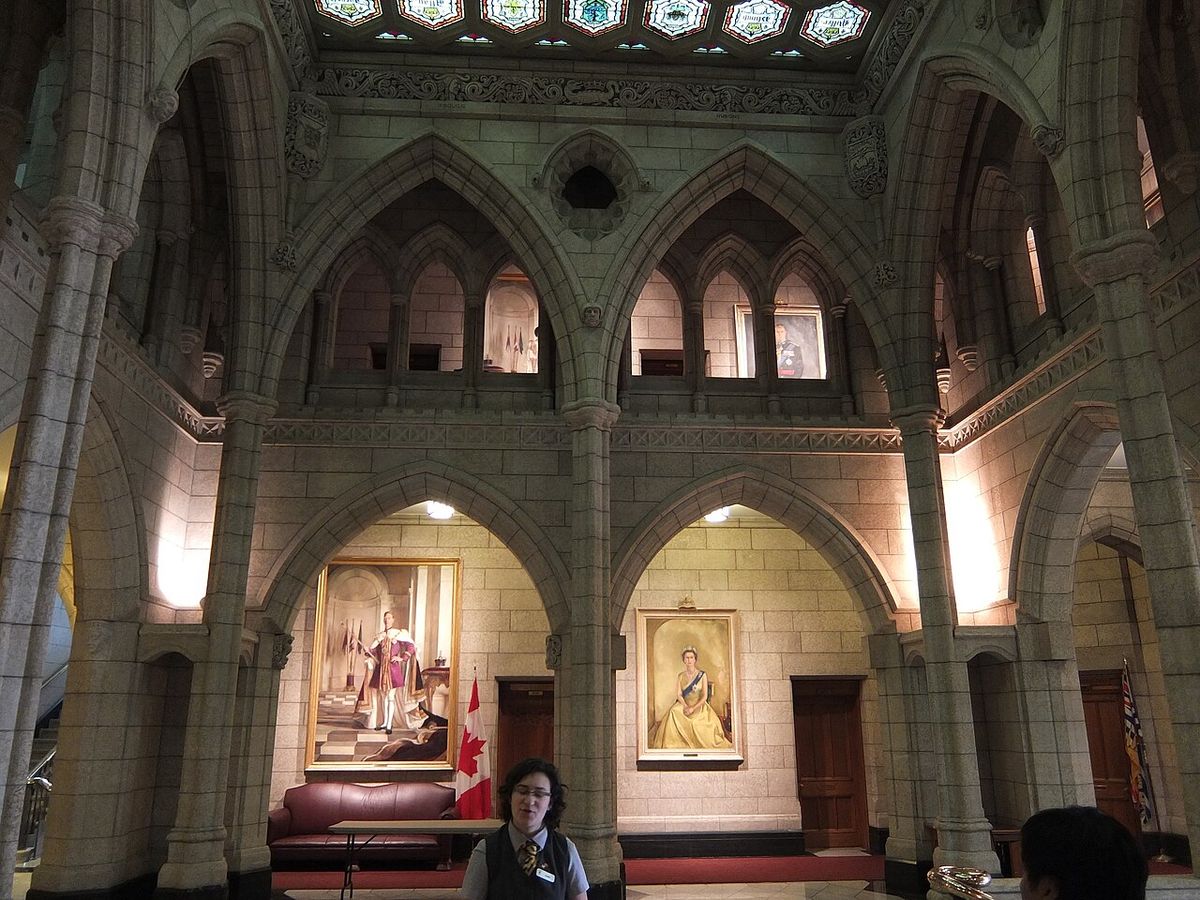
- Senate Foyer: Double-height space with colonnades, sculptures of pre-Confederation figures, and portraits of monarchs.
- House of Commons Chamber: West wing chamber with green decor, a canvas ceiling with heraldic symbols, and stained-glass windows.
The Legislative Chambers
The Centre Block houses the two chambers of Canada's bicameral Parliament: the Senate and the House of Commons. Each chamber has a distinct colour scheme, architectural style, and ceremonial function, reflecting British parliamentary traditions adapted for Canada. The Senate, representing the regions of Canada, occupies the east wing, while the democratically elected House of Commons is in the west wing. Both spaces contain symbolic art and are the focal points of the nation's legislative process. Located in the Centre Block's east wing, the Senate chamber is dominated by the colour red in its upholstery, carpeting, and draperies, reflecting its association with the Crown and the British House of Lords. The room is capped by a gilt ceiling with deep octagonal coffers filled with heraldic symbols, including maple leaves, fleurs-de-lis, and lions. It rests on pilasters capped by caryatids, between which are clerestory windows. On the east and west walls hang eight murals from the Canadian War Memorials Fund, painted between 1916 and 1920, depicting scenes from the First World War. These works were originally intended for a separate memorial but have been displayed in the Senate since 1921. The thrones for the monarch and consort, or the governor general, are located at one end, from which the Speech from the Throne is delivered. On the centre table sits the Diamond Jubilee Calendar, commissioned to mark the 60th anniversary of Queen Elizabeth II's accession.
The House of Commons chamber in the building's western wing features a green colour scheme, visible in the carpeting, bench upholstery, and draperies, a tradition dating to the British House of Commons. The chamber is 21 metres long and 16 metres wide, with seats for 320 members of parliament and a public gallery for 580 persons. A stretched linen canvas ceiling, designed in 1920, sits 14.7 metres above the floor and is painted with the heraldic symbols of Canadian, provincial, and territorial coats of arms. The speaker's chair, made in 1921 as an exact replica of the one in the British House of Commons, is topped by a carved wood canopy bearing the royal coat of arms of Canada made from wood from Westminster Hall. The opposing members' benches are spaced 3.96 metres apart, a distance traditionally said to equal two swords' length. Twelve stained-glass windows in the east and west walls, commissioned in 1967 as a Centennial Project, contain approximately 2,000 pieces of hand-blown glass each, arranged in a Decorated Gothic style pattern with provincial and territorial floral emblems.
Renovation and Public Access
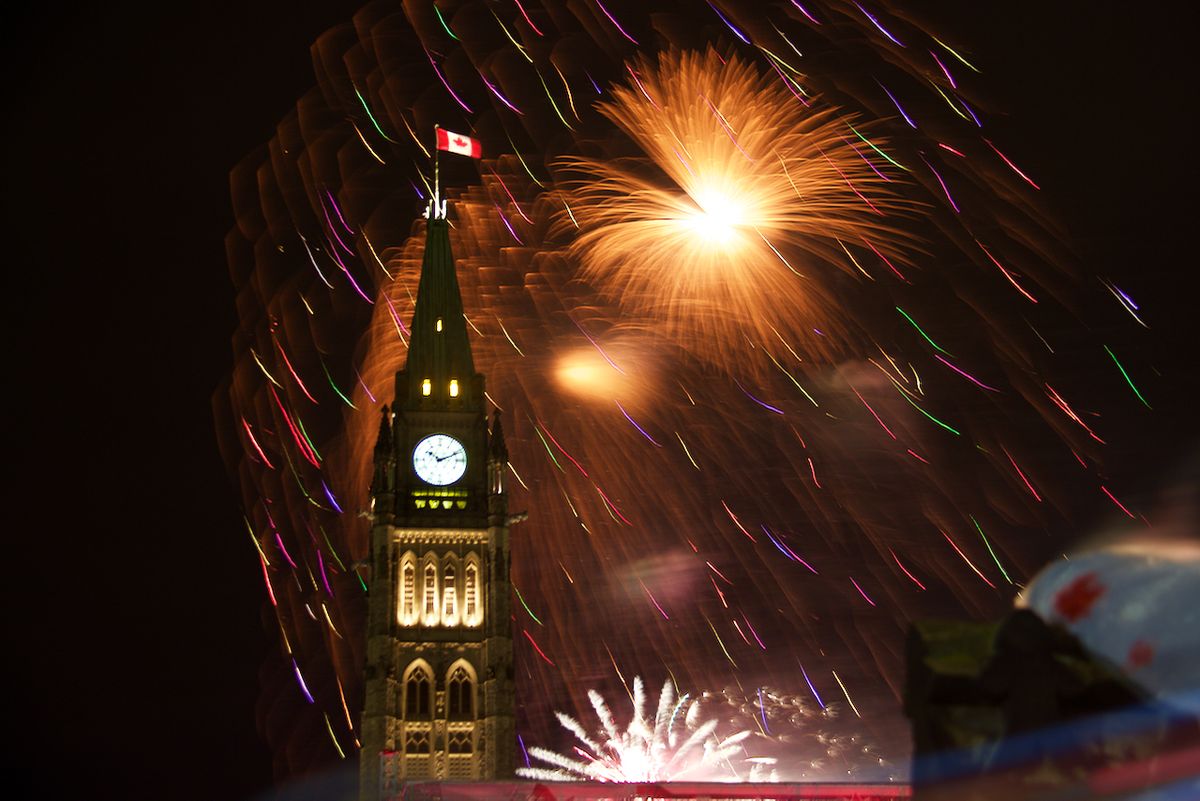
In 2018, the Centre Block was closed to the public and parliamentarians to begin a comprehensive rehabilitation project. Described as the largest and most complex heritage building restoration ever undertaken in Canada, the work is projected to last until at least 2031. During this period, the Senate has relocated to the Senate of Canada Building at 2 Rideau Street, while the House of Commons sits in a temporary chamber within the restored West Block. The renovation aims to modernize infrastructure, improve accessibility, and preserve the building's historic fabric for future generations. Despite the physical closure, public engagement with the Centre Block continues through innovative digital and multimedia experiences. Prior to the closure, public access to Parliament Hill and the Centre Block was a major attraction in Ottawa. Free guided tours of the buildings were available year-round, with tickets obtainable from an information tent in summer or the Visitor Welcome Centre at other times. Tours included visits to the Hall of Honour, the Library of Parliament, and, when Parliament was not sitting, the Senate and Commons chambers. When the House was in session, visitors could watch proceedings from the public galleries. Parliament Hill remains a focal point for national celebrations, most notably the day-long events and fireworks on Canada Day, July 1. The grounds feature statues of historical figures and the Centennial Flame, lit in 1966. Current alternatives for experiencing the Centre Block include 'Parliament: The Immersive Experience', a multimedia attraction in downtown Ottawa that recreates the building in 360 degrees. The Senate of Canada also offers a comprehensive Virtual Tour of Centre Block, a digital, 360-degree exploration that allows users to wander the historic halls, view art collections, and learn about architectural details from before the rehabilitation. This virtual experience includes interactive elements like treasure hunts for children and detailed looks at spaces such as the Senate Chamber and the Salon de la Francophonie.
Symbolism and National Identity
The Centre Block is a significant physical expression of Canadian history, values, and identity. Its architecture and interior decoration contain many symbols intended to communicate the nation's origins, diversity, and democratic principles. From the Gothic Revival style that connects Canada to its European parliamentary roots to the indigenous materials like Tyndall stone that root it in the Canadian landscape, every element carries meaning. The building serves not only as a workplace for government but as a national monument, commemorating Confederation, honouring wartime sacrifice, and celebrating the continuity of the Canadian state. The extensive use of stone carving throughout the building tells visual stories. Gargoyles and grotesques adorn the exterior, while inside, sculptures depict monarchs, explorers, First Nations figures, and symbols of Canadian industry and fauna. The choice of colours in the legislative chambers, red for the Senate and green for the Commons, directly references British tradition, acknowledging Canada's constitutional history. Meanwhile, the incorporation of provincial and territorial coats of arms, floral emblems, and the names of speakers into the architecture reinforces the federal and confederated nature of the country. Artworks like the First World War murals in the Senate and the memorial sculptures in the Hall of Honour ensure that national sacrifice is remembered within the seat of government. The building's representation on Canadian currency confirms its status as a national symbol. The Library of Parliament is featured on the $10 bill, the Peace Tower on the $20 bill, and the entire Centre Block complex on the $50 bill. This places the image of Canada's democracy directly into the hands of its citizens, a constant reminder of the institutions housed within the stone walls on Parliament Hill.
Visitor Information and Practical Details
While the Centre Block itself is closed for renovations, Parliament Hill remains an active and accessible destination for visitors to Ottawa. The grounds are open year-round for self-guided exploration, offering views of the Gothic Revival architecture, the Peace Tower, and numerous statues. The Centennial Flame, lit in 1966, burns at the centre of the open plaza. During the summer months, visitors can often meet members of the Royal Canadian Mounted Police on the Hill. The focal point for visitor services is the Info-Tent in summer or the Visitor Welcome Centre at other times, though specific tour offerings for the East Block and other locations are subject to parliamentary activity and security screening. For those seeking to understand the interior of the Centre Block, the primary option is the Senate's Virtual Tour, an online, interactive 360-degree experience. Additionally, 'Parliament: The Immersive Experience' is a paid multimedia attraction located in downtown Ottawa that recreates the building. When the Centre Block reopens after 2031, it is expected that free guided tours will resume. These tours typically last between 20 minutes to an hour, with longer visits recommended to fully appreciate Parliament Hill. General inquiries about visiting Ottawa's attractions can be directed to Ottawa Tourism.
| Attraction/Experience | Type | Availability | Key Feature |
|---|---|---|---|
| Parliament Hill Grounds | Self-guided tour | Open year-round | Statues, Centennial Flame, architecture |
| Senate Virtual Tour of Centre Block | Digital 360° experience | Online, on-demand | Exploration of art, architecture, and chambers |
| Parliament: The Immersive Experience | Multimedia attraction | Ticketed, in downtown Ottawa | 360° recreation of Centre Block |
| East Block Guided Tours | In-person guided tour | Seasonal, subject to availability | Historic rooms like Sir John A. Macdonald's office |
| Public Galleries (House of Commons/Senate) | Observation of proceedings | When Parliament is sitting, in temporary locations | Viewing of democratic debate |
Questions about Centre Block
When will the Centre Block renovations be finished?
The rehabilitation of the Centre Block is projected to be completed around 2031. This project, which began in 2018, is described as the largest and most complex heritage building restoration ever undertaken in Canada. It involves modernizing infrastructure, improving accessibility, and meticulously preserving the building's historic stonework, art, and architectural details. During this period, the Senate sits in the Senate of Canada Building on Rideau Street, while the House of Commons operates from a temporary chamber within the restored West Block on Parliament Hill.
Why is the Centre Block important to Canada?
The Centre Block is the heart of Canadian federal democracy, housing the elected House of Commons and the appointed Senate where laws are debated and passed. Its Gothic Revival architecture and extensive symbolic artwork make it a powerful national monument, commemorating Confederation, honouring wartime sacrifice, and celebrating Canadian identity. The building is a widely recognized symbol of the country, depicted on Canadian currency, and serves as the focal point for national celebrations like Canada Day. It represents the continuity of governance and the traditions of parliamentary democracy in Canada.
What happened to the original Centre Block?
The original Centre Block, completed in the 1860s, was destroyed by a catastrophic fire on 3 February 1916. The blaze gutted the building, but the Library of Parliament at the rear was saved by a quick-thinking clerk who shut its iron doors. Reconstruction of the present Centre Block began almost immediately on the same footprint, incorporating the surviving library. The new building, designed by architects Jean-Omer Marchand and John A. Pearson, was built in a grander Gothic Revival style. While the structure was largely complete within a decade, detailed interior stone carving and decorative work continued intermittently into the 1970s.
How can I see the Senate and House of Commons while Centre Block is closed?
While the permanent chambers in Centre Block are closed, both the Senate and House of Commons continue to sit in temporary locations. The Senate conducts its business in the Senate of Canada Building at 2 Rideau Street. The House of Commons meets in a temporary chamber constructed inside the restored West Block on Parliament Hill. When Parliament is in session, the public may be able to observe proceedings from the public galleries in these temporary locations, though access is subject to parliamentary activity and security screening. The best way to see the original, ornate chambers is through the Senate's Virtual Tour of Centre Block.
Can you tour the Centre Block in Ottawa?
The Centre Block building itself is closed for physical tours due to a major rehabilitation project that began in 2018 and is expected to last until 2031. This is the largest and most complex heritage building rehabilitation project ever undertaken in Canada. Visitors can still explore the grounds of Parliament Hill and view the exterior of the Gothic Revival building. To experience the interior, the primary options are digital: a free 360 degree Virtual Tour of Centre Block offered online by the Senate, or a visit to the paid multimedia attraction 'Parliament: The Immersive Experience' in downtown Ottawa, which recreates the building.
What is inside the Centre Block?
Inside the Centre Block are the two main parliamentary chambers: the House of Commons, decorated in green, and the Senate, decorated in red. The building also contains important ceremonial spaces such as Confederation Hall, an octagonal chamber at the main entrance with a central column placed in 1917, and the Hall of Honour, a rib vaulted corridor used for ceremonial parades. It houses the Library of Parliament, which survived the 1916 fire, and offices for the Prime Minister, party leaders, senators, and members of parliament. Other features include the Senate foyer with its stained glass Diamond Jubilee window for Queen Elizabeth II, numerous committee rooms, and the Parliamentary Press Gallery.
Sources and further reading
- Centre Block (Wikipedia)
- Parliament Hill free tours and programming (ottawatourism.ca)
- Virtual Tour of Centre Block, Art & Architecture (sencanada.ca)
- Parliament Hill | Frommer's (frommers.com)
Checked by the Novello Desserts desk. Last updated 2026-10-27.