Fortress of Louisbourg
The Fortress of Louisbourg is a National Historic Site on Cape Breton Island, Nova Scotia, featuring a one-quarter reconstruction of an 18th-century French fortified town. Its two sieges, particularly the 1758 British capture, were decisive in the Anglo-French contest for North America. Operated by Parks Canada as a living history museum, the site represents the largest historical reconstruction project on the continent. Today, visitors experience the multicultural fabric of 18th-century Louisbourg through costumed animators, authentic buildings, and coastal trails, functioning as a significant cultural destination and economic driver for the region.
Historical Significance and Construction
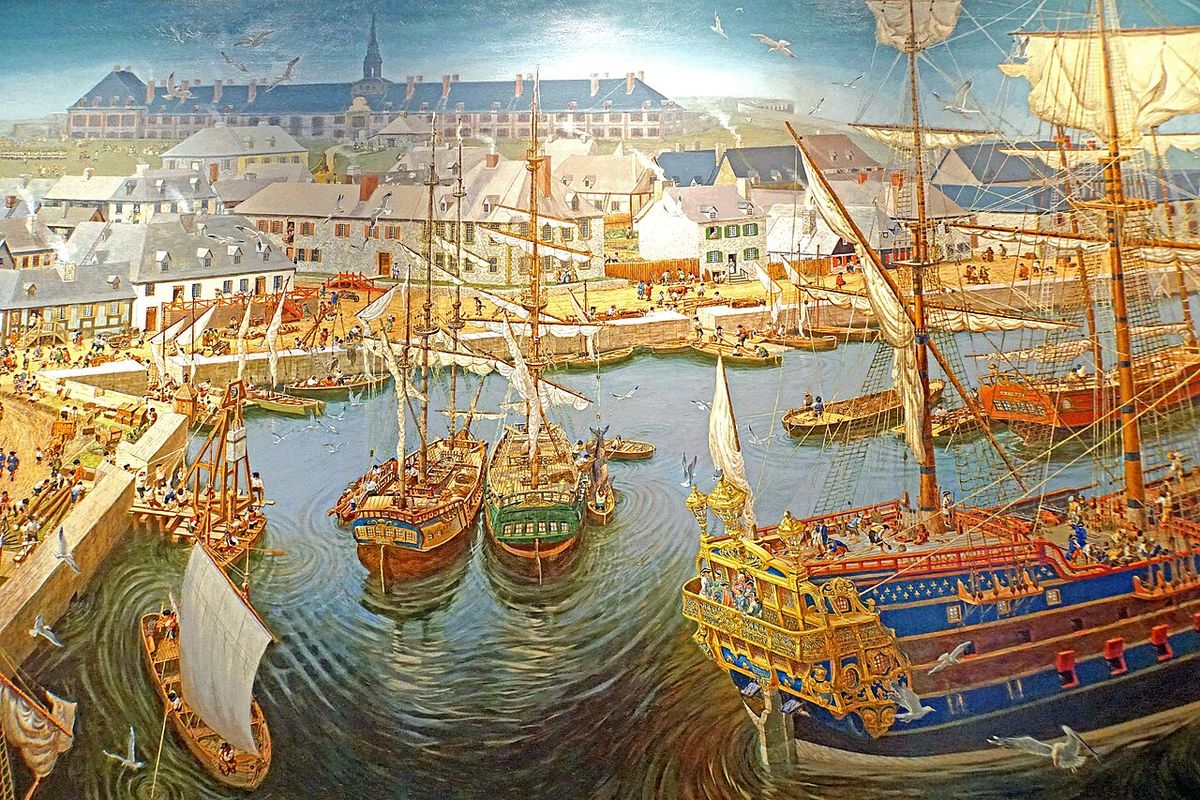
Founded in 1713 by settlers from Newfoundland and initially called Havre à l'Anglois, the settlement was renamed Louisbourg in honour of King Louis XIV. It was established as France's key Atlantic stronghold after the 1713 Treaty of Utrecht ceded peninsular Nova Scotia to Britain. The fortress was designed to protect France's lucrative North Atlantic fishery, provide a base for naval forces, and shield the seaward approach to Quebec. Construction of the extensive fortifications, directed by engineers like Jean-Francois du Vergery de Verville and Etienne Verrier, occurred mainly between 1720 and 1740. The project eventually cost an enormous 30 million livres, far exceeding its original four million livre budget. The fortified town was surrounded by two and a half miles of walls, with the landward defences reaching 30 feet high and 36 feet across, protected by a wide ditch.
By 1752, the population reached 4,174 people. Louisbourg's economy was centred on the cod fishery, not agriculture, and it became the third busiest port in North America after Boston and Philadelphia. In 1731 alone, fishermen exported 167,000 quintals of cod and 1,600 barrels of cod-liver oil. The town featured a commercial district, residential areas, a sophisticated hospital, military barracks, and numerous taverns, making it the second most important city in New France after Quebec. Its strategic location and economic value earned it nicknames like the 'Gibraltar of the North' and the 'Dunkirk of America'.
Sieges and Demise
The fortress's military history is defined by two major sieges that altered the course of Canadian history. The first siege occurred in 1745 during the War of the Austrian Succession, when a force of New Englanders backed by the Royal Navy captured Louisbourg after a brief campaign. The New Englanders took the famous Louisbourg Cross from the fortress chapel, an artifact later rediscovered in Harvard University archives and now on loan to the site. The fortress was returned to France in 1748 by the Treaty of Aix-la-Chapelle, a decision that frustrated both French and British colonists. Britain responded by founding the fortified naval base of Halifax in 1749, where the 29th Regiment of Foot was stationed to clear land for the new port and settlement.
The conflict widened during the Seven Years' War, leading to the second and decisive siege in 1758. The fortress, defended by Governor Augustin de Boschenry de Drucour, capitulated on July 26, 1758, providing Britain with a crucial launching point for the 1759 siege of Quebec. To prevent any future French use, British engineers systematically demolished the fortifications and town over six years, beginning in 1760. The British garrison remained until 1768, but the site was largely abandoned by 1785. Some of the cut stone was shipped to Halifax for reuse in other construction projects.
Twentieth-Century Reconstruction and Research
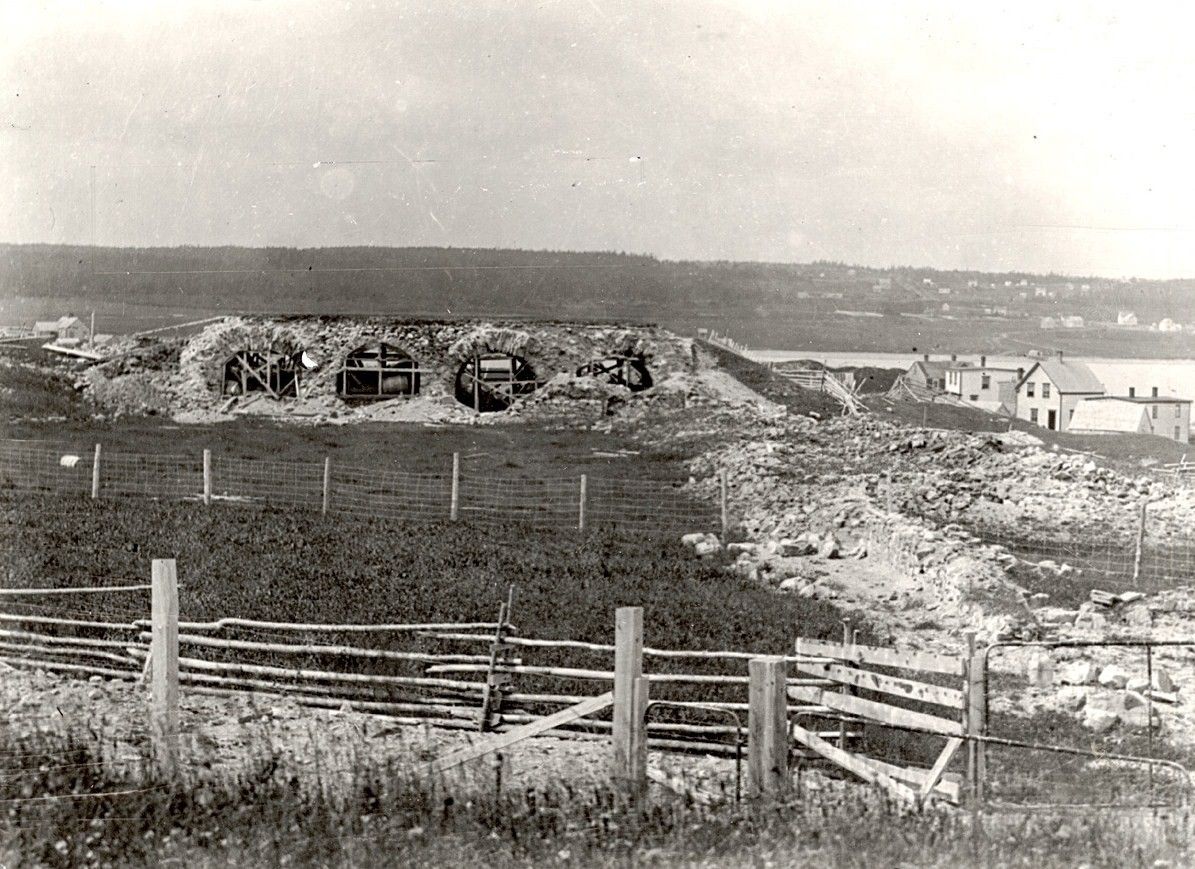
The fortress ruins were designated a National Historic Site in 1920. A monumental reconstruction project began in 1961, aiming to recreate one-fifth of the town and its defences as they appeared at its height in 1744. The $26 million project was an interdisciplinary effort involving archaeologists, historians, and architects, and it provided employment for many unemployed Cape Breton coal miners. The head stonemason was Ron Bovaird, and architect Yvon LeBlanc was responsible for most of the town-site buildings. Researchers consulted over 750,000 pages of documents and 500 maps from archives in France, England, Scotland, the United States and Canada to ensure historical accuracy, a process that spanned five decades.
Over several decades, workers constructed approximately 60 buildings and two bastions, learning 18th century masonry and carpentry techniques. The project involved expropriating the entire community of West Louisbourg. Key researchers included archaeologists Bruce W. Fry and Charles Lindsay, and historians such as B. A. Balcom, Kenneth Donovan, Brenda Dunn, and A. J. B. Johnston. Additional restoration work was undertaken from 2018 to 2020 to protect the site from rising water levels, and again from 2022 to 2023 following damage from Hurricane Fiona. The Museum/Caretakers Residence, built around 1935-36, is a Classified Federal Heritage Building within the site.
Fortress Layout and Defensive Features
The Fortress of Louisbourg was a complex fortified town featuring extensive military architecture. The walls enclosed the town and were designed with six bastions: the King's, Queen's, Dauphin, Princess, Maurepas, and Brouillon bastions. Of these, the King's Bastion and the Dauphin Bastion have been reconstructed. The Dauphin Bastion is often called a demi-bastion due to design modifications made during construction. The land-facing western walls were the strongest at 30 feet high and 36 feet thick, while the seaward eastern walls were only 16 feet high and 6 feet thick, reflecting the expectation of attack from the harbour.
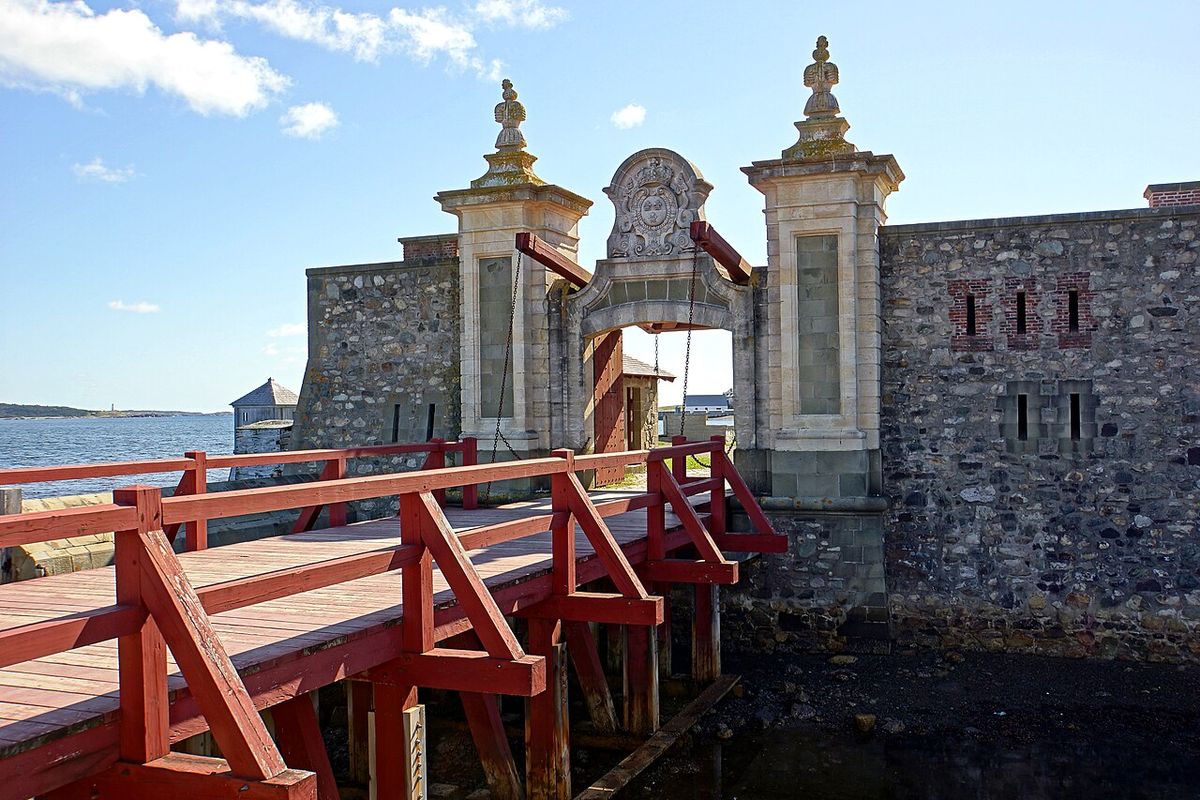
The site had four main gates providing access. The Dauphin Gate, now reconstructed, was the busiest landward entrance. The Frederick Gate served as the waterfront entrance. The Maurepas Gate connected to Rocheford Point and was elaborately decorated for arriving ships. The Queen's Gate on the sparsely populated seaward side saw little use. The fortress could mount 148 guns, though historians estimate only about 100 embrasures were ever armed. Separate from the main fort, the Island Battery in the harbour entrance had walls 10 feet high and 8 feet thick, mounting thirty-one 24-pound guns. The larger Royal Battery across the harbour mounted 40 guns to cover the harbour entrance.
- King's Bastion: Contained the governor's residence, barracks, and military chapel. The central stronghold.
- King's Hospital: A 100-bed facility run by six Brothers of Saint-Jean-de-Dieu with a bakery, kitchen, and laundry.
- Dauphin Gate: The main landward gate leading to fishing compounds and inland roads.
- Island Battery: A fortified island with 31 guns controlling harbour access.
- Royal Battery: A 40-gun battery across the harbour from the town.
- Civilian Structures: Included inns, taverns, marketplaces, and skilled labourers' workshops.
Visitor Experience and Programming
The Fortress of Louisbourg National Historic Site offers a comprehensive immersion into 18th century life. Visitors enter through the reconstructed Dauphin Gate or Frederic Gate into a town animated by costumed interpreters portraying soldiers, fishermen, merchants, and domestic servants. Daily programming includes musket and cannon firings, historical craft demonstrations, and puppet shows for children. The site encourages hands-on learning, with opportunities to try archaeology with artifact puzzles in the King's Bastion. Families can visit a dedicated children's room and observe period livestock including sheep, chickens, goats, and geese roaming the grounds.
Five hiking trails outside the fortress walls provide access to original 18th century ruins and coastal scenery. The Fortress Louisbourg Association, a charitable organization celebrating its 50th anniversary in 2026, operates food services and gift shops on site, with proceeds supporting preservation. Their food services, available from May to October, feature traditional recipes and historic spirits. Special events include the annual Fortress Noël holiday celebration on December 5, 2026, and the FLA's 50th Anniversary Celebration on September 19, 2026, which is free with limited space for 200 guests. The Parks Canada app offers self-guided tours for independent exploration.
Planning and Practical Information
The Fortress of Louisbourg is open year-round, with full visitor services available from May 18 to October 31, 2026. The peak season runs from July 1 to September 11, with the site open daily from 9:30 am to 5:00 pm. The shoulder seasons are May 18 to June 30 and September 12 to October 31. Visitors are advised to dress in layers for the coastal climate and wear comfortable walking shoes, as terrain includes loose gravel, cobblestones, and grassy inclines. While the site strives for accessibility, some reconstructed 18th century buildings have narrow doorways and stone steps. Sensory experiences include the sounds of historic weapons and farm animals, and the smell of open-hearth fires and ocean air.
Dining options within the fortress serve traditional 18th century recipes and local seafood from May to October. Pets are not permitted within the reconstructed fortress. Recreational drone use is prohibited across the site, with fines up to $25,000 for unauthorized flights. The Parks Canada Discovery Pass provides admission. The fortress is located approximately a 35-minute drive from Sydney, Nova Scotia.
| Season | Dates (2026) | Hours | Services |
|---|---|---|---|
| Peak Season | July 1, Sept 11 | 9:30 am, 5:00 pm | Full programming, costumed animators, all food services |
| Shoulder Season | May 18, June 30 | 9:30 am, 5:00 pm | Full visitor services, some programming |
| Shoulder Season | Sept 12, Oct 31 | 9:30 am, 5:00 pm | Full visitor services, some programming |
| Off-Season | Nov 1, May 17 | Grounds accessible | Limited services. Site open for exploration |
Cultural Context and Broader Connections
The Fortress of Louisbourg exists within a network of significant historic sites in eastern Nova Scotia that tell interconnected stories. The site acknowledges the enduring presence of the Mi'kmaq, known as L'nu, on Unama'ki (Cape Breton Island) since time immemorial. A formal partnership between Parks Canada and the Mi’kmaq of Nova Scotia facilitates the co-management of protected areas. The 18th century brought French, Basque, German, English, Irish, Scottish, and African people to its shores, and the site interprets these diverse stories through music, dance, language, and craft traditions. Nearby attractions include the Marconi National Historic Site, which chronicles Guglielmo Marconi's first transatlantic wireless telegraph experiments, and the St. Peters Canal, one of Canada's oldest European settlements linking the Bras d'Or Lakes to the Atlantic.
The site's national recognition includes a 1995 stamp series issued by Canada Post marking the 275th anniversary of its founding, the 250th anniversary of the first siege, and the 100th anniversary of the Sydney and Louisburg Railway. The five stamps in the series depicted scenes like 'The Harbour and Dauphin Gate' and 'The King's Bastion', designed by Rolf P. Harder. The fortress museum is affiliated with the Canadian Museums Association, the Canadian Heritage Information Network, and the Virtual Museum of Canada. These connections highlight the fortress's place in Canada's national historical narrative and its role in regional tourism.
Economic Impact and Community Engagement
The reconstruction and operation of the Fortress of Louisbourg have had a substantial economic effect on the region, particularly as the North Atlantic fishery and coal mining industries declined. Today, the site supports employment through Parks Canada and the Fortress Louisbourg Association, and stimulates tourism-related businesses in accommodation, dining, and retail throughout the town of Louisbourg and Cape Breton. The fortress aided the local economy of Louisbourg as it sought to diversify beyond traditional industries. The Fortress Louisbourg Association, founded in 1976, is a key community organization dedicated to the site's presentation and preservation. As it marks its 50th anniversary in 2026, it engages the public through volunteering, donations, and membership. The association operates the site's food services and gift shops, with all proceeds supporting its mission. It actively collects stories and photographs from people involved with the fortress since 1976. Their community initiatives demonstrate how public support contributes directly to maintaining this historical resource for future generations. The association's volunteers help guide visitors, assist at events, and support educational programs that bring the fortress's history to life.
Questions about Fortress of Louisbourg
What are the opening dates and hours for the Fortress of Louisbourg?
The Fortress of Louisbourg is open all year, but full visitor services are available from May 18 to October 31, 2026. During the peak season from July 1 to September 11, and the shoulder seasons from May 18 to June 30 and September 12 to October 31, the site is open daily from 9:30 am to 5:00 pm. The grounds remain accessible outside these dates, but services like costumed animation and food outlets are limited. It is recommended to check the Parks Canada website for the most current schedule before your visit.
How much time should I plan for a visit?
Parks Canada recommends planning a minimum of four hours to fully experience the Fortress of Louisbourg. The site is expansive, covering a one-quarter reconstruction of the original town and fortifications, plus extensive ruins and coastal trails. With costumed animators, historical demonstrations, museum exhibits, and dining options, many visitors find they could easily spend a full day exploring. The site's scale and depth of programming often inspire visitors to return for a second day.
Is the site accessible for visitors with mobility challenges?
The Fortress of Louisbourg has varying levels of accessibility. The main streets and some exhibits are accessible via gravel ramps, and many reconstructed building doorways are wide enough for wheelchairs. However, the 18th century design means some buildings have narrow turning radii inside, stone steps, and uneven cobblestone surfaces. The terrain includes loose gravel, grass, and inclines. Visitors are advised to wear sturdy shoes and contact the site in advance at [email protected] for detailed accessibility information and to discuss specific needs.
Can I bring my dog to the Fortress of Louisbourg?
Dogs and other pets are not permitted within the reconstructed Fortress of Louisbourg. This policy is in place for the safety of visitors, the animals, and the historic site's ambiance, which includes free-roaming farm animals. Pets should not be left unattended in vehicles, especially during warm weather. Visitors travelling with service animals are encouraged to contact the site at [email protected] prior to their visit for specific guidance and arrangements.
What special events happen at the fortress?
The fortress hosts several annual events that enhance the visitor experience. A key holiday event is Fortress Noël, scheduled for December 5, 2026. The Fortress Louisbourg Association, which supports the site, is celebrating its 50th anniversary with a special celebration on September 19, 2026, featuring music and memories. Throughout the operating season, daily programming includes historical reenactments, musket drills, and cannon firings. Seasonal activities and cultural demonstrations reflecting the site's Mi'kmaq, French, and other heritages are also regularly featured.
What is the historical importance of the Fortress of Louisbourg?
The Fortress of Louisbourg was a decisive French military and commercial stronghold in 18th century North America. Its two sieges, especially the British capture in 1758, were turning points in the struggle for control of Canada, directly enabling the subsequent British campaign against Quebec. The fortress was also the third busiest port on the continent and the centre of a vast Atlantic fishery. Its reconstruction in the 20th century represents the largest project of its kind in North America, preserving the stories of the Mi'kmaq, French, and other diverse communities that shaped early Canada.
Sources and further reading
- Fortress of Louisbourg (Wikipedia)
- Fortress of Louisbourg National Historic Site, Parks Canada (parks.canada.ca)
- Fortress of Louisbourg National Historic Site (novascotia.com)
- Fortress Louisbourg Association (fortressoflouisbourg.ca)
- Louisbourg & Area | Destination Cape Breton (cbisland.com)
Checked by the Novello Desserts desk. Last updated 2026-10-27.