Massey Hall
Massey Hall is a historic performing arts auditorium located in the Garden District of downtown Toronto, Ontario. Opened in 1894 as a gift from industrialist Hart Massey, it is renowned for its outstanding acoustics and its Moorish Revival interior, and it has served as a premier venue for a vast array of musical, cultural, and political events for over a century. Designated a National Historic Site of Canada in 1981, the hall underwent a major revitalization from 2018 to 2022, which restored its heritage features and added the modern Allied Music Centre. Today, Massey Hall remains a cherished cultural landmark, hosting everything from intimate concerts to grand performances for audiences drawn from across Canada and beyond.
Origins and Architectural Design
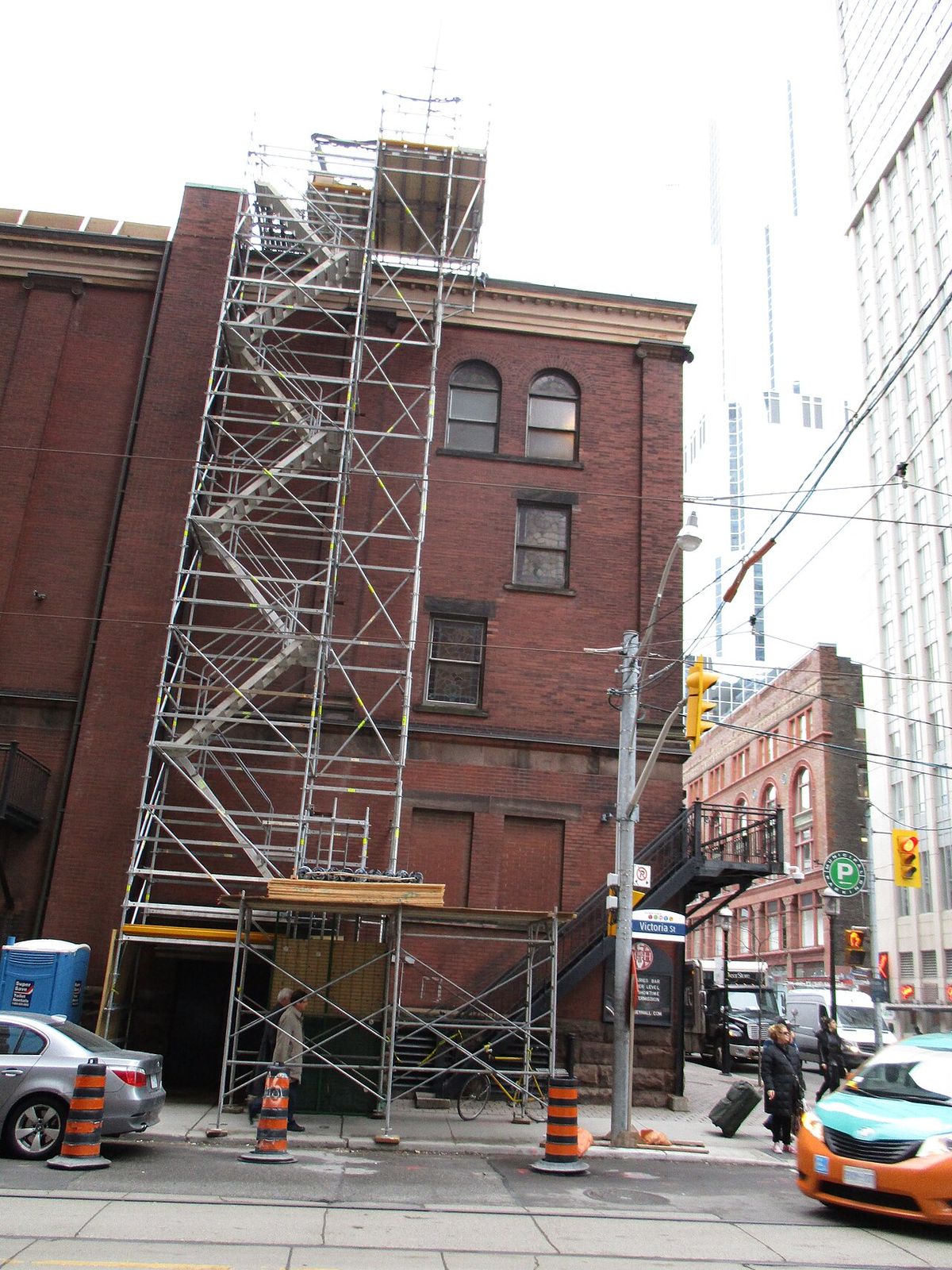
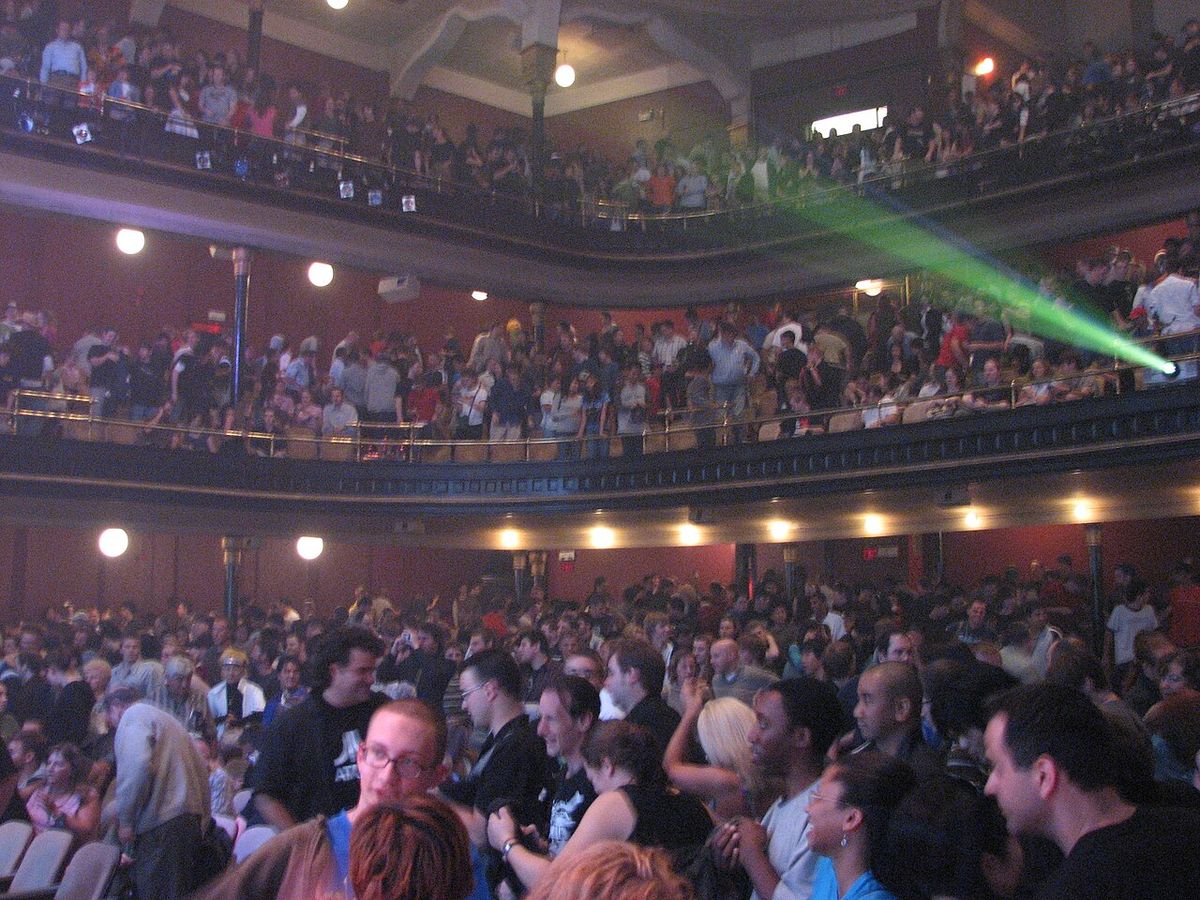
Massey Hall was conceived by Hart Massey, founder of the Massey Manufacturing Company, as a secular meeting place for the people of Toronto and as a memorial to his music-loving son, Charles. He financed its construction with the intent that it would not seek large profits, aiming to make cultural events accessible to all. Designed by architect Sidney Badgley, the hall was completed in 1894 at a cost of CA$152,390.75. Its exterior presents a neoclassical Palladian facade, a preference of Hart Massey's daughter Lillian, while the interior is a striking example of Moorish Revival architecture, inspired by Spain's Alhambra Palace and Louis Sullivan's Chicago Auditorium. The elaborately decorated hall features a series of Moorish arches spanning its width and was originally adorned with thirty stained glass windows depicting famous composers, created by the Faircloth Brothers glass firm. The building's foyer is finished in Art Deco style, a later addition. For its first decade, the hall could seat 3,500 patrons, but fire escapes were added to the front facade following the 1904 Toronto Great Fire, becoming a well-known, though later removed, part of its exterior character.
Evolution and Early Renovations
Throughout its early history, Massey Hall underwent several modifications to adapt to changing needs and safety standards. In 1917, the Albert Building at 15 Shuter Street was added as a janitorial residence and later converted into backstage space. A major renovation in 1933, funded by the Massey Foundation, significantly altered the hall's capacity and simplified its name from Massey Music Hall to Massey Hall. This renovation reduced the seating capacity to 2,765 to improve audience comfort and sightlines. Further updates occurred in the 1940s. For much of the 20th century, the hall was the primary home of the Toronto Symphony Orchestra and the Toronto Mendelssohn Choir, a relationship that lasted until the orchestra moved to the new Roy Thomson Hall in 1982. In 1994, for the hall's centennial, the basement was refurbished to include the Centuries bar, marking the first time alcohol was permitted on the premises, and a balcony lounge bar was added roughly five years later.
The Massey Hall Forever Revitalization
After over a century of continuous use, Massey Hall began its most significant renewal project, titled Massey Hall Forever, with preparatory work in 2013. The hall closed to the public in July 2018 for the primary phase of construction, a CA$184 million project that included a CA$113 million second phase with contributions from the federal and Ontario governments. Led by architects Marianne McKenna of KPMB Architects and Christopher Borgal of GBCA Architects, the project involved a full restoration of the heritage building and the construction of a new seven-storey addition. The interior restoration meticulously repaired original wood, steel beams, and plaster moulds, and uncovered the approximately 100 original stained glass windows that had been boarded up since the 1950s. The renovation introduced a retractable seating system in the main hall, allowing for flexible standing-room configurations, and significantly enhanced the audio, lighting, and stage infrastructure. Accessibility was greatly improved with the addition of an elevator and new passerelles, which are cantilevered glass walkways. The main hall's capacity is now 2,534 seated or 2,800 standing. The project was completed in 2022, with performances resuming in November 2021.
The Allied Music Centre
The revitalization project's centrepiece is the Allied Music Centre, a modern glass and steel addition constructed on the site of the demolished Albert Building. This seven-storey tower is connected to the historic hall via the exterior passerelles and is designed to provide comprehensive support spaces for artists and the community. It houses several new performance and creative spaces, significantly expanding Massey Hall's programming capabilities. The fourth floor features the TD Music Hall, a versatile space with a capacity of 245 seated or 450 standing. The sixth floor contains the intimate Allied Music Centre Theatre, which seats 105. The seventh floor is home to the Deane Cameron Recording Studio, named for the late Massey Hall CEO. The addition also includes rehearsal rooms, artist lounges, dressing rooms, and a new loading dock. In the basement of the main hall, the Muskoka Spirits Bar provides another informal performance area with standing room for 450. This integrated facility solidifies Massey Hall's role as a hub for artistic development and community outreach.
A Stage for Legends and Landmark Events
Massey Hall's stage has been graced by an extraordinary roster of performers and speakers from across the musical and cultural spectrum. For decades, it was the home of classical music in Toronto, hosting the Toronto Symphony Orchestra and artists like Enrico Caruso, Maria Callas, Glenn Gould, and Arturo Toscanini. The hall has been equally important for jazz, folk, rock, and popular music, creating a detailed record of Canadian cultural history. Many significant live recordings have been made within its walls, cementing its place in music lore. The hall has also served as a prominent forum for political speeches and lectures by notable figures such as Winston Churchill, Helen Keller, and the Dalai Lama. This tradition of hosting diverse and significant events continues unabated following the revitalization.
Key historic performances and recordings associated with Massey Hall include many famous artists from the past century and more. The hall was the location of a notable 1953 jazz concert by Charlie Parker, Dizzy Gillespie, Bud Powell, Charles Mingus, and Max Roach, which was released as Jazz at Massey Hall. Other significant live recordings made at the hall include Neil Young's Live at Massey Hall 1971, Rush's All the World's a Stage in 1976, and Ronnie Hawkins' Let It Rock in 1995. The hall has also hosted recorded performances by artists like Matthew Good and Russell Peters. Gordon Lightfoot has performed at Massey Hall over 170 times, the most of any artist.
- Jazz at Massey Hall (1953): A legendary concert featuring Charlie Parker, Dizzy Gillespie, Bud Powell, Charles Mingus, and Max Roach, released as a seminal live album.
- Neil Young's Live at Massey Hall 1971 (1971): A solo acoustic performance recorded and released as a celebrated live album.
- Rush's All the World's a Stage (1976): A double live album recorded over two nights that captured the band at a peak moment.
- Ronnie Hawkins' 60th Birthday Concert (1995): A star-studded event with Jerry Lee Lewis, Carl Perkins, and The Band, documented on the album Let It Rock.
- Gordon Lightfoot's record: The Canadian folk singer performed at the hall over 170 times, more than any other artist, including the final show before the 2018 closure and the first show after the 2021 reopening.
- Russell Peters' Almost Famous (2016): The comedian's Netflix stand-up special was filmed during a series of shows at the hall.
- The Tragically Hip with Feist (2021): The band's first televised performance since Gord Downie's death, for the Juno Awards.
Notable Artists Across Genres
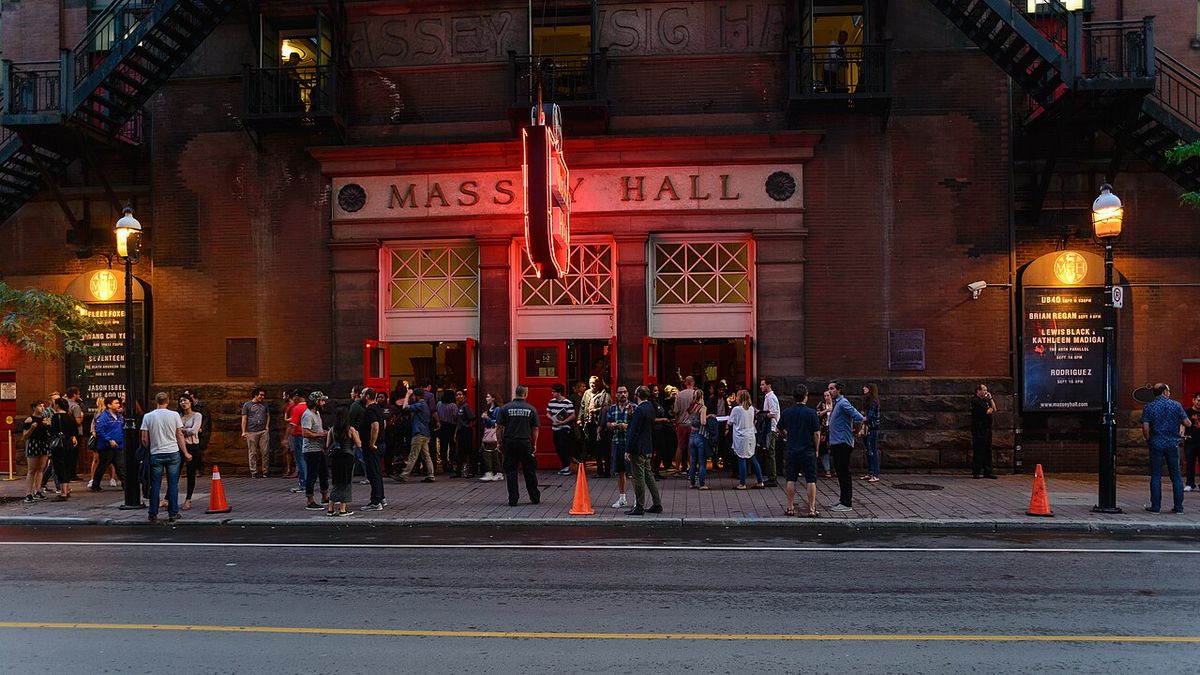
The breadth of talent that has performed at Massey Hall demonstrates its status as a premier Canadian venue. The list spans over a century and includes foundational figures in every genre. In classical and operatic music, the hall has hosted luminaries such as Luciano Pavarotti, Montserrat Caballé, and Vladimir Horowitz. The jazz tradition is represented by greats like Oscar Peterson, Billie Holiday, and the participants of the famed 1953 concert. The folk and singer-songwriter tradition is deeply connected to the hall through artists like Joni Mitchell, Gordon Lightfoot, and Ron Sexsmith, who marked his 60th birthday with a 2024 retrospective concert. Rock and popular music performers who have filled the hall include Bob Dylan, The Kinks, Rush, Bob Marley and the Wailers, Billy Joel, and more contemporary acts like Harry Styles, Justin Bieber, and the K-pop group Seventeen. Comedians such as Jerry Seinfeld have also headlined, illustrating the venue's versatility as a space for all forms of performance art.
Visitor Information and Accessibility
Massey Hall is located at 178 Victoria Street at the intersection of Shuter Street, just east of Yonge Street in downtown Toronto. The venue is easily accessible by public transportation, with the Queen subway station on Line 1 Yonge-University located nearby at the corner of Shuter and Yonge Streets. The 501 Queen streetcar line also stops at the corner of Victoria and Queen Streets. The hall is operated by The Corporation of Massey Hall and Roy Thomson Hall, a non-profit charitable organization. The recent revitalization project placed a strong emphasis on modernizing accessibility throughout the complex. New features include an elevator providing access to all levels, the glass passerelles connecting the old and new buildings, and improved sightlines from the rebuilt grand stage. The venue regularly offers behind-the-scenes building tours, providing the public with insight into its history, architecture, and restoration.
Programming and Cultural Role
Following its reopening, Massey Hall and the Allied Music Centre continue to present a wide-ranging calendar of events that reflects its historic legacy while fostering new talent. The programming spans classical, jazz, folk, rock, world music, comedy, and spoken word. The addition of the TD Music Hall and the Allied Music Centre Theatre allows for more intimate performances and experimental works, supporting emerging artists. The Deane Cameron Recording Studio provides a resource for music creation and production. The venue actively engages with the community through outreach initiatives and artistic development programs housed within the Allied Music Centre. As a National Historic Site, Massey Hall is not merely a preserved relic but a living, evolving institution that remains central to Toronto's and Canada's cultural life, dedicated to connecting audiences with powerful live performances for generations to come.
Questions about Massey Hall
What is the capacity of Massey Hall?
The capacity of Massey Hall has changed over time due to renovations. Originally built to seat 3,500, a 1933 renovation reduced seating to 2,765. Following the major 2018 to 2022 revitalization, the main hall now accommodates 2,534 seated patrons or up to 2,800 for standing-room events. The new Allied Music Centre addition includes the TD Music Hall with a capacity of 245 seated or 450 standing.
When was Massey Hall built and who built it?
Massey Hall was built in 1894. It was constructed as a gift to the people of Toronto from industrialist Hart Massey, who also financed the entire project. The hall was designed by architect Sidney Badgley at a cost of CA$152,390.75. Hart Massey built it to serve as a secular meeting place for choral music and as a memorial to his son Charles, who loved music. The debut concert was a performance of Handel's 'Messiah' on June 14, 1894.
What famous concerts were recorded at Massey Hall?
Several famous live albums were recorded at Massey Hall. The most notable is the 1953 jazz concert featuring Charlie Parker, Dizzy Gillespie, Bud Powell, Charles Mingus, and Max Roach, released as 'Jazz at Massey Hall'. Other significant recordings include Neil Young's 'Live at Massey Hall 1971' and Rush's 'All the World's a Stage' recorded in 1976. Ronnie Hawkins' 60th birthday concert in 1995 was documented on the album 'Let It Rock'.
What was the Massey Hall Forever project?
The Massey Hall Forever project was the primary phase of a major revitalization that began in July 2018. It was a CA$184 million renovation and restoration project that included a full exterior and interior refurbishment of the historic hall. The project restored original architectural details, uncovered boarded up stained glass windows, and improved acoustics and seating. It also involved constructing a new seven storey addition called the Allied Music Centre, which added new performance venues and support spaces.
How do I get to Massey Hall using public transit?
Massey Hall is easily accessible by public transit in downtown Toronto. An entrance to Queen subway station on Line 1 Yonge University is located nearby at the corner of Shuter Street and Yonge Street. The 501 Queen streetcar line stops at the corner of Victoria Street and Queen Street. The hall's address is 178 Victoria Street, at the intersection of Shuter and Victoria Streets, just east of Yonge Street.
Which artist has performed the most times at Massey Hall?
Gordon Lightfoot has performed the most times at Massey Hall. The Canadian folk singer songwriter played the venue over 170 times throughout his career. His significant connection to the hall was showed when he performed the last show in 2018 before the hall closed for renovations. Lightfoot also had the honour of performing the first concert after the hall reopened in November 2021 following the extensive revitalization project.
Sources and further reading
- Massey Hall (Wikipedia)
- Building Tour: Massey Hall, TSA (torontosocietyofarchitects.ca)
- Massey Hall (citysightseeingtoronto.com)
Checked by the Novello Desserts desk. Last updated 2026-10-30.