Motel 6
Motel 6 is an American budget motel chain with a significant presence in Canada, offering functional, affordable lodging for travellers. Founded in Santa Barbara, California, in 1962 by William Becker and Paul Greene, the chain pioneered a 'no-frills' concept with rooms originally priced at six dollars per night. For Canadian travellers and road-trippers, Motel 6 provides a consistent, value-oriented option across multiple provinces, from Ontario to Alberta. The brand is famously associated with the long-running radio advertising campaign narrated by Tom Bodett and the slogan, 'We'll leave the light on for you.'
Origins and Expansion
Motel 6 was conceived by two Santa Barbara building contractors, William Becker and Paul Greene, who sought to create an affordable alternative to the increasingly upscale hotel chains of the early 1960s. They spent two years developing a business model focused on extreme cost-cutting, which allowed them to offer rooms for a flat rate of six dollars. This price was designed to cover building costs, land leases, and basic supplies. The first Motel 6 opened on June 1, 1962, in Santa Barbara, featuring coin-operated black-and-white televisions and a deliberate lack of on-site restaurants to keep overhead low. The concept proved immediately popular, achieving occupancy rates around 85 percent, well above the industry average.
This success fueled rapid expansion, with the 15th property opening in Salt Lake City, Utah, in 1965, marking the chain's first move outside California. By 1966, the chain had grown to 25 locations, including one in Gilroy, California. The founders sold the business to an investment group in 1968, but growth continued under new ownership. The 1970s saw further geographic expansion, including the opening of the large Motel 6 Tropicana in Las Vegas and a location in Fort Lauderdale, Florida, by 1972. The chain reached a milestone of 300 locations across the United States by 1980.
During the 1980s, Motel 6 began acquiring other budget chains to bolster its portfolio. This strategy included buying out the Sixpence Inn chain in the western United States and the Envoy Inn chain, formerly known as Budgetel and Bargaintel, in the Midwest and Pennsylvania. In 1991, the company acquired Regal 8 Motels. A shift in brand direction occurred in 1985 when new owner Kohlberg Kravis Roberts moved away from the strict 'no frills' roots by adding amenities like telephones and colour television. This period also saw the beginning of the famous Tom Bodett radio advertisements in 1986.
Entry into the Canadian Market and Brand Evolution
Motel 6 entered the Canadian market in 2000 with its first location in Burlington, Ontario. This international expansion marked a new chapter for the brand, bringing its value proposition to Canadian travellers. The chain's presence in Canada includes properties in key tourist and transit hubs such as Huntsville, Ottawa, and Niagara Falls. In Huntsville, Ontario, the Motel 6 features an indoor pool and rooms with expanded cable TV, catering to visitors exploring the Muskoka region. The Niagara Falls location is noted for its proximity to Horseshoe Falls, being within a 20-minute walk, and offers pet-friendly accommodations without extra fees.
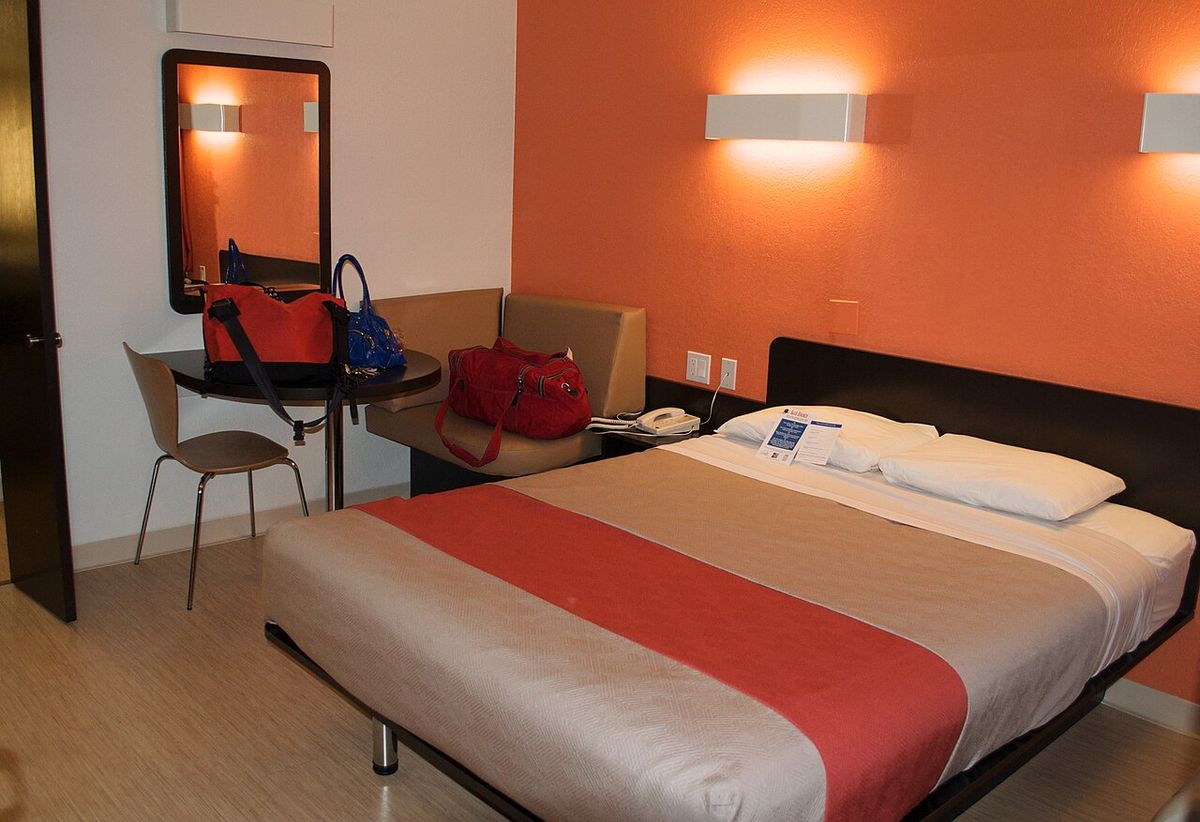
Throughout the 1990s and 2000s, the brand underwent significant changes under the ownership of the French hospitality group Accor, which acquired Motel 6 in 1990. To accelerate growth, Motel 6 began franchising in 1994, a departure from its traditional company-owned model. In 1999, the company launched Studio 6 Extended Stay, a sister brand designed for longer visits with suites featuring kitchenettes. A major system-wide renovation dubbed the 'Phoenix Project' began in 2008, modernizing rooms with an emphasis on energy efficiency, easier cleaning, and updated furnishings to address common customer complaints while maintaining low rates. The renovation program involved an investment of more than six million dollars in properties to help rebuild areas affected by Hurricane Katrina in 2006.
Motel 6 was founded in Santa Barbara, California, in 1962 by William Becker and Paul Greene. The chain opened its first location outside California in Salt Lake City, Utah, in 1965. It expanded into Canada with its first international location in Burlington, Ontario, in 2000. By 1980, the chain had reached 300 locations, and as of 2024, Motel 6 and Studio 6 collectively operated approximately 1,500 locations across the United States and Canada.
- 1993: Opened its first high-rise location, Motel 6 LAX in Los Angeles, California.
- 1994: Began franchising properties to expand outside its traditional Western United States base.
- 2000: Opened its first international location in Burlington, Ontario, Canada.
- 2002: Celebrated its 40th anniversary at its original Santa Barbara location.
- 2006: Invested over $6 million in properties for post-Hurricane Katrina rebuilding in New Orleans and Gulfport.
- 2012: Sold by Accor to The Blackstone Group for $1.9 billion.
Motel 6 was founded in 1962 with rooms initially costing $6 USD per night. As of August 2022, the most expensive motel in the entire chain was the original Santa Barbara location. That original motel was reportedly charging $426 per night for a room before taxes during the late summer of 2022. This price was a significant increase from its opening rate sixty years prior.
Ownership Changes and Recent Developments
Accor sold the chain to The Blackstone Group in 2012 for $1.9 billion, with Blackstone operating it on a stand-alone basis under the entity G6 Hospitality. For over a decade, Motel 6 and Studio 6 were controlled by this portfolio. A major shift occurred in late 2024 when Indian hospitality giant Oyo Rooms, through its parent company Oravel Stays, completed the acquisition of G6 Hospitality in an all-cash transaction valued at $525 million. The deal was announced in September 2024 and finalized on December 17, 2024.
Following the acquisition, OYO appointed Sonal Sinha as the chief executive officer of G6 Hospitality, tasked with steering the Motel 6 and Studio 6 brands forward. As of 2024, the combined portfolio of Motel 6 and Studio 6 comprised approximately 1,500 locations across the United States and Canada. This acquisition by a global budget hospitality operator signals a new era of potential expansion and digital integration for the classic American motel chain. The chain's performance in customer satisfaction surveys, such as the American Customer Satisfaction Index, placed it at the bottom of its category for two consecutive years in 2017 and 2018.
Services and Amenities
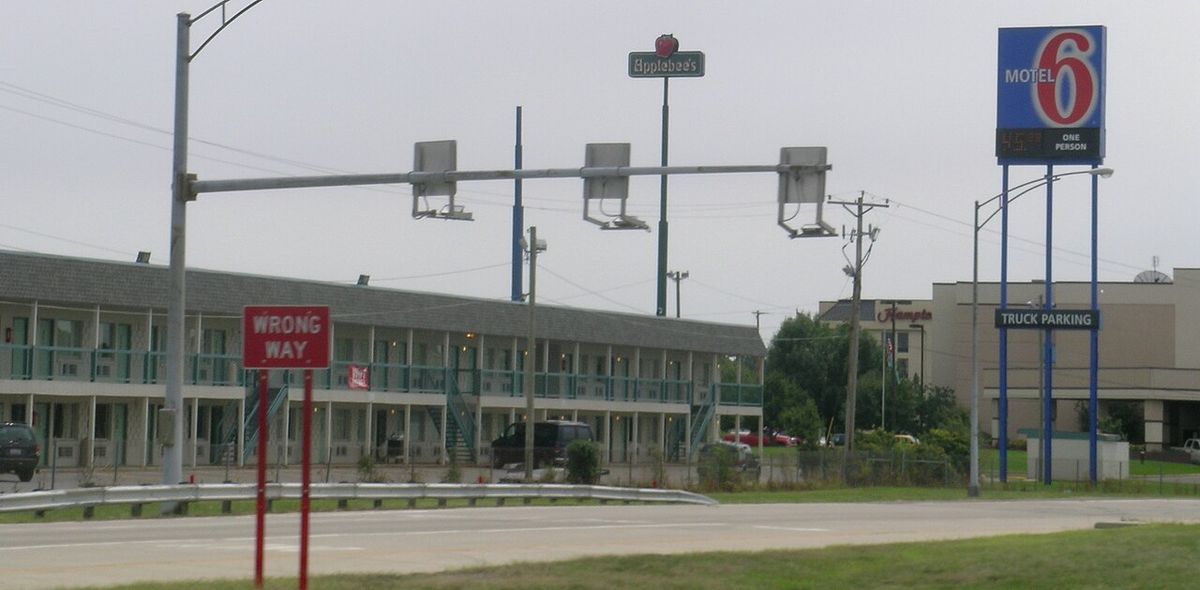
Motel 6 maintains its core identity as a provider of essential, affordable lodging. Standard amenities across the chain include free Wi-Fi, flat-screen televisions, air conditioning, and refrigerators. Many locations offer free parking, a significant value for road travellers. Pet-friendly policies are a consistent feature, with many properties allowing pets without weight restrictions or additional fees, as seen at the Niagara Falls location. While most properties do not have elevators, they provide 24-hour front desk service.
Specific Canadian locations highlight regional adaptations. The Motel 6 in Huntsville, Ontario, features an indoor pool, a desirable amenity in a resort area. The Niagara Falls property serves as a practical base for sightseers, within a 15 to 25 minute walk of major attractions like Clifton Hill, the Niagara Convention Centre, and Horseshoe Falls. Rooms are equipped with microwaves and refrigerators for simple meal preparation, and some offer Google TV and Chromecast. Consistent with the brand's history, on-site dining is rare, though restaurants are typically located nearby. The chain's main competitors in the budget segment include America's Best Value Inn, Days Inn, Econo Lodge, Knights Inn, Red Roof Inn, Rodeway Inn, Super 8 and Travelodge.
Advertising and Cultural Impact
Since 1986, Motel 6 has been linked to its radio advertising campaign created by The Richards Group of Dallas. The ads feature the warm, folksy narration of writer and NPR commentator Tom Bodett, who concludes each spot with the reassuring tagline, 'We'll leave the light on for you.' The campaign's music, a simple tune composed by Tom Faulkner and performed on guitar and fiddle by Faulkner and Milo Deering, became recognizable. The first advertisements were conceived and written by David Fowler. This marketing strategy proved successful, earning a Clio Award in 1996 and numerous other national and international awards.
Beginning in 1986, Motel 6 has advertised through radio commercials featuring the voice of writer and National Public Radio commentator Tom Bodett. The campaign features the tagline 'We'll leave the light on for you.' In 1996, the ads won a Clio Award. The campaign was selected by Advertising Age magazine as one of the Top 100 Advertising Campaigns of the Twentieth Century. The campaign itself has won numerous national and international awards.
Controversies and Legal Settlements
In September 2017, immigration attorneys alleged that desk clerks at two Motel 6 locations in Phoenix, Arizona, were notifying U.S. Immigration and Customs Enforcement when guests presented identification from Mexico. Court records indicated at least 20 arrests at these motels over a seven-month period in 2017. Motel 6 stated the practice was implemented locally without senior management's knowledge and issued a directive prohibiting the voluntary provision of guest lists to ICE. The company was sued for discrimination and privacy violations, resulting in a settlement of $7.6 million with the plaintiffs in November 2018. Separately, the state of Washington filed a lawsuit in January 2018, alleging Motel 6 had provided the names of thousands of guests to ICE officers. In April 2019, Motel 6 agreed to pay $12 million to settle the Washington state lawsuit. These cases highlighted serious concerns over corporate privacy policies and their implementation at the property level.
Motel 6 in the Canadian Travel Landscape
For Canadian travellers, Motel 6 represents a specific niche within the hospitality sector. It competes with other budget chains like Super 8, Travelodge, and Econo Lodge, offering a standardized product often situated near highways, city centres, and major tourist destinations. Its value proposition is particularly appealing to families, road-trippers, and budget-conscious tourists seeking a clean, functional place to sleep without premium amenities. The chain's expansion into Canada, beginning in 2000, filled a gap for consistent, national budget lodging.
Properties in Canada, such as those in Niagara Falls and Ottawa, are strategically located to serve tourists visiting Canadian attractions. The chain's pet-friendly policy is an advantage for travellers with animals, a service not always guaranteed at other budget hotels. While the brand has faced customer satisfaction challenges in broader industry rankings, its enduring presence and recent acquisition by a global operator like OYO suggest a continued focus on the budget segment of the Canadian travel market. The operational model for Canadian locations involves several standard features and policies.
- Accommodation Type: Budget motel rooms, with extended-stay suites under the Studio 6 brand.
- Common In-Room Features: Flat-screen TV, air conditioning, refrigerator, microwave, free Wi-Fi.
- Property Features: Free parking, 24-hour front desk, exterior room corridors (with newer builds having interior corridors).
- Pet Policy: Generally pet-friendly, often without extra fees or weight limits.
- Accessibility: Most locations do not have elevators, requiring guests to use stairs.
- Deposit: Some locations, like Niagara Falls, require a security deposit, often $200, paid separately upon arrival.
- Dining: No on-site restaurants, but proximity to local dining options.
Questions about Motel 6
When was the first Motel 6 in Canada opened?
The first Motel 6 location in Canada opened in the year 2000 in Burlington, Ontario. This marked the brand's initial foray outside the United States, bringing its budget lodging model to the Canadian market. The expansion into Canada was part of the chain's broader growth strategy under the ownership of Accor at the time. Canadian locations now include cities like Huntsville, Ottawa, and Niagara Falls, providing options for travellers across the country.
Is Motel 6 pet-friendly?
Yes, Motel 6 is generally known for its pet-friendly policy at many of its locations. Specific properties, such as the Motel 6 Niagara Falls, ON Near the Falls, explicitly allow pets without extra weight restrictions or additional pet fees. This policy makes the chain a popular choice for travellers who wish to bring their animals along. Guests are advised to confirm the pet policy directly with their intended location before booking, as policies can be managed at the property level.
Who owns Motel 6 now?
As of December 17, 2024, Motel 6 and its sister brand Studio 6 are owned by Oravel Stays, the parent company of the Indian hospitality chain OYO. OYO completed the acquisition of G6 Hospitality, the previous operator, in an all-cash transaction valued at $525 million. Following the acquisition, OYO appointed Sonal Sinha as the chief executive officer of G6 Hospitality. Prior to this, the chain was owned by The Blackstone Group from 2012 until the sale in 2024.
What is the meaning behind the name 'Motel 6'?
The name 'Motel 6' directly references the original room rate charged by the founders when the first motel opened in 1962. William Becker and Paul Greene priced their rooms at six dollars per night, a rate designed to cover their basic costs while undercutting competitors. The name was a straightforward marketing tool to communicate the exceptional value to travellers. Adjusted for inflation, that six-dollar rate in 1962 is equivalent to approximately sixty-four dollars in 2025, demonstrating the chain's long-standing commitment to budget pricing.
Who is the voice in the Motel 6 commercials?
The voice in the Motel 6 radio commercials is Tom Bodett. He is a writer and National Public Radio commentator. Bodett has been the narrator for the campaign since it began in 1986. The ads feature the tagline 'We'll leave the light on for you.'
What amenities can I expect at a Motel 6 in Canada?
At a Canadian Motel 6, guests can typically expect standard budget amenities such as free Wi-Fi, air conditioning, a refrigerator, a microwave, and a flat-screen TV. Many locations offer free parking and 24-hour front desk service. Some properties, like the one in Huntsville, Ontario, may feature an indoor pool. Most Motel 6 locations do not have elevators or on-site restaurants, aligning with the brand's cost-effective operational model that has been in place since its founding.
Sources and further reading
- Motel 6 (Wikipedia)
- Hotel Motel 6 Niagara Falls, ON Near the Falls, Canada (trivago.ca)
Checked by the Novello Desserts desk. Last updated 2026-10-27.