Mummers' play
The Mummers' play is a form of folk theatre performed by troupes of amateur, costumed actors known as mummers or guisers. Rooted in British and Irish traditions, the practice involves seasonal performances, often featuring a ritual combat and resurrection, and spread to several former British colonies including Canada. In Newfoundland and Labrador, the tradition of mummering or 'jannying' became a distinctive Christmas-time custom of house visits in disguise. The plays and associated parades, such as the famous Philadelphia Mummers Parade, represent a living folk tradition that continues to evolve, blending historical performance with contemporary community celebration.
Origins and Historical Development
The tradition of mumming, referring to costumed community members visiting houses, dates to the Middle Ages, but the specific folk play format known today emerged much later. The earliest evidence of the play structure featuring combat and a doctor comes from the mid-to-late 18th century. The earliest complete text of a mummers' play is an undated chapbook of 'Alexander and the King of Egypt' published by John White in Newcastle upon Tyne between 1746 and 1769. A fuller early version is the 1779 'Morrice Dancers' play from Revesby, Lincolnshire, which is a forerunner of Plough Monday plays and includes a dragon and a 'wild worm' as characters. Throughout the 18th and 19th centuries, scripts were recorded in places like Islip, Oxfordshire (1780), Truro, Cornwall (c. 1780), and a Cheshire location near the Welsh border before 1788. The practice in southern England had its heyday in the late 19th and early 20th centuries, with many traditional groups, known as sides, ceasing around the First World War. The second half of the 20th century saw a major revival of interest, often led by folk music and dance enthusiasts, who frequently perform the plays in pubs around Christmas to raise money for charity rather than for personal gain.
The Structure and Characters of the Play
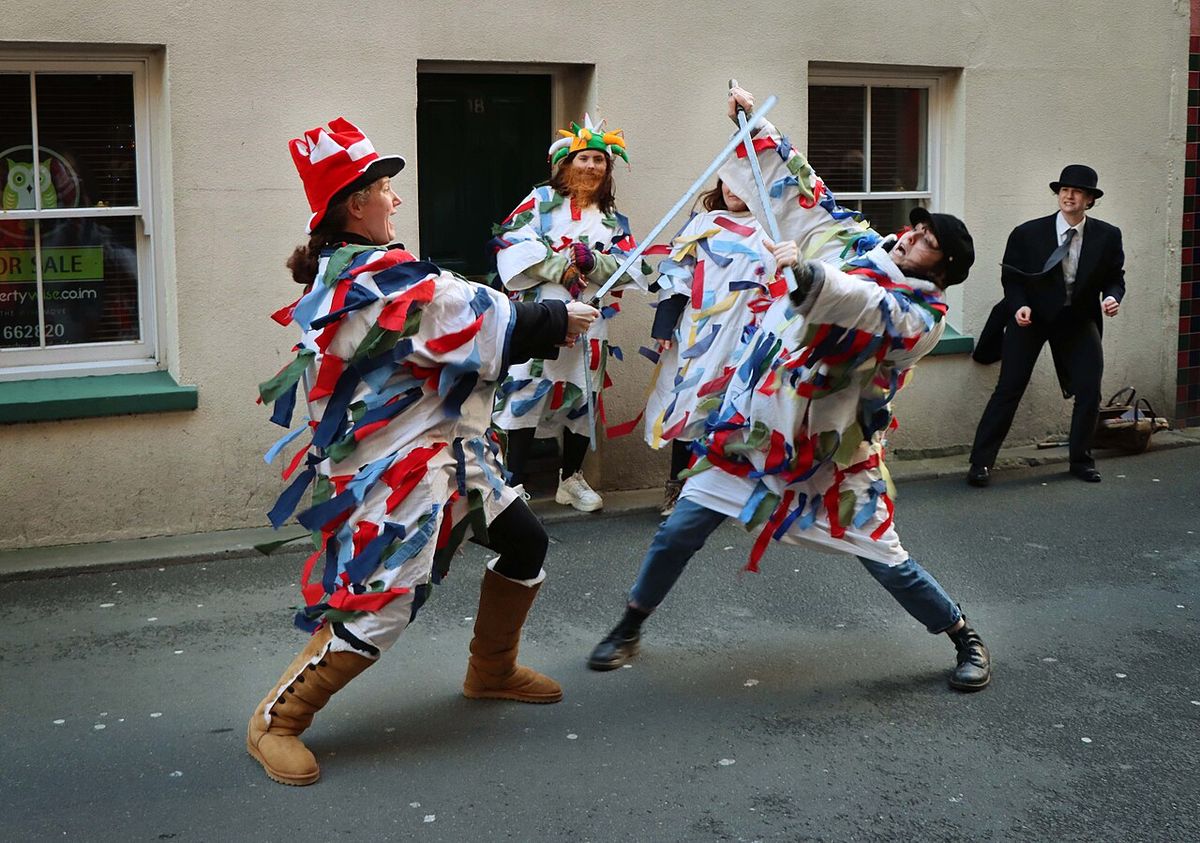
Mummers' plays are broadly comic performances with a recognizable narrative structure centered on a ritual death and revival. The most common plot involves a combat between two characters, typically a hero and his opponent, ending with the death of one. A quack Doctor character then enters and uses a magic potion to revive the fallen figure, which early folklorists linked to pre-Christian fertility rituals, an interpretation later criticized by modern researchers. The characters are usually introduced through short speeches in rhyming couplets or introduce themselves during the action. While the specific names vary by region, the core roles remain consistent across many traditions. The principal hero is most commonly Saint George, King George, or Prince George in England, though in the Cotswolds it may be Robin Hood and in Scotland the hero is Galoshin. His chief opponent is often the Turkish Knight in southern England, but can have other names like Slasher or the Prince of Paradine. Other frequent characters include Old Father Christmas, who acts as a presenter, the Fool, and a character who demands money from the audience, such as Beelzebub or Little Devil Doubt. In many southern English versions, the play concludes with the entrance of 'Little Johnny Jack his wife and family on his back,' a character played by the youngest mummer who directly solicits food and money, with the wife and family represented by dolls or a picture. Despite the frequent mention of Saint George, the dragon character rarely appears in the plays, though one did appear without words in the 1779 Revesby play.
Seasonal and Regional Variations in Britain and Ireland
While most closely associated with Christmas and the New Year, mummers' plays were performed at other key points in the calendar, leading to distinct local names and traditions rooted in seasonal customs. In parts of England, plays performed around All Souls' Day were known as Souling or soul-caking, while those at Easter were called Pace-egging or Peace-egging. In the East Midlands, plays performed on or near Plough Monday were known as Plough plays, performed by groups with names like Plough-jags, Plough-stots, or Plough witches. These teams sometimes pulled a plough and humorously threatened to plough up the gardens of those who did not offer a donation, and similar plays have been documented in Denmark since the late 1940s. In north-eastern England, the plays are traditionally linked with sword dances or Rapper dances.
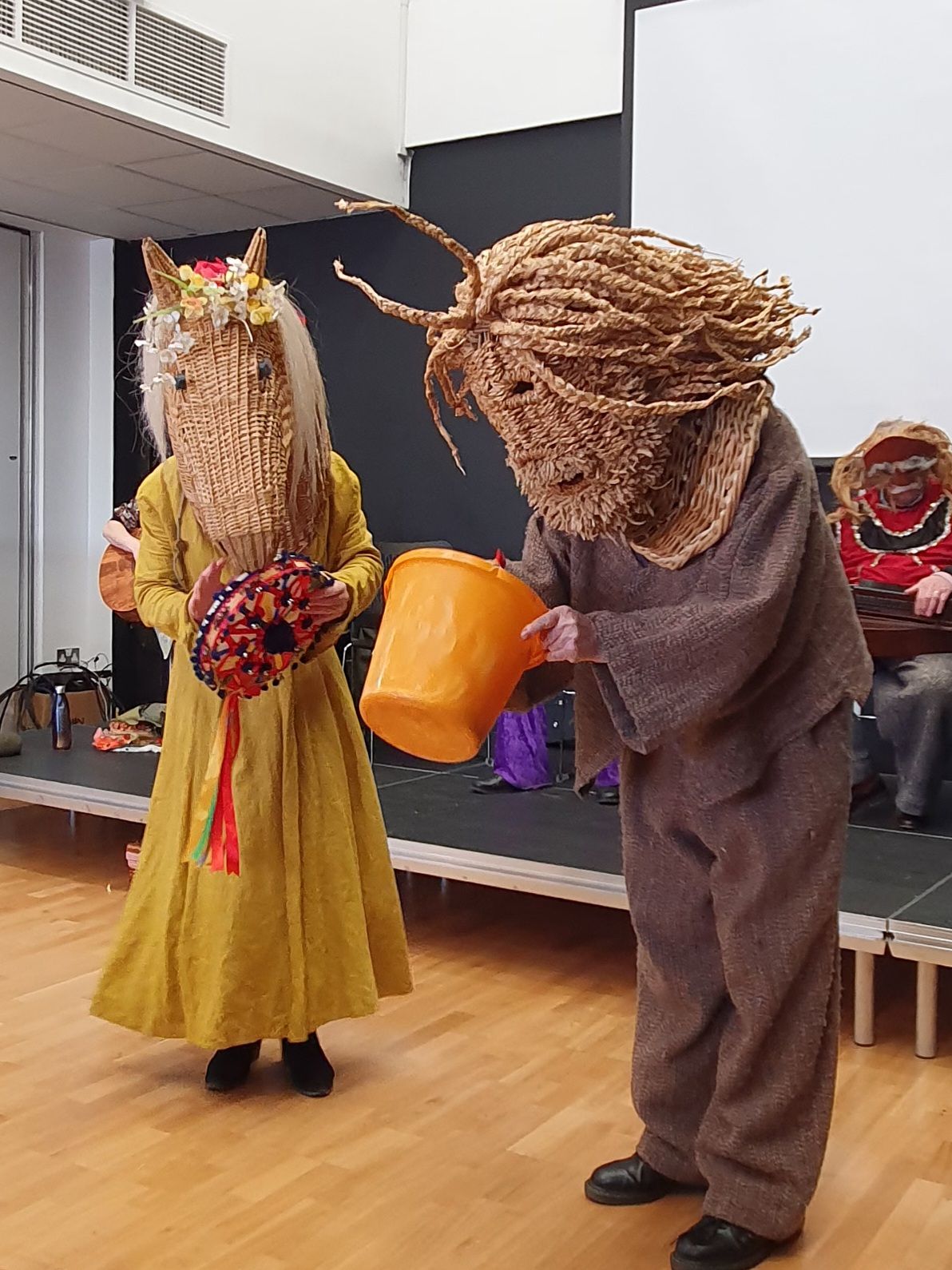
- England: In the Sheffield area and northern Derbyshire, a dramatised version of the 'Derby Ram' folksong known as the Derby Tup play has been performed by teams of boys since at least 1895, featuring a Tup (ram) killed by a Butcher and sometimes revived by a Doctor. In Yorkshire, the 'Owd 'Oss' (Old Horse) play, another dramatised song, was performed around Christmas into the 20th century, persisting in Dore until at least 1970, and featuring a hobby horse made from a real horse's skull or a wooden head. In Ynysmeudwy near Swansea, groups of four boys performed a play on Bonfire Night as characters like Crwmpyn John and Robin Hood.
- Ireland: Irish mummers' plays, performed in English, often incorporate famous figures from Irish history like Colmcille, Brian Boru, and Wolfe Tone alongside standard characters like the Captain, Saint Patrick, and the Doctor. The tradition continues in areas like County Fermanagh, Tyrone, Wexford, and Fingal, County Dublin, where it is part of Ireland's National Inventory of Intangible Cultural Heritage. The practice was discouraged by the Catholic Church in the early 20th century, and in 1935 the Carne Mummers were arrested under the Dance Halls Act. A revival was spearheaded by the Fingal Mummers in the 1980s, and a festival is held each October by Scoil Seamus Ennis, hosting troupes from across Ireland and England.
- Scotland: The Scottish tradition, often called Galoshins, was documented in the 20th century by researchers like A.L. Taylor and Emily Lyle, who recorded oral histories. Brian Hayward's research mapped performances largely across Scotland's Central Belt, with an outlier in Ballater, Aberdeenshire. An earlier Shetland tradition from around 1788, published by Sir Walter Scott in 1831, featured a 'calling-on song' for the Papa Stour Sword Dance with the Seven Champions of Christendom but no combat plot. Modern troupes like the all-female Meadows Mummers perform plays inspired by this research and have performed internationally, including in Barga, Italy in 2019.
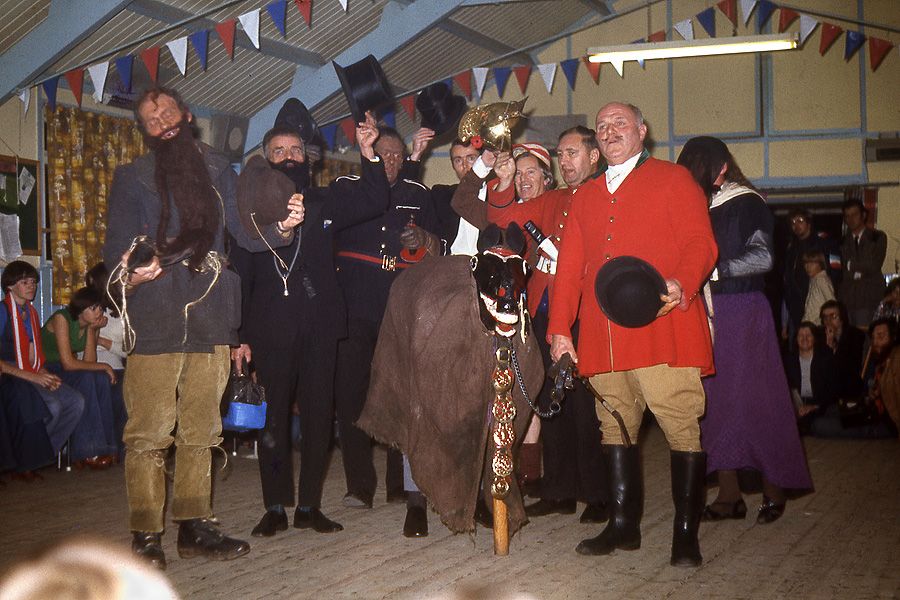
- Isle of Man: The Manx White Boys play, first recorded in 1832, concludes with a song and a sword dance. Modern versions frequently adapt the characters to comment on contemporary issues, featuring figures like Sir Banker, Expert, and Estate Agent since the 1990s, and it is performed annually on the Saturday before Christmas. A compendium of sources on the play edited by Stephen Miller was published in 2010.
The Tradition in North America: Parades and Mummering
Mumming traditions were brought to North America by European immigrants, where they evolved into distinctive new forms, most notably the massive Philadelphia Mummers Parade. The parade, officially established in 1901, traces its roots over 350 years to the informal house-visiting customs of Swedish, Irish, German, and English communities in the city. It is recognized as the oldest continuous folk parade in the United States and was named the best holiday parade in the country by USA Today. The 125th edition was held on January 1, 2026, coinciding with the start of the United States semiquincentennial celebrations, though frigid winds near freezing and gusts of 30 mph forced the postponement of the outdoor string band competition. The parade is a complex, day-long event organized into five distinct divisions, each with a specific performance style and judging criteria.
| Division | Primary Focus | Key Feature and Details |
|---|---|---|
| Comics | Satire and humour | Use traditional 'Mummers umbrella'. Poke fun at current events and politics. |
| Wench Brigades | Traditional style with live brass bands | Originated from Comic division. Wear bonnets, dresses, painted faces, and golden slippers. |
| Fancy Division | Visual spectacle and elaborate costumes | Costumes can weigh hundreds of pounds with massive backpieces, feathers, and sequins. |
| String Bands | Live music and choreographed drills | Play instruments like banjos, saxophones, accordions, violins, and drums without recorded tracks. |
The Mummers Museum in Philadelphia is dedicated to preserving this history. It marked its 50th anniversary with a Mardi Gras concert featuring the Glen David Andrews Band on February 7, 2026. In recent years, parade clubs have made concerted efforts to be more inclusive and address past controversies involving cultural insensitivity. They have collaborated with diverse community groups such as the Philadelphia Chinese Community Organizations United, Danza Tonantzin, and the Positive Movement Entertainment Drumline.
In Canada, the tradition took root most strongly in Newfoundland and Labrador, where it is known as mummering or jannying. During the Twelve Days of Christmas, groups would disguise themselves in old clothing, masks, and padded costumes to conceal their identities, then visit neighbours' homes where hosts were expected to guess who they were. Traditional mummers' plays like 'St. George and the Dragon' were part of these visits, and the custom is the subject of folk songs like 'The Mummer's Carol,' popularized by the band Simani and later by Great Big Sea. A hip-hop version by M.W.A. (Mummers With Attitude) was released in 2014. The practice is documented and discussed by institutions like The Rooms in Newfoundland, which hosts events on its history and impact.
Mummers in Music, Literature, and Cultural Legacy
The mummers' play has inspired numerous works in other art forms, reflecting its enduring cultural resonance as a symbol of folk performance, disguise, and ritual. In literature, Thomas Hardy provided a detailed fictional depiction based on his childhood experiences in his 1878 novel 'The Return of the Native.' Leo Tolstoy's 'War and Peace' includes a scene of mummers, including Nikolai and Natasha Rostov, making boisterous house visits in swapped-gender costumes. Ngaio Marsh's 1957 detective novel 'Off with His Head' is set around a fictional sword dance play called the 'Dance of the Five Sons,' featuring characters like The Fool and a Hobby Horse. George R.R. Martin's 'A Song of Ice and Fire' series often uses the term 'mummer' as a pejorative and references events as a 'mummer's farce.'
In music, several folk and popular songs are directly connected to the tradition, spanning from traditional recordings to contemporary hits. 'The Singing of the Travels' by the Symondsbury Mummers has been recorded on folk anthologies and by the Silly Sisters (Maddy Prior and June Tabor). Steeleye Span's 'A Calling-on Song' from their 1970 album 'Hark! The Village Wait' is based on a sword-dance or pace-egg play song. Loreena McKennitt's 1997 hit 'The Mummers' Dance' from the album 'The Book of Secrets' refers to a springtime mummers' play in Ireland. The song 'England in Ribbons' by Hugh Lupton and Chris Wood, based on mummers' play characters, named a BBC Radio 3 St. George's Day programme in 2006. The Canadian folk group Great Big Sea performed 'The Mummer's Song,' an arrangement of the traditional Newfoundland 'Mummer's Carol.' The English rock band XTC titled their 1983 album 'Mummer.'
The legacy of mummers' plays is maintained by revival groups and cultural institutions. In Ireland, The Armagh Rhymers have been performing mummers' plays and related traditions since the 1970s. In England, groups like the Northstow Mummers in Cambridge perform the Derby Tup play, and the Master Mummers' Directory lists over 250 active folk play groups. The plays continue to be a subject of academic study and folkloric research, with resources like the Folk Play Research Website providing scripts, photos, and databases. The tradition's blend of performance, community participation, and seasonal celebration ensures its continued relevance as a living piece of intangible cultural heritage on both sides of the Atlantic.
Frequently Asked Questions for Canadian Audiences
For Canadians encountering this tradition at local festivals or through media, several common questions arise about its nature, origins, and local connections. The practice has particular resonance in Atlantic Canada and intersects with broader folk culture celebrated across the country. Is mummering the same as the Philadelphia parade? While related, they are distinct expressions. Mummering in Newfoundland is an informal, house-visiting tradition focused on disguise and guessing games, often including short plays. The Philadelphia parade is a large, organized, competitive public spectacle with defined divisions and elaborate floats. Both stem from the same historical roots in British and Irish folk customs. Are mummers' plays still performed in the UK and Ireland? Yes, though primarily through revival groups. Traditional sides largely disappeared after WWI, but many were revived from the 1950s onward by folk enthusiasts. In Ireland, groups like the Armagh Rhymers and the Fingal Mummers perform regularly, and the tradition is actively maintained in specific regions like County Fermanagh and Isle of Man.
What is the connection to sword dancing? In some regions, especially north-eastern England, mummers' plays are integrally linked to sword dances or Rapper dances. The plays might precede or follow the dance, and some performances, like the historic Papa Stour dance from Shetland, blend character introductions with the dance itself without a full play plot. How were mummers viewed by authorities historically? Authorities often viewed mumming with suspicion due to the anonymity provided by disguise. In 1418, a London law forbade mumming and wearing disguises within the city. In 1935, Irish mummers in Carne were arrested under the Dance Halls Act for performing in the street, showing periodic official resistance to the tradition. Can you see mummers' plays in Ontario or other Canadian provinces? While not a widespread tradition outside Newfoundland, elements can appear at multicultural or folk festivals. The tradition is more likely to be presented as a historical performance or workshop by folkloric societies rather than as a living community practice. Institutions may host talks, like those at The Rooms in St. John's, which discuss the tradition's impact in Newfoundland and beyond. What is the significance of the Doctor character? The Doctor is a central comic figure who uses a magic potion to revive a slain character, providing the narrative climax of death and rebirth. This plot element led early scholars to theorize about links to ancient fertility rites, though this is now debated. The character's exaggerated claims and pseudo-learned speech are staples of the humour.
Questions about Mummers' play
What is a Mummers' play?
A Mummers' play is a traditional folk drama performed by amateur actors in costume, known as mummers or guisers. The most common plot involves a ritual combat between a hero, like Saint George, and an opponent, ending with the death and subsequent magical revival of a character by a Doctor. These plays are performed seasonally, often at Christmas or New Year, during house-to-house visits or in streets and pubs. They are a form of community celebration that includes music, dance, and the collection of money or food.
Where did the Mummers' play tradition originate?
The tradition of costumed community visits, or mumming, dates back to the Middle Ages in Britain and Ireland. The specific folk play structure known today emerged in the mid to late 18th century. The practice spread from the British Isles to a number of former British colonies. Ireland has its own unique history of mummers' play.
How is the Mummers' tradition celebrated in Canada?
In Canada, the mumming tradition is most prominent in Newfoundland and Labrador, where it is called mummering or jannying. During the Christmas season, people disguise themselves in elaborate, often humorous costumes and visit neighbours' homes, where the hosts must guess their identities. Traditional short plays, like 'St. George and the Dragon,' may be performed. The custom is celebrated in local festivals and is the subject of folk songs, such as 'The Mummer's Song' performed by Great Big Sea.
What is the Philadelphia Mummers Parade?
The Philadelphia Mummers Parade is a massive New Year's Day folk parade and the oldest continuous parade of its kind in the United States, officially established in 1901. It features thousands of performers in five divisions: Comics, Wench Brigades, Fancy Division, String Bands, and Fancy Brigades. Each division has a distinct style, from satirical humour to elaborate costumes and live musical performances. The 125th parade was held on January 1, 2026, and is a major civic celebration broadcast internationally.
What are the key characters in a traditional Mummers' play?
The key characters in a standard Mummers' play include a hero, most commonly Saint George, King George, or Prince George. Another key character is his chief opponent, known as the Turkish Knight in southern England. A quack Doctor comes to restore the dead man to life. Other characters include Old Father Christmas, the Fool, and Beelzebub or Little Devil Doubt.
Are there any museums dedicated to Mummers?
Yes, there is a Mummers Museum. This museum is dedicated to preserving the history of mummers, who are costumed entertainers. It celebrated its 50th anniversary on February 7, 2026, with a large Mardi Gras concert featuring the Glen David Andrews Band. The museum itself offers an experience lasting about one hour and thirty minutes. It focuses on the tradition of mummers as performers who welcome the new year with dance and music. The museum's existence highlights the cultural significance and ongoing interest in mummering traditions.
Sources: Wikipedia and current public reporting, checked by the Novello Desserts desk. Last updated 2026-10-30.