University of Saskatchewan
The University of Saskatchewan (USask) is a major public research university located in Saskatoon, Saskatchewan. Founded in 1907, it is the province's largest educational institution and a prominent member of Canada's U15 group of research-intensive universities. The university's expansive campus along the South Saskatchewan River is celebrated for its Collegiate Gothic architecture and serves as a significant tourist destination, offering museums, cultural venues, and public attractions. USask is a central part of Saskatchewan's intellectual and cultural life, contributing groundbreaking research in areas from agriculture to nuclear physics while welcoming visitors to explore its historic grounds and facilities.
Historical Foundations and Campus Development
The University of Saskatchewan was established by a provincial act on March 19, 1907, with a mandate to provide higher education accessible to all, regardless of race, creed, or religion. The institution was modeled on the American state university system, emphasizing applied research to serve Saskatchewan's agrarian society. After a politically influenced selection process, Saskatoon was chosen as the university's permanent home on April 7, 1909, over other contending cities like Regina and Battleford. The first classes began in September 1909 with seventy students, and the first degrees were awarded in 1912, with women comprising two of the three graduating honours students. Prime Minister Sir Wilfrid Laurier laid the first stone of the College Building on July 29, 1910, and the campus officially opened on May 1, 1913.
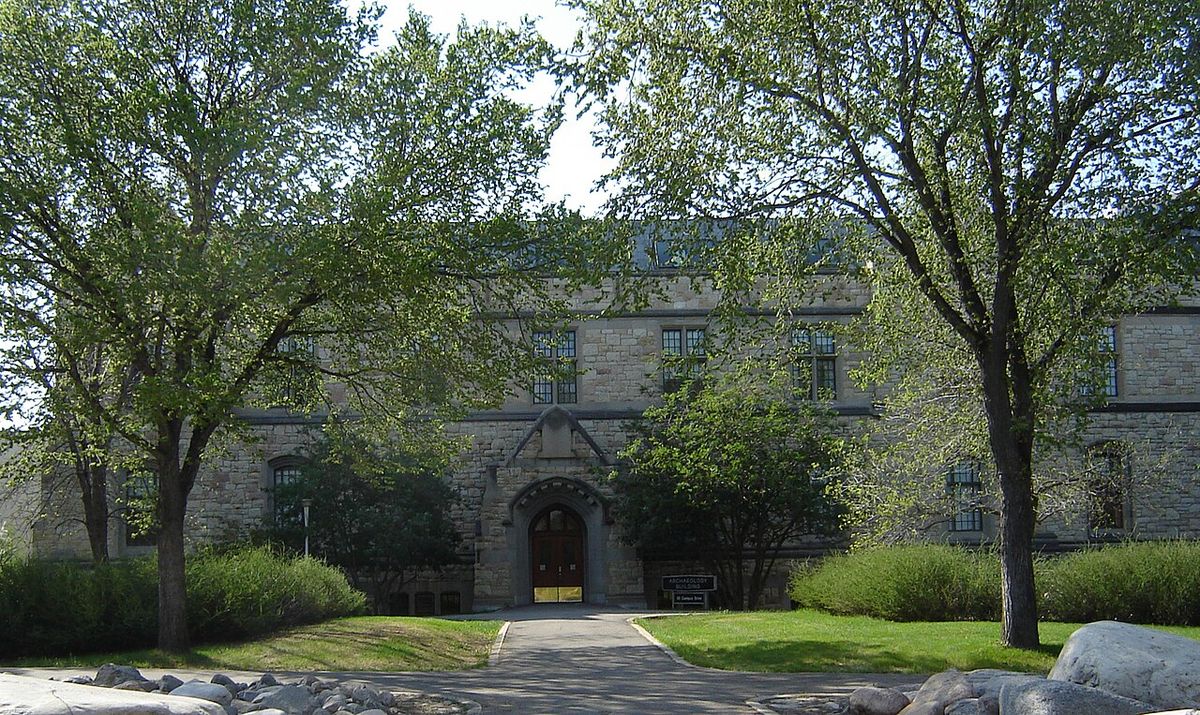
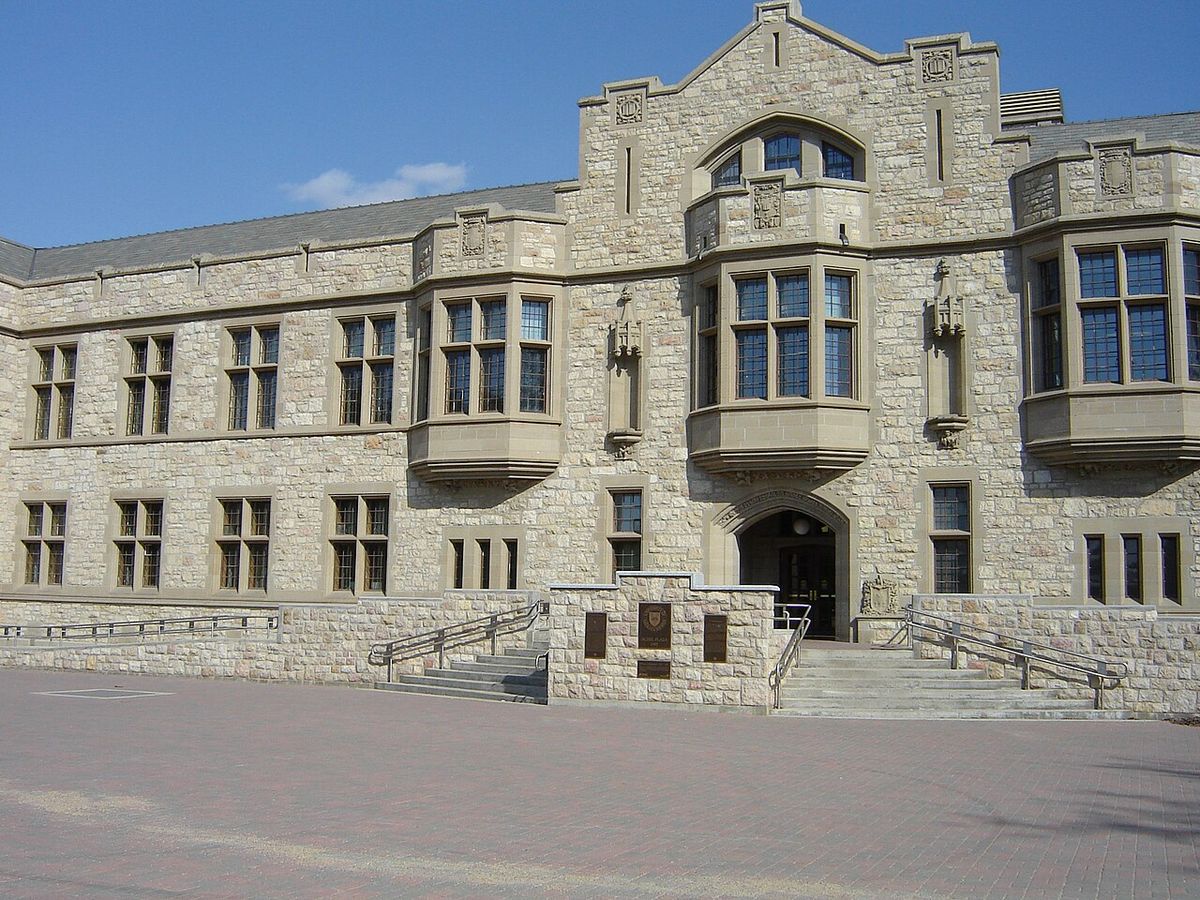
The original campus plan, designed by architects Brown & Vallance, featured Collegiate Gothic style buildings constructed around a central green space known as The Bowl. Early structures like Saskatchewan Hall, the Engineering Building, and the President's Residence were built using locally quarried greystone limestone, which became a signature campus material. As the local limestone supply was exhausted, the university turned to Tyndall stone from Manitoba for later constructions. The Memorial Gates, erected in 1927 at the corner of College Drive and Hospital Drive, honour the sixty seven students and faculty who lost their lives in the First World War. In total, 342 university community members enlisted for that war, with 100 wounded and 33 awarded medals for valour.
Over the decades, the campus expanded significantly from its original holdings. The university once controlled extensive lands northeast of the core campus, much of which was later developed into residential neighbourhoods like Silverspring and the commercial Preston Crossing retail area. The campus itself now encompasses 981 hectares, with an additional 200 hectares allocated for the Innovation Place Research Park. Key later additions include the Murray Memorial Main Library (1956), the Physical Activity Complex, and Merlis Belsher Place, a modern sports complex that opened as the home for Huskie athletics. The historic College Building, also known as the Peter MacKinnon Building, was designated a National Historic Site of Canada in 2001 for its architectural significance.
Academic Structure and Notable Colleges
The university's academic structure has grown from its beginnings as an agricultural college to encompass a comprehensive range of disciplines. The first colleges established were Arts and Science (1909) and Agriculture (1912), the latter now known as the College of Agriculture and Bioresources. The institution quickly expanded its professional offerings, founding colleges of Engineering (1912), Law (1913), Pharmacy and Nutrition (1914), and the N. Murray Edwards School of Business (1917). Subsequent decades saw the establishment of colleges in Medicine (1926), Education (1927), Nursing (1938), Graduate Studies and Research (1946), Kinesiology (1958), Veterinary Medicine (1964), and Dentistry (1965). Today, USask offers over 200 academic programs across its various colleges and schools.
The university also has a long history of affiliation with theological colleges, providing a unique dimension to its academic community. These affiliated institutions include Emmanuel College (Anglican, 1909), St. Andrew's College (United Church, 1913), the Lutheran Theological Seminary (1920), St. Thomas More College (1936), and Central Pentecostal College (1983). A significant development in the university's history was the 1934 incorporation of Regina College, which was granted degree-granting privileges in 1959 and later became the independent University of Regina in 1974. The university's extension department, established in 1910, was the first of its kind at a Canadian university, and correspondence courses were introduced in 1929, highlighting an early commitment to accessible education.
- Arts and Science (1909)
- Agriculture and Bioresources (1912)
- Engineering (1912)
- Law (1913)
- Pharmacy and Nutrition (1914)
- N. Murray Edwards School of Business (1917)
- Medicine (1926)
- Veterinary Medicine (1964)
Visitor Attractions and Public Spaces
The University of Saskatchewan campus is a major attraction for visitors to Saskatoon, renowned for its beautiful grounds and Collegiate Gothic architecture. The central social hub is The Bowl, a large green space encircled by historic buildings. Public tours of the campus are available year round, with special large scale events like Open House, which in 2026 featured campus tours, hands on activities, and presentations across dozens of locations. The university encourages visitors to use public transit or designated drop off points during busy events, with paid visitor parking available at locations like the Stadium Parkade and Lot 4. The City of Saskatoon's Fire Station No. 5 was relocated to university land on Preston Avenue North in 2023, serving the growing campus area.
Several museums and cultural centres on campus are open to the public. The Diefenbaker Canada Centre is a prime ministerial museum dedicated to Canada's 13th prime minister, John G. Diefenbaker, and hosts exhibits on the Canadian experience, offering guided tours for groups. The Museum of Antiquities, located in the Arts Building, houses a collection of full scale replica sculptures from ancient Greek, Roman, Egyptian, and Near Eastern civilizations, with free admission and public tours available. The Biology Building features the Museum of Natural Sciences, which displays living plants, animals, and fossils to outline evolution through geological time. The Gordon Snelgrove Gallery in St. Thomas More College hosts monthly exhibitions of local and regional artists from September to April.
Performance and athletic venues provide year round entertainment. The Greystone Theatre, established in 1946 within the university's drama department, is one of the oldest theatres in the province and stages regular performances. Huskie athletics are a major draw, with teams playing at Merlis Belsher Place, a modern complex that also hosts community recreational leagues. Griffiths Stadium is the home of Huskie football, with a capacity of 4,600 and an eight lane athletics track. The Physical Activity Complex (PAC) offers public access to a large fitness centre, a triple gymnasium, and a 40 foot rock climbing wall, alongside aquatic and dance programs. The campus observatory provides free public viewings of the night sky every Saturday evening.
- Diefenbaker Canada Centre (prime ministerial museum)
- Museum of Antiquities (free admission, replica sculptures)
- Greystone Theatre (public performances)
- Merlis Belsher Place (Huskie sports and community athletics)
- Campus Observatory (free Saturday night viewings)
- Physical Activity Complex (fitness centre, climbing wall, pools)
- The Bowl (central campus green space)
- Little Stone School House (historic 1888 building on campus grounds)
Research Achievements and National Facilities
The University of Saskatchewan has a storied history of scientific innovation that has had global impact. In 1948, the university built Canada's first betatron facility for radiation research. Sylvia Fedoruk, who later became the university's first female chancellor and Saskatchewan's lieutenant governor from 1988 to 1994, was a member of the pioneering cobalt 60 research team. This expertise led to the establishment of the Saskatchewan Accelerator Laboratory in 1964, featuring a linear accelerator that positioned university scientists at the forefront of Canadian nuclear physics.
A crowning achievement in the university's research portfolio is the Canadian Light Source (CLS) synchrotron, which opened on October 22, 2004. This national facility for synchrotron light research is the size of a football field and represents one of the largest investments in Canadian science. The CLS attracts researchers from across the country and around the world. The university is also home to the Vaccine and Infectious Disease Organization (VIDO), established in 2003, which develops vaccines for humans and animals. The adjacent Innovation Place Research Park is an industrial science and technology park that fosters collaboration between private industry and university researchers.
The university's research endeavours extend into diverse fields including agriculture, environmental science, and Arctic studies. USask is an active member of the University of the Arctic, an international network of over 200 institutions promoting education and research in the circumpolar region. Through programs like north2north, USask enables student exchange and mobility across the North. Other significant research facilities on campus include the Plasma Physics Laboratory, which operates a tokamak, and the site where an SCR 270 radar was used in 1949 to image the Aurora for the first time. These facilities collectively demonstrate the university's role as a national research leader.
Governance and Institutional Recognition
The governance of the University of Saskatchewan is established by the University of Saskatchewan Act, which created a tricameral system consisting of a Board of Governors, a University Council, and a Senate. The Board of Governors, comprising eleven members, is responsible for financial policy, management, and administrative affairs. The University Council, a body of 116 faculty and students, serves as the academic governing body. The Senate, with 100 representatives, acts as a liaison between the university and the public and professional sectors. This structure, modeled on the University of Toronto Act of 1906, was designed to balance academic independence with public accountability.
The university has received consistent recognition in national and international rankings. In the 2023 Academic Ranking of World Universities, it placed between 301st and 400th globally and between 12th and 17th in Canada. The 2025 QS World University Rankings placed USask 340th in the world and 14th in Canada. In Maclean's 2024 rankings, the university was placed 15th in the Medical Doctoral university category. Beyond academic rankings, the university was identified in February 2025 as one of Saskatchewan's top 100 employers, noted for benefits such as extensive campus fitness facilities and a 21 week parental leave at 95 percent of salary.
The university's commitment to its founding principles is reflected in its historical milestones. The original University Act explicitly stated that no woman would be deprived of any advantage accorded to male students, a progressive stance for the era. The first graduating class in 1912 included honour students who were women. The university's coat of arms was formally registered with the Canadian Heraldic Authority on February 15, 2001. Throughout its history, the university has experienced periods of internal change, such as in May 2014 when the provost resigned and the president was fired following turmoil over addressing a structural deficit.
Campus Life and Visitor Information
Beyond its academic and research functions, the University of Saskatchewan campus is an active community with extensive amenities for students, staff, and visitors. Culinary Services operates numerous eateries across campus, including in Place Riel, with cashless payment systems accepting debit, credit, and mobile pay. The university bookstore and Shop USask outlets at Preston Crossing and on campus sell merchandise, apparel, gift items, and textbooks. For recreation, the university offers a wide range of programs and activities through its Fit Centre, including kids' camps, swimming, dance, and special needs programming.
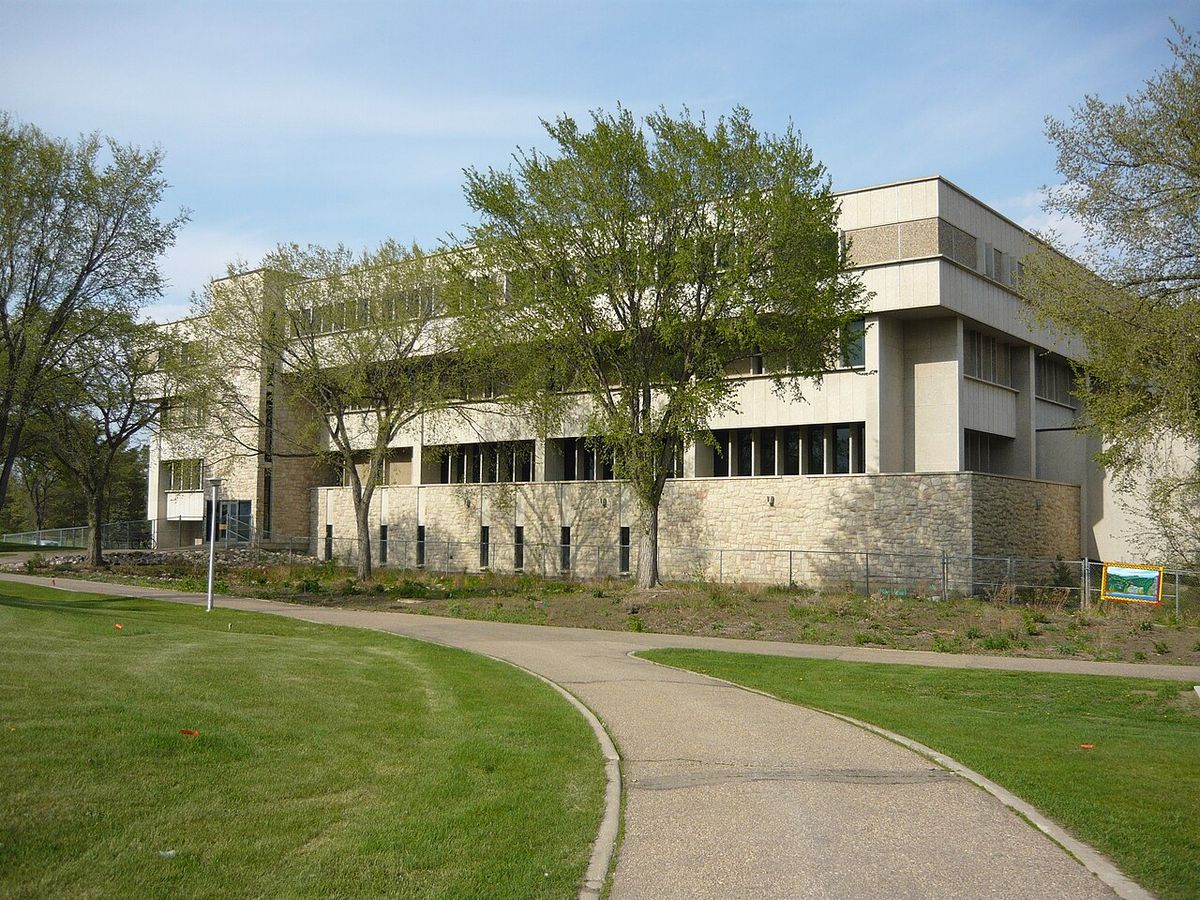
Visitors to the campus can explore several unique architectural and landscape features. The Beamish Conservatory, an atrium in the Agriculture Building, and the Leo Kristjanson Agriculture Atrium are notable interior spaces. The Law Building features a living roof, part of a research project to test green roof technology in Saskatchewan's extreme climate. The Nobel Plaza is an intimate space within the central student gathering area. The campus is also home to the historic Little Stone School House, originally built in 1888 and relocated to a quiet spot off College Drive. The university's commitment to safety and security is formalized through dedicated campus services.
The university actively engages with the broader Saskatoon community and international visitors. It hosts major public events like Vetavision, a biennial open house at the Western College of Veterinary Medicine where the public can learn about animal health and research. The university also facilitates international visits, offering tailored tours and planning assistance. For prospective students and their families, events like Counsellor Days are held in Saskatoon, Prince Albert, and online each October. The university's social media channels, such as @usask.future.students, provide ongoing updates and encourage visitors to share their experiences using hashtags like #usaskopenhouse.
Comparative University Rankings
The University of Saskatchewan's standing among Canadian and global institutions is measured by several major ranking bodies, each using different methodologies. The rankings reflect the university's position as a significant research intensive institution within Canada, though its precise placement varies from year to year and between different ranking systems. Its strongest showings are in the QS rankings (14th nationally) and the Academic Ranking of World Universities (12th-17th nationally). The variation in global rank, from 301st to 441st, highlights the differences in criteria, such as research citation impact, international faculty ratio, and academic reputation surveys. The university's inclusion in the U15 Group of Canadian Research Universities is a further indicator of its research intensity, which is a key factor in these assessments.
| Ranking Body | Year | National Rank in Canada |
|---|---|---|
| Academic Ranking of World Universities | 2023 | 12-17 |
| QS World University Rankings | 2025 | 14 |
| Times Higher Education World University Rankings | 2024 | 16 |
| U.S. News & World Report Global Rankings | 2022-23 | 18 |
| Maclean's Medical-Doctoral Category | 2024 | 15 |
| Maclean's Reputation Ranking | 2024 | 21 |
Questions about University of Saskatchewan
What are the main tourist attractions at the University of Saskatchewan?
The campus features several key attractions open to the public. The Diefenbaker Canada Centre is a museum dedicated to Prime Minister John Diefenbaker and Canadian history. The Museum of Antiquities offers free admission to view full scale replica sculptures from ancient civilizations. The historic campus itself, with its Collegiate Gothic architecture and central Bowl, is a popular site for walking tours. Visitors can also attend Huskie athletic events at Merlis Belsher Place, see a play at the Greystone Theatre, or enjoy free Saturday night viewings at the campus observatory.
When was the University of Saskatchewan founded and where is it located?
The University of Saskatchewan was founded by a provincial act on March 19, 1907. The location in Saskatoon was selected by the board of governors on April 7, 1909, after consideration of several other cities. The main campus is situated on the east side of the South Saskatchewan River, directly across from downtown Saskatoon. It encompasses 981 hectares of land, featuring a mix of historic greystone and Tyndall stone buildings in a Collegiate Gothic style, with the South Saskatchewan River providing a scenic backdrop.
What is the Canadian Light Source and why is it significant?
The Canadian Light Source (CLS) is a national synchrotron research facility located at the University of Saskatchewan. It opened on October 22, 2004, and is roughly the size of a football field. A synchrotron produces extremely bright light used by scientists to study the molecular and atomic structure of materials. The CLS is considered one of the largest and most innovative investments in Canadian science, attracting researchers from across the country and around the world to conduct experiments in fields ranging from agriculture and medicine to environmental science and advanced materials.
Can the public visit the University of Saskatchewan campus?
Yes, the public is welcome to visit the University of Saskatchewan campus year round. The university offers guided tours, and many of its museums and galleries have free admission. Major public events include Open House for prospective students, which features campus tours and activities, and Vetavision, a biennial open house at the Western College of Veterinary Medicine. Visitors can park in designated paid lots, use public transit, or be dropped off at locations like the Physical Activity Complex. The campus also hosts athletic games, theatre performances, and art exhibitions that are open to all.
What is the history behind the Memorial Gates on campus?
The Memorial Gates were erected in 1927 at the corner of College Drive and Hospital Drive to honour University of Saskatchewan alumni who served in the First World War. A stone wall at the site bears the inscribed names of the sixty seven university students and faculty who lost their lives during the war. In total, 342 members of the university community enlisted, with 100 wounded and 33 awarded medals for valour. The gates serve as a permanent memorial and are a poignant historical landmark on the campus, reflecting the university's connection to broader national events.
What major research discoveries are associated with the University of Saskatchewan?
The university has been the site of several groundbreaking discoveries. Sylvia Fedoruk, a member of the research team, later became the university's first female chancellor. Other significant innovations include the development of sulfate resistant cement and pioneering work in nuclear physics through the Saskatchewan Accelerator Laboratory, established in 1964. The university also built Canada's first betatron facility in 1948 and was the first to image the Aurora using radar in 1949.
Sources and further reading
- University of Saskatchewan (Wikipedia)
- Services and Attractions (usask.ca)
- Open House, Admissions | University of Saskatchewan (admissions.usask.ca)
Checked by the Novello Desserts desk. Last updated 2026-10-29.