Yule log
The Yule log, known in French as the bûche de Noël, is a traditional Christmas dessert with deep roots in European winter customs. In Canada, particularly within Quebec, the cake is a central part of holiday celebrations, while the broader concept of the Yule log also appears as festive tourist attractions and community ceremonies. The edible version, a sponge cake roulade decorated to resemble a wooden log, became popular in the 19th century. Today, it symbolizes festive tradition alongside modern interpretations like amusement park rides and annual university events that bring communities together during the holiday season.
Origins and Historical Development
The tradition of the Yule log predates its edible form by many centuries, originating as a ritual involving a specially selected log burned on the hearth during the winter season. The earliest known description of such a ritual comes from the 6th century Spanish bishop Martin of Braga, who wrote of placing a log in the hearth and offering food and wine upon it. This practice was widespread across Europe, with variations in customs regarding the type of wood, the timing of the burning, and associated superstitions. A common belief held that keeping a charred piece of the log would protect the home from lightning in the coming year. The ritual is thought by scholars to have roots in Roman traditions honouring the Lares during the Kalends of January, later merging with Christian practices. Despite its name, the tradition's direct link to the pre-Christian Germanic Yule festival is debated by historians, as medieval Scandinavian sources do not mention such a log.
The transition from a burned log to a dessert began in the 19th century, largely credited to Parisian pastry chefs. The first published recipe for a bûche de Noël appeared in 1890 in Pierre Lacam's Le Mémorial Historique et Géographique de la Pâtisserie. Lacam's recipe used rounds of génoise sponge cake layered with coffee or chocolate buttercream to form a log shape. He later attributed the invention of the cake to Antoine Charabot of La Maison Quillet in 1879. The dessert gained rapid popularity among the Parisian bourgeoisie during the Belle Époque period, from 1870 to 1914, as an emblem of sophisticated taste. Its appeal spread across Europe and to French-influenced regions globally, including Quebec, where it became a staple of Réveillon celebrations.
The Dessert: Composition and Variations
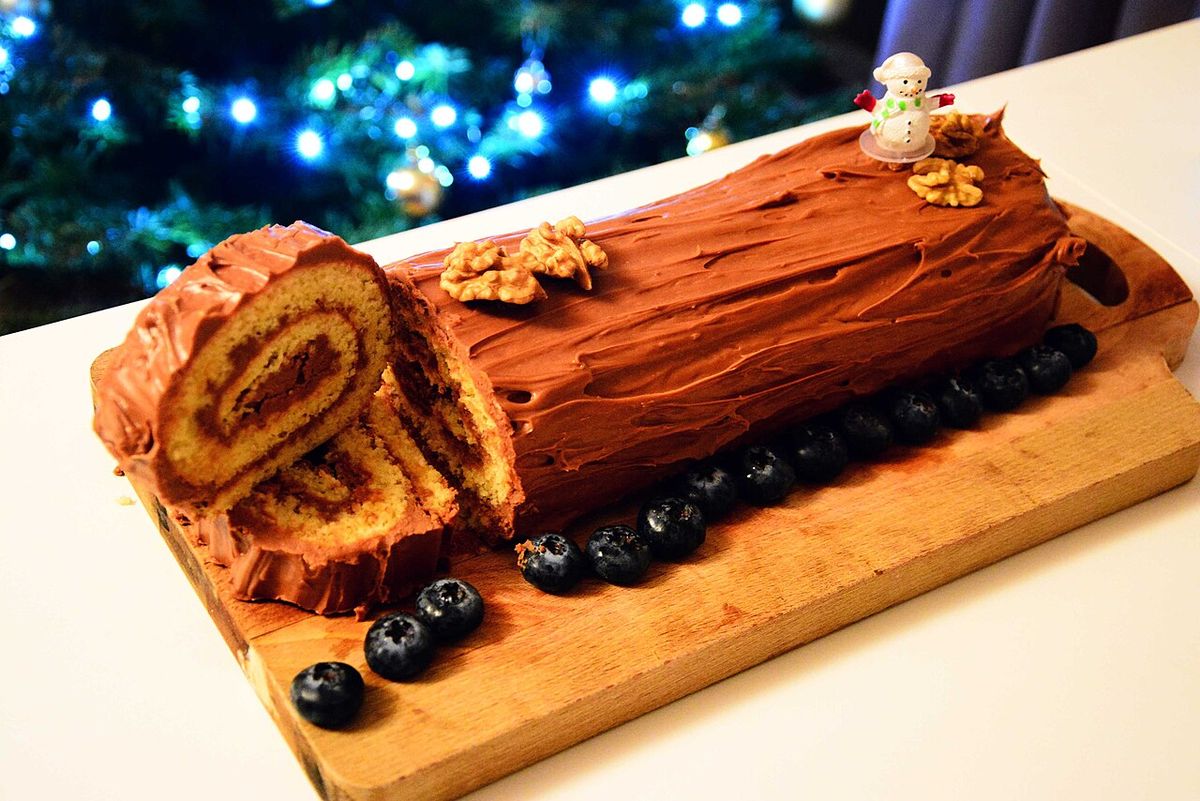
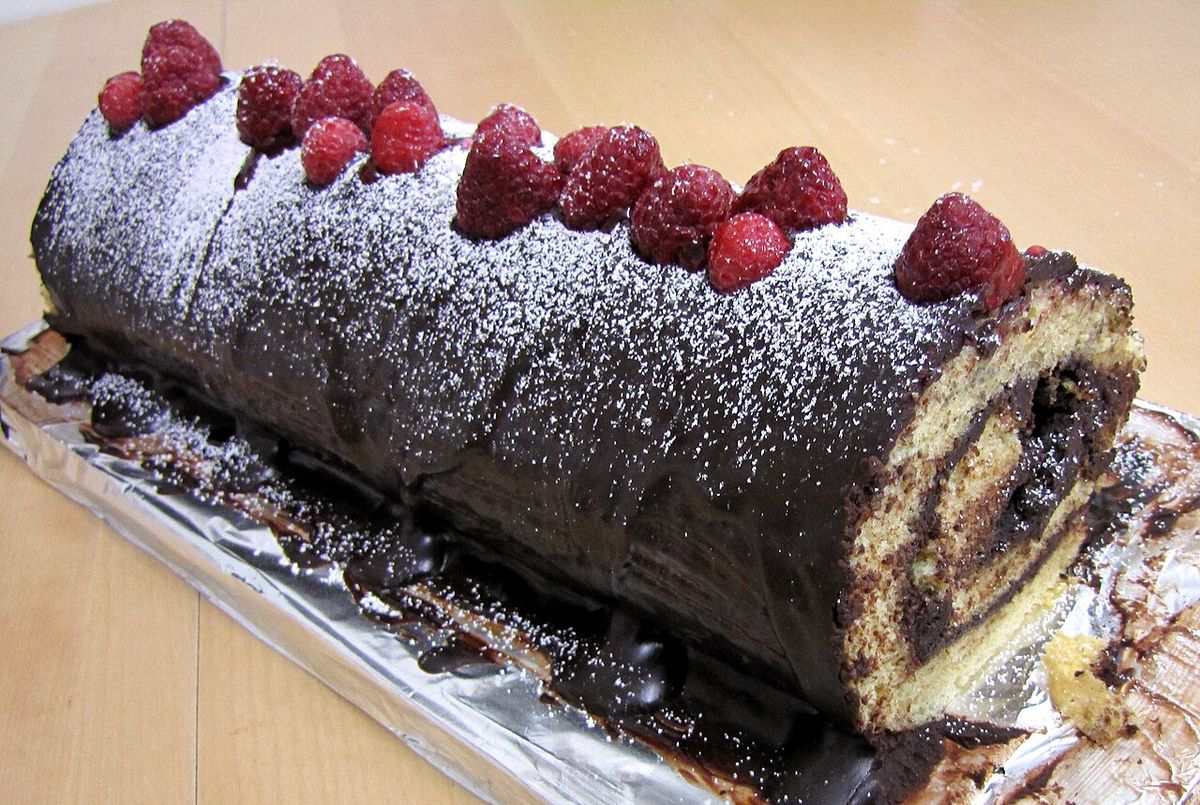
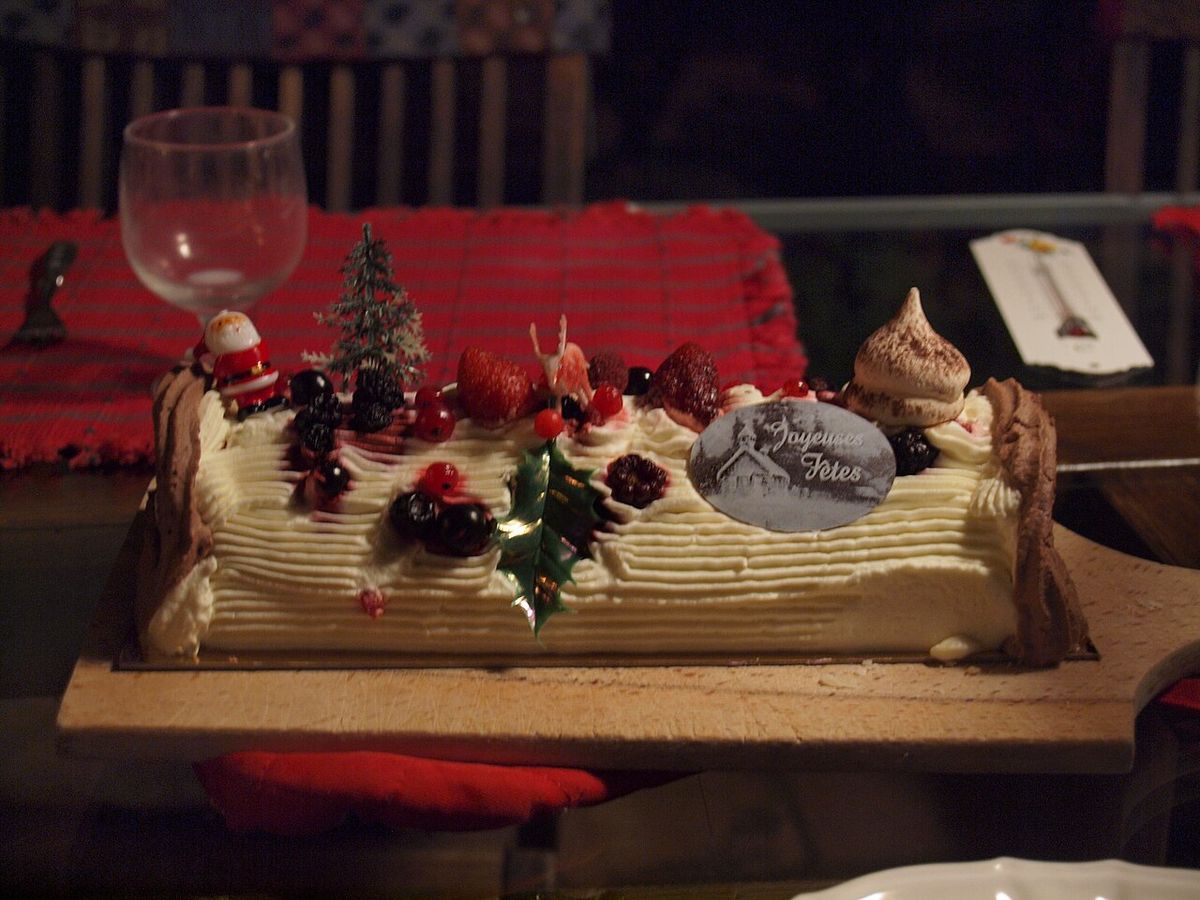
The classic Yule log cake is a sweet roulade designed to mimic the appearance of a miniature log. It is traditionally made from a genoise sponge cake, baked in a shallow pan, then spread with icing, rolled into a cylinder, and coated again on the exterior. The most common and classic combination features a yellow sponge cake with chocolate buttercream. To enhance the rustic, wooden aesthetic, bakers often drag a fork through the icing to create a bark-like texture and dust the cake with powdered sugar to resemble snow. Common decorative elements include meringue or marzipan mushrooms, fresh berries, and small cake branches attached to the main roll.
Modern patissiers and home bakers have created an extensive array of variations on the traditional formula. Contemporary versions may use chocolate sponge cake, ganache, or icings flavoured with espresso, liqueurs, or fruit purees. Premium artisanal versions, such as those offered by Maison Caffet for the 2026 holiday season, highlight ingredients like dark chocolate, hazelnuts, and praline. Each year, luxury brands and renowned pastry chefs release new, often extravagant interpretations. In 2025, selections noted by publications included creations from Dior, Ladurée, Nina Métayer, and a collaboration between Repetto and Café de la Paix. The dessert is typically sized to serve six to eight people and is a central feature of the holiday dessert table in many Canadian homes, especially in French-Canadian culture.
Yule Log as a Tourist Attraction and Activity
Beyond the dessert, the Yule log theme has been incorporated into seasonal tourist attractions and family activities in North America. A prominent example is the Yule Log Flume, a water ride at Santa's Village, a family amusement park. The attraction invites guests to ride in a log boat through a themed 'Yule Forest,' complete with a climbing logging ramp and a final splashdown. For the 2026 season, the final operating day for the ride was October 11. The ride has specific safety requirements, including a minimum height of 36 inches to ride with a companion and 48 inches to ride alone. Such attractions blend the whimsical concept of a log journey with festive holiday theming, offering a unique winter or autumn experience.
Other Canadian Christmas activities often run concurrently with the season where Yule logs are enjoyed. These include events like Pumpkinferno at Upper Canada Village in Morrisburg, Ontario, a Halloween and autumn light display, and family-friendly sleigh rides. While not directly named for the Yule log, these seasonal destinations contribute to the broader range of winter tourism in Canada, where the sharing of food and tradition is central. Tour operators also offer specific Christmas and New Year's tours across Canada, catering to visitors seeking a festive experience. The demand for these seasonal experiences shows how the concept of festive tradition extends from the dining table into leisure and travel.
- Yule Log Flume: A log boat ride at Santa's Village with a final 2026 operating day of October 11.
- Pumpkinferno: An outdoor light experience at Upper Canada Village in Morrisburg, Ontario, open select nights in October.
- Family Sleigh Rides: A horse-drawn activity offered as part of Canadian Christmas experiences.
- Casa Loma: A historic castle in Toronto that operates as a major Christmas tourist attraction.
- Christmas & New Year Tours: Organized multi-day trips available across Canada during the holiday season.
Community and Academic Ceremonies
A significant and time-honoured interpretation of the Yule log tradition exists in the form of community ceremonies, particularly within academic settings. A notable example is the annual Yule Log Celebration at William & Mary in Williamsburg. This tradition began in the 1930s and involves the campus community gathering in the Sunken Garden and the Wren Building's Great Hall. The ceremony features festive music, student reflections on themes of peace and gratitude, the reading of poems and stories, and the ceremonial burning of a Yule log in the fireplace. A key ritual involves attendees tossing sprigs of holly into the flames to symbolically cast away the year's woes.
The event has evolved to include virtual participation, with recorded ceremonies available for alumni and friends worldwide. In recent years, students have added new customs, such as adorning trees in the Wren portico with paper doves bearing messages of gratitude. The ceremony also incorporates historical recipes from local figures like Virgie Williams, a Black business owner and community pillar from Williamsburg's historic Triangle District. Proceeds from recent ceremonies have been donated to environmental causes, such as the Elizabeth River Project. This academic tradition demonstrates how the ancient ritual of the Yule log has been adapted to foster community, reflection, and charitable action within a modern institutional context.
- Founding Decade: The William & Mary Yule Log ceremony started in the 1930s.
- Key Locations: The event is held in the Sunken Garden and the Wren Great Hall on campus.
- Charitable Recipient (2020s): Proceeds have been directed to the Elizabeth River Project for environmental restoration.
- Historical Figure: Recipes from Virgie Williams, owner of The Triangle Restaurant in Williamsburg, are featured.
- New Student Tradition: Decorating trees in the Wren portico with paper doves of gratitude.
- Virtual Access: Ceremonies are recorded and made available for global viewing by alumni and friends.
Cultural Significance in Canada
In Canada, the Yule log holds a dual significance, representing both a culinary tradition and a symbol of festive heritage. As a dessert, the bûche de Noël is especially prominent in Quebec, a province with strong French cultural ties. It is a customary feature of Christmas Eve dinners (Réveillon) and holiday gatherings, where it serves as a focal point of the dessert course. The cake's presence in patisseries and grocery stores each December confirms its role in the seasonal rhythm of Canadian food culture. The demand for artisanal, high-quality versions from chocolatiers like Maison Caffet indicates its continued importance as a celebratory treat. The broader themes associated with the Yule log, light in darkness, warmth, community, and renewal, resonate within Canada's diverse winter celebrations.
While large-scale public log-burning ceremonies are less common, the essence of the tradition is reflected in many ways: from family gatherings around a fireplace to university ceremonies that unite campus communities. The adaptation of the concept into amusement park rides also speaks to its place within North American holiday entertainment. For Canadians, the Yule log, in all its forms, connects contemporary holiday practices to a long, cross-continental history of winter ritual and celebration. This connection is particularly felt in Quebec, where the dessert is an expected and integral part of the cultural celebration of Christmas.
Modern Production and Seasonal Commerce
The production of Yule log cakes is a major seasonal enterprise for bakeries, patisseries, and chocolatiers. As a holiday-specific product, it drives significant pre-order sales and specialized marketing campaigns in the weeks leading up to Christmas. Artisanal producers emphasize premium ingredients and elaborate designs. For instance, Maison Caffet's 2026 collection promoted logs made with dark chocolate, hazelnuts, and praline, positioned as a delightful end-of-meal dessert. These products are often sold alongside other festive confections like chocolate gift boxes, advent calendars, and praline collections, forming a comprehensive holiday gourmet offering.
The commercial lifecycle of the Yule log is tightly bound to the holiday calendar. Pre-orders typically open in late November, with production and pickup concentrated in December. The attraction-based interpretations, like the Yule Log Flume, also operate on a seasonal schedule, usually closing in early October as parks transition to Halloween or winter events. This commercial and operational cycle reinforces the Yule log's status as a specific feature of the holiday season. The emphasis on pre-orders for cakes ensures freshness and manages production capacity, while the fixed dates for attractions and ceremonies create annual rituals that families and communities can plan around. This structured seasonality is integral to the Yule log's enduring appeal and economic role.
| Offering | Type | Typical Seasonal Timeline |
|---|---|---|
| Artisanal Yule Log Cakes | Dessert | Pre-orders in November, available through December |
| Yule Log Flume Ride | Amusement Park Attraction | Operates through summer and fall, closing early October (e.g., Oct 11, 2026) |
| University Yule Log Ceremony | Community Event | Held once annually in early December |
| Luxury Designer Yule Logs | High-end Dessert | Limited release, announced and available in December |
Related Traditions and Practices
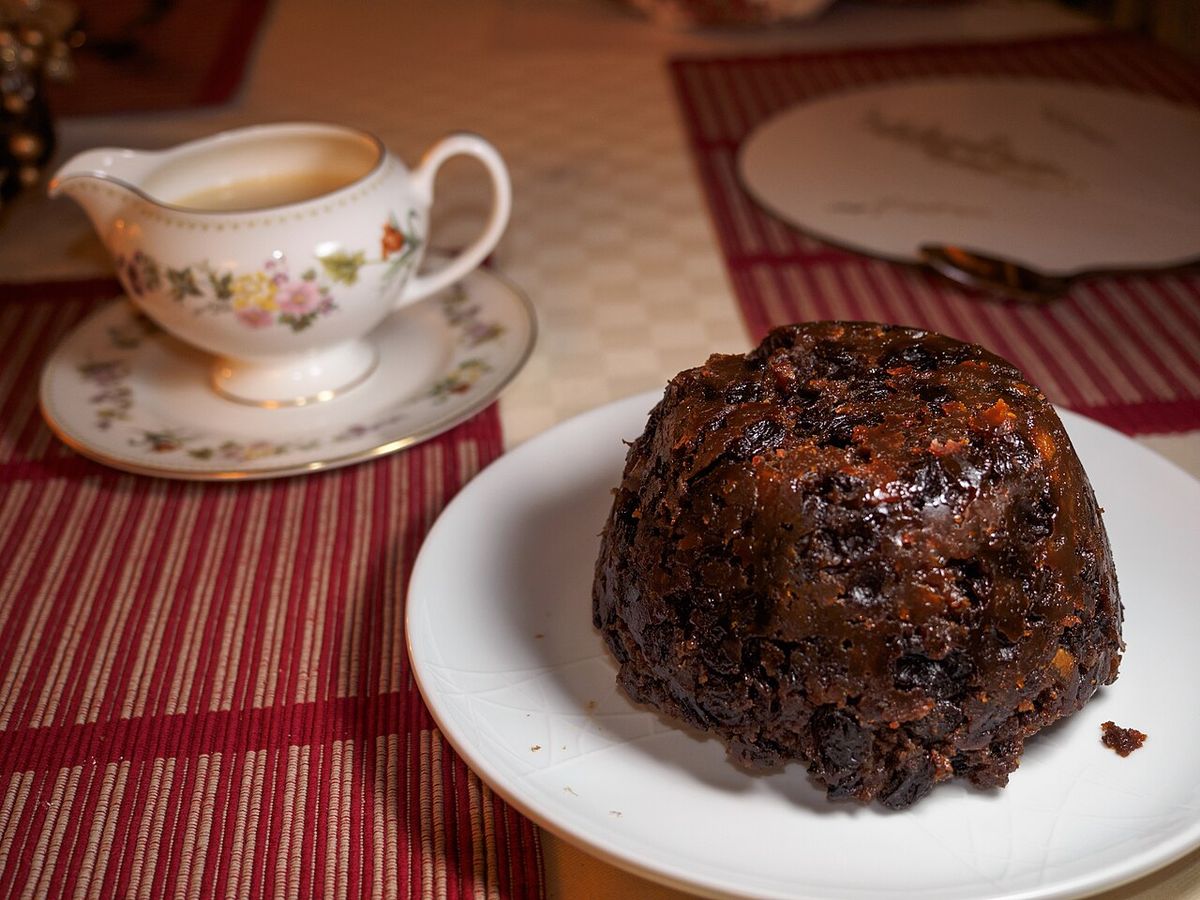
The Yule log cake exists within a wider constellation of Christmas food traditions and similar desserts. Its closest culinary relative is the Swiss roll or jelly roll, a basic sponge cake roulade that forms the technical foundation for the bûche. Other related pastries include the nut roll, a filled yeast bread, and the pionono, a small sweet roll. In different cultures, the Christmas cake takes other forms, such as the British Christmas pudding or the German Stollen, but the Yule log remains distinct for its specific representational design.
The ritualistic burning of a Yule log also shares connections with other winter fire traditions across Europe. In Scotland, a historical practice involved carving the face of the Cailleach, a winter goddess, onto a log before burning it on Christmas Eve. In various European countries, the log was often sprinkled with wine or salt, or had food offerings placed upon it before lighting. These practices, which mostly faded by the 18th century due to the impracticality of large hearths in urban homes, provided the direct symbolic inspiration for the cake that eventually replaced them. The survival of the cake, and the adaptation of the ritual into community ceremonies, ensures the continuity of the Yule log's symbolic themes of light, warmth, and renewal in the modern era.
- Swiss Roll: A basic sponge cake roulade, the technical precursor to the Yule log cake.
- Christmas Pudding: A British boiled fruit dessert, a different traditional Christmas cake.
- Nut Roll: A filled yeast bread or pastry related to the roulade concept.
- Pionono: A small, sweet rolled sponge cake.
- Scottish Cailleach Log: A historical practice of carving a goddess's face on a log before burning it at Christmas.
- Kalends Traditions: Roman January celebrations that influenced early Yule log rituals.
Questions about Yule log
What is a Yule log cake made of?
A traditional Yule log cake, or bûche de Noël, is primarily made of sponge cake and buttercream. The classic version uses a genoise sponge, which is a light, egg-based cake, and chocolate buttercream for filling and frosting. The cake is baked in a rectangular pan, spread with buttercream, rolled into a cylinder, and then coated again on the outside. Decorations often include textured icing to resemble bark, powdered sugar for snow, and meringue mushrooms. Modern variations may incorporate different cake flavours like chocolate, ganache, or icings flavoured with coffee, liqueurs, or fruit.
Where did the Yule log tradition originate?
The tradition of burning a Yule log originated as a winter ritual in Europe, with the earliest known description written by the 6th century Spanish bishop Martin of Braga. The practice involved placing a large log on the hearth, often with offerings of food and wine, and burning it during the Christmas season. Scholars believe the ritual has roots in Roman customs for the Kalends of January. The custom was widespread across many European countries for centuries before largely dying out in the 18th century. The edible cake version was developed much later, in 19th century Paris, as a culinary reinterpretation of this ancient tradition.
Is there a Yule log ride in Canada?
Yes, a Yule log-themed amusement ride exists in Canada. The Yule Log Flume is an attraction at Santa's Village, where guests ride in a log boat through a themed 'Yule Forest.' The ride features a climbing ramp and a splashdown finale. For the 2026 season, the final day of operation was October 11. The ride has specific safety requirements, including height restrictions. Children must be at least 36 inches tall to ride with a companion and 48 inches tall to ride alone. This attraction incorporates the whimsical concept of a log journey into a festive family experience.
What happens at the William & Mary Yule Log ceremony?
The William & Mary Yule Log Celebration is an annual holiday tradition that began in the 1930s. The campus community gathers in the Sunken Garden and the Wren Building's Great Hall for festive music, singing, and student reflections on themes like peace and gratitude. The ceremony includes the reading of special poems and stories and the highlight of burning a Yule log in the fireplace. Attendees participate by tossing sprigs of holly into the flames to symbolize casting away the year's cares. The event often supports charitable causes, and recordings are made available for alumni and friends to participate virtually from around the world.
When was the first Yule log cake recipe published?
The first known published recipe for a Yule log cake appeared in 1890. It was included in Le Mémorial Historique et Géographique de la Pâtisserie, a comprehensive pastry book by French chef Pierre Lacam. His recipe described creating a log shape using rounds of génoise sponge cake sandwiched with coffee or chocolate buttercream. Lacam later noted that the cake was invented by pastry chef Antoine Charabot at La Maison Quillet in Paris in 1879. The dessert quickly became fashionable among the Parisian middle class and spread in popularity from there.
How is the Yule log significant in Quebec?
In Quebec, the Yule log cake, or bûche de Noël, is a deeply ingrained Christmas tradition due to the province's French heritage. It is a customary dessert served during the Réveillon, the festive meal held on Christmas Eve. The cake's presence signifies the celebration and is a staple in homes, bakeries, and restaurants throughout December. Its importance reflects the broader cultural retention of French culinary customs in Quebec. The dessert's popularity ensures it remains a central and expected part of the holiday season, connecting Quebecers to a long history of European pastry arts and winter celebration.
Sources and further reading
- Yule log (Wikipedia)
- Christmas Yule Log 2026 - Artisanal Holiday Desserts (maison-caffet.com)
- Why yule log has become a Christmas favourite (nationalgeographic.com)
Checked by the Novello Desserts desk. Last updated 2026-10-29.