Christmas pudding
Christmas pudding, also known as plum pudding or figgy pudding, is a traditional steamed dessert central to Christmas dinner celebrations in Britain and across the Commonwealth. Its dense, dark form, packed with dried fruits, suet, spices, and spirits, is typically prepared weeks in advance and famously served aflame with brandy butter or custard. The dish holds significant cultural resonance in Canada, a tradition brought by British settlers and maintained in many households as a festive culinary centrepiece. Its history, from medieval origins to Victorian codification and its symbolic role within the British Empire, speaks to its enduring status as a traditional holiday treat with a complex evolution.
Composition and Character
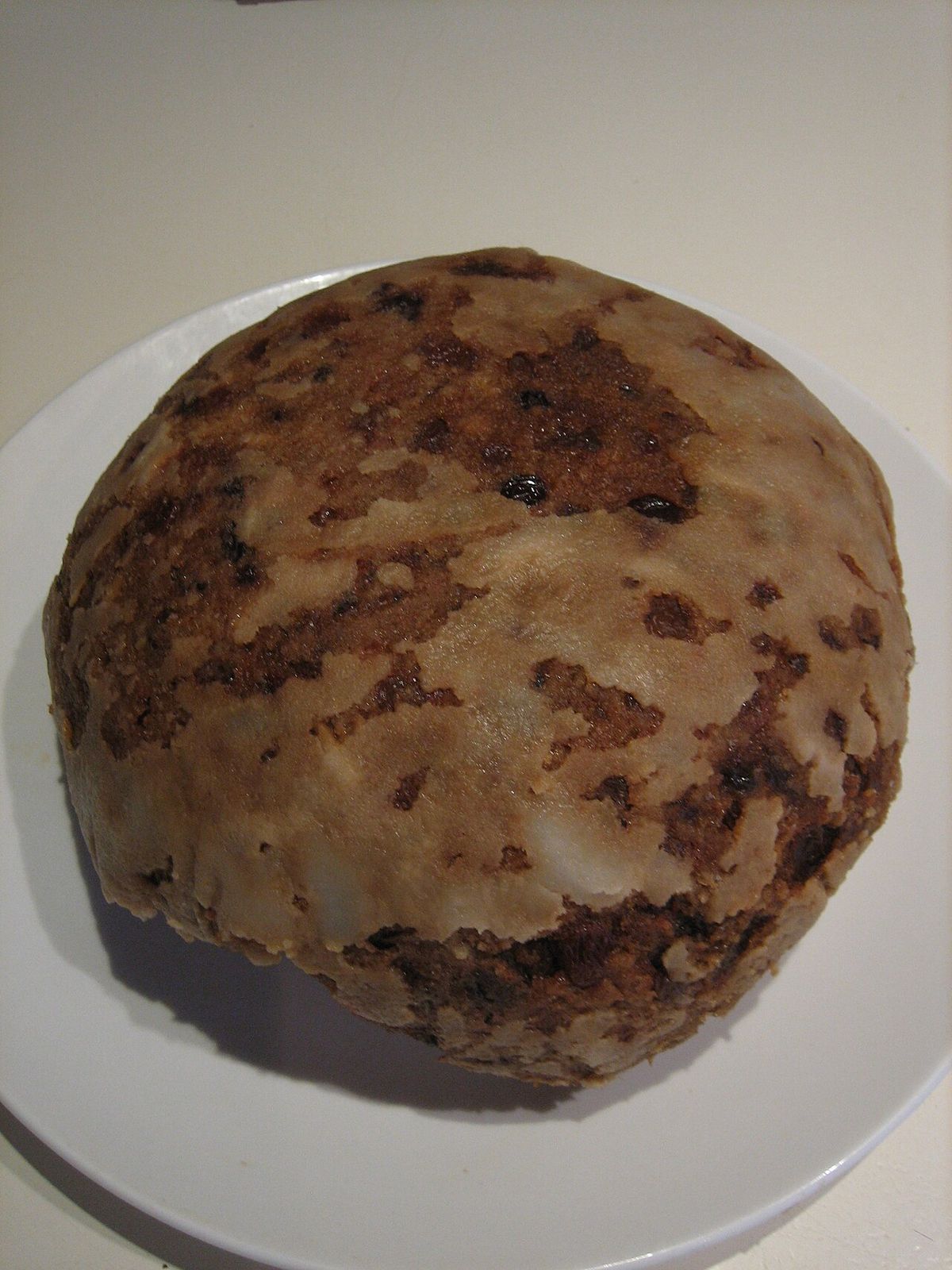
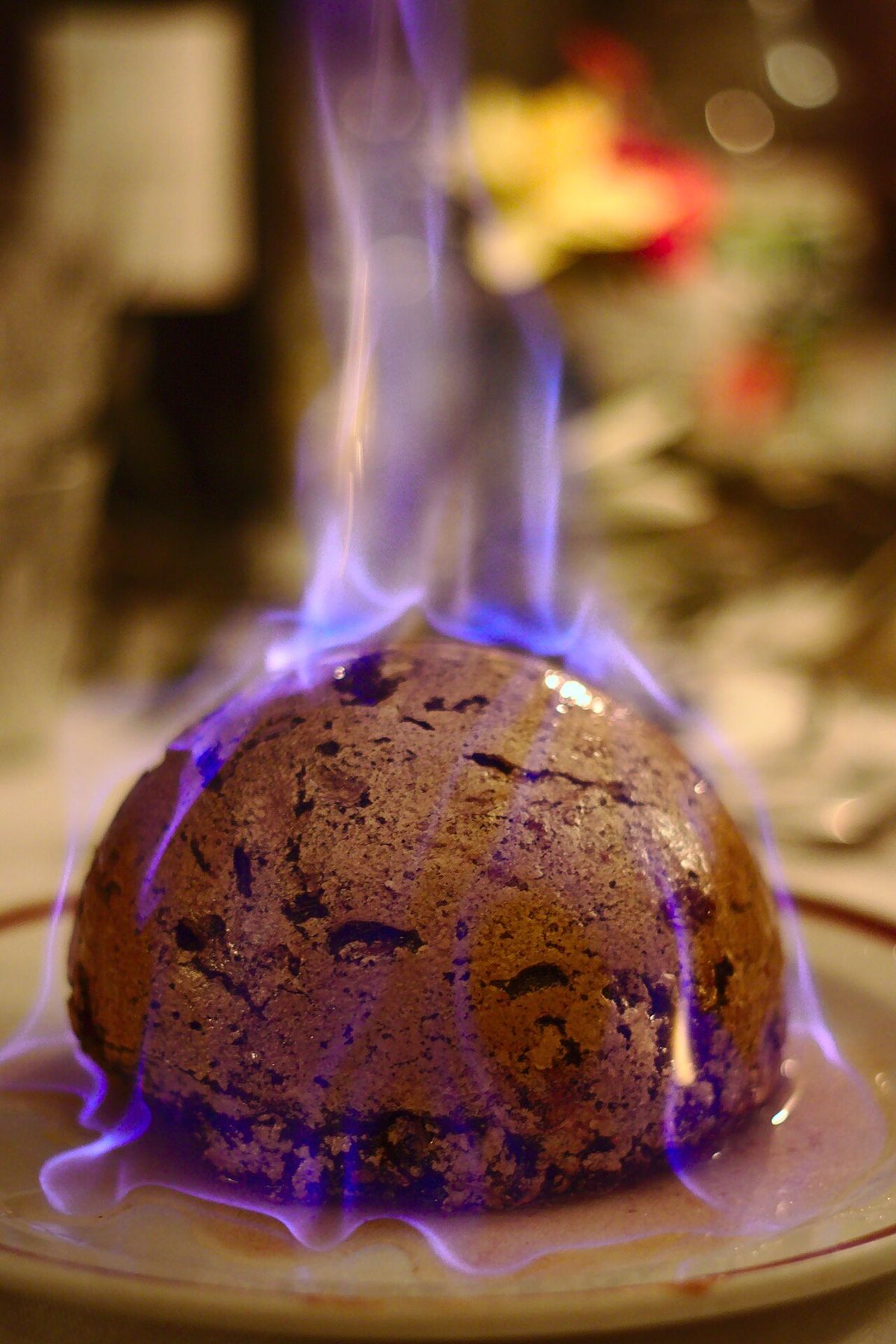
Traditional Christmas pudding is a dense, steamed dessert defined by a rich amalgamation of ingredients that were historically considered luxurious. The base typically consists of breadcrumbs or flour, shredded suet, dark brown sugar or black treacle, and eggs, which bind the mixture together. The defining character comes from an abundance of dried fruits such as raisins, sultanas, currants, and sometimes figs, prunes, cranberries, or apricots, along with candied citrus peel, blanched almonds, and a blend of warming spices like cinnamon, nutmeg, and mixed spice. The mixture is moistened with alcohol, traditionally brandy, stout, porter, or barley wine, which acts as both a flavour enhancer and a preservative, and can also be moistened with the juice of citrus fruits. The long, slow steaming process, often lasting from three to eight hours, results in a very dark, almost black pudding with a deep, complex aroma, and the colour deepens with longer cooking. The final presentation involves reheating the pudding by steaming, then dousing it in warm brandy which is set alight at the table before serving, a process known as 'firing' the pudding. It is conventionally accompanied by brandy butter, rum butter, hard sauce, cream, lemon cream, ice cream, custard, or sweetened béchamel, and is sometimes sprinkled with caster sugar, providing a rich and festive conclusion to the Christmas meal.
Historical Evolution from Medieval to Victorian
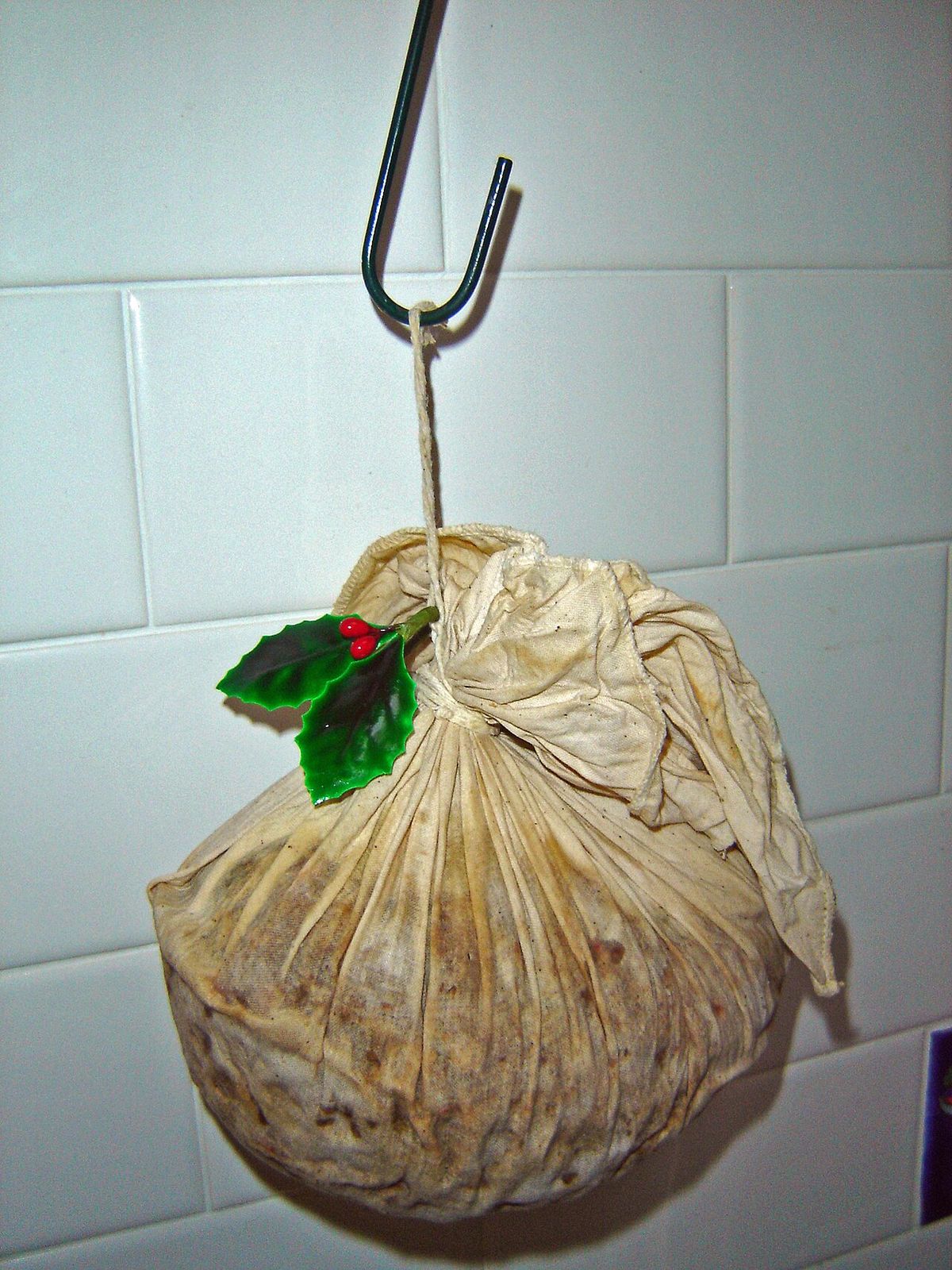
The origins of Christmas pudding lie in medieval England, with early precursors being savoury pottages or porridges that contained meat, grains, and dried fruits. These were often boiled in animal intestines or stomachs, similar to haggis or sausages, before the method of boiling in a pudding cloth became common. Recipes such as 'fraunche mele' from the Liber Cure Cocorum represent early bag puddings without fruit, and other possible ancestors include croustades, malaches whyte, creme boiled, and sippets. By the 17th century, recipes for plum pottage or plum pudding began to appear, with the term 'plum' referring generally to raisins or dried fruit, and one of the earliest recorded plum pudding recipes was published by Mary Kettilby in her 1714 book A Collection of above Three Hundred Receipts in Cookery, Physick and Surgery. As meat preservation improved in the 18th century, the savoury elements diminished, and the dish became sweeter and more recognisable as a dessert, though it was not yet exclusively tied to Christmas and was often served with beef as a widespread feast dish. The Victorian era cemented its holiday association and transformed its preparation, shifting from a cloth-boiled round pudding to one steamed in a basin, unwrapped, placed on a platter, and decorated with holly. In 1845, cookery writer Eliza Acton published the first recipe to explicitly call the dish 'Christmas Pudding' in her bestselling book Modern Cookery for Private Families. Its popularity was further solidified by Charles Dickens' vivid description of the Cratchit family's pudding in his 1843 novel A Christmas Carol, and the tradition of preparing the pudding on Stir-up Sunday, the last Sunday before Advent, also became established in this period, linking the culinary ritual to the church calendar.
The Empire Pudding: A Recipe for Imperial Unity
The custom of eating Christmas pudding was disseminated globally by British colonists, making it a common festive dish in Australia, New Zealand, South Africa, and Canada. In the 20th century, the pudding took on a deliberate political and symbolic role as a unifying icon of the British Empire, a message widely promoted through the media. In 1927, the Empire Marketing Board sought and received permission from King George V and Queen Mary to publish the royal family's Christmas pudding recipe to promote imperial trade and unity. The royal chef, Henry Cédard, provided the original recipe designed to serve forty people, including the entire royal family and their guests. The EMB faced two challenges: reducing the recipe to serve only eight people, and meticulously sourcing every ingredient from within the Empire to reflect its colonies. The final 1927 Empire Christmas Pudding recipe was a carefully constructed symbol, and its ingredients were sent to national newspapers and popular women's magazines, with free copies printed for the public. The recipe was a phenomenal success, as thousands of requests for the recipe flooded the EMB office, demonstrating its popular appeal. The concept culminated in 1931 with the creation of a colossal 10-ton Christmas pudding, the largest ever created at that time, at the Royal Albert Hall for a charity market for the People's Dispensary for Sick Animals, an event held on November 24 and 25. Known as the 'Prince of Wales' Empire Christmas Pudding', with the Prince of Wales (later Edward VIII) as a patron of the PDSA charity, it was stirred by the Lord Mayor of London and the High Commissioners of the Dominions before being divided into 11,208 smaller puddings for distribution to the poor across Britain, with cities like Manchester and Salford receiving 512 puddings each. The specific imperial ingredients mandated in the 1927 recipe included:
- Australian currants
- South African stoned raisins
- Canadian apples
- Jamaican rum
- English beer
- Cyprus brandy
- West Indian nutmeg
Traditions and Rituals of Preparation and Serving
The preparation and serving of Christmas pudding are surrounded by numerous traditions, many of which continue in Canadian households. The most famous preparatory ritual is the observance of Stir-up Sunday, typically the last Sunday before Advent, which in 2026 falls on November 22. On this day, families gather to mix the pudding, with each member taking a turn to stir the mixture from east to west, in honour of the Magi and their journey, and to make a secret wish. The association of the pudding with thirteen ingredients representing Christ and the twelve apostles is a popular but unsubstantiated myth that claims the pudding should be made on the 25th Sunday after Trinity. Historically, small tokens were baked into the pudding mixture, which could be kept by the person whose serving included them, a custom that came from an earlier tradition of putting tokens in a Twelfth Cake. Common items included a silver threepence or sixpence coin believed to bring wealth, a tiny wishbone for good luck, a silver thimble for thrift, or an anchor charm to symbolise safe harbour. On Christmas Day, the serving is itself a ceremony where the pudding is brought to the table ceremoniously and greeted with a round of applause. The reheated pudding is turned out onto a platter, decorated with a sprig of holly which is inedible, doused in warm brandy or occasionally rum, and set alight before being carried to the table. This dramatic presentation, immortalised by Dickens, remains a cherished highlight of the holiday meal for many, and the initial cooking usually involves steaming for many hours, though most pre-20th century recipes assumed the pudding would be served immediately after this first steaming.
Detailed Comparison with Christmas Cake and Other Puddings
While both are rich, fruit-laden desserts associated with the holiday, Christmas pudding and Christmas cake are distinct in composition, preparation, and presentation. Christmas pudding is a steamed dessert, dark in colour from black treacle and its long cooking time, and its texture is dense and moist from suet and breadcrumbs, and it contains no icing. In contrast, Christmas cake is a baked fruitcake, typically covered first with a layer of marzipan (almond paste) and then with a hard layer of royal icing, and it is not set on fire. Another key difference is the maturation process. Both desserts benefit from being made in advance, but the Christmas pudding is steamed initially for many hours and then simply re-steamed on the day, while the Christmas cake is often 'fed' with small amounts of alcohol over several weeks before being iced. The Victorian era fashion for Christmas pudding involved steaming the mixture in a basin, while earlier English puddings were boiled in a cloth and were round in shape. It is also important to distinguish Christmas pudding from the American concept of pudding, which is a soft, dairy-based dessert like custard, whereas in British terminology 'pudding' can simply mean 'dessert'. Plum pudding can sometimes refer to other kinds of boiled pudding involving dried fruit, not exclusively the Christmas variety, and the name 'figgy pudding' correctly refers to a much earlier 14th-century precursor that was a wet, sticky porridge of boiled figs, water, wine, ground almonds, raisins, and honey, which later evolved to include meat and grains before becoming a steamed pudding made with raisins.
Modern Preparation, Ingredients, and Adaptations
Contemporary recipes for Christmas pudding, such as the enduringly popular one by British cook Delia Smith, largely follow traditional methods but offer adaptations for modern kitchens and dietary needs. The core process begins the day before steaming, involving soaking dried fruits like raisins, sultanas, and currants in brandy overnight to allow the alcohol to fully penetrate. The next day, the soaked fruit is combined with suet, breadcrumbs, flour, spices, sugar, grated apple, and grated orange and lemon zests, and moistened with a mixture of rum, barley wine, stout, and eggs. The mixture should have a fairly sloppy consistency that falls instantly from the spoon when tapped on the side of the bowl, and if needed, a spot more stout can be added. It is then packed into a lightly greased pudding basin, covered with a double layer of baking parchment and a sheet of foil tied securely with string, often with a string handle across the top for easy manoeuvring, and steamed for eight hours in a steamer set over simmering water, with the water checked and topped up with boiling water halfway through. Many cooks make their puddings weeks or even a year ahead, storing them in a cool, dark place away from light, such as under the bed in an unheated bedroom, to mature after being re-wrapped in fresh parchment and foil. For those unable to find traditional beef suet, vegetable suet or grated butter that has been frozen for 45 minutes can be substituted, and if barley wine is unavailable, extra stout, strong dry cider, or another strong ale can be used. Gluten-free adaptations use alternative flours, and the brandy in the recipe serves as a key preservative, with omitting it requiring the pudding to be refrigerated and consumed within a week. The steaming time is critical for developing the traditional dark brown colour, with longer steaming producing a richer hue, and it is very difficult to over-steam a pudding.
Cultural Significance in Song, Literature, and Symbolism
Christmas pudding occupies a firm place in Western cultural consciousness, prominently featured in carols and literature. The well-known carol 'We Wish You a Merry Christmas' includes two direct references, with the lines 'Oh, bring us some figgy pudding' and 'We all like our figgy pudding,' highlighting the dessert's cherished and demanded status. In literature, the most detailed depiction is in Charles Dickens' A Christmas Carol, where the impoverished Cratchit family's joy in their humble pudding captures the spirit of Christmas. Dickens describes the scene with Mrs. Cratchit bringing in the pudding 'like a speckled cannon-ball, so hard and firm, blazing in half of half-a-quartern of ignited brandy, and bedight with Christmas holly.' This vivid imagery helped cement the flaming pudding as a symbol of a proper Victorian Christmas. Within the British Empire, the pudding became a media-promoted symbol of unity. Some interpretations of the pudding's elements carry Christian symbolism, with the holly representing the crown of thorns and the flames representing the passion of Christ, though these are later attributions. The dish makes numerous appearances in 18th-century culture, and its role in Dickens' work is particularly significant for embedding it in the modern Christmas tradition.
Notable Recipes and Historical Figures
The development of the Christmas pudding recipe was shaped by several key cookery writers and historical figures across centuries and continents. Eliza Acton's 1845 recipe in Modern Cookery for Private Families was the first to formally name it 'Christmas Pudding'. Earlier, Mary Kettilby's 1714 recipe provided one of the first documented versions of a plum pudding. In the United States, recipes appeared early in the colonial period, with Helen Bullock's 1742 book The Williamsburg Art of Cookery including a recipe with a pound each of a variety of dried fruits and sugar, half a pound each of candied citron, orange and lemon peel, one pint of brandy, and twelve eggs. In the 19th century, American poet sisters Alice Cary and Phoebe Cary contributed a plum pudding recipe to Jennie June's American Cookery Book, which was made as a bread pudding by soaking stale bread in milk then adding suet, candied citron, nutmeg, eggs, raisins and brandy, cooked in boiling water and served with a sweet wine sauce. The 1927 Empire Marketing Board recipe, derived from the royal kitchen of King George V, is a historically significant version designed to promote imperial unity. Modern authoritative recipes include Delia Smith's version, which calls for rum, barley wine, stout, and eight hours of steaming, and is recommended to be made on Stir-up Sunday. The myth of George I, the 'Pudding King', requesting plum pudding at his first English Christmas in 1714 remains popular but unsubstantiated, as does the legend that the pudding's association with Christmas dates back to a specific medieval custom.
Preparation Timeline and Common Questions
The ideal timeline for preparing a traditional Christmas pudding begins weeks or even months before December 25, with Stir-up Sunday serving as the traditional starting point. If a pudding is made fresh in December, it is still perfectly edible, as there is nothing that makes a fresh pudding inedible, though the tradition favours maturation for a few weeks or months to deepen the flavours. On Christmas Day, the stored pudding is reheated by placing it in a steamer over a saucepan quite full of boiling water, turning the heat down to a gentle simmer once it returns to a boil, and steaming it for several hours until hot through. The key equipment needed includes a pudding basin, such as a Mason Cash bowl which is famously used in productions like Downton Abbey, parchment paper, aluminum foil, string, and a trivet for inside a pot. The mixed spice called for in British recipes is a specific blend that should not be substituted with pumpkin pie spice, as the ingredient quantities differ significantly, but it can be homemade using a dedicated recipe. Leftover barley wine from the recipe can be used in other dishes, such as adding it to a Beef in Designer Beer recipe to create a rich sauce, if one does not wish to drink it. For those discovering an old pudding from a previous year, it should be unwrapped and checked for obvious signs of deterioration or mould, and if it still smells nice, it can be re-steamed with fresh parchment and foil on Christmas Day.
Questions about Christmas pudding
What is the difference between Christmas pudding, plum pudding, and figgy pudding?
These names refer to essentially the same traditional steamed dessert, with historical nuances. 'Plum pudding' is the oldest common term, where 'plum' was a pre-Victorian word for raisins or dried fruit in general. 'Figgy pudding' originates from Cornish and Devonshire dialects where 'fig' also meant raisin, not the fruit, and refers to an earlier, porridge-like version from the 14th century made with boiled figs, water, wine, ground almonds, raisins and honey. The name 'Christmas pudding' was first used in print by Eliza Acton in 1845 and has since become the standard term in the UK and Commonwealth nations like Canada, while 'figgy pudding' is more commonly used in the United States. The Vanderbilt University research notes that 'figgy puddings were originally just plum puddings by a different name' due to a mistake by cookbook authors.
Why is Christmas pudding set on fire?
Setting the Christmas pudding alight is a dramatic serving tradition that enhances the spectacle of the Christmas meal. The cold pudding is reheated by steaming, then warm brandy is poured over it and ignited just before bringing it to the table, a process sometimes called 'firing' the pudding. The flames burn off the alcohol, leaving a caramelised flavour, and the visual display is met with applause and a round of applause as it is carried in. Historically, the flames have also been interpreted by some as representing the passion of Christ, adding a layer of symbolic meaning to the ritual. The practice is famously described in Charles Dickens' A Christmas Carol and has been a standard part of the serving ceremony since the Victorian era, creating a memorable Christmas finale.
What is Stir-up Sunday and when is it?
Stir-up Sunday is the traditional day for making the Christmas pudding mixture, allowing it several weeks to mature before Christmas. It falls on the last Sunday before the season of Advent, which is the fifth Sunday before Christmas Day. In 2026, for example, Stir-up Sunday is November 22. The name comes from the opening words of the collect for that day in the Church of England's Book of Common Prayer: 'Stir up, we beseech thee, O Lord, the wills of thy faithful people. That they, plenteously bringing forth the fruit of good works...' This led to the custom of 'stirring up' the Christmas pudding on that day. Initially probably a schoolchild joke, the day became formally associated with pudding making in the late Victorian era, with family members taking turns to stir the mix from east to west and make a wish.
Can you make Christmas pudding in advance?
Yes, making Christmas pudding in advance is not only possible but traditional and recommended for flavour development. The flavours meld and deepen significantly with age. Puddings are often made anywhere from six weeks to a full year before Christmas, and a six-week-old pudding is considered quite fresh. Once steamed and cooled, they are re-wrapped in fresh parchment and foil and stored in a cool, dark, dry place away from light. An unheated bedroom is an ideal spot. The alcohol in the recipe acts as a natural preservative, allowing the pudding to keep very well for many months. On Christmas Day, the pudding is simply re-steamed for several hours to heat it through before serving.
What can I use instead of suet in a Christmas pudding?
While shredded beef suet is traditional and provides a distinctive light texture as it takes a long time to break down during steaming, suitable substitutes exist. Vegetable suet is a common alternative found in many supermarkets. Another option, as suggested in Delia Smith's recipe notes, is to use grated butter that has been frozen for about 45 minutes. The butter should be grated and tossed with a little of the recipe's flour to keep the gratings separate before incorporation. The choice of fat affects the texture and required cooking time, with suet needing a longer steaming period of at least four hours, and preferably longer, to create the air pockets that give the pudding its characteristically soft texture.
What is traditionally hidden inside a Christmas pudding?
A long-standing tradition involved baking small tokens into the pudding mixture for family members to find in their slice, which could be kept by the finder. These tokens were believed to bestow specific fortunes for the coming year. Common items included a silver threepence or sixpence coin believed to bring wealth, a tiny wishbone for good luck, a silver thimble for thrift, or an anchor charm to symbolise safe harbour. This custom derived from an earlier tradition of putting tokens in a Twelfth Cake, which had died out by the 20th century. Due to modern safety concerns about choking or dental damage, this practice has significantly declined, and many contemporary recipe writers explicitly advise against putting anything non-edible into the pudding.
Sources and further reading
- Christmas pudding (Wikipedia)
- Traditional British Christmas Pudding (or Plum ... (christinascucina.com)
- A Traditional Christmas Pudding recipe | Delia Smith (deliaonline.com)
- Traditional Figgy Pudding (Christmas Pudding) (daringgourmet.com)
- Christmas Pudding Recipes (greatbritishchefs.com)
Checked by the Novello Desserts desk. Last updated 2026-10-27.