Global experts urge action on youth digital media harms
A Lancet series says governments and tech firms must act to protect young people from social media harms.
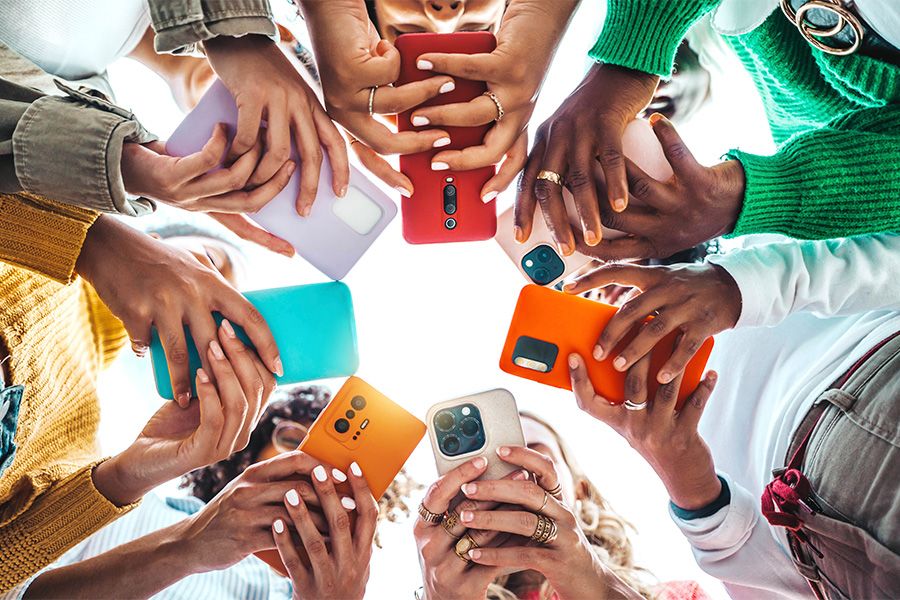
Experts from around the world, including Canada, say the scale of digital technology use by children and youth is a public health issue that needs immediate action to prevent further harm. A series of papers published by The Lancet on Sunday argues responsibility for keeping young people safe must shift from families to big tech companies and governments. The authors say efforts by parents, such as screen-time limits, and individual willpower are not enough to address the digital determinants of health now part of everyday life. They call for government regulation and reforms to tech business models to prioritize young people's well-being.
"It's easy to think about how technology impacts our health as being about our individual choices. And one of the things that we really want to get across in this series is that that's not the right way to think about it," said co-author Jay Shaw, the Canada Research Chair in responsible health innovation at the University of Toronto. Shaw said the design choices and business models of technology companies drive health-related consequences. He pointed to features like infinite scroll, which makes it difficult for users to stop a session, as examples of design that promotes problematic use.
The Lancet papers cite an umbrella review of 2,790 studies that documented harms like depression, anxiety, sleep disruption and limited physical activity associated with problematic digital media use. The review also found some health benefits, including a feeling of well-being, linked to moderate digital media use and active video gaming. Shaw said this shows the importance of considering patterns of engagement and content when assessing benefits and harms. While big tech companies often counter claims of mental health harm by citing insufficient causal evidence, the authors say the sheer scale of digital media's presence justifies taking precautionary public health action.
READ MORE: Young Canadians turn to social media for mental health clues, psychiatrists say
Shaw said Australia has already imposed regulations limiting social media access to people 16 and over, and dozens of other countries, including Canada, are considering similar measures. He said Canada's proposed policies, Bill C-34, the Safe Social Media Act, and Bill C-36, the Protecting Privacy and Consumer Data Act, have "got (it) pretty much exactly right" if they pass into law. The legislation would create a Digital Safety Commission to oversee tech companies and restrict social media use for those under 16. It would also allow exemptions for companies that show adequate safeguards for protecting children.
"It's that logic of incentivizing digital media companies to demonstrate safety that is the key, I think, to all of this," Shaw said. He noted there are many positive uses of social media, including education and recreation, so a total ban for younger teens is not ideal. "At the same time, I don't see another effective way to encourage digital media companies to enhance the safety of their platforms for young people," he said. Instagram's age restriction is 13, and owner Meta says users under 16 have default account settings that allow parents to set screen time limits and see who their kids are messaging.
The Lancet series drew on the lived experiences of a youth advisory group. Yifan Zhou, a 30-year-old Canadian member, said social media can do good, like connecting friends over long distances and providing educational information. She has also talked with other young people about the darker side, including loneliness from reduced in-person connection and anxiety from comparing one's life to others' posts online. Zhou said a family member in their teens was exposed to online predators for years before anyone found out. "They also didn't know that it wasn't the way it's supposed to be, but the kind of regulations and also the education and a lot of things weren't in place," she said.
Dr. Michael Cheng, a psychiatrist at the Children's Hospital of Eastern Ontario and the CHEO Research Institute, said he frequently sees the addictive nature and mental health harms of social media. He noted that years ago, children admitted to hospital would ask about visiting hours for their parents. "Now, the first question is often, 'do I get to keep my cellphone?'" he said. Cheng, who was not involved in the Lancet series, said it is important to see a global convergence of concern about the issue. "Maybe the pendulum will swing back towards a safer side when we can design safer technologies," he said.
With files from Narcity
Amara Okafor covers health, medical research and public health in Canada for Novello Desserts.