Canadian Club
Canadian Club is a globally recognized brand of Canadian whisky, originally created by Hiram Walker and Sons in the late 19th century. Known popularly as CC, it is distinguished by its smooth flavour profile achieved through a multi-year aging process in oak barrels. The brand holds significant cultural and historical importance in Canada, having received royal warrants from five consecutive British monarchs and playing a notable role during the Prohibition era. Today, Canadian Club is produced by Suntory Global Spirits and remains one of the world's best-selling Canadian whiskies, available in numerous expressions across more than 150 countries.
Historical Origins and Development
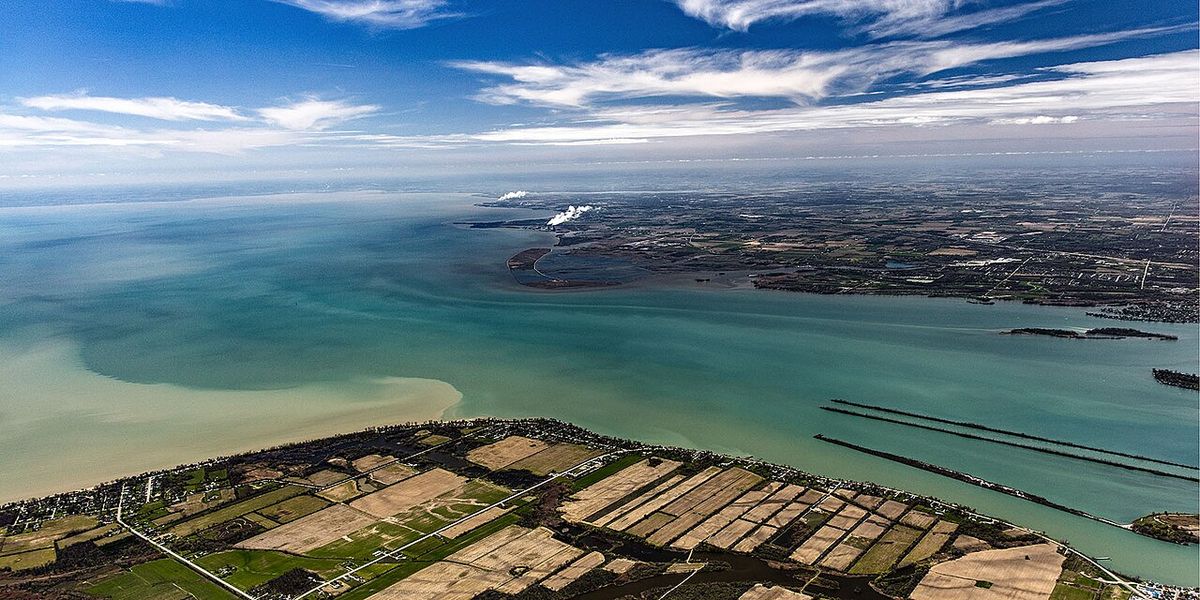
Hiram Walker founded his distillery in Detroit in 1858, having first learned distillation while producing cider vinegar in his grocery store during the 1830s. With the Prohibition movement gaining strength in Michigan, Walker strategically relocated his operations across the Detroit River to Windsor, Ontario, in 1858 to ensure continued production and export capabilities. From this new base, he developed Walkerville, a model company town that provided housing, utilities, and civic services for his employees, which was later incorporated as a legal town in 1890 and absorbed into Windsor in 1935. Walker's whisky, initially marketed as a premium product called "Club Whisky," gained popularity in upscale gentlemen's clubs across North America for its smoothness and five-year oak barrel aging. American distillers, seeking to differentiate their products, successfully petitioned for the inclusion of "Canada" on Walker's label, a move that inadvertently boosted the brand's exclusivity and appeal. In response, Walker formally changed the label in 1889, adding "Canadian" to the top, and by 1890 had fully incorporated it into the brand name, officially creating Canadian Club.
Upon Hiram Walker's death in 1899, control of the distillery passed to his sons, who continued to expand the business and the community of Walkerville. The company merged with Gooderham & Worts, Ltd. in 1926, forming Hiram Walker-Gooderham & Worts, Ltd., which consolidated its position as a major spirits producer. During the Prohibition era in the United States, Canadian Club became a highly sought-after commodity, with one of its most infamous clients being Chicago gangster Al Capone, who smuggled thousands of cases from Windsor into Detroit. The brand's prestige was further cemented by its receipt of royal warrants from Queen Victoria, Edward VII, George V, George VI, and Elizabeth II, making Hiram Walker & Sons the only North American distiller to achieve this honour. The original Walker distillery in Windsor remains in production today, and the brand is now part of the Jim Beam portfolio within Suntory Global Spirits, where it ranks as the portfolio's fourth-best-selling alcoholic product behind Jim Beam bourbon, Sauza Tequila, and DeKuyper cordials.
The "Hide A Case" Advertising Campaign
In 1967, Hiram Walker & Sons launched one of the most ambitious and enduring advertising campaigns in spirits history, known as "Hide A Case." The campaign involved hiding 22 cases of Canadian Club whisky in exotic locations around the world and releasing clues through advertisements, enticing consumers to become treasure hunters. This interactive promotion ran until 1981 and generated significant media attention whenever a case was discovered, blending adventure marketing with brand loyalty. The campaign was briefly revived in 2010 with a hunt in Tonga offering a $100,000 prize, but was ultimately discontinued after Suntory Global Spirits acquired the brand in 2011, likely due to legal concerns about encouraging travel to remote and sometimes dangerous locations. The company indicated that they had no plans to revive the campaign in 2018, leaving the remaining hidden cases as part of the brand's lore.
Notable discoveries from the campaign captured public imagination and often involved dramatic stories from participants. In 1968, David and Diana Mattoon redirected their honeymoon to Venezuela to successfully retrieve a case hidden beneath Angel Falls. The following year, a group of Boy Scouts accidentally found the case hidden in the Yukon before the official clue was published, prompting the company to hide a second, replacement case in the territory that remains missing. Other finds included a case on Mount Kilimanjaro discovered by Dutch journalist Peter Juul in 1977, a case in a Manhattan skyscraper located by John Blewett in a highly competitive 1978 hunt, and the Great Barrier Reef case found by prawn fishermen in 1979. The most recent discovery was in 2010, when Kristina Beall located the Tonga case as part of the company's brief revival of the campaign, which involved flying eight consumers from the US and Canada to hunt for it.
As of 2024, six of the original 22 cases remain unfound, their locations becoming part of the brand's folklore. The missing cases are believed to be in the Yukon Territory, Loch Ness in Scotland, Robinson Crusoe Island off Chile, Tanzania, the North Pole, and Lake Placid in the United States. Local searchers, such as liquor store owner Tim Robinson, have continued to look for the Lake Placid case into the 2020s, theorizing it may have sunk into swampy terrain and having contacted a local who recalled the company's visit to hide it in 1979. The North Pole case is considered likely impossible to recover given decades of ice movement and snowfall, potentially lost deep below the ice. The campaign's cultural impact extended even into fiction, serving as a plot point in the horror fiction podcast Welcome to Night Vale in 2017 with a short story arc focused on a fictitious case hidden at Night Vale Radio.
Several of the case discoveries involved specific individuals and dates that highlight the campaign's reach. In 1968, David and Diana Mattoon found a case hidden underneath Angel Falls in Venezuela. In 1977, Dutch journalist Peter Juul accidentally discovered a case on Mount Kilimanjaro. In 1978, John Blewett located one in a Manhattan skyscraper during a race contested by thousands of hunters. In 1979, a group of prawn fishermen found the Great Barrier Reef case, which had been hidden in 1968. In 2010, Kristina Beall located the Tonga case during a brief revival of the campaign.
- 1968: David and Diana Mattoon found the case under Angel Falls in Venezuela.
- 1969: A group of Boy Scouts found the original Yukon case, leading to a second, still-missing case being hidden elsewhere in the Yukon.
- 1977: Dutch journalist Peter Juul accidentally found the case on Mount Kilimanjaro in Tanzania.
- 1978: John Blewett located the case in a Manhattan skyscraper after a race contested by thousands of hunters.
- 1979: Prawn fishermen discovered the Great Barrier Reef case which had been hidden in 1968.
- 2010: Kristina Beall found the Tonga case during a revived contest with a $100,000 prize.
Other Notable Marketing and Sponsorships
Beyond the "Hide A Case" campaign, Canadian Club has maintained a consistent presence in popular culture through strategic advertising, sponsorships, and product placements. A classic print advertisement for the whisky served as inspiration for the pre-title sequence of the 1977 James Bond movie, The Spy Who Loved Me, linking the brand with sophistication and cinematic intrigue. In motorsport, Canadian Club was the main sponsor for Andretti Green Racing's #27 car driven by Dario Franchitti during the 2007 IndyCar Series season, a partnership that culminated in winning both the series championship and the 2007 Indianapolis 500. The brand also achieved significant visibility through its frequent product placement in the AMC television show Mad Men, where it was often the drink of choice for the main character Don Draper, reinforcing its image as a classic, mid-century premium spirit favoured by advertising executives.
Core Product Range and Specifications
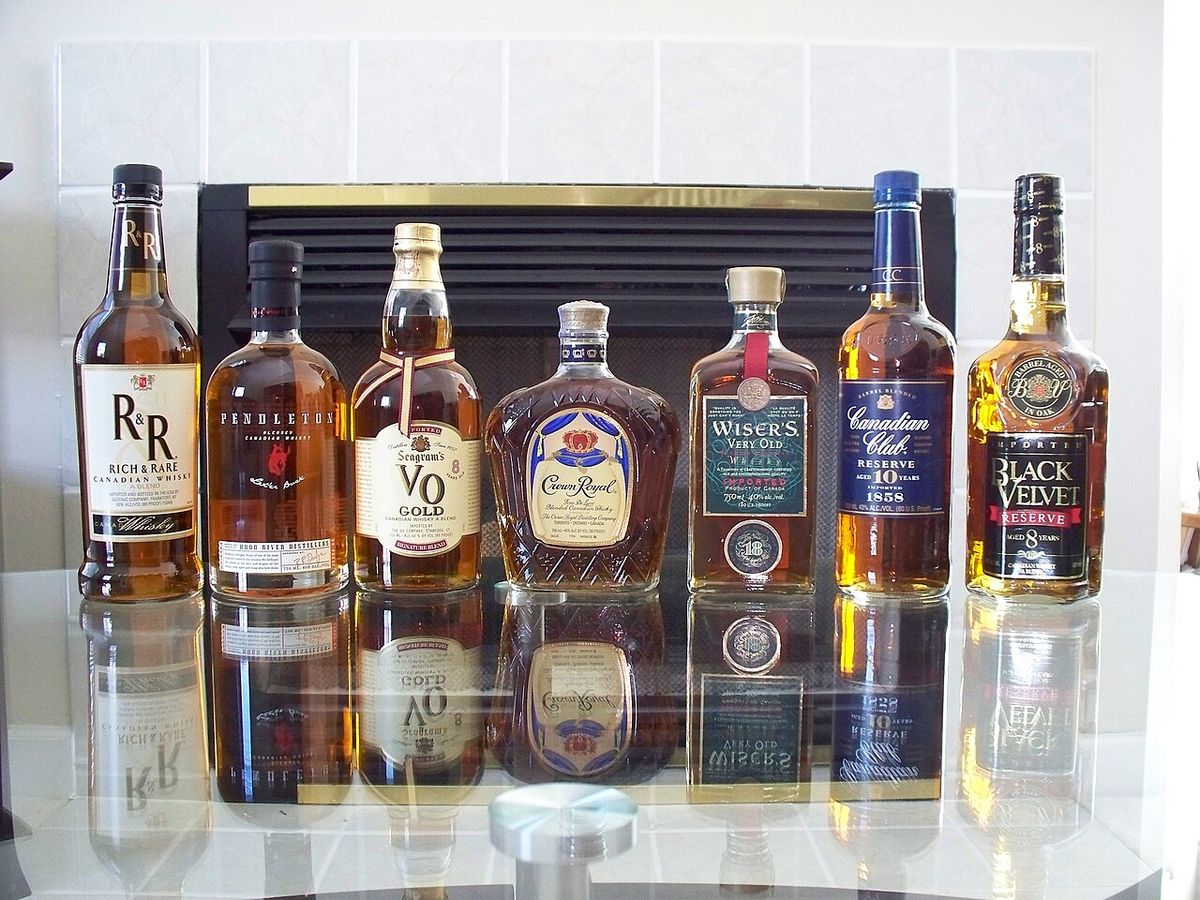
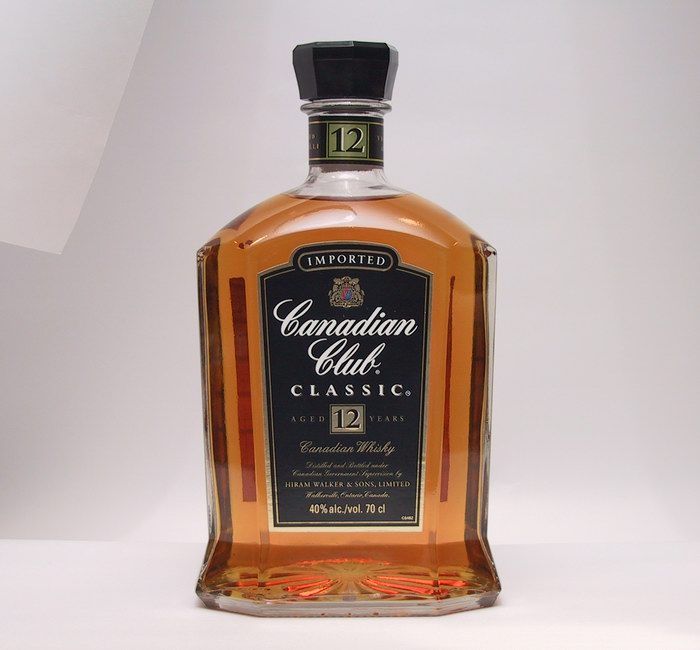
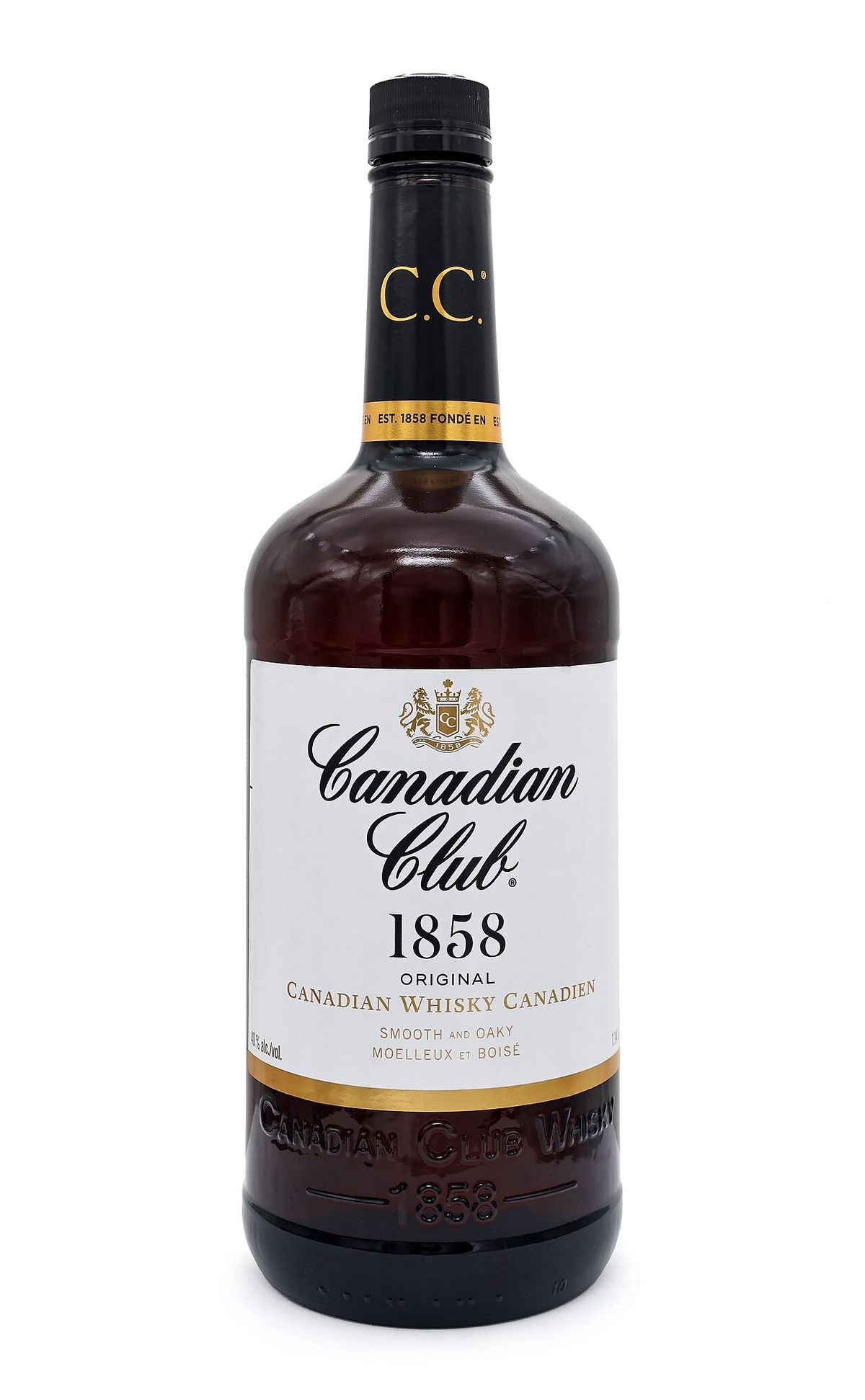
The Canadian Club portfolio features a range of whiskies, primarily bottled at 80 proof (40% alcohol by volume), catering to various tastes and occasions. The flagship product is Canadian Club 1858, the base expression which does not carry an age statement and is sold in over 150 countries, frequently used as a mixer. For aged offerings, the brand provides Canadian Club Reserve, which is aged for 9 years, and Canadian Club Classic, aged for 12 years. A distinct rye offering is Canadian Club 100% Rye, crafted entirely from single-grain rye. The line also includes flavoured expressions such as Canadian Club Apple, which adds apple flavouring to the 1858 base, and Canadian Club Dock No. 57, which features added blackberry flavour.
In specific markets, Canadian Club has developed ready-to-drink (RTD) products to meet consumer demand for convenience. Canadian Club Mixed & Ready was launched in Australia in April 2001, consisting of a pre-mixed blend of six-year-old Canadian Club with dry ginger ale, cola, soda and lime, or lemon crush, sold in 330 mL bottles and 375 mL cans. An Australian advertising campaign to pitch Canadian Club to those who were "over beer" was hugely successful and led to its international launch, with all flavours also available in New Zealand. A 6% ABV "Premium Strength" variant is available only in 375mL cans and is mixed with dry ginger ale. The standard Canadian Club 1858 is bottled at a lower proof of 74 (37% ABV) in Australia and New Zealand, differing from the global standard proof of 80.
The core expressions of Canadian Club are defined by their proof, age, and primary characteristics. Canadian Club 1858 is the base version, sold in over 150 countries and often used as a mixer. Canadian Club Reserve is aged 9 years. Canadian Club Classic is aged 12 years. Canadian Club 100% Rye is crafted entirely from single-grain rye. Canadian Club Apple is the 1858 version with added apple flavour. Canadian Club Dock No. 57 is the 1858 version with added blackberry flavour. Canadian Club Mixed & Ready is a pre-mixed ready-to-drink blend available in several flavours.
- Canadian Club 1858: Base version, no age statement, 80 proof (74 proof in Australia/NZ).
- Canadian Club Reserve: Aged 9 years, 80 proof.
- Canadian Club Classic: Aged 12 years, 80 proof.
- Canadian Club 100% Rye: Made from single-grain rye, 80 proof.
- Canadian Club Apple: 1858 base with apple flavour, 80 proof.
- Canadian Club Dock No. 57: 1858 base with blackberry flavour, 80 proof.
- Canadian Club Mixed & Ready (RTD): Launched April 2001 in Australia, 4.8% ABV, with a 6% ABV Premium Strength variant in cans.
Limited Edition and Discontinued Expressions
Over its long history, Canadian Club has released numerous limited edition and now-discontinued expressions, often highlighting extended aging or unique cask finishes. These special releases cater to connoisseurs and collectors, demonstrating the depth and versatility of the brand's whisky-making. Notable past expressions include Canadian Club Premium, Canadian Club Reserve aged 10 years, and a Limited Edition aged 20 years. The brand has also produced the Canadian Club Chronicles series, with releases aged 41, 42, 43, 44, and 45 years, representing some of its oldest offerings. Other distinguished discontinued variants include Canadian Club 100 Proof, which was aged for six years and bottled at 100 proof (50% ABV) for a stronger flavour profile.
The Canadian Club Sherry Cask was a double-matured expression, first in white oak barrels for at least eight years and then in casks from the Sherry wine region of Spain, bottled at 82.6 proof (41.3% ABV). For special markets, the distillery has produced limited quantities in older agings of 15 years and up. A particularly exclusive release was a 30-year-old version bottled in 2008 to commemorate the brand's 150th anniversary in a very limited bottling. These limited releases often serve to mark milestones and explore different maturation techniques beyond the standard aging process used for the core range.
The following is a list of key limited edition and discontinued Canadian Club expressions. These include Canadian Club Premium and Canadian Club Reserve, which was aged 10 years. There was also a Canadian Club Limited Edition aged 20 years. The Canadian Club Chronicles series featured expressions aged 41, 42, 43, 44, or 45 years. Canadian Club 100 Proof was aged six years and bottled at 100 proof. Canadian Club Sherry Cask was double-matured, first in white oak barrels and then in casks from the Sherry wine region. For the whisky's 150th anniversary in 2008, a 30-year-old version was released in a very limited bottling.
- Canadian Club Premium: A discontinued premium offering.
- Canadian Club Reserve (10 Year): A discontinued expression aged 10 years.
- Canadian Club Limited Edition (20 Year): A limited release aged 20 years.
- Canadian Club Chronicles 41-45 Year: A series of ultra-aged releases from 41 to 45 years old.
- Canadian Club 100 Proof: Aged six years and bottled at 100 proof (50% ABV).
- Canadian Club Sherry Cask: Double-matured in oak and sherry casks, 82.6 proof.
- Canadian Club 30 Year (2008): Released for the brand's 150th anniversary in very limited bottling.
Cultural and Diplomatic Significance
Canadian Club holds a unique place in Canadian cultural identity and even in lighthearted international relations. The brand's association with royalty through its five consecutive royal warrants is a point of national pride, reflecting a tradition of quality recognized by the British Crown. Its role during American Prohibition, supplying whisky to a thirsty market including notorious figures like Al Capone, is a storied chapter in the history of cross-border trade and smuggling. The whisky also played a minor but memorable role in the so-called "Whisky War" between Canada and Denmark over Hans Island, where Canadian Club was the usual bottle left by the Canadians as a humorous calling card during the friendly territorial dispute.
The brand's marketing campaigns, especially the global "Hide A Case" treasure hunts, engaged consumers in an unprecedented way, turning advertising into a participatory adventure that spanned decades. This campaign not only boosted sales but also embedded the brand in popular culture, inspiring real-world exploration and even fictional storylines in podcasts like Welcome to Night Vale. Through consistent product placement in influential media like Mad Men and sponsorship in high-profile sports like the IndyCar Series, Canadian Club has maintained its image as a classic, reliable, and sophisticated Canadian product with enduring appeal both at home and abroad. The distillery's legacy is physically rooted in the community of Walkerville, which Hiram Walker built and which was once almost entirely employed by his company, leaving a lasting architectural and social imprint on Windsor, Ontario where the original distillery remains in production.
Questions about Canadian Club
Who founded Canadian Club whisky?
Canadian Club was founded by American-born entrepreneur Hiram Walker. He established his distillery in Detroit in 1858 but soon moved it to Windsor, Ontario, due to growing prohibitionist sentiment in Michigan. Walker first marketed his product as "Club Whisky" for its popularity in gentlemen's clubs, and formally incorporated "Canadian" into the name by 1890. The business was passed to his sons after his death in 1899.
What was the 'Hide A Case' campaign?
Launched in 1967, the "Hide A Case" campaign was an innovative advertising effort where Hiram Walker & Sons hid 22 cases of Canadian Club in exotic locations worldwide and released clues in ads. It encouraged consumers to become treasure hunters, with finds generating significant media attention. The campaign officially ran until 1981, with a brief revival in 2010. As of 2024, 16 cases have been found, leaving six still missing in places like the Yukon, Loch Ness, and the North Pole.
What types of Canadian Club whisky are available?
The core range includes Canadian Club 1858 (the base mixer), Canadian Club Reserve (aged 9 years), Canadian Club Classic (aged 12 years), and Canadian Club 100% Rye. Flavoured options include Canadian Club Apple and Canadian Club Dock No. 57 (blackberry). In Australia and New Zealand, a ready-to-drink line called Canadian Club Mixed & Ready is also available. The brand has also released numerous limited edition and older-aged expressions over the years.
Why is it called Canadian Club?
Canadian Club whisky earned its name from its popularity in late 19th century gentlemen's clubs across the United States and Canada, where it was first known as Club Whisky. American distillers, in an attempt to reduce its appeal, successfully petitioned for the word Canada to be added to the label. This strategy backfired, as it only made the whisky seem more exclusive. Hiram Walker capitalized on this by formally changing the label in 1889, adding Canadian above Club Whisky, and by 1890, the name was fully integrated as Canadian Club, distinguishing his product from competitors.
Did Canadian Club really have ties to Al Capone?
Yes, Canadian Club had direct ties to the infamous Chicago gangster Al Capone during the Prohibition era in the United States. The Hiram Walker distillery, located in Windsor, Ontario, became a crucial supplier for smugglers due to its position across the river from dry Michigan. Al Capone was one of the distillery's most significant clients, orchestrating the smuggling of thousands of cases of Canadian Club from Windsor into Detroit and beyond. This relationship is a documented part of the brand's history, highlighting its role as a major contraband item during that period.
Does Canadian Club have a royal warrant?
Yes, Canadian Club holds the distinction of having received royal warrants from five consecutive British monarchs: Queen Victoria, Edward VII, George V, George VI, and Elizabeth II. This prestigious recognition signifies that the distillery supplied its whisky to the royal household. Hiram Walker & Sons is notably the only North American distiller to have ever been granted such a warrant. This royal endorsement is a key part of the brand's heritage and a mark of its longstanding quality and reputation.
Sources and further reading
- Canadian Club (Wikipedia)
- How to use it: three recipes with Canadian Club 1858 - Boothby. (boothby.com.au)
- Canadian Club 15 Year Old Sherry Cask Launch (vieamaggi.com)
- Canadian Club Whisky (lcbo.com)
Checked by the Novello Desserts desk. Last updated 2026-10-31.