General Tso's chicken
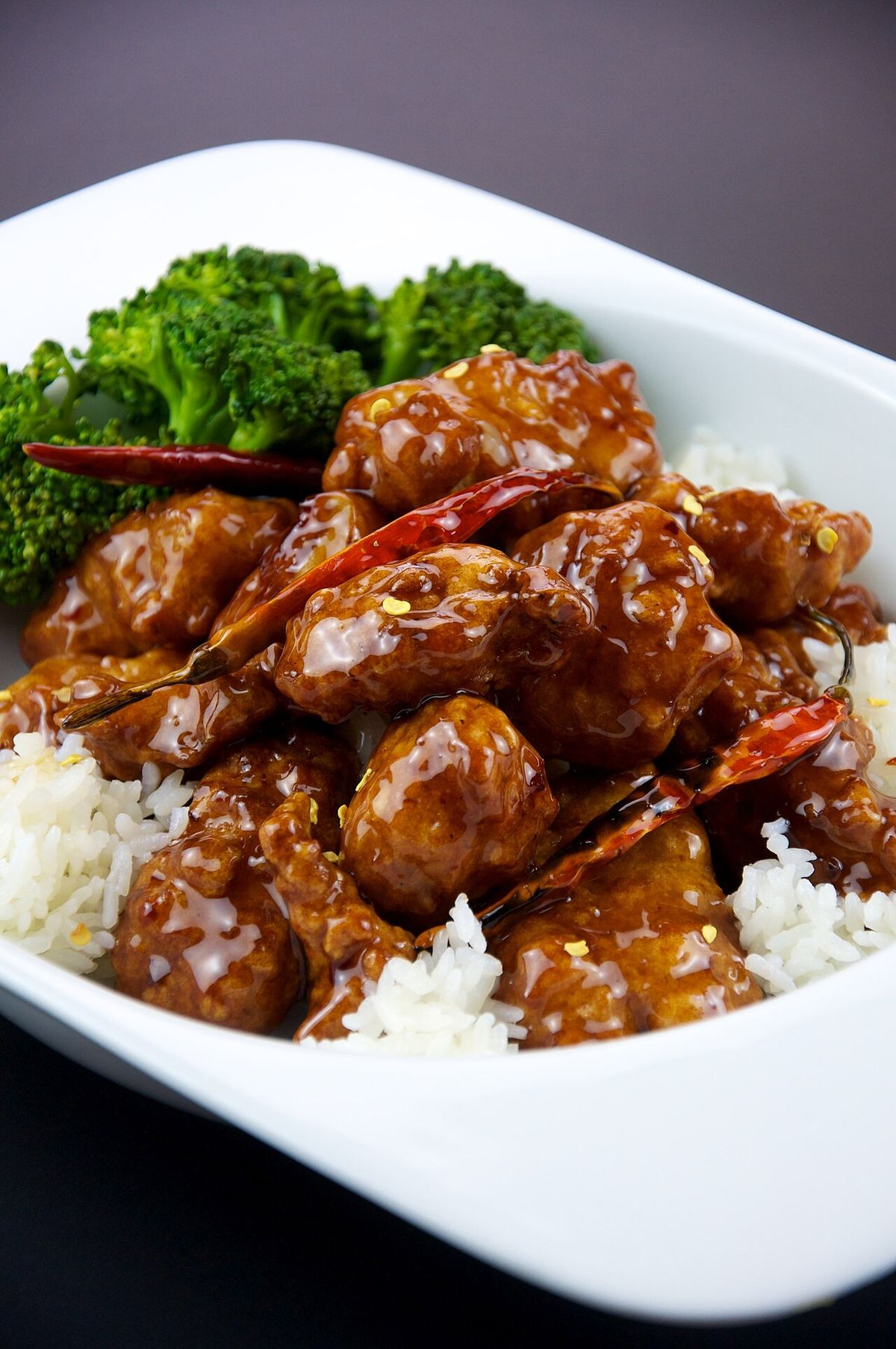
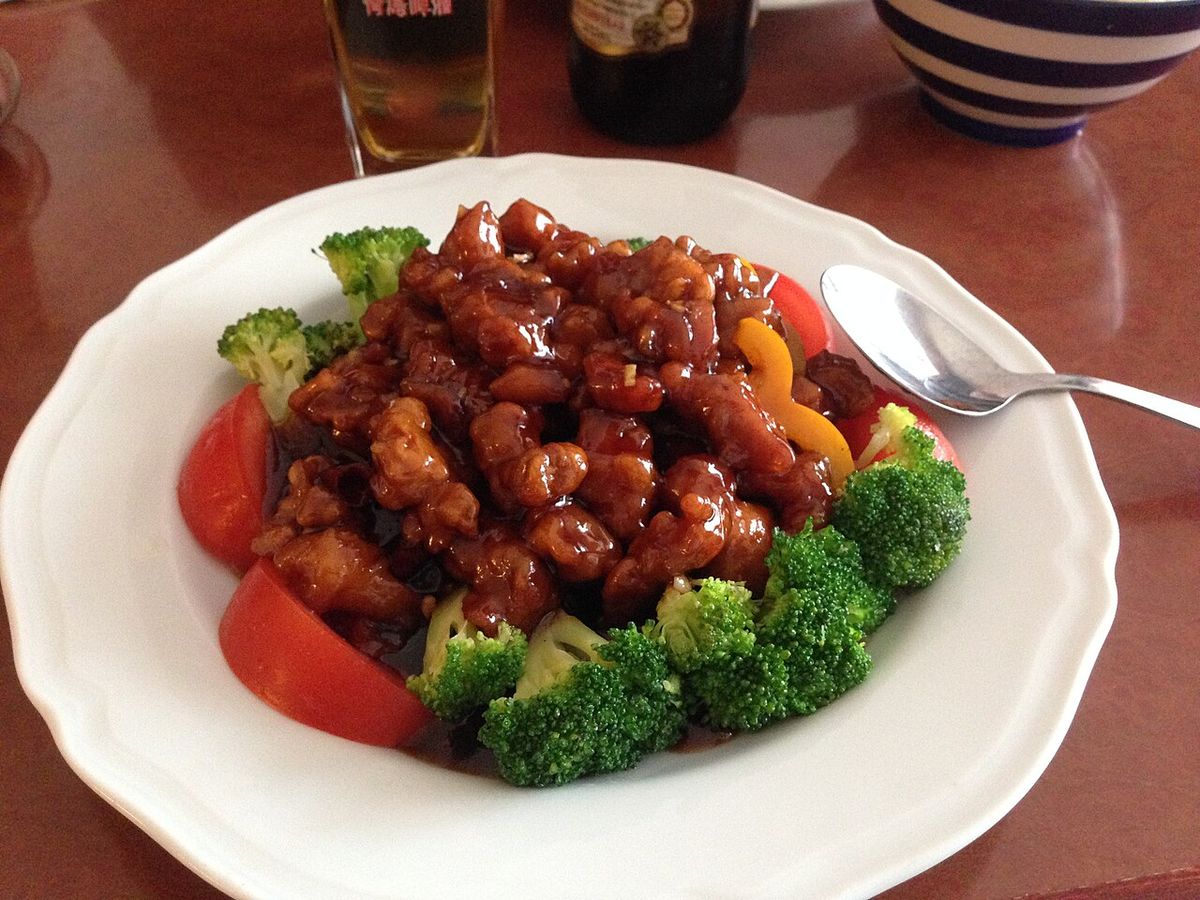
General Tso's chicken is a sweet and spicy deep-fried chicken dish that has become a staple of North American Chinese cuisine. It is characterized by crispy, battered chicken pieces coated in a glossy, tangy sauce often featuring soy sauce, sugar, garlic, and dried chilies. The dish holds significant popularity in Canada, where it is a common menu item in Chinese-Canadian restaurants. It represents a familiar fusion of flavours adapted to Western palates, having been altered from its original spicier form to suit American tastes, a change that also influenced its presence in Canada.
Naming and Historical Figure
The dish is named for Zuo Zongtang, a prominent Chinese statesman and military leader from Hunan Province who lived from 1812 to 1885 during the late Qing dynasty. Despite this historical namesake, the dish has no authentic connection to Zuo or traditional Hunanese cooking, having been invented nearly a century after his death. Some culinary historians, such as chef Eileen Yin-Fei Lo, have speculated that the name may be a play on the homophone 'zongtang', which means 'the hall of the ancestors'. The dish is frequently found under alternative names on menus, often with the surname Tso replaced by another, such as General Gau's or General Tao's chicken. This practice highlights its status as a generic category of sweet-and-sour fried chicken within Westernized Chinese cuisine rather than a specific recipe tied to one creator.
Claims of Invention
The origin of General Tso's chicken is contested, with two Chinese chefs in New York City each claiming credit for its creation in the early 1970s. The competing claims involve Peng Chang-kuei and T. T. Wang, whose stories reflect different approaches to the dish's preparation and naming. These accounts can be partially reconciled by distinguishing between the invention of the name and the development of the crispy-fried recipe that became standard in North America. The debate illustrates the dish's evolution as a product of Chinese immigrant entrepreneurship and adaptation in the United States.
Chef Peng Chang-kuei, a native of Hunan who later worked in Chongqing and Taipei, stated he introduced General Tso's chicken around 1973 upon opening his restaurant 'Uncle Peng's Hunan Yuan' on East 44th Street in New York. Peng claimed his establishment was the city's first to serve the dish, promoting it as a house specialty. A 1977 review of Uncle Peng described the General Tso's chicken as 'a stir-fried masterpiece, sizzling hot both in flavor and temperature'. Peng provided two different accounts of the dish's earlier creation. In one, he recalled serving it during a 1953 state banquet in Taiwan for visiting U.S. Admiral Arthur W. Radford. In another story proposed by Taiwanese food writer Zhu Zhenfan, Peng improvised the dish for a late-night visit by Chiang Ching-kuo, son of Chiang Kai-shek, when his kitchen was low on ingredients.
Conversely, the Shun Lee Palace restaurants in New York claim their chef, T. T. Wang, invented the dish in 1972. Restaurant owner Michael Tong asserted that Shun Lee Palace was the first Hunanese restaurant in the United States and that its signature dishes, including General Tso's chicken, were widely copied. Significantly, Wang's version was reportedly introduced under the name 'General Ching's chicken' and featured the crispy fried chicken texture that defines the modern dish. This suggests Wang may have developed the specific cooking technique that became popular, while Peng originated the 'General Tso' name for a differently prepared recipe.
Evolution and Characteristics
The original versions of the dish served in New York in the 1970s were reportedly more spicy than sweet. As it spread across North America, the recipe was significantly altered to cater to local tastes, becoming notably sweeter and less pungent. This process of adaptation is a common feature of American Chinese and Canadian Chinese cuisine, where dishes are frequently modified from their regional Chinese origins. The standard North American version today is a balance of sweet, sour, salty, and spicy flavours, with a thick, glossy sauce clinging to crispy chicken. The dish's popularity drew the attention of food writers like Fuchsia Dunlop from the United Kingdom and Jennifer 8. Lee from the U.S., who helped document its history and cultural journey.
In Taiwan, where the dish is also known, it is prepared quite differently, typically without the pronounced sweetness common in North America. Taiwanese versions often use chicken with the skin on and give soy sauce a much more dominant role in the sauce. This divergence shows how a single dish name can represent distinct culinary preparations in different cultural contexts. When Peng opened a restaurant in Hunan in the 1990s to introduce Tso's chicken, the locals found the dish too sweet, and his restaurant quickly closed, further demonstrating the gap between the North American adaptation and regional Chinese tastes.
Typical Ingredients and Preparation
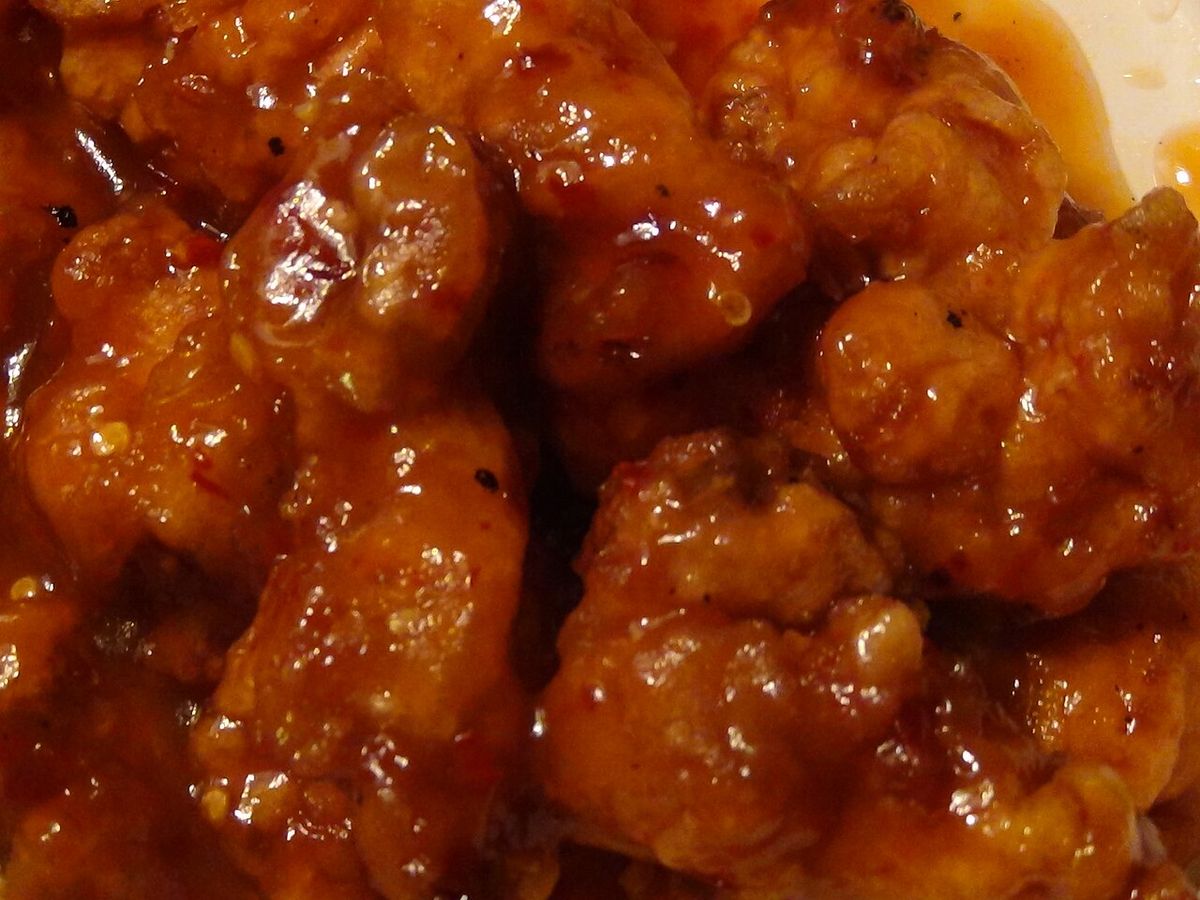
The preparation of General Tso's chicken involves several key stages: marinating and coating the chicken, deep-frying it to achieve crispiness, and then tossing it in a wok with a prepared sauce. The standard ingredients can be categorized into those for the sauce, the batter, and the main components of the dish itself. Common recipes call for a specific set of components that create its signature profile. The chicken pieces are first coated in a mixture of cornstarch and egg before being deep-fried until golden and crispy. In a separate wok, the sauce ingredients are combined and heated until thickened.
- Sauce: Soy sauce, rice wine, rice-wine vinegar, sugar, cornstarch (for thickening), dried whole red chili peppers, and minced garlic.
- Batter/Breading: A simple mixture of egg and cornstarch, which adheres to the chicken and fries to a light, crisp coating.
- Main Dish: Cubed dark-meat chicken (typically thigh), which is preferred for its juiciness and flavour, and broccoli, which is often stir-fried separately and served as a side or mixed in.
The fried chicken is then added to the wok and quickly tossed to coat each piece evenly in the sauce. The dish is typically served immediately over steamed rice. Broccoli is arranged alongside the chicken. The use of whole dried red chili peppers infuses the sauce with heat and aroma. These whole chilies are often not meant to be eaten.
Place in North American Chinese Cuisine
General Tso's chicken is a classic example of a Westernized Chinese dish created by immigrant chefs for a North American clientele. It falls under the umbrella of American Chinese cuisine and, by extension, Canadian Chinese cuisine, where it is equally prevalent. The dish is part of a family of similar sweet, saucy, and fried chicken dishes that dominate takeout menus, including orange chicken, sesame chicken, and lemon chicken. Its popularity is such that it has become a standard against which other similar dishes are measured, often serving as a benchmark for a restaurant's style. In Canada, the dish is a common offering in Chinese-Canadian restaurants from coast to coast, reflecting the broad integration of this culinary tradition.
The dish's appeal lies in its familiar combination of crispy texture and rich sauce. The story of General Tso's chicken, from its contested New York origins to its status as a staple, exemplifies adaptation. It remains a beloved fixture in both home kitchens and professional settings. The dish was altered to suit the tastes of Americans. In Taiwan, the dish is not served sweet. The dish is a Chinese-American sweet and spicy deep-fried chicken dish.
Related Dishes
General Tso's chicken is closely related to several other dishes within the canon of Westernized Chinese cuisine. These dishes share common preparation methods, such as deep-frying protein and coating it in a sauce, but are distinguished by their primary flavouring agents. Understanding these relationships helps contextualize General Tso's chicken within a broader category of popular menu items. The list includes dishes that are commonly found alongside it on restaurant menus throughout Canada and the United States.
- Orange Chicken: Features chicken in a sweet and tangy sauce flavoured primarily with orange zest or juice, often with a brighter, fruitier profile and less heat.
- Sesame Chicken: Similar in preparation but typically uses a sweeter, less spicy sauce and is garnished with toasted sesame seeds.
- Lemon Chicken: Often prepared with a lighter, clearer lemon-based sauce that is more sour than sweet, and the chicken may be served in larger cutlets.
- Hunan Cuisine: The purported regional inspiration, though authentic Hunanese food is known for its dry heat, sour flavours, and use of smoked and cured meats, differing greatly from the sweet, saucy North American dish.
- Crispy Fried Chicken: Shares the deep-frying technique but is usually served without a heavy sauce, highlighting the crisp texture alone.
Questions about General Tso's chicken
Who was General Tso?
General Tso refers to Zuo Zongtang, a real historical figure who was a prominent Chinese statesman and military leader from Hunan Province during the late Qing dynasty. He lived from 1812 to 1885. The dish was named for him retroactively in the 1970s, though he had no actual connection to its creation or recipe. Some culinary experts suggest the name might also be a play on words related to ancestral halls.
Where was General Tso's chicken invented?
General Tso's chicken was invented in New York City. Two Chinese chefs, Peng Chang-kuei and T. T. Wang, each claimed to have invented it there. Peng rolled out the dish circa 1973 at his restaurant Uncle Peng's Hunan Yuan on East 44th Street. T. T. Wang is said to have invented it in 1972 at New York's Shun Lee Palaces.
What are the main ingredients in General Tso's chicken?
The main ingredients include cubed dark-meat chicken, which is coated in a batter of egg and cornstarch and deep-fried. The signature sauce is made from soy sauce, rice wine, rice-wine vinegar, sugar, cornstarch for thickening, dried whole red chili peppers, and garlic. The dish is commonly served with steamed rice and broccoli. The combination creates a balance of sweet, spicy, salty, and sour flavours with a crispy texture.
Is General Tso's chicken authentic Chinese food?
No, General Tso's chicken is not an authentic dish from any region of China. It is a creation of Chinese immigrant chefs in North America, designed to suit local tastes. While named after a Hunanese general, its sweet and spicy profile, and particularly its crispy fried preparation, are not characteristic of traditional Hunanese cuisine. In Taiwan, a less sweet version exists, but the dish as known in Canada and the U.S. is a product of Westernized Chinese cuisine.
How is General Tso's chicken different from orange chicken?
Both are sweet, saucy, deep-fried chicken dishes, but they are distinguished by their primary flavouring. General Tso's chicken sauce is based on soy sauce, vinegar, garlic, and dried chilies, giving it a more complex, spicy, and savoury-sweet profile. Orange chicken, as the name implies, derives its dominant flavour from orange zest or juice, resulting in a fruitier, tangier, and often sweeter taste with typically less heat. The texture and cooking method are otherwise very similar.
Why is General Tso's chicken so popular in Canada?
General Tso's chicken is part of Canadian Chinese cuisine. The dish caters to a wide audience with its crispy texture and balanced flavours. It is a staple dish that exemplifies the innovation and adaptation of immigrant food cultures. The dish's popularity is similar to its status in the United States.
Sources and further reading
- General Tso's chicken (Wikipedia)
- General Tso's Chicken (recipetineats.com)
- General Tso's Chicken Recipe (natashaskitchen.com)
Checked by the Novello Desserts desk. Last updated 2026-10-19.