Hot cross bun
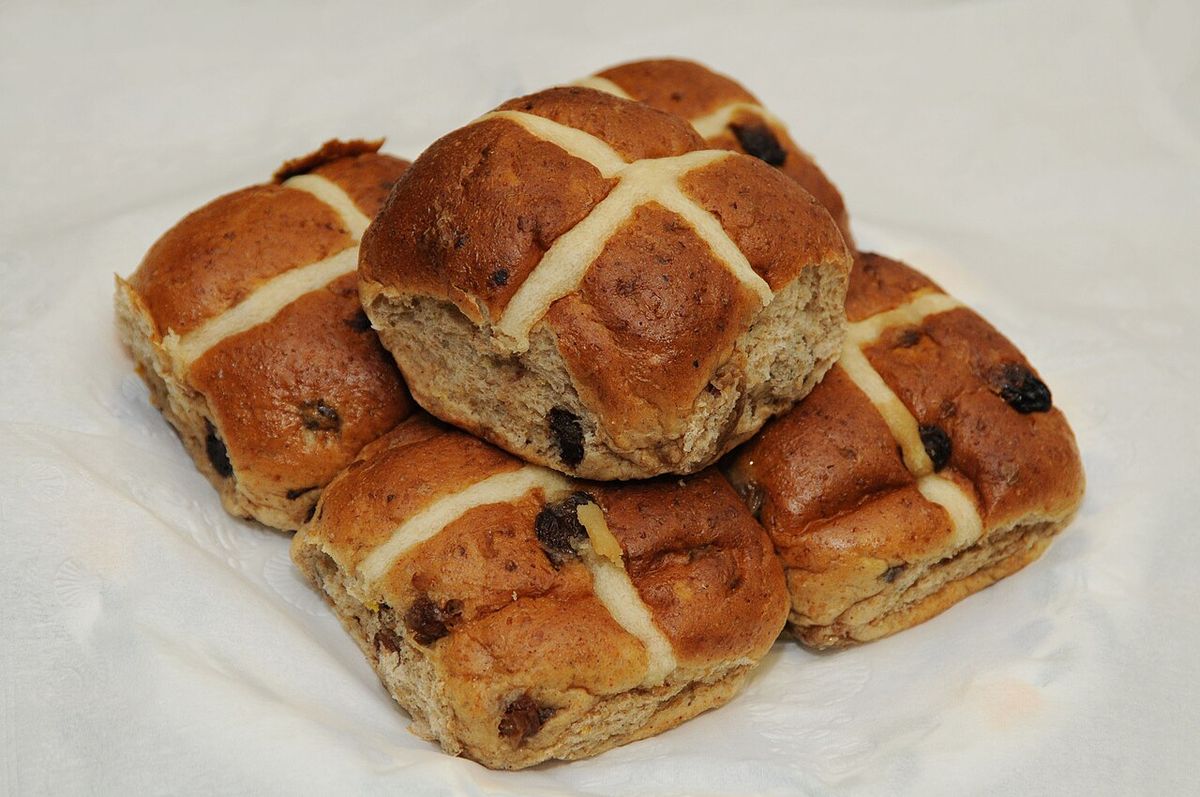
A hot cross bun is a spiced sweet bread roll, traditionally containing raisins or currants and marked with a cross on top. In Canada, as in other Commonwealth nations, these buns are a cherished Easter food, historically eaten to break the Lenten fast on Good Friday. Their significance extends beyond the religious, having become a seasonal staple in bakeries and supermarkets across the country, often enjoyed toasted with butter. The bun's cross is symbolic of the crucifixion of Jesus, while the spices within are said to represent those used in his embalming.
Historical Origins and Development
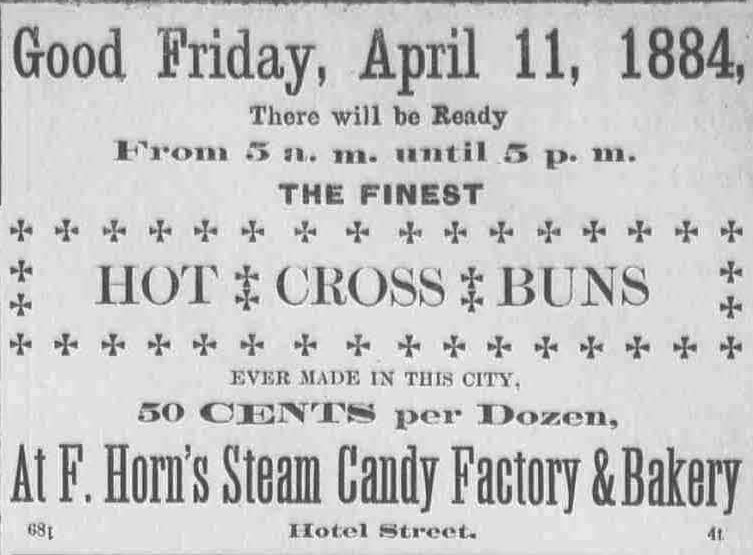
The history of the hot cross bun is deeply intertwined with Christian observance in England. The first known written reference to them appears in a London street cry from 1733, published in Poor Robin's Almanac, which mentions 'one or two a penny hot cross buns'. The familiar nursery rhyme 'Hot Cross Buns' was published in the London Chronicle in 1767. Their production and sale were historically controlled by decree. In 1592, during the reign of Elizabeth I, the London Clerk of Markets forbade the sale of spiced buns except at burials, on Good Friday, or at Christmas, with any illicit batches forfeited to the poor. Food historian Ivan Day notes that while the buns were certainly made in London during the 18th century, there are no definitive records or recipes from earlier periods. The buns were primarily made in domestic kitchens due to these restrictions, and the punishment for selling them outside the permitted times was the forfeiture of all the product to the poor.
Symbolism and Superstitions
Each element of the hot cross bun carries specific meaning within the Christian tradition. The cross marked on top represents the crucifixion of Jesus Christ, while the spices mixed into the dough, such as cinnamon and nutmeg, are said to signify the spices used to embalm his body after death. Over centuries, a body of English folklore and superstition has grown around these baked goods. One widespread belief held that a hot cross bun made and served on Good Friday would not spoil or grow mouldy over the subsequent year. Such a bun was also thought to possess medicinal properties, with a piece given to an ill person said to aid recovery. Sailors would carry them on voyages as a talisman against shipwreck, and hanging a bun in the kitchen was believed to protect the home from fires and ensure successful bread baking, with the bun being replaced annually. This belief in the protective, non-perishable nature of the bun has parallels in Classical times with similar claims made for sacrificial bread before the advent of Christianity.
Traditional and Modern Variations
The classic hot cross bun is a spiced, yeasted dough studded with raisins or currants, with a cross traditionally piped on top using a shortcrust pastry or a simple flour-and-water paste. In the 21st century, however, the variety available has expanded dramatically, particularly in Commonwealth countries like Canada, the United Kingdom, and Australia. Major supermarkets and bakeries now produce numerous flavour variations that extend the bun's appeal beyond the Easter season. These modern interpretations often include ingredients like chocolate chips, toffee, salted caramel, orange-cranberry, and apple-cinnamon. In Australia, recent innovations have included savoury versions flavoured with Vegemite and cheese or jalapeño and cheese, as well as novelty versions inspired by biscuits like Iced VoVo and Pizza Shapes. In Jamaica and parts of the Caribbean, the concept evolved into a spiced Easter loaf sweetened with molasses and often eaten with cheese and accompanied by beverages like mauby or ginger beer. Similar Easter breads exist in other cultures, such as the mazanec in Slovakia and the Czech Republic, which also often bears a cross on top.
Hot Cross Buns in Canadian Practice
In Canada, hot cross buns are a familiar sight in grocery stores and bakeries in the weeks leading up to Easter, enjoyed as part of the country's food traditions. They are commonly served warm, split, and toasted with a generous spread of butter. Their popularity has also inspired creative culinary adaptations that make use of leftover or slightly stale buns. The most prominent of these is the hot cross bun bread and butter pudding, a dessert that transforms the spiced buns into a rich, custard-based bake. This dish exemplifies a practical and delicious approach to reducing food waste while creating a special Easter treat. The buns' inherent sweetness and spice make them an ideal base for such puddings, often enhanced with additions like marmalade, chocolate, or fresh berries. Recipes for this pudding are frequently featured in Canadian cooking magazines and online food publications, with specific instructions for preparation. The dish is celebrated for being easy to prepare, deliciously comforting, and slightly indulgent, often served with a scoop of vanilla bean ice cream.
Recipe Spotlight: Hot Cross Bun Bread and Butter Pudding
This dessert is a common example of how a traditional ingredient can be reinvented. It is both a method for using leftover hot cross buns and a celebrated Easter pudding in its own right. The basic preparation involves slicing buns, spreading them with butter and often a complementary jam like raspberry or orange marmalade, and layering them in a baking dish. A custard mixture of milk, cream, eggs, and sugar is poured over the buns and left to soak, sometimes for up to half an hour. The pudding is then baked until the custard is set and the top is golden and crisp. Common recipe variations include adding dark or white chocolate chunks, dried fruit like sultanas, or a splash of liqueur such as Cointreau for added depth of flavour. It is typically served warm, often with a scoop of vanilla ice cream or a drizzle of cream. The appeal of this dish lies in its comforting, indulgent quality and its simplicity. Key tips for success include using slightly stale buns, which absorb the custard better, and allowing adequate resting time for the custard to soak in before baking. Many recipes recommend covering the dish with foil partway through baking to prevent over-browning. Popular ingredient substitutions demonstrate its versatility.
- Bread Base: Brioche, panettone, or croissants can be used outside of Easter.
- Jam: Raspberry, apricot, strawberry, or marmalade, or even Nutella or Biscoff spread.
- Chocolate: White, milk, or dark chocolate, or broken Easter egg pieces.
- Fruit: Fresh raspberries, blueberries, blackberries, sliced strawberries, or pitted cherries.
A specific recipe from February 2026 calls for six hot cross buns, 80 grams of butter, orange marmalade, dark chocolate, raisins, milk, cream, Cointreau, eggs, and orange zest. The ingredients are baked in a 20-centimetre dish to create a hot cross bun bread and butter pudding. This dessert is described as a tasty twist on a classic British dessert and is considered an ultimate Easter treat. It is also noted as a great way to use up leftover hot cross buns to make a fabulous Easter dessert.
Making Hot Cross Buns from Scratch
For home bakers, preparing hot cross buns from scratch is a rewarding Easter tradition. A standard dough involves flour, salt, sugar, instant yeast, nutmeg, orange zest, milk, egg, and melted butter. The process typically requires mixing the dry and wet ingredients to form a shaggy dough, then kneading briefly until cohesive. The dough is slicked with oil, covered, and left to rise in a warm place for two to three hours until it is poofier and feels light to the touch. Many recipes offer an overnight method where the shaped buns are covered and refrigerated, then baked the next morning after coming to room temperature, which is particularly convenient for Good Friday breakfast. Before baking, the buns are brushed with an egg wash. The cross can be applied before baking using a pastry or flour paste, or after baking with a simple icing made from confectioners' sugar or a cream cheese frosting. A final glaze of orange juice and sugar brushed on after baking adds a sheen and extra citrus note. Recipes often suggest soaking currants or raisins beforehand to plump them, though instructions for this are sometimes noted separately. The goal is a fluffy, fragrant bun that is perfectly spiced and moist.
Comparative Traditions and Global Adaptations
The hot cross bun's influence extends across the Commonwealth and beyond, with each region developing its own characteristics. In the United Kingdom, the bun remains closest to its historical form, though supermarket variations are prolific. In the United States, versions often feature an iced cross rather than the traditional baked dough cross. Australian variations are notably diverse, ranging from chocolate chip to burger sauce flavours. The Jamaican Easter bun is a distinct evolution, being a denser, molasses-sweetened loaf consumed with cheese. In Slovakia and the Czech Republic, the similar mazanec is an Easter cake. The underlying theme across cultures is the use of spiced, sweetened bread associated with the Easter period. The commercial season for these products has grown longer in many countries, with buns available for months rather than just around Good Friday. This extended availability increases the likelihood of leftovers, which in turn fuels the popularity of recipes like bread and butter pudding. The basic components of this pudding, regardless of the bread used, are slices of buttered bread, a custard of eggs and dairy, and a period of soaking before baking.
Cultural Significance and Seasonal Timing
Hot cross buns hold a dual significance as both a religious symbol and a secular seasonal marker. Their association with Good Friday is paramount, as they were traditionally the first leavened bread to be eaten after the Lenten fast. The date for their consumption is therefore movable, tied to the lunar calendar that determines Easter. Despite this, a separate 'Hot Cross Bun Day' is sometimes noted on September 11, though this is not widely observed in Canada. The expansion of their commercial availability means they now signal the approach of spring and Easter much like holiday-specific foods for other festivities. In Canadian homes, they may be purchased or homemade, with from-scratch recipes offering both same-day and overnight preparation methods to accommodate busy schedules. Their role in folklore, as objects believed to bring protection and health, adds a layer of cultural history to their consumption. Today, while many enjoy them for their taste alone, the story of the hot cross bun connects eaters to centuries of tradition, regulation, superstition, and culinary adaptation. The buns are popular not just in the UK but in Commonwealth countries like Australia, New Zealand, Canada, and India, as well as having made their way to the United States and elsewhere.
Questions about Hot cross bun
Why are hot cross buns eaten on Good Friday?
Hot cross buns are traditionally eaten on Good Friday within the Christian tradition to mark the end of Lent. The cross on the bun symbolizes the crucifixion of Jesus Christ, and the spices inside are said to represent the spices used to embalm his body. Consuming them after the Lenten fast became a customary way to observe the solemn day. The buns mark the end of the fasting season and commemorate the crucifixion.
Can you buy hot cross buns all year round in Canada?
While hot cross buns are most prominently available in the lead-up to Easter, their seasonal availability has expanded in many countries, including Canada. Major supermarkets often stock them for several months, and some variations may be found outside the traditional spring period. However, they remain most strongly associated with the Easter season. In the United Kingdom, they are available all year round, a trend that may be reflected in some Canadian stores.
What is hot cross bun bread and butter pudding?
Hot cross bun bread and butter pudding is a popular dessert that adapts the classic British bread and butter pudding. It uses sliced hot cross buns layered in a dish, often spread with butter and jam, then soaked in a custard mixture of eggs, milk, cream, and sugar before being baked. It's a common way to use leftover buns and is served as a warm, comforting Easter treat. Recipes frequently include additions like chocolate, marmalade, or fresh berries.
What are some modern flavours of hot cross buns?
Beyond the traditional spiced fruit bun, many modern variations are now widely available. Common flavours include chocolate chip, toffee, salted caramel, orange-cranberry, and apple-cinnamon. In Australia, more adventurous savoury versions like Vegemite and cheese or jalapeño and cheese have also been introduced. Other novel Australian variations have included sour cherry, burger sauce, Iced VoVo, and Pizza Shapes flavours.
What is the cross on a hot cross bun made from?
Traditionally, the cross on top of a hot cross bun is made from a shortcrust pastry strip. Many modern recipes, however, use a simple paste made from flour and water which is piped onto the buns before baking. After baking, some versions feature a cross made from a simple icing sugar glaze or a cream cheese frosting. The cross is baked right into the dough in some contemporary recipes.
Are there any superstitions associated with hot cross buns?
Yes, English folklore includes several superstitions. It was believed a Good Friday bun would never grow mouldy and could protect a house from fire if hung in the kitchen. Buns were also kept for medicinal purposes, thought to aid recovery from illness, and taken on sea voyages as a charm against shipwreck. The hanging bun was replaced each year, and it was said to ensure all bread baked in that kitchen would turn out perfectly.
Sources and further reading
- Hot cross bun (Wikipedia)
- Hot Cross Bun Easter Pudding (dish.co.nz)
- Hot cross bun bread and butter pudding (carolinescooking.com)
- Hot Cross Bun Bread and Butter Pudding (desertislanddishes.co)
- Simple Overnight Hot Cross Buns (alexandracooks.com)
Checked by the Novello Desserts desk. Last updated 2026-10-27.