Montreal-style bagel
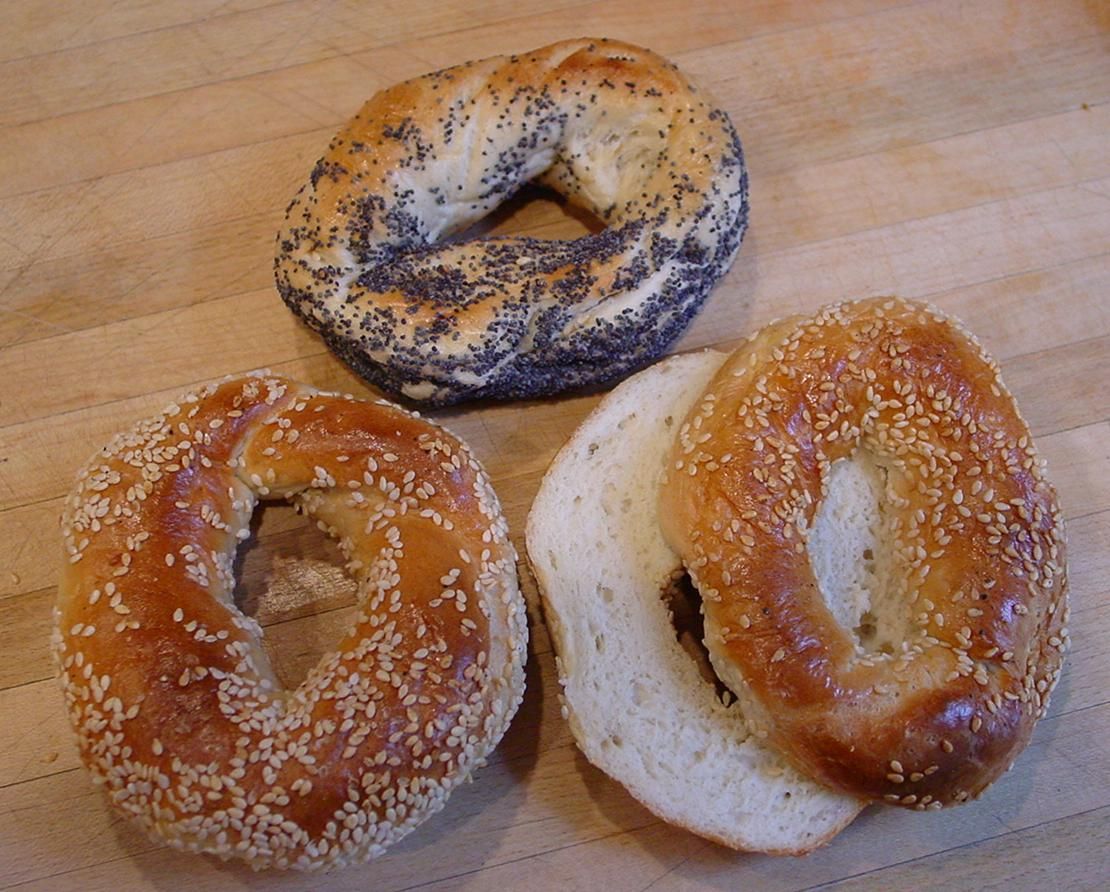
The Montreal-style bagel is a distinctive variety of handmade, wood-fired baked bread that is a celebrated culinary icon of Montreal and Quebec. Characterized by its smaller, thinner, denser, and sweeter profile compared to the New York-style bagel, it is boiled in honey-sweetened water and baked in a wood-fired oven. Its unique texture and flavour have made it a point of local pride and a sought-after food item across Canada and beyond. The bagel contains malt and egg, has no salt, and typically comes in two predominant varieties: black seed (poppy seed) or white seed (sesame seed).
Origins and history
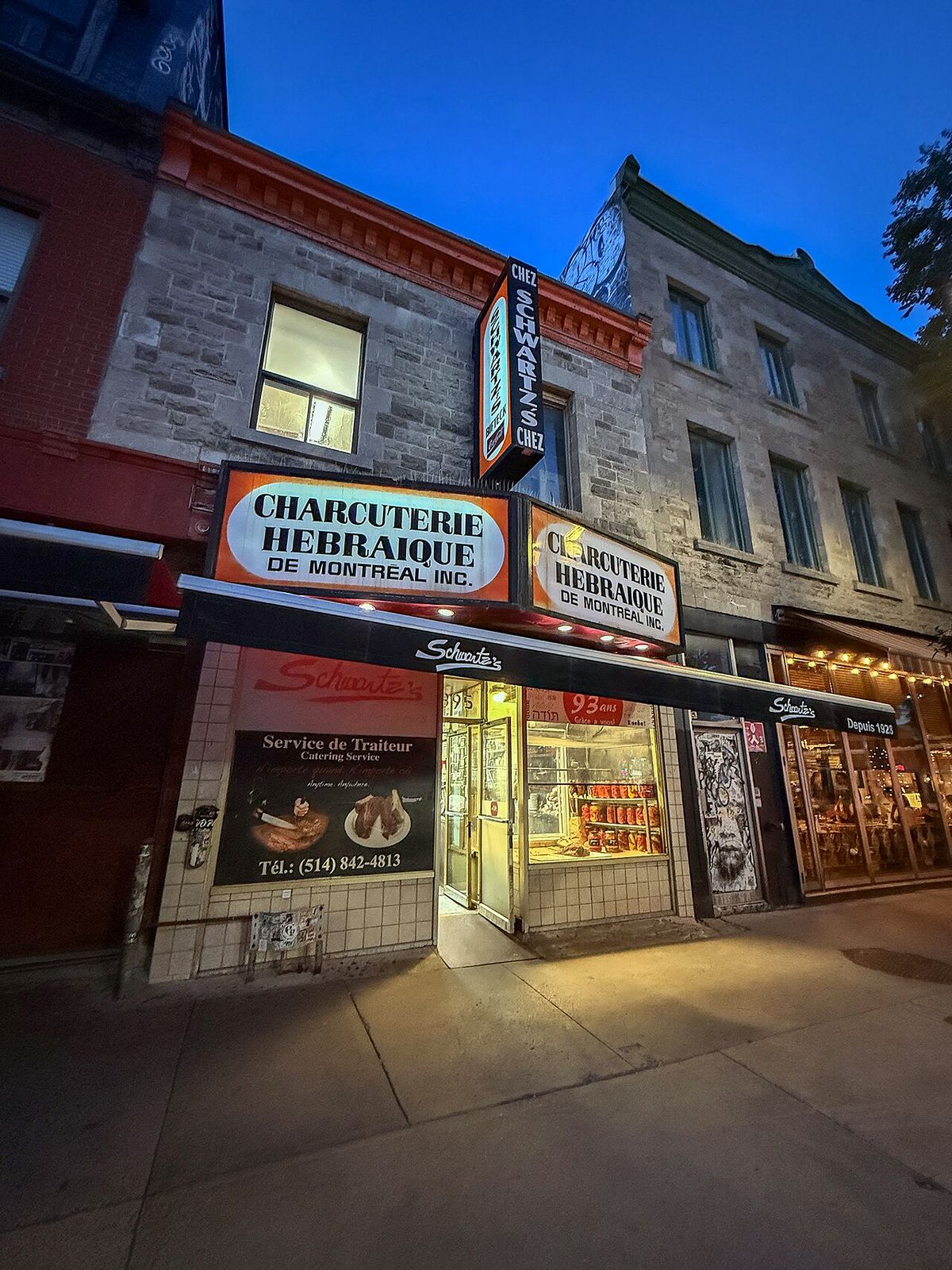
The specific texture and taste reflect the regional baking styles from the areas where these immigrant bakers learned their trade. Historical accounts differ on who first introduced the bagel to Montreal, with credit often given to baker Chaim (Hyman) Seligman. Seligman reportedly began selling bagels in the Lachine neighbourhood before moving his operation to a lane next to Schwartz's Delicatessen on Boulevard Saint-Laurent, a central artery in Montreal's Jewish community. He would string his bagels into dozens and sell them from a pushcart, later a horse and wagon, and eventually a converted taxi, becoming a fixture on "Jewish Main".
Key partnerships and rivalries among early bakers shaped the modern bagel landscape. Seligman went into business with Myer Lewkowicz and Jack Shlafman, though these partnerships eventually dissolved. These separations led directly to the founding of Montreal's two most famous bagel institutions. Jack Shlafman established Fairmount Bagel on Fairmount Avenue in 1949, though some records suggest an earlier bakery opened as early as 1919. In 1957, Myer Lewkowicz, who had worked for Seligman, founded the St. Viateur Bagel Shop on Saint-Viateur Street in the Mile End district. Both bakeries remain in operation today, often claiming the title of the city's oldest bagel shop and anchoring the continued production of authentic Montreal-style bagels.
Characteristics and production
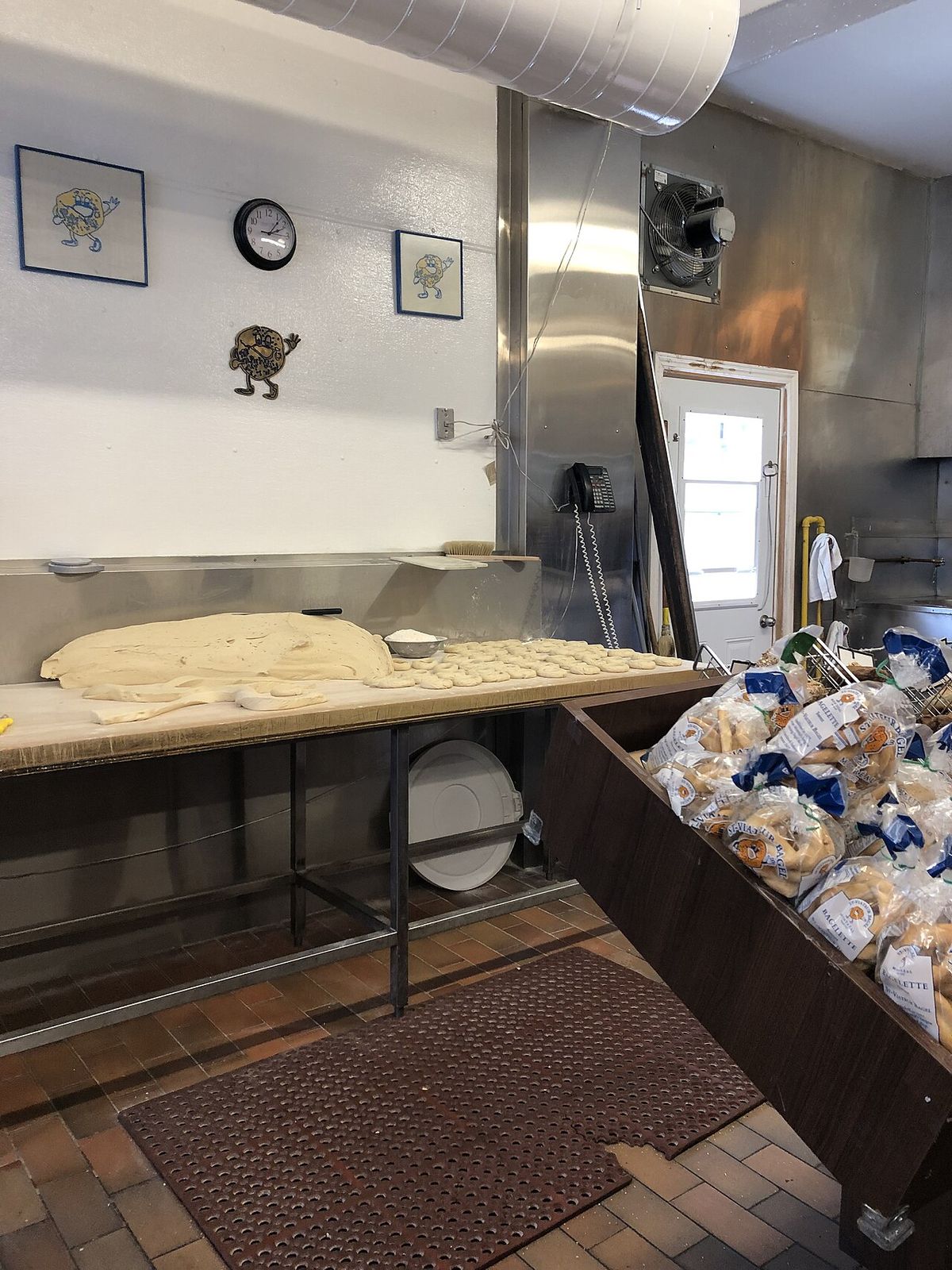
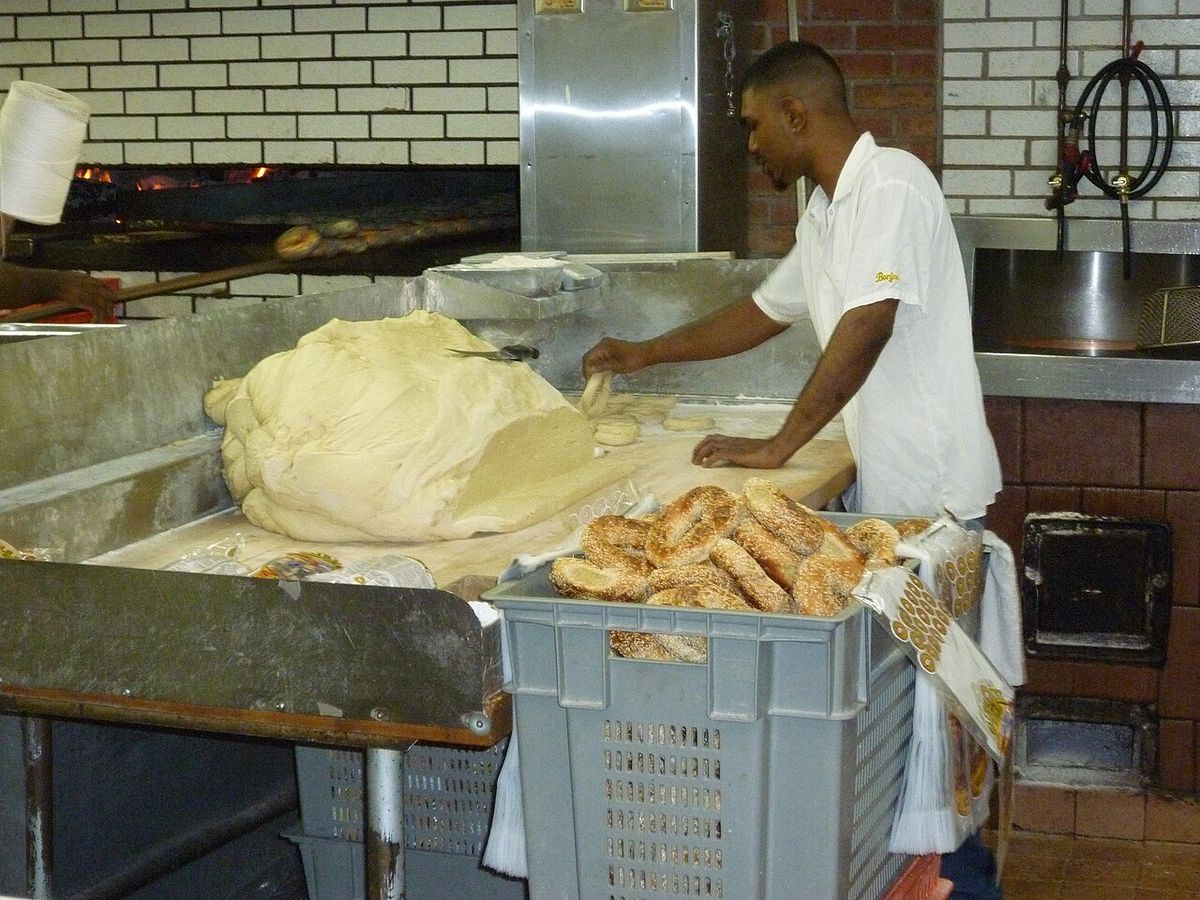
The Montreal-style bagel is defined by a specific set of ingredients, techniques, and physical attributes that distinguish it from other bagel varieties, particularly the New York style. The dough is made with wheat flour, malt, eggs, and yeast, and notably contains no added salt. A defining characteristic is the use of honey, which is incorporated directly into the dough and, crucially, into the water used for poaching the shaped bagels before baking. This honey bath imparts a subtle sweetness and contributes to the bagel's distinctive golden-brown crust. The production process is traditionally manual and follows a meticulous sequence where the dough is divided, hand-rolled into ropes, and shaped into rings with a characteristically large hole.
The bagels are then simmered in the honey-sweetened water for about a minute per side before being dredged in either sesame seeds (white seed) or poppy seeds (black seed), which are the two classic and predominant varieties. The final and most important step is baking the bagels in a wood-fired oven, which gives them a unique, slightly smoky flavour and a crisp exterior with a dense, chewy interior. The physical result of this process is a bagel that is smaller and thinner than a New York-style bagel, with a denser and chewier texture and a distinctly sweeter taste due to the honey. This combination of traits creates a specific eating experience that is deeply cherished in Montreal, where the proper way to enjoy a Montreal bagel is considered to be fresh out of the oven, often simply with a schmear of cream cheese.
- Smaller and thinner than a New York-style bagel.
- Denser and chewier in texture.
- Distinctly sweeter due to the honey.
- Golden in colour with a crisp crust.
- Defined by a larger central hole.
Notable bakeries and local culture
Montreal's bagel culture is dominated by two legendary, family-run bakeries that have operated for generations and are destinations in their own right. Both establishments produce bagels using the traditional hand-rolled, wood-fired method, and their storefronts are often perfumed with the aroma of baking bread and toasted seeds, drawing both locals and tourists. Local allegiance to one bakery or the other is a common and lighthearted point of contention among Montrealers, with debates over which makes the superior bagel being a fixture of the city's food discourse. Beyond these two giants, other shops like La Fabrique De Bagel de Montréal also produce authentic Montreal-style bagels. The bagel has transcended its bakery origins to become a staple on restaurant menus across the city, appearing in bread baskets and featured in dedicated dishes. The most famous restaurant dish is the Beautys Special at Beautys Luncheonette, a sandwich of cream cheese, smoked salmon, tomato, and onion that was highlighted by Anthony Bourdain on his television show.
Dissemination across Canada and internationally
As Montreal's English-speaking Jewish community migrated to other parts of Canada and abroad, a demand for Montreal-style bagels followed, leading to their spread across the country. Bagel shops specializing in the Montreal style have opened in numerous Canadian cities including Toronto, Ottawa, Vancouver, Calgary, Winnipeg, Hamilton, Dartmouth in Nova Scotia, and even Whitehorse. This dissemination has made the Montreal bagel a recognizable Canadian food item well beyond Quebec's borders, catering to a population familiar with its unique qualities. The style has also found footholds internationally, with shops appearing in the United Kingdom and several American cities such as Burlington, Los Angeles, Seattle, Portland, Oakland, and Houston. For a long time, the style was rare in the northeastern United States due to the dominance of the New York bagel, though outposts have existed, such as Myer's Bagels in Burlington, Vermont, which was started by a former St-Viateur baker. The Montreal-style bagel achieved a unique distinction when Montreal-born astronaut Gregory Chamitoff, nephew of the owner of Fairmount Bagels, took three bags of sesame bagels with him on space missions STS-124 and ISS Expedition 17. This event made the Montreal-style bagel the only variety of bagel known to have travelled to space, a fact celebrated in Montreal's food lore and highlighting its cultural significance.
Comparison with New York-style bagels
The differences between Montreal and New York-style bagels are pronounced and stem from variations in recipe and technique. A direct comparison highlights the defining features of each style, beginning with the ingredients in the dough. The Montreal bagel's dough includes egg and honey, while the New York version typically uses malt syrup or sugar and often contains salt, which is absent from the Montreal recipe. The boiling liquid for a Montreal bagel is honey-sweetened water, whereas New York bagels are boiled in water that may contain malt syrup or baking soda, and the baking method is also distinct, with Montreal bagels traditionally baked in a wood-fired oven and New York bagels baked in standard gas or electric ovens.
These procedural differences result in clear physical and sensory contrasts that are summarized in the table below. The Montreal bagel is smaller, thinner, and denser with a larger hole and a crisp crust from the wood fire, while the New York bagel is larger, puffier, and softer with a doughier interior. The flavour profile of the Montreal bagel is sweeter from the honey, while the New York bagel has a malt-forward, sometimes slightly salty taste. These distinctions are not merely academic but reflect deep regional identities and baking traditions, with each style commanding a devoted following that debates their respective merits.
| Characteristic | Montreal-Style Bagel | New York-Style Bagel |
|---|---|---|
| Size & Shape | Smaller, thinner, larger hole | Larger, puffier, smaller hole |
| Texture | Denser, chewier crust | Softer, doughier, chewy interior |
| Flavour Profile | Sweeter (from honey), no salt | Malt-forward, often slightly salty |
| Crust | Crisp from wood-fired baking | Softer exterior |
| Primary Toppings | Sesame or poppy seeds | Wider variety (everything, garlic, etc.) |
Making Montreal-style bagels at home
While the authentic wood-fired oven is difficult to replicate in a home kitchen, many recipes allow enthusiasts to approximate Montreal-style bagels using standard kitchen equipment. The process requires patience and attention to the specific techniques that define the style, beginning with combining flour, malt, yeast, egg, and honey to form a firm, elastic dough. This dough is kneaded and allowed to rise until nearly doubled in size, which typically takes about one and a half hours, before being deflated and divided into equal pieces. Each piece is then rolled by hand into a rope, wrapped around the baker's fingers to form a ring with overlapped ends, and the seam is rolled to seal it securely.
The critical steps of boiling and baking follow specific parameters designed to mimic the traditional process as closely as possible. A honey-sweetened water bath is brought to a simmer, and the bagels are poached for about one minute per side before being immediately dredged in a bowl of sesame or poppy seeds. To mimic the intense heat of a wood-fired oven, home bakers often use a baking stone or steel preheated in a standard oven to a high temperature, around 475 degrees Fahrenheit. The bagels are baked on the stone for 18 to 23 minutes until they achieve a deep golden brown colour, and proper storage involves keeping them in a paper bag at room temperature for a day or slicing and freezing them for longer preservation, with reheating possible directly from frozen in a toaster or oven.
Cultural significance and legacy
The Montreal-style bagel is more than a food item. It is a symbol of the city's immigrant history and its enduring Jewish community. The bagel contributes significantly to Montreal's gastronomic identity alongside smoked meat, and it represents a commitment to artisan food production, resisting full automation in favour of a handmade tradition that continues in the city's famous bakeries. The bagel's legacy is maintained through the ongoing operations of its founding bakeries, which are now tourist attractions as much as local shops, and its appearance in popular culture from television shows to its journey into space has reinforced its status.
For Montrealers, the bagel is a source of immense civic pride and a unifying food. There is a friendly rivalry between the city's two most prominent bagel shops, St-Viateur Bagel and Fairmount Bagel, which both claim to be the oldest. The Montreal-style bagel remains a defining piece of Canadian culinary heritage. It continues to be produced daily in the heart of the city, enjoyed by residents and visitors alike who seek out its unique taste and texture.
Questions about Montreal-style bagel
What makes a Montreal bagel different from a New York bagel?
The Montreal bagel is smaller, thinner, sweeter, and denser than a New York-style bagel, and it has a larger hole. The Montreal bagel contains malt, egg, and no salt, and it is boiled in honey-sweetened water before being baked in a wood-fired oven. In contrast, the New York bagel is larger and softer. The differences in texture and taste reflect the style of the particular area in Poland where the immigrant bakers learned their trade.
Where can I buy authentic Montreal-style bagels?
Authentic Montreal-style bagels are produced by several Montreal bagel factories. The two most prominent bagel shops in Montreal are St-Viateur Bagel and Fairmount Bagel. Montreal-style bagel shops have also opened in other Canadian cities like Vancouver, Ottawa, Toronto, and Calgary. They have spread to some US cities such as Burlington, Los Angeles, and Seattle, and even to the UK.
How should I store and reheat Montreal bagels?
For short-term storage, keep Montreal bagels in a paper bag at room temperature for up to a day to maintain their texture. For longer storage, it is recommended to slice them and freeze them in an airtight container or bag for up to three months. To reheat, frozen whole bagels can be baked at 375 degrees Fahrenheit for 4-5 minutes unwrapped for a crisp result, or wrapped in foil for 10-15 minutes for a softer texture. Sliced frozen bagels can be toasted directly.
Why are Montreal bagels boiled in honey water?
Montreal bagels are boiled in honey sweetened water before being baked to give them a distinctive sweetness, golden colour, and crust. This cooking process is a key part of the traditional Montreal style method. The honey in the water bath, along with honey or malt in the dough, differentiates them from New York style bagels which are typically boiled in malt water. The boiling step also contributes to the bagel's signature chewiness and denser texture before they are finished in a wood fired oven.
What are the main types of Montreal bagels?
The two main and classic varieties of Montreal style bagel are black seed, meaning poppy seed, and white seed, meaning sesame seed. These are the predominant types offered by the city's well-known bakeries. While these are the traditional choices, some modern recipes or shops may experiment with other toppings. However, the authentic Montreal bagel experience is typically defined by these two simple, seed based varieties that highlight the bagel's sweet, malty flavour and wood fired crust.
Did Montreal bagels really go to space?
Yes, Montreal style bagels are the only bagels known to have travelled to outer space. Astronaut Gregory Chamitoff, a Montreal native, took three bags of sesame seed bagels with him on his space missions. He brought them aboard Space Shuttle mission STS 124 as a passenger and later on ISS Expedition 17 as a crewmember during his six month stay on the International Space Station. This event is a notable point of pride and a fun fact in the history of this distinctive Canadian food item.
Sources and further reading
- Montreal-style bagel (Wikipedia)
- Montreal Bagels Recipe (kingarthurbaking.com)
- Montreal-Style Bagels (foodfaithfitness.com)
- Everything you should know about the Montréal bagel (mtl.org)
- Homemade Bagels Montreal Style Recipe (anitalianinmykitchen.com)
Checked by the Novello Desserts desk. Last updated 2026-10-31.