St-Viateur Bagel
St-Viateur Bagel is a Montreal-style bagel bakery and restaurant chain founded in 1957, headquartered in the Mile End neighbourhood of Montreal. It is one of the city's most famous and long-running food businesses, renowned for its hand-rolled, wood-fired bagels that define the classic Montreal style. The bakery holds deep cultural importance as a central part of Montreal's historic Jewish Quarter and a representation of the city's immigrant heritage. With multiple locations across the Greater Montreal area and an online store, St-Viateur Bagel continues to be a daily destination for locals and a must-visit culinary stop for visitors from around the world.
History and Founding
St-Viateur Bagel was established on May 21, 1957 by Myer Lewkowicz, a Holocaust survivor who had immigrated to Canada from Poland in 1953. Lewkowicz, who grew up poor in a shtetl near Kraków, learned the bagel trade while working at the Montreal Bagel Bakery, owned by Hyman Seligman. He named his new venture after its location on St-Viateur Street in the Mile End district. The shop's origins are deeply personal, with Lewkowicz later stating that his wartime experience in the Buchenwald concentration camp, where he dreamt of bread, influenced his decision to open the bakery. For decades, the business operated as a single storefront, becoming one of Montreal's longest-running bagel shops. In 1985, the original location suffered an extensive fire, but its crucial wood-burning oven remained entirely intact, allowing the business to continue. The bakery celebrated its 60th anniversary in 2017, marking over six decades of continuous operation.
Ownership of St-Viateur Bagel eventually passed to Joe Morena, who had worked at the shop for 15 years prior to taking over. Under Morena's management, the business has expanded significantly from its single original outlet. The bakery has faced operational challenges common to long-standing city businesses, including the permanent closure of its Monkland Avenue café location in March 2019 after an 18-year lease ended amid rising rents. Despite such changes, the core operation at 263 Rue St-Viateur O remains the central part of the enterprise, open from 6:00 am until midnight every day of the week. The business has also addressed modern regulatory demands, installing an emissions filter to comply with updated local bylaws concerning wood-burning ovens, a requirement reported on by the Globe and Mail in 2018.
The Montreal Bagel and Production Process
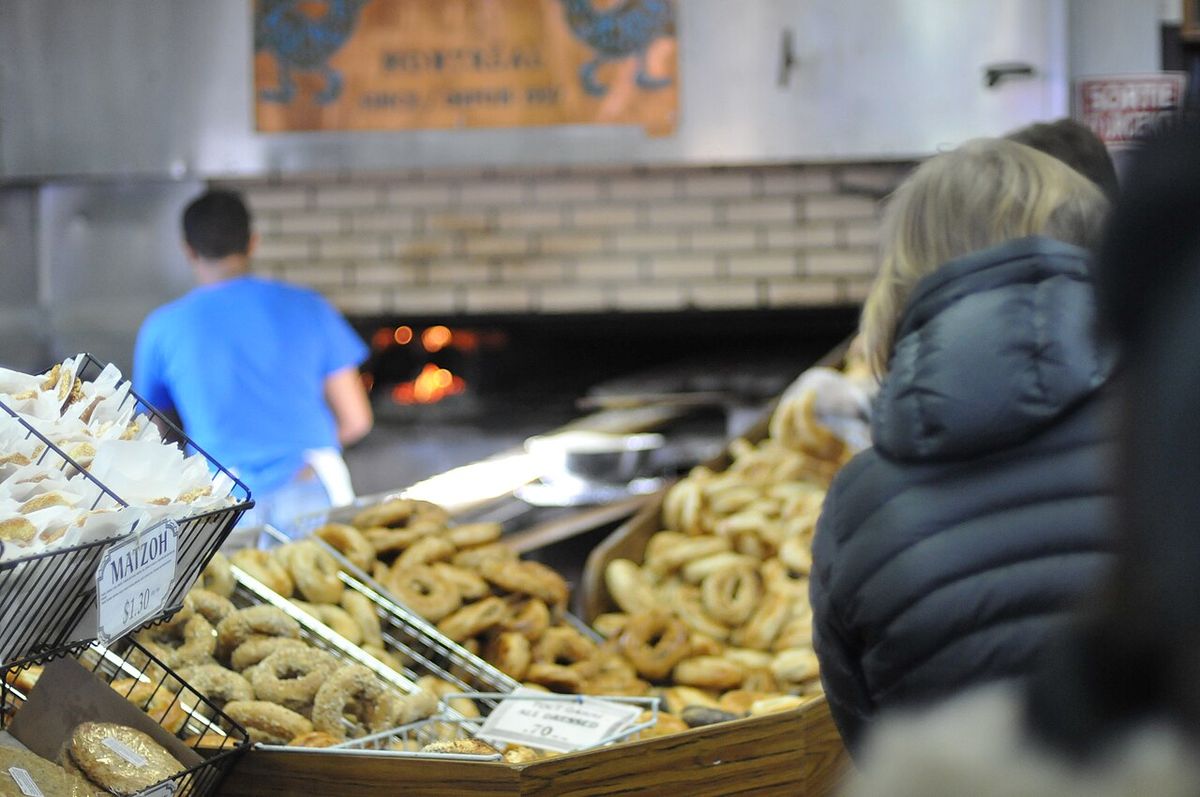
The bagel produced by St-Viateur is the definitive Montreal-style bagel, distinct from the more common New York variety. The Montreal bagel is characterized by its sweeter taste, thinner profile, and notably larger hole. It is also boiled in honey-sweetened water before baking, which contributes to its unique flavour and glossy, blistered crust. Since the shop's opening in 1957, its production process has adhered strictly to the original recipe and method. Each bagel is individually hand-rolled, then boiled for 30 to 60 seconds in honey water. After boiling, the bagels are dipped in seeds and then baked on long wooden planks inside a traditional wood-burning oven. This oven, which survived the 1985 fire, is central to creating the crispy, slightly smoky exterior and dense, chewy interior that defines an authentic Montreal bagel.
St-Viateur offers a wide variety of bagel flavours, catering to diverse tastes while maintaining its traditional base. The production occurs in plain view of customers at several locations, emphasizing the craft and consistency of the process. The nutritional profile of the bagels is publicly available, with each bagel containing between 200 and 240 calories based on a serving size of half a bagel. An order of two dozen bagels is typically priced between $22 and $25 CAD. The bakery's commitment to its original method is a point of pride and a key differentiator in the market, particularly in its friendly rivalry with nearby Fairmount Bagel for the title of Montreal's best.
- Plain
- Sesame
- Poppy
- All Dressed
- Whole Wheat
- Cinnamon & Raisin
- Rosemary & Sea Salt
- Blueberry
- Pumpernickel
- Muesli
Expansion and Business Operations
From its single original bakery, St-Viateur Bagel has grown into a multi-faceted operation with a presence across the Montreal region. The business model encompasses several distinct types of locations, including traditional bakeries for fresh bagel takeout, sit-down cafés that also offer takeout, and a mobile food truck. As of 2026, the company operates seven locations and has announced the opening of an eighth, a 'bar à tartinades' or spread bar, described as a grab-and-go concept. The original flagship at 263 Rue St-Viateur O remains the primary location, operating from 6:00 am to midnight daily. Other notable locations include a bakery in Dollard-Des Ormeaux at 821 Tecumseh, a café and bakery in Laval at 1585 boulevard Dagenais O, and a location in Anjou at 10350 rue Renaude-Lapointe, each with its own operating hours for both bakery and café services.
The company also runs a successful online store, offering fresh St-Viateur bagels for delivery across North America, significantly expanding its customer base beyond Montreal. This growth has not gone unnoticed by larger food industry players. In recent years, the Ottawa-based chain Kettleman's Bagel Co., which makes Montreal-style bagels, expressed interest in expanding into the Montreal market and even purchasing a famous local shop. St-Viateur co-owner Robert Morena responded to this prospect by calling it 'preposterous,' using the analogy that it would be like going to Rome to build a Coliseum. Morena confirmed his shop was not in talks to sell and noted that St-Viateur, despite its capacity and frequent acquisition proposals, had remained hesitant to expand into Ontario, preferring to maintain its focused, tradition-based operation in its home market.
Cultural Significance and Community Role
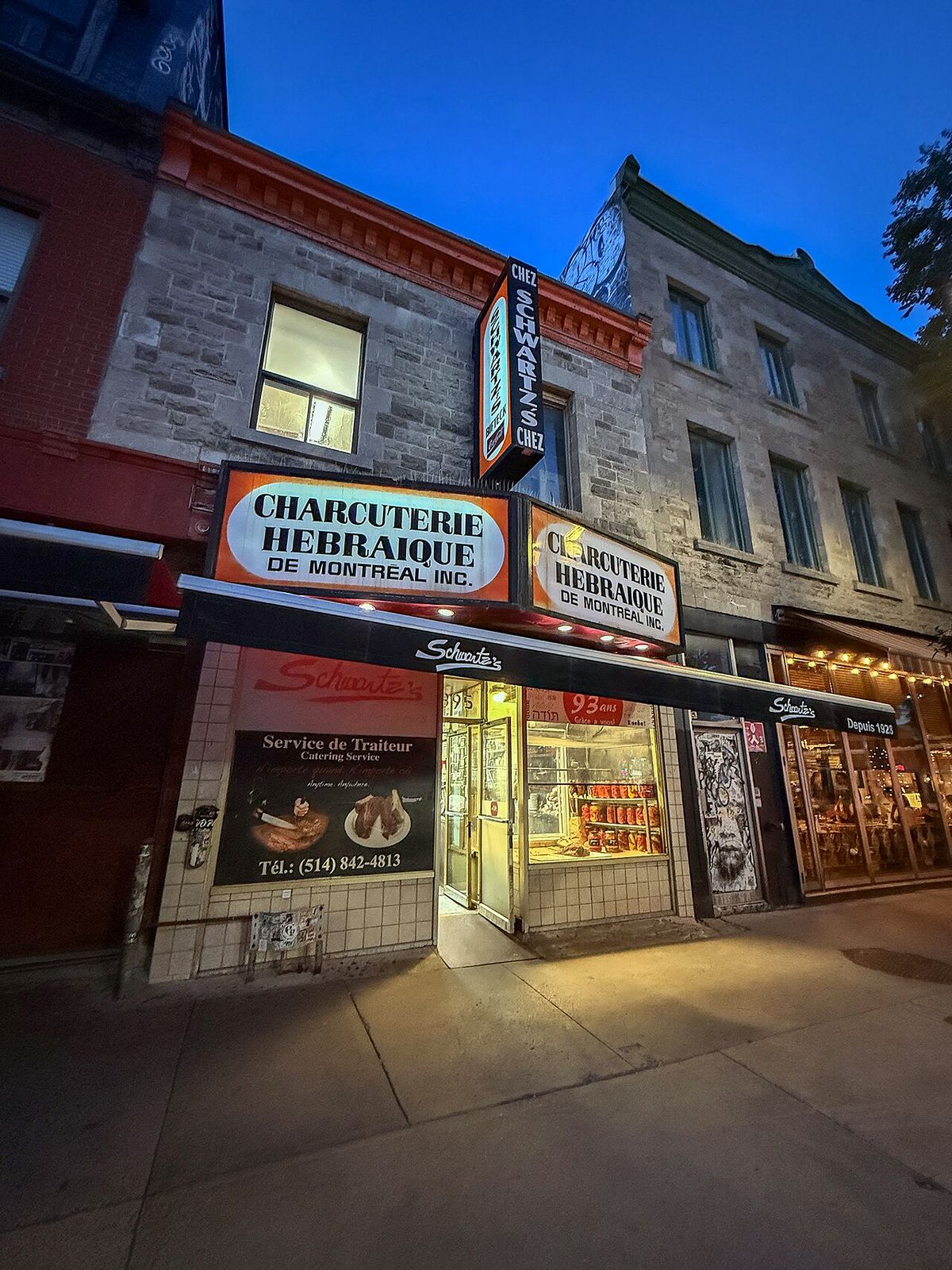
St-Viateur Bagel Shop is situated on the border of Montreal's historic Jewish Quarter and the Mile End neighbourhood, placing it at the centre of a rich cultural and culinary district. The area is also home to other famous Jewish food institutions like Schwartz's deli, Moishes Steakhouse, Cheskie's Bakery, and Beauty's Luncheonette, all with long histories within the city's Jewish community. A study from the Université de Montréal notes the strong influence of Jewish food on Montreal's culinary culture, linked to the large Jewish immigrant population that settled along Boulevard St. Laurent in the early 20th century, making items like bagels and smoked meat inexpensive and widely accessible. St-Viateur is a living continuation of this history, a daily touchpoint for a tradition that spans generations.
The bagel itself carries symbolic weight within Jewish culture, as explained by Université de Montréal theology professor Oliver Bauer. The round shape of the bagel is seen to represent infinity and immortality. Because of this symbolism, bagels are traditionally served at significant lifecycle events, including the bris ceremony celebrating a baby boy's circumcision and shiva gatherings during the mourning period after a death. This deep cultural resonance gives St-Viateur's product a communal and spiritual importance beyond a simple baked good. The bakery's operation for over six decades, through neighbourhood changes and city developments, reflects its role as a community fixture and a keeper of tradition.
In Media and Popular Culture
St-Viateur Bagel has been featured in numerous media reports and entertainment productions, reflecting its status as a Montreal landmark. Local and national news outlets widely covered the closure of its Monkland Village café in March 2019, highlighting the impact of rising commercial rents on beloved neighbourhood businesses. Its traditional baking method also placed it at the centre of an environmental story in 2018, when the Globe and Mail reported on wood-burning businesses facing new emission bylaws. The bakery addressed this by installing a filter system to reduce emissions and comply with regulations, ensuring the continuation of its wood-fired process. In 2020, the shop gained exposure to a global audience through an appearance in Season 3, Episode 5 of the Netflix travel and food series 'Somebody Feed Phil,' hosted by Phil Rosenthal. The bakery's profile received a significant boost in international popular culture in late 2025 and early 2026. Its logo was prominently featured on a T-shirt worn by the character Rose Landry, portrayed by actress Sophie Nélisse, in Season 1, Episode 5 of the Canadian television series 'Heated Rivalry.' This placement introduced the St-Viateur brand to a new, broad viewership. The company maintains an active public presence, announcing in 2026 that it would be participating in that year's New York Bagel Fest, bringing a taste of Montreal to an international stage.
Locations and Customer Experience
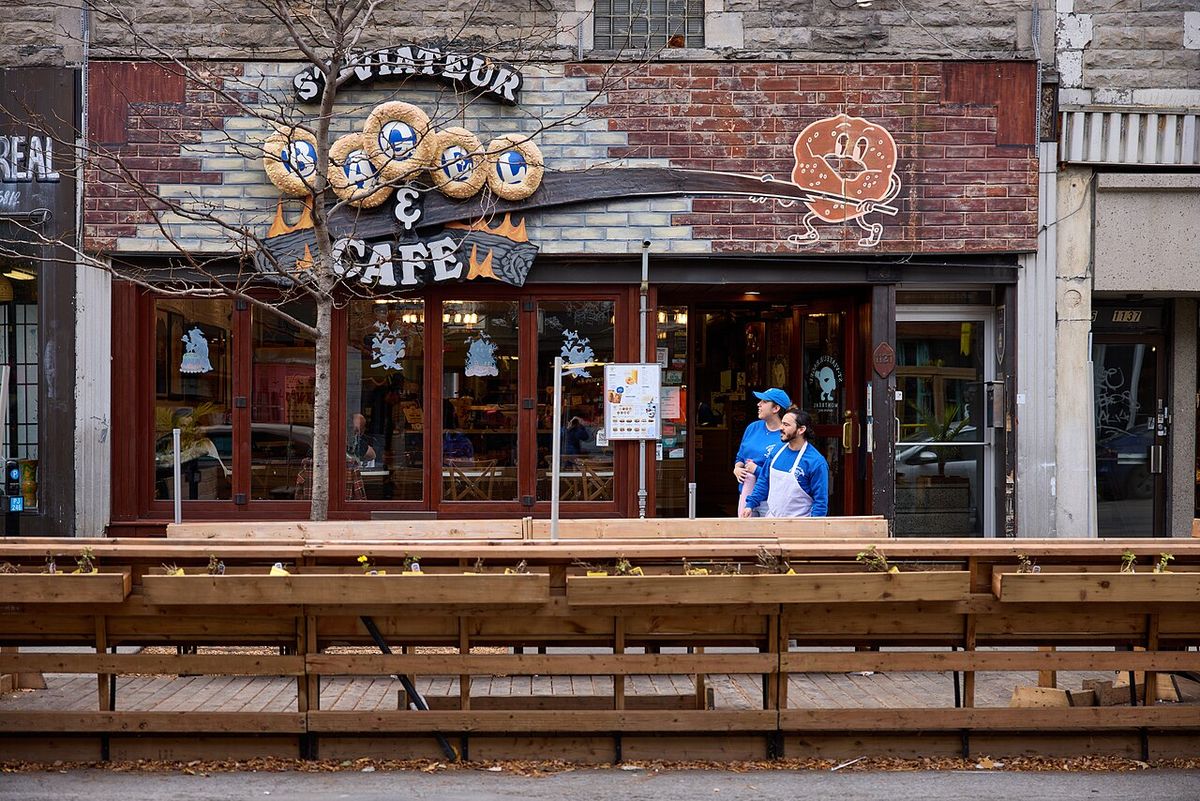
St-Viateur Bagel operates a network of locations designed to serve both the dedicated bakery customer and those seeking a café experience. The original and flagship location at 263 Rue St-Viateur O in Mile End is a bakery offering takeout only, open from 6:00 am to midnight every day. This location embodies the classic, no-frills bagel shop experience where customers can watch the baking process. In contrast, several other locations function as combined bakeries and sit-down cafés with takeout options. These include the Dollard-Des Ormeaux outlet, open from 6:00 am to 9:00 pm on weekdays and 6:00 am to 7:00 pm on weekends, and the Laval location, open from 7:00 am to 7:00 pm on weekdays and 7:00 am to 6:00 pm on weekends. The Anjou location has separate hours for its bakery and sandwich café services, with the bakery opening at 6:30 am daily.
The customer experience is consistently praised for the quality and authenticity of the product. Reviews frequently highlight the freshness of the bagels, the classic flavours like sesame and poppy seed, and the unique texture achieved by the wood-fired oven. The environment at the original shop focuses on efficiency and the visible craft of bagel-making, with the transformation of simple dough into finished product on full display. Amenities across locations include takeout service and a dedicated food truck, providing flexibility for how customers enjoy their bagels. The company's online store extends this experience beyond geographic limits, allowing customers across North America to have fresh Montreal bagels delivered directly to them.
| Location | Type | Core Hours (Bakery) |
|---|---|---|
| 263 Rue St-Viateur O, Montreal | Bakery (Takeout) | Daily: 6:00 am, midnight |
| 821 Tecumseh, Dollard-Des Ormeaux | Bakery & Café | Mon-Fri: 6:00 am - 9:00 pm. Sat-Sun: 6:00 am - 7:00 pm |
| 1585 boul. Dagenais W., Laval | Bakery & Café | Mon-Fri: 7:00 am - 7:00 pm. Sat-Sun: 7:00 am - 6:00 pm |
| 10350 rue Renaude-Lapointe, Anjou | Bakery & Café | Mon-Fri: 6:30 am - 7:00 pm. Sat-Sun: 6:30 am - 6:00 pm |
Questions about St-Viateur Bagel
Where is the original St-Viateur Bagel located?
The original and flagship St-Viateur Bagel is located at 263 Rue St-Viateur O in the Mile End neighbourhood of Montreal, within the borough of Le Plateau-Mont-Royal. This location is strictly a bakery for takeout, where customers can purchase freshly baked bagels. It is open every day of the week from 6:00 in the morning until midnight. The shop is named after the street it resides on and has been operating at this address since its founding in 1957.
What makes a Montreal-style bagel from St-Viateur different?
St-Viateur's Montreal-style bagels are distinct in several key ways from other styles, particularly the New York bagel. They are hand-rolled, boiled in honey-sweetened water, and then baked in a wood-fired oven, which gives them a crispier crust and a slight smoky flavour. Montreal bagels are typically sweeter, thinner, and have a larger hole in the centre. The process has remained unchanged since 1957, emphasizing a chewy interior and a glossy, blistered exterior that is characteristic of the authentic Montreal style.
Who owns St-Viateur Bagel?
St-Viateur Bagel is owned by Joe Morena, who took over the business after working at the shop for 15 years. The bakery was originally founded in 1957 by Myer Lewkowicz, a Holocaust survivor from Poland. Morena has overseen the expansion of the business to include multiple locations while maintaining the traditional baking methods. In media reports, co-owner Robert Morena has also been cited representing the company, particularly in discussions about potential acquisitions by outside chains.
Can I order St-Viateur bagels online?
Yes, St-Viateur Bagel operates an online store that ships its fresh bagels across North America. This service allows customers outside of Montreal to have the famous bagels delivered directly to them. For local customers, most physical locations offer takeout service, and several function as sit-down cafés. The company also operates a food truck, providing another avenue for customers to enjoy their products at various events and locations.
What are the operating hours for St-Viateur Bagel?
Operating hours vary by location. The original bakery at 263 Rue St-Viateur O is open from 6:00 am until midnight, seven days a week. Other bakery and café locations in Dollard-Des Ormeaux, Laval, and Anjou have more varied hours, typically opening early in the morning and closing in the evening, with slightly reduced hours on weekends. For example, the Laval location is open from 7:00 am to 7:00 pm on weekdays and 7:00 am to 6:00 pm on weekends. Specific hours for each outlet are listed on the company's website.
Has St-Viateur Bagel been featured in any TV shows or movies?
Yes, St-Viateur Bagel has been featured in television shows. It appeared in a 2020 episode of the Netflix series Somebody Feed Phil. The bakery gained significant international popularity in late 2025 and early 2026 after its logo was seen on a T shirt worn by the character Rose Landry in season 1 episode 5 of the Canadian TV series Heated Rivalry. The shop has also been widely covered in Montreal and national news outlets, such as when its Monkland Avenue café closure was reported in 2019. Media coverage has also included discussions on business challenges, such as emission bylaws affecting its traditional wood burning ovens.
Sources and further reading
- St-Viateur Bagel (Wikipedia)
- Locations | St-Viateur Bagel Montreal (stviateurbagel.com)
- St-Viateur Bagel, Restaurant in Montreal: Menu, Reviews ... (restomontreal.ca)
Checked by the Novello Desserts desk. Last updated 2026-10-25.