Peanut butter
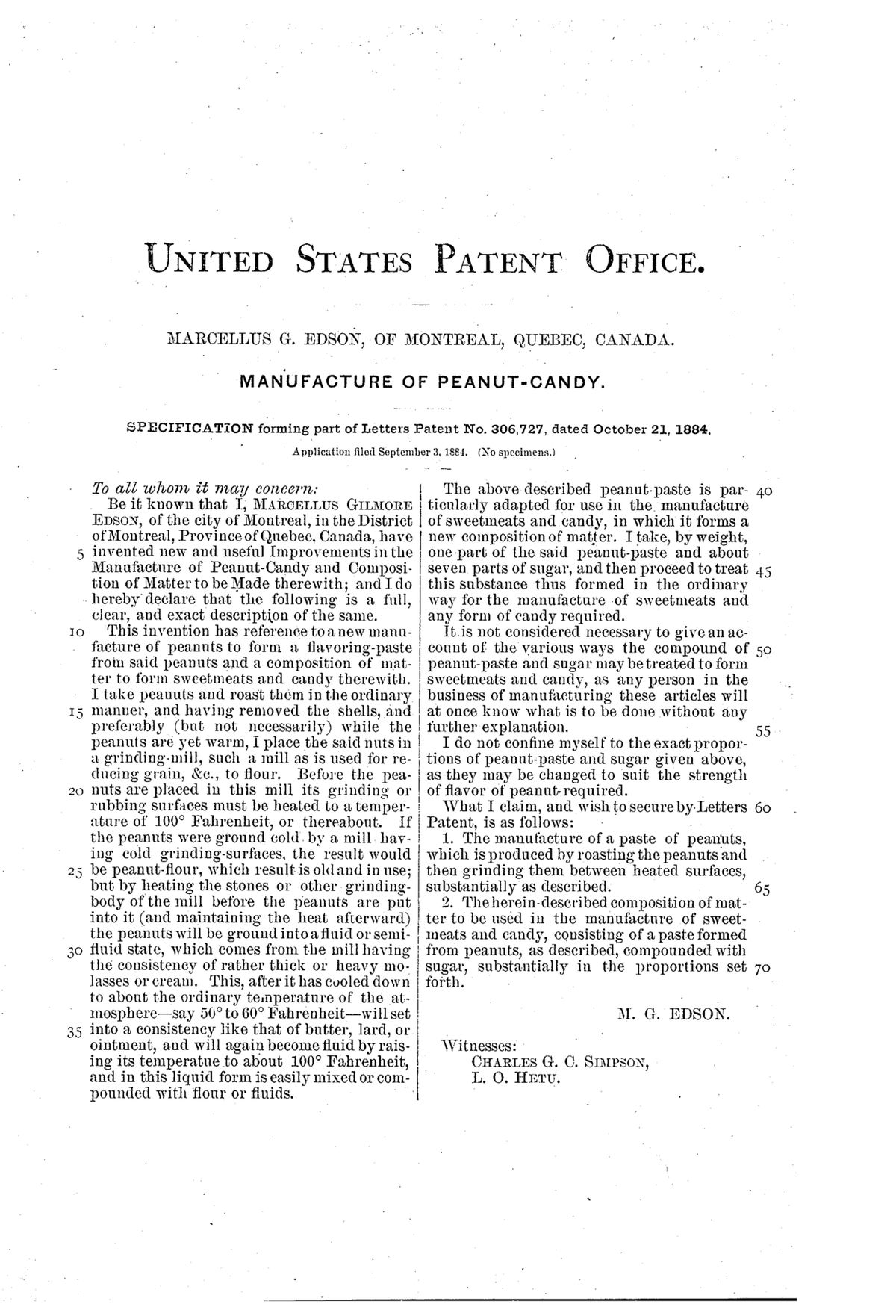
Peanut butter is a food paste or spread made from ground, dry-roasted peanuts, often containing additional ingredients like salt, sweeteners, or emulsifiers. It is a nutrient-rich source of protein, vitamins, and minerals, consumed globally but with particular significance in North America. Its invention as a modern, spreadable food product is credited to Marcellus Gilmore Edson of Montreal, who obtained the first patent for its production in 1884. In Canada, peanut butter is a staple pantry item and a key ingredient in many homemade snacks and desserts, reflecting its enduring popularity and cultural integration.
Historical Development
The earliest known consumption of a peanut paste dates to the Aztec and Inca civilizations, who ground roasted peanuts for food and medicinal purposes, such as treating aching gums in the 16th century. The modern, spreadable product emerged in the late 19th century through a series of industrial inventions and patents. Marcellus Gilmore Edson of Montreal, Quebec, secured the first Canadian and American patent for peanut butter in 1884, describing a process of milling roasted peanuts until they reached a fluid or semi-fluid state and then cooling the mixture to a consistency like that of butter, lard, or ointment. In the United States, businessman George Bayle began selling peanut butter as a snack food in St. Louis by 1894, while health advocate John Harvey Kellogg patented a Process of Producing Alimentary Products using boiled peanuts on May 24, 1898, and served it to patients at his Western Health Reform Institute because they needed a high-protein food that required no chewing. Contrary to popular belief, agricultural scientist George Washington Carver did not invent peanut butter, though his 1916 publication How to Grow the Peanut and 105 Ways of Preparing it For Human Consumption popularized their uses after many preparation methods were already patented. Key technological advancements followed, including Dr. Ambrose Straub's patent for a peanut-butter-making machine in 1903 and Joseph L. Rosefield's 1922 invention of a process using partially hydrogenated oil to prevent oil separation, which he licensed to the Peter Pan brand in 1928 before launching his own Skippy brand in 1932.
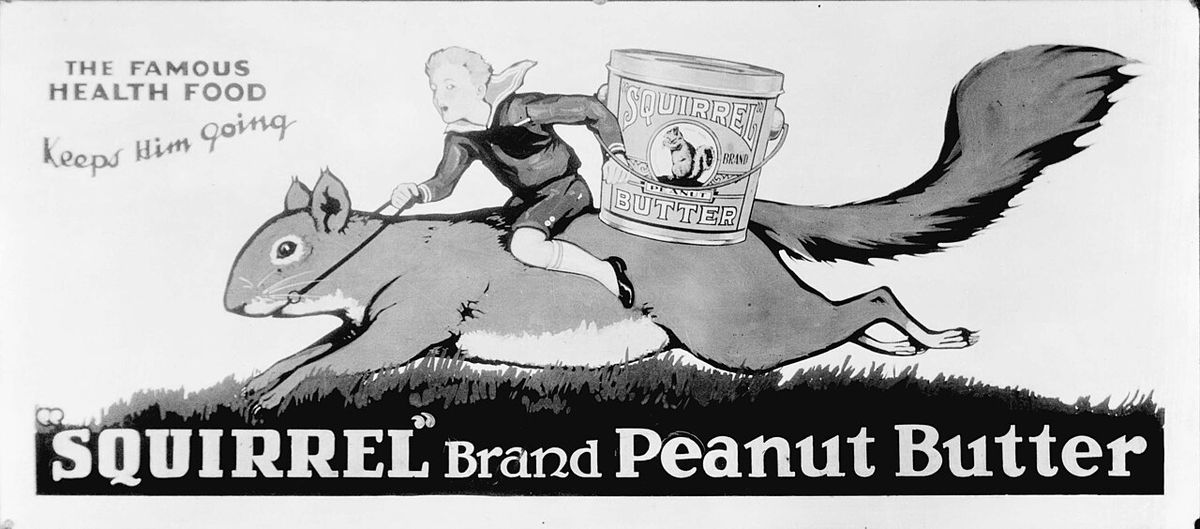
Peanut butter's adoption was influenced by economic and social factors. During the First World War, it became a popular protein substitute during meat rationing in the United States, promoted through government campaigns like Meatless Mondays in 1917. Its initial status as a food served in expensive health institutes meant it was first consumed primarily by wealthy people before becoming a mass-market commodity. The product spread internationally, with production beginning in South Africa in 1926 under the Black Cat brand by Tiger Brands, which took over from Alderton Limited in Potgietersrus. In the Netherlands, due to regulations protecting the term butter, peanut butter is known as pindakaas, meaning peanut cheese, a name derived from a similar, solid peanut paste dish called pinda-dokkunnu that existed in the Dutch colony of Suriname by 1783. Under the Skippy brand, Rosefield developed a new method of churning creamy peanut butter for smoother consistency and created the first chunky style by mixing in peanut fragments, while Procter and Gamble launched the sweeter Jif brand in 1955 using sugar and molasses.
Production and Manufacturing
The industrial production of peanut butter is a multi-stage process that transforms raw peanuts into a smooth or textured spread. It begins with the planting of peanuts in the spring, with harvesting typically occurring from late August to October when clear, dry weather conditions facilitate picking and prevent soil from sticking to the pods and stems. After harvest, peanuts are removed from vines and transported to shelling facilities where moisture is carefully controlled to prevent excessive frangibility of the shells and kernels during mechanical cracking and shell removal, a step designed to reduce dust in the plant. The shelled peanuts then undergo a critical roasting phase, which can be done via batch or continuous hot air methods, with batch roasting in a revolving oven at about 800 degrees Fahrenheit followed by holding at 320 degrees Fahrenheit for 40 to 60 minutes, a method suitable for peanuts with differing moisture content. Continuous hot air roasting, where peanuts are rocked through a roaster, is favoured by large manufacturers as it lowers spoilage rates and requires less labour, with a photometer indicating completion.
Following roasting, the peanuts are removed from the oven as quickly as possible and placed in a blower-cooler cylinder with suction fans to pull air through, cooling them efficiently to about 86 degrees Fahrenheit to retain oil and moisture. The next step is blanching, which removes the remaining seed coats through either heat or water methods. Heat blanching uses hot air at 280 degrees Fahrenheit for up to 20 minutes to soften skins, followed by steam in a blanching machine where skins are removed by bristles or rubber belts and blown into waste bags. Water blanching, which first appeared in 1949, involves rolling kernels through stationary blades to crack the skin, a one-minute hot water bath, and then rubbing off the skins on a swinging canvas pad before drying with hot air at 120 degrees Fahrenheit for at least six hours. After blanching, the peanuts are screened and inspected to eliminate burnt and rotten kernels, with a blower removing light peanuts and a colour sorting machine removing discoloured ones. The final manufacturing stage is grinding, where the peanuts pass through two grinders to achieve first a medium and then a fine grind, at which point salt, sugar, and vegetable oil stabilizer may be added for flavour and to maintain a homogeneous mixture, and chopped peanuts are added for chunky varieties. Before packaging, the peanut butter is pumped into a heat exchanger to cool it to about 120 degrees Fahrenheit, then sealed in jars, labelled, and set aside for crystallization before being packaged into cartons for distribution to retailers.
Types and Varieties
Peanut butter is commercially available in several distinct types, each defined by its ingredients, texture, and processing methods. Conventional peanut butter, the most common supermarket variety, typically consists of up to 10 percent added salt, sugars, and hydrogenated vegetable oils, which act as stabilizers to prevent oil separation. The texture is broadly categorized as either smooth or crunchy, with smooth or creamy peanut butter having peanuts ground uniformly, possibly with added corn syrup and vegetable oil, to create a thick, creamy texture like butter. Natural peanut butter represents a simpler formulation, normally containing just peanuts and a small amount of salt, and is sold without emulsifiers that bind the peanut oils with the peanut paste. This lack of stabilizers means minor separation of oil and solid occurs, requiring stirring before consumption to restore its creamy texture. The markets for organic and artisanal peanut butter are small but established, with artisanal peanut butter usually being preservative-free, additive-free, and handmade in a cottage industry-style setup first used around 1970. A more recent innovation is powdered peanut butter, a lower-calorie alternate to traditional peanut butter made by pressing roasted peanuts to remove most of the oil while still retaining protein and flavour. This powder can be rehydrated with water to form a paste or added directly to smoothies, protein shakes, baking, and cooking, offering versatility for different dietary needs and recipes.
Nutritional Value and Health Considerations
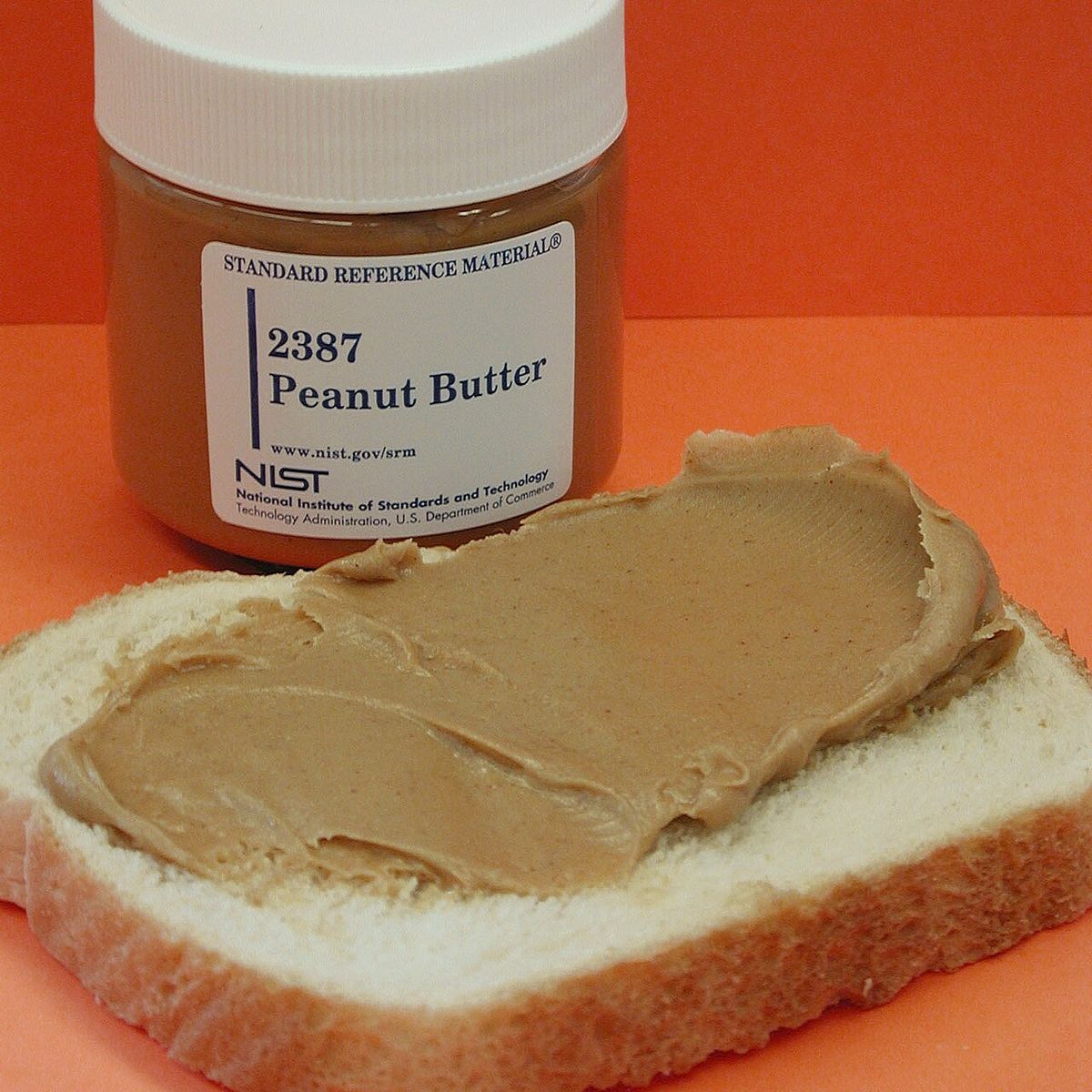
Peanut butter is a calorie-dense, nutrient-rich food with a detailed nutritional profile. A 100-gram amount of smooth peanut butter supplies 597 calories and is composed of 51 percent fat, 22 percent protein, 22 percent carbohydrates including 5 percent dietary fibre, and 1 percent water. The fat profile includes 25 percent saturated and monounsaturated fats, mainly oleic acid, and 12 percent polyunsaturated fat, primarily linoleic acid. It is a rich source, providing 20 percent or more of the Daily Value, of dietary fibre, vitamin E, pantothenic acid, folate, niacin, and vitamin B6. It is also high in content of the dietary minerals manganese, magnesium, phosphorus, zinc, copper, and sodium, the latter added as salt during manufacturing, and is a moderate source, providing 10 to 19 percent of the Daily Value, of thiamin, riboflavin, iron, and potassium.
The primary health concern associated with peanut butter is peanut allergy, which can trigger a range of possible allergic reactions from mild to life-threatening anaphylaxis. Common symptoms include shortness of breath, wheezing, tightening of the throat, itching, skin reactions such as hives and swelling, and digestive problems. Due to the potential severity of these reactions, peanut butter is among common foods sometimes banned in schools. Conversely, early exposure to peanut proteins has been linked to a reduced incidence of allergies, as suggested by research in Israel where consumption of the peanut-butter-flavoured snack Bamba by infants is associated with a low incidence of peanut allergies. For global health, peanut butter's nutritional density makes it a primary component in ready-to-use therapeutic foods like Plumpy'nut, a peanut paste with milk solids approved by the World Health Organisation as a highly successful alternative to refeeding for severe child malnutrition, with a shelf life of two years unrefrigerated.
Culinary and Other Uses
Peanut butter is a versatile ingredient used in both sweet and savoury applications across many cuisines. Its classic use is as a spread on bread, toast, or crackers, most famously in the peanut butter and jelly sandwich, and it is used in a number of breakfast dishes and desserts, such as granola, smoothies, crepes, cookies, brownies, and croissants. Its flavour combines well with other flavours, such as oatmeal, cheese, cured meats, savory sauces, and various breads and crackers, and its creamy or crunchy, fatty, salty taste pairs very well with complementary soft and sweet ingredients like fruit preserves, bananas, apples, chocolate, and honey. The taste can also be enhanced by similarly salty things like bacon, and one common snack for children is called ants on a log, with a celery stick acting as the log, its groove filled with peanut butter and raisins arranged on top representing ants.
Its utility extends beyond human consumption into animal care and humanitarian aid. Peanut butter inside a hollow chew toy is a method to occupy a dog with a flavored treat, and a common outdoor bird feeder is made by coating a pine cone with peanut butter and an overlying layer of bird seed. The most significant humanitarian use is in combating malnutrition through products like Plumpy'nut, a ready-to-use therapeutic food that is a peanut paste with other contents such as milk solids. A single pack contains 500 calories, can be stored unrefrigerated for two years, and requires no cooking or preparation, making it effective in famine-stricken countries. Peanut butter's physical properties as a viscoelastic food that exhibits both solid and fluid behaviours are defined through rheology to understand characteristics like soft texture, spreadability, and grittiness.
- Sandwiches: The peanut butter and jelly sandwich is a common North American lunch item.
- Baking: Used in cookies, brownies, and squares for a rich, nutty flavour.
- Breakfast: Added to oatmeal, smoothies, or spread on toast and pancakes.
- Snacks: The base for ants on a log and a dip for fruits like apples and bananas.
- Savory Cooking: Incorporated into satay sauces, soups, and stews for depth and creaminess.
- Pet Enrichment: Used inside dog toys as a long-lasting, engaging treat.
- Bird Feeding: Applied to pine cones as an adhesive for wild bird seed.
- Therapeutic Food: The primary ingredient in Plumpy'nut for treating severe acute malnutrition.
Consumption Patterns and Cultural Significance
Peanut butter is consumed globally, but its highest per capita consumption is in North America and parts of Europe. The United States is a leading exporter and one of the largest consumers annually per capita, with National Peanut Butter Day celebrated on January 24. Demand can surge during crises, as seen in March 2020 at the onset of the COVID-19 pandemic, when retail sales of peanut butter in the United States increased by 75 percent over the level in March 2019, likely due to pantry stocking. According to Jon Krampner's 2013 book, per capita consumption of peanut butter in Canada and the Netherlands exceeds that of the United States, making the Netherlands the largest consumer per capita in Europe. In Israel, the peanut-butter-flavoured puffcorn snack Bamba accounts for 25 percent of the snack market, and its consumption by infants has been linked to a low incidence of peanut allergies among Israelis.
In Canada, peanut butter is a common household staple, reflecting its status as an affordable, shelf-stable source of protein and its integration into school lunches, baking, and quick snacks. The product's history is also tied to Canada through Marcellus Gilmore Edson's pioneering 1884 patent in Montreal. During the Second World War, American soldiers used the slang term monkey butter for peanut butter. The physical properties of peanut butter, being a viscoelastic food that exhibits both solid and fluid behaviours, are studied in food science rheology to better understand and control its spreadability and texture, which are key to its consumer appeal and application in various recipes and food products.
Economic and Production Statistics
The global peanut butter industry relies on a steady supply of peanuts, with production and trade figures highlighting key players. A 2012 article stated that China and India are the first and second-largest producers of peanuts in the world, respectively, while the United States is the third-largest producer of peanuts. Within the U.S., the states of Georgia and Texas are the two major peanut-producing states, and more than half of the American peanut crop is used to make peanut butter. The manufacturing process is capital-intensive, favouring large-scale continuous roasting methods that reduce the rate of spoilage and require less labour compared to batch methods. The market is dominated by major brands like Jif, launched in 1955, Skippy from 1932, and Peter Pan from 1928 in North America, alongside numerous natural and organic brands catering to niche markets and international brands like South Africa's Black Cat.
China and India are the first and second-largest producers of peanuts in the world. The United States is the third-largest producer of peanuts. More than half of the American peanut crop is used specifically to make peanut butter. The states of Georgia and Texas are the two major peanut-producing regions in the United States.
| Rank | Country | Notes on Peanut Butter Use |
|---|---|---|
| 1 | China | World's largest peanut producer. |
| 2 | India | Second-largest global producer. |
Peanut butter is a grocery staple with stable demand. A related product called Plumpy'nut is a peanut butter-based food purchased in large quantities by aid organizations to fight malnutrition in famine-stricken countries. Powdered peanut butter is a lower-calorie alternate made by pressing roasted peanuts to remove most of the oil. It can be rehydrated with water to form a paste or added directly to smoothies, protein shakes, baking, and cooking.
Questions about Peanut butter
Who invented peanut butter?
While ancient Aztec and Inca civilizations made a paste from ground peanuts, the modern, spreadable peanut butter was patented by Marcellus Gilmore Edson of Montreal, Quebec, in 1884. His process involved milling roasted peanuts into a fluid or semi-fluid state and then cooling the mixture to a butter-like consistency. Other key figures in its early commercialization include George Bayle, who sold it as a snack in St. Louis in 1894, and John Harvey Kellogg, who patented a version using boiled peanuts in 1898 for patients at his sanitarium. Joseph L. Rosefield's 1922 invention of a stabilization process using partially hydrogenated oil was crucial for the modern shelf-stable product and led to the Peter Pan and Skippy brands.
Is peanut butter healthy?
Peanut butter is a nutrient-dense food, providing a good source of plant-based protein, healthy monounsaturated and polyunsaturated fats, dietary fibre, and essential vitamins and minerals like vitamin E, magnesium, phosphorus, and niacin. A 100-gram serving provides 597 calories, 22 grams of protein, and is a rich source of several B vitamins. However, conventional varieties often contain added sugars, salt, and hydrogenated oils, while natural peanut butter with just peanuts and salt offers a purer nutritional profile but requires stirring due to oil separation. For individuals with a peanut allergy, it can cause severe reactions including anaphylaxis and must be avoided.
What is the difference between crunchy and smooth peanut butter?
The primary difference is texture. Smooth or creamy peanut butter is ground uniformly into a fine, spreadable paste, often with added corn syrup and vegetable oil to create a thick, creamy texture. Crunchy or chunky peanut butter includes coarsely-ground peanut fragments mixed into the smooth base to give extra texture. Both types have similar foundational nutritional values, though the presence of larger peanut pieces in chunky varieties may contribute to a slightly different mouthfeel and fibre content.
Why does oil separate in natural peanut butter?
Oil separation occurs in natural peanut butter because it lacks the hydrogenated oils or emulsifiers used in conventional brands to bind the peanut oils with the solid peanut paste. Natural peanut butter normally contains just peanuts and a small amount of salt, sold without these binding emulsifiers. Without stabilizers, the natural peanut oils rise to the top over time due to differences in density, a process known as oil separation. This is a normal physical state and does not indicate spoilage, and the product is restored to a creamy, homogeneous consistency by stirring the oil back in before consumption.
How is peanut butter used to treat malnutrition?
Peanut butter is a core ingredient in ready-to-use therapeutic foods like Plumpy'nut, which is used to treat severe acute malnutrition in children. This peanut-based paste is fortified with milk solids, vitamins, and minerals, providing concentrated calories, with a single pack containing 500 calories. It requires no cooking, refrigeration, or preparation, has a shelf life of two years unrefrigerated, and can be administered directly from the packet. Approved by the World Health Organisation as a highly successful alternative to refeeding, its effectiveness and ease of use have made it a standard in emergency feeding programs in famine-stricken regions worldwide.
Do Canadians eat more peanut butter than Americans?
Yes, per capita consumption of peanut butter in Canada exceeds that of the United States. This fact is reported in Jon Krampner's 2013 book on peanut butter. The Netherlands is noted as the largest consumer per capita in Europe and also exceeds the United States in consumption. The United States remains a leading exporter and one of the largest consumers annually. The data illustrates varying international consumption patterns for this popular food spread.
Sources and further reading
- Peanut butter (Wikipedia)
- 54 Recipes with Peanut Butter (delish.com)
- 25+ Sweet & Savory Ways to Use Peanut Butter (skagitfoodcoop.com)
Checked by the Novello Desserts desk. Last updated 2026-10-19.