Tourtière
Tourtière is a traditional French Canadian meat pie dish, originating from the province of Quebec, that holds a cherished place in the nation's culinary heritage. Typically made with minced or cubed pork, beef, veal, or game meats and often potatoes, it is a hearty, savoury pie encased in pastry. The dish is most famously associated with Christmas and New Year's Eve celebrations in Quebec, but it is enjoyed year-round across Canada and in bordering regions of the United States. Its significance extends beyond a simple meal, representing a deep connection to French Canadian history, regional identity, and family tradition.
Origins and Etymology
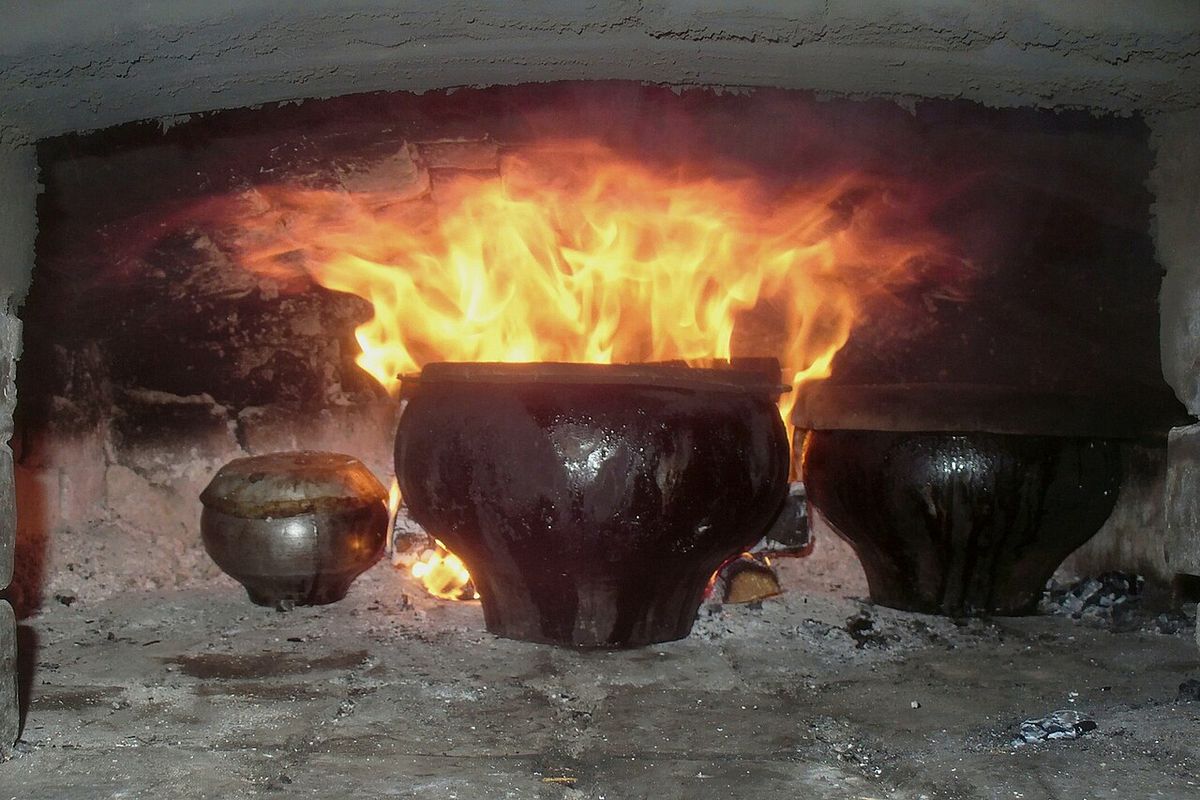
The origins of tourtière are deeply rooted in the culinary traditions of French colonists in Quebec, with influences tracing back to the 18th century. Historical accounts suggest the dish evolved from a British and French colonial dish known as "sea pie," which is considered a direct forerunner of the tourtière of Lac-Saint-Jean. Some food historians have described tourtière as an example of 'the cuisine of the occupied,' reflecting French culinary traditions adapted under British rule after the Conquest of Quebec in 1759. Contrary to a persistent myth, the name tourtière is not derived from the passenger pigeon, known in French as the "tourte." Instead, the term comes from the tourtière, the deep-sided earthenware or metal dish in which the pie was traditionally baked. This metonymy, where the name of the cooking vessel transferred to the food itself, is similar to the etymology of the word "casserole." Dishes bearing the name tourtière have been documented in certain regions of France since the 17th century, further supporting this linguistic origin.
Regional Variations Across Canada
There is no single definitive recipe for tourtière, as the dish has evolved into distinct regional styles across Canada, each with its own character. The primary variations are defined by the type of meat used, the preparation of the filling, and the specific blend of spices. These differences reflect local ingredients and historical culinary practices, creating a diverse range of meat pies united under one name. The most notable regional styles originate from Quebec, Acadia, and the Francophone communities of Manitoba. The tourtière of Montreal is typically made with finely ground pork, which is browned before water and spices are added, and this version is known for its distinctive spicing, often featuring cinnamon and cloves, and is commonly served with ketchup, maple syrup, or cranberry preserves. In the Saguenay-Lac-Saint-Jean region and Eastern Quebec, the tourtière is a distinctly different dish known as Tourtière du Lac-Saint-Jean or tourtière saguenéenne, which is a slow-cooked, deep-dish pie made with cubed meats such as pork, beef, and sometimes wild game or duck confit, combined with cubed potatoes. This version is baked for up to eight hours until the ingredients meld into a stew-like consistency, and within the Saguenay-Lac-Saint-Jean area itself, the ground meat version is usually called "pâté à la viande," reserving the name "tourtière" exclusively for their local cubed-meat specialty. In Acadian regions of New Brunswick, Nova Scotia, and Prince Edward Island, the dish is often called pâté à la viande and varies from community to community, with the Acadian version frequently being a pork pie that may also include chicken, hare, or beef, and in areas like Petit-Rocher and Campbellton, New Brunswick, it is prepared in small individual pie plates and known as "petits cochons" or little pigs. For French Canadians in Manitoba, particularly in Winnipeg neighbourhoods like St. Boniface and in rural areas, tourtière is a holiday staple seasoned with combinations of savoury, nutmeg, cloves, cinnamon, celery salt, dry mustard, salt, and pepper.
Traditional Preparation and Key Ingredients
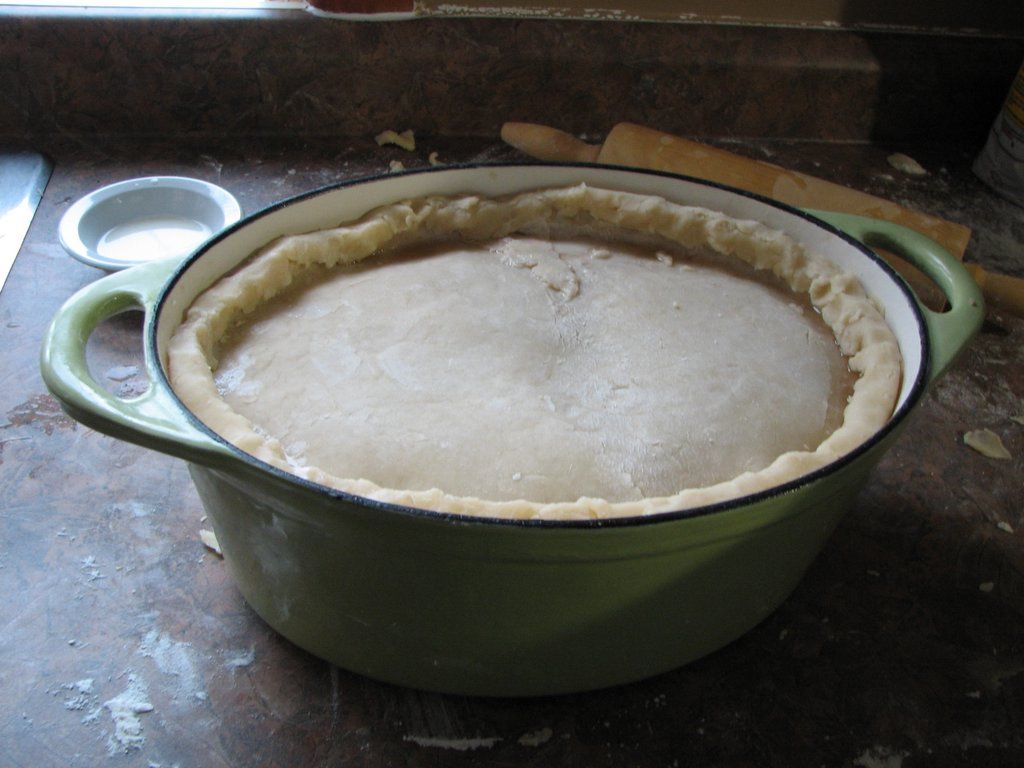
The core of a tourtière is a savoury filling encased in a flaky pastry crust, though the methods for achieving this result vary widely. The choice of meat is historically guided by regional availability, with pork, beef, and veal being common, while coastal versions might use fish like salmon, and inland areas often incorporate rabbit or wild game such as venison. Potatoes are a frequent addition, either mashed into a ground meat filling or cubed and layered with cubed meats in the Lac-Saint-Jean style. The spicing is what gives tourtière its signature warmth and complexity, with common spices including ground cloves, cinnamon, nutmeg, allspice, and savoury. Some recipes incorporate salted herbs, a traditional Quebec blend of fresh parsley, chives, and celery leaves preserved with salt. The preparation of the Lac-Saint-Jean style is a marathon of patience and technique, distinct from the more common hour-long bake. The cubed meats and potatoes are combined raw in a very deep, sturdy pot like a cast iron Dutch oven, covered with broth, and sealed with a pastry lid. It is first baked at a high temperature to set the bottom crust, then the heat is reduced significantly for a long, slow cook that can last eight hours or more. This extended cooking time allows the meats to become exceptionally tender and the flavours to deepen. For ground meat tourtières, the process involves browning the meat with onions, adding spices and liquid such as broth or water, and simmering before the filling is cooled and placed into a standard pie crust. Many home cooks advocate preparing the filling and pastry a day in advance, allowing the flavours to develop and simplifying the final assembly and baking on the day of serving.
- The meat for Lac-Saint-Jean tourtière is cubed, not ground, and can include pork shoulder, beef roast, and duck confit.
- Nothing is browned first in the Lac-Saint-Jean method. All ingredients go into the pot raw.
- The dish requires a specific baking sequence: one hour at 400°F (200°C), then three hours at 325°F (160°C), then two and a half hours at 300°F (150°C), and a final hour and a half uncovered.
- A total cooking time of eight hours is standard for an authentic Lac-Saint-Jean tourtière.
- The pot must be very sturdy, such as a cast iron Dutch oven. A disposable aluminum pan will fail under the weight.
- Broth is added only once, to a level about half an inch under the meat, and is never replenished during baking.
Cultural Significance and Holiday Traditions
Tourtière is far more than a simple meat pie. It is a culinary emblem of French Canadian culture and a centrepiece of holiday gatherings. Its strongest association is with the Christmas réveillon, the traditional feast held after Midnight Mass on Christmas Eve in Quebec, and it is also a common feature of New Year's Eve celebrations. Serving tourtière during these times is a deeply rooted tradition that connects families to their heritage and to generations past, and the dish's presence on the holiday table signifies celebration, abundance, and communal sharing. While it is a special occasion food for many, tourtière is also sold in grocery stores across Canada throughout the year, making it accessible for everyday meals. The dish's popularity has spread well beyond Quebec, carried by French Canadian migrants to other provinces and into the New England states of the US, where it remains a part of the cultural fabric in areas with historic Quebecois communities.
- The dish became the traditional dish of the Saguenay region of Quebec since the Second World War.
- In the late 19th and early 20th century, immigrants from Quebec introduced tourtière to the New England states.
- It is popular in the US states of Maine, Rhode Island, Vermont, New Hampshire, and Massachusetts.
- In Manitoba, it is an integral part of holiday meals in the Winnipeg neighbourhoods of St. Boniface and St. Norbert.
- The tourtière of Lac-Saint-Jean has undergone several metamorphoses in its development.
Serving and Accompaniments
Tourtière is traditionally served in slices, either warm or at room temperature, and is almost always accompanied by condiments that provide a tangy or sweet contrast to the rich, spiced meat. The choice of accompaniment can be as regional as the pie itself, and in Quebec, it is common to serve tourtière with homemade fruit ketchup, pickled beets, or bread-and-butter pickles. Some enjoy it with a drizzle of maple syrup or molasses, or with cranberry preserves, and ketchup is also a popular and simple condiment. These acidic or sweet elements are intended to cut through the fat and richness of the pie, and side dishes are typically kept simple and are not meant to compete with the main event. A classic pairing in some households is a serving of small, sweet canned peas, and the pie is substantial enough to often be considered a complete meal on its own, especially during festive holiday spreads.
Modern Adaptations and Home Cooking
In contemporary Canadian kitchens, the tourtière remains a beloved project for home cooks, especially during the holiday season. While purists adhere to traditional family recipes, many modern adaptations have emerged to suit different tastes and time constraints. Common variations include adding a small amount of tomato product or breadcrumbs to a ground meat filling to enhance moisture, or incorporating cheeses like sharp cheddar directly into the pastry dough for extra flavour. The type of pastry used can also vary, with some recipes favouring a sour cream-enriched dough for tenderness. For those short on time, store-bought pie crust is a widely accepted shortcut. The dish is also highly adaptable for make-ahead preparation. Cooked tourtière keeps well in the refrigerator for three to five days and freezes beautifully for up to three months, often tasting even better when reheated as the flavours continue to meld. Common modern recipe adjustments and tips include the following list, drawn from contemporary cooking notes.
- Adding chopped canned tomatoes and their juice to the meat filling for moisture and flavour.
- Using breadcrumbs in the filling to absorb excess liquid and keep it moist but not runny.
- Making a pastry dough with sour cream and an egg yolk as the liquid binder, sometimes with grated Cheddar cheese mixed in.
- Preparing the meat filling and pastry dough a full day ahead of assembly to simplify the process.
- Reheating a baked tourtière gently at 350°F (180°C), avoiding a hot and fast method.
- For a creamier texture in a Lac-Saint-Jean tourtière, baking it a day before, refrigerating it overnight, and reheating it for 1 to 2 hours at 325°F (160°C) before serving.
- Substituting a mix of fresh parsley, chives, and celery leaves with salt for store-bought Quebec salted herbs if unavailable.
- Allowing the meat mixture to marinate in the refrigerator for 6 to 12 hours before baking for deeper flavour, though this is considered a bonus, not a requirement.
Comparison of Key Tourtière Styles
Tourtière has several major regional styles that differ in ingredients, preparation, and cooking methods. The Montreal style is made with finely ground pork only, and water is added to the meat after browning. It is seasoned with cinnamon and cloves for a distinctive flavour. This version is commonly found throughout Canada and its surrounding areas, though it is less popular than other styles. The Lac-Saint-Jean style is a slow-cooked deep-dish meat pie made with potatoes and various meats cut into small cubes. In the Saguenay-Lac-Saint-Jean area, the name 'tourtière' is reserved exclusively for this local variety.
| Characteristic | Montreal / Common Tourtière | Tourtière du Lac-Saint-Jean |
|---|---|---|
| Meat Preparation | Finely ground pork, sometimes with beef or veal | Cubed pork, beef, and often game or duck confit |
| Potatoes | Often mashed and mixed into the filling | Cubed and layered with raw cubed meat |
| Pre-cooking | Meat is browned on the stovetop before baking | All ingredients are combined raw in the pot |
| Cooking Vessel | Standard pie plate or shallow baking dish | Very deep, sturdy pot like a cast iron Dutch oven |
| Pastry | Top and bottom crust in a pie plate | Often a single pastry lid sealing a deep pot |
| Liquid Added | Water or broth added during stovetop simmering | Broth added once to cover ingredients partially |
| Total Baking Time | Approximately 45 minutes to 1 hour | Approximately 8 hours with staged temperature drops |
| Final Texture | Firm, sliceable ground meat pie | Stew-like, with meat falling apart in its juices |
Questions about Tourtière
What is tourtière?
Tourtière is a traditional French Canadian meat pie originating from Quebec. It consists of a savoury filling of minced or cubed meat, often pork, beef, or veal, and usually potatoes, baked inside a flaky pastry crust. It is famously associated with Christmas and New Year's Eve celebrations but is enjoyed year-round across Canada. The dish is known for its warm spicing, commonly including cloves, cinnamon, and nutmeg.
Why is tourtière eaten at Christmas?
Tourtière is a traditional centrepiece of the Christmas réveillon, the festive meal held after Midnight Mass on Christmas Eve in Quebec. Serving it during the holidays is a deep-seated cultural tradition that connects French Canadian families to their heritage. It symbolizes celebration, family gathering, and culinary tradition. While strongly linked to Christmas, it is also popular for New Year's Eve and is available commercially throughout the year.
What is the difference between regular tourtière and Tourtière du Lac-Saint-Jean?
The key difference lies in the meat preparation and cooking time. A regular Quebec tourtière, common in Montreal, uses finely ground meat, is seasoned, and bakes in about an hour in a standard pie plate. Tourtière du Lac-Saint-Jean from the Saguenay region uses cubed meats and cubed potatoes layered raw in a deep pot, sealed with pastry, and slow-baked for up to eight hours. This results in a stew-like, deep-dish pie, whereas the ground meat version is more like a conventional meat pie.
What is traditionally served with tourtière?
Tourtière is traditionally served with condiments that provide a tangy or sweet contrast to its rich flavour. Common accompaniments include homemade fruit ketchup, pickled beets, bread-and-butter pickles, cranberry preserves, or a simple drizzle of maple syrup or ketchup. These are meant to cut through the fat. Simple side dishes like small, sweet canned peas are also a classic pairing in some households.
Can you freeze tourtière?
Yes, tourtière freezes very well, making it an excellent make-ahead dish. It is recommended to freeze it in cooked portions. Properly stored, it will keep in the freezer for up to three months without trouble. To serve, reheat it gently in an oven at approximately 350 degrees Fahrenheit (180 degrees Celsius). Many cooks find the flavour improves after freezing and reheating, as the ingredients have more time to meld.
What meats can be used in a tourtière?
The meat in a tourtière varies by region and availability. The most common meats are pork, beef, and veal. In the Lac-Saint-Jean style, cubed pork shoulder, beef roast, and duck confit are typical. Game meats such as venison, wild boar, rabbit, or goose are also traditional, especially in regions where hunting is common. Historically, the now-extinct passenger pigeon was not the source of the dish's name, despite a common myth.
Sources and further reading
- Tourtière (Wikipedia)
- Tourtiere Recipe, French Canadian Meat and Potato Pie (lecoupdegrace.ca)
- French Canadian Tourtière (bluejeanchef.com)
- Tourtiere: Traditional Canadian Meat Pie (simplywhisked.com)
Checked by the Novello Desserts desk. Last updated 2026-10-29.