Ceinture fléchée
The ceinture fléchée, or arrow sash, is a traditional finger-woven woollen sash distinguished by its colourful zigzag and arrowhead patterns. Originating in the late 18th century among French Canadian habitants and voyageurs, it served vital utilitarian purposes such as fastening winter coats, providing back support, and aiding in the fur trade. The sash evolved into a powerful symbol of cultural identity and resistance, notably during the Lower Canada Rebellion, and was later adopted as a key part of national regalia by Métis communities. Today, it remains a prominent emblem at winter festivals like the Quebec Winter Carnival and Manitoba's Festival du Voyageur, representing the shared and distinct heritages of Québécois and Métis peoples across Canada.
Historical origins and development
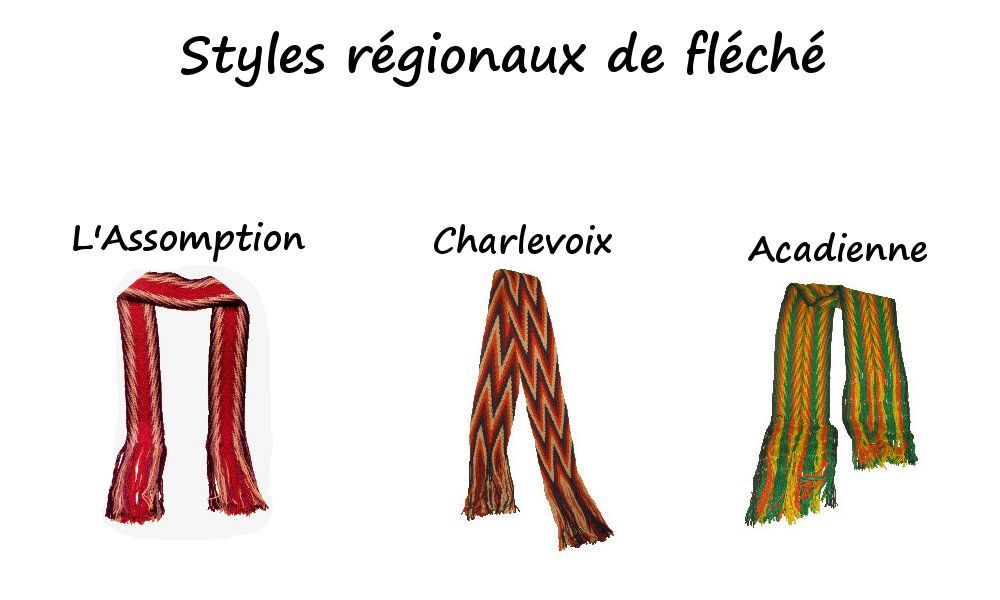
The ceinture fléchée first appears in historical records from the 1770s in Lower Canada, where it was worn by habitants as a practical and fashionable winter garment. British visitor Thomas Anbury noted its presence in 1776, referring to it as a coloured sash, while German mercenaries and the wife of Major-General Frederick Riedesel documented its use in 1777. By 1798, the term 'cinture à flesche' was used in a voyageur's inventory, solidifying its name. The sash's production became a domestic industry, particularly in the parish of L'Assomption from the 1780s onward, where weavers used imported English worsted wool. The design evolved significantly, with a standard pattern featuring a central red band and barbed arrow-like edges emerging around 1835, leading to these sashes being recorded in Hudson's Bay Company ledgers as 'l'Assomption' sashes. This period of innovation and standardization was crucial in transforming the sash from a simple garment into a recognizable cultural artifact.
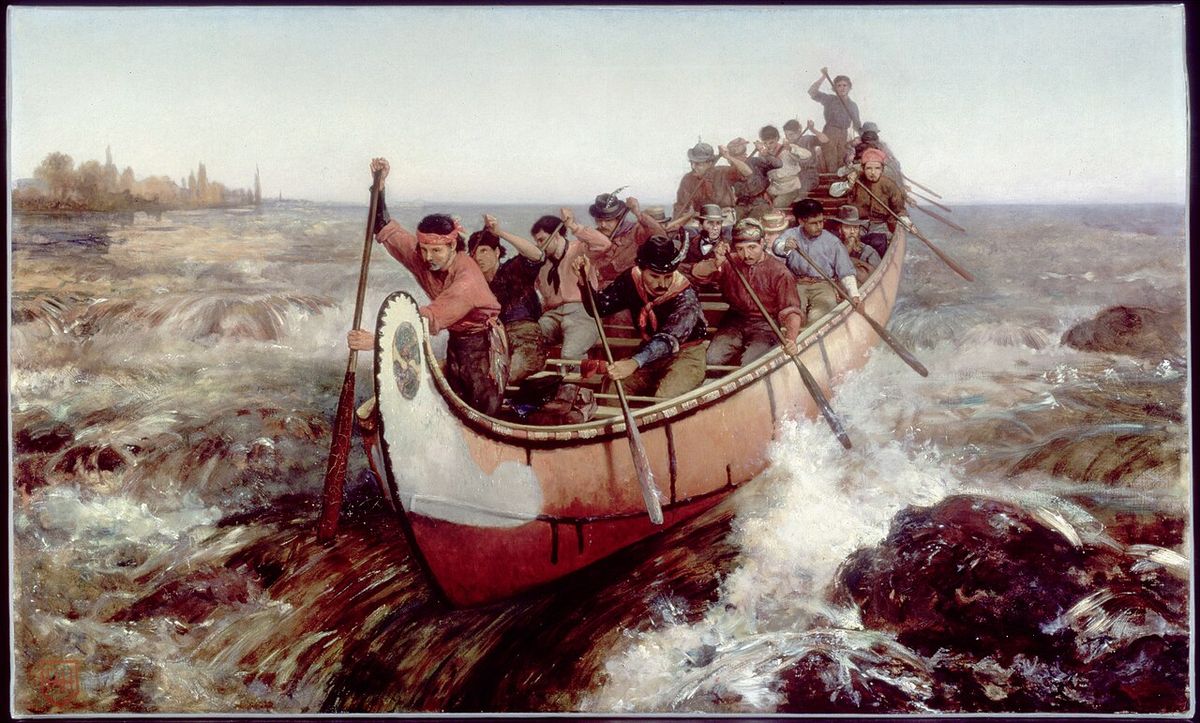
The fur trade was instrumental in spreading the ceinture fléchée across North America. Voyageurs working for the North West Company and later the Hudson's Bay Company wore their sashes westward, where they attracted the attention of Indigenous trading partners. To meet this new demand, fur trade companies commissioned sashes woven in Montreal and also began importing loom-woven versions from England, especially after the 1821 merger of the two major companies. This commercial distribution introduced the sash to First Nations and Métis communities, who incorporated it into their own material culture. While French Canadian artisans continued hand-weaving, the cheaper, mass-produced English versions became more common in the Old Northwest, creating a complex legacy of authentic and trade sashes. The decline of the fur trade after 1870 and the advice of parish priest Tancrède Viger, who criticized the low pay for weavers, led to a slowdown in traditional production, though knowledge of the craft was preserved by a dedicated few.
Utilitarian uses and construction
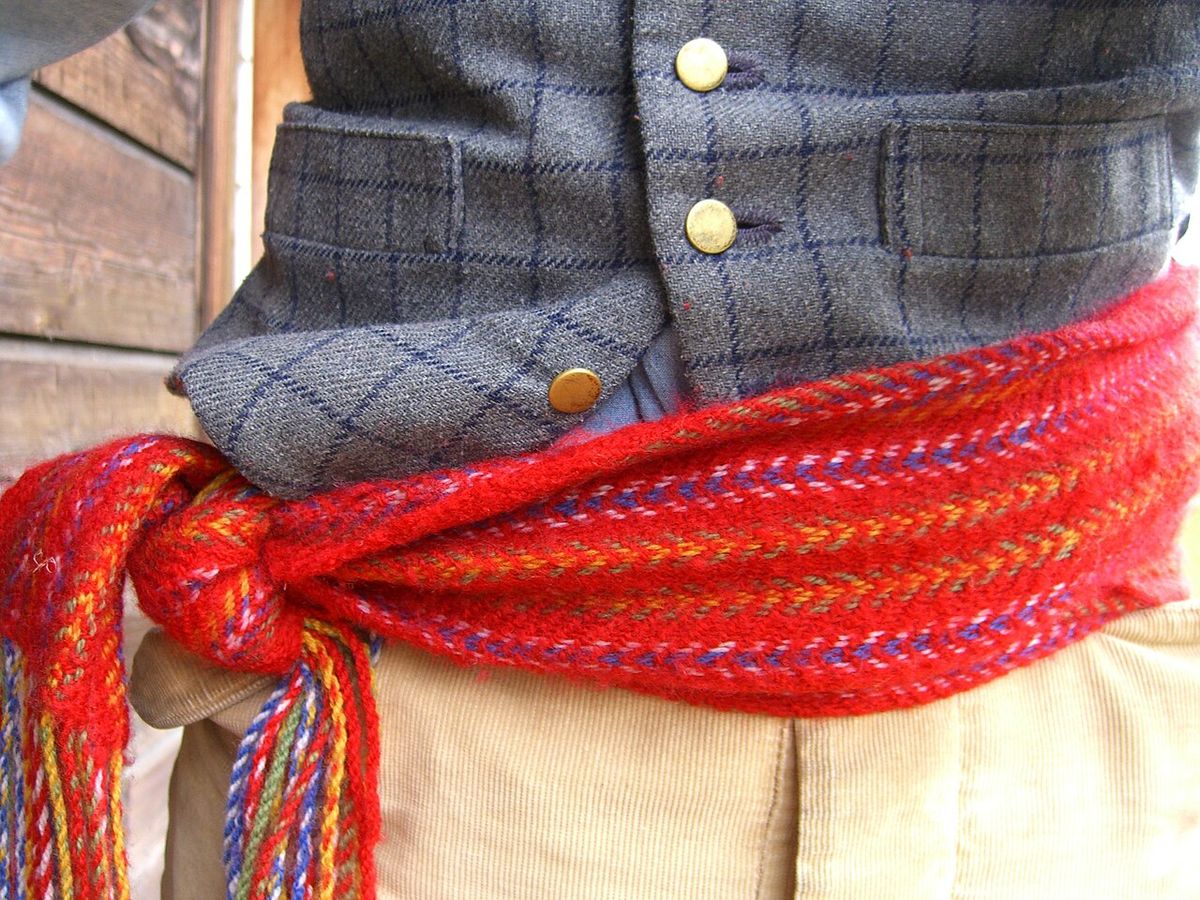
The ceinture fléchée was a multifunctional tool essential for survival and work in 18th and 19th century Canada. Its primary use was to secure the long winter coat, or capote, tightly at the waist to retain body heat during harsh winters. For voyageurs and labourers, the wide sash provided crucial lumbar support, helping to prevent back injuries and hernias during strenuous activities like paddling and portaging heavy loads. Beyond this, the sash served as a bandana, a makeshift harness, a tow rope, a tourniquet, and even as a source of thread for repairs, as the long fringes could be unravelled for mending. Its versatility made it an indispensable part of the everyday kit for French Canadian workers and fur trade employees, embodying a practical ingenuity born of necessity.
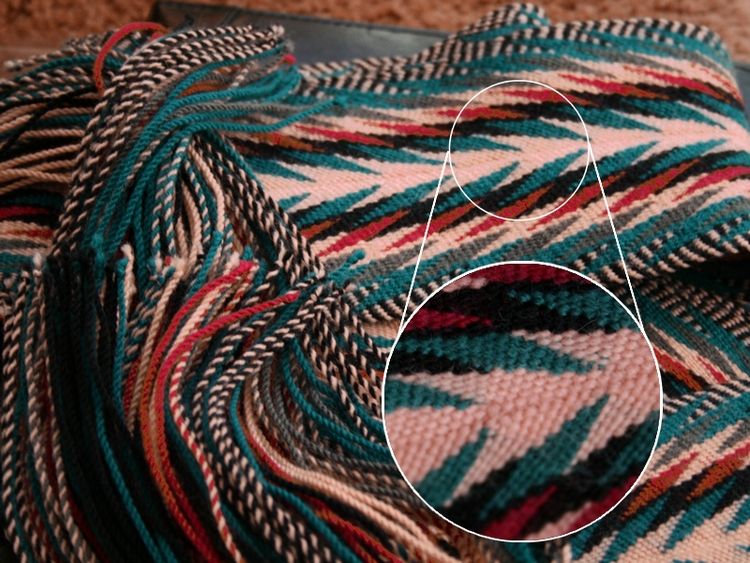
The creation of a traditional ceinture fléchée is a meticulous process of finger weaving, a technique that does not involve a loom. A weaver begins by selecting and measuring long woollen threads, ensuring there is enough length to wrap twice around the wearer's waist plus extra for the fringes. The threads are then organized and woven by hand to create the signature patterns, which include zigzags representing lightning bolts, lozenges symbolizing flames, and the central arrowhead motifs. The final step involves finishing the ends with twists or braids to form the decorative and functional fringes. Mastery of this craft was historically considered a rite of passage, with skilled weavers developing a hard callus on the fingertip, known as a 'needle finger', acknowledged as a mark of expertise and dedication by family matriarchs.
Symbolism and cultural significance
The ceinture fléchée transcends its practical origins to occupy a major symbolic space in Canadian history. For Québécois, it became an emblem of cultural pride and national identity. The sash was used to fasten homemade capotes, making it a visual identifier of resistance and a key part of the rebel uniform. This association was immortalized in art, such as Henri Julien's painting Le Vieux de '37 . The sash also represents prestige and social status from its earliest days, as its elaborate, colourful design was a deliberate choice over plainer, cheaper alternatives, signalling distinction within the community.
For Métis communities, the adoption of the sash is a core component of their national regalia and a symbol of their distinct identity born from the fur trade. The sash signifies their kinship networks and shared history with French Canadian voyageurs and Indigenous nations. In contemporary times, the ceinture fléchée serves as a public symbol of Franco-Canadian and Métis culture at major festivals. It is famously worn by Bonhomme Carnaval, the mascot of the Quebec Winter Carnival, and is a common sight at Manitoba's Festival du Voyageur and Alberta's Flying Canoë Volant festival. These events use the sash to celebrate heritage, fostering a living connection to the past for participants and spectators alike. The sash is featured in other artistic creations, including the painting L'Assemblée des six-comtés by Charles Alexander Smith and the music of the band Les Cowboys Fringants.
- An emblem of Québécois national identity and cultural pride.
- A key component of traditional Métis national regalia.
- A symbol of social status and prestige in historical French Canadian society.
- A central icon at winter cultural festivals across Canada.
- Featured in significant artworks like Le Vieux de '37 and L'Assemblée des six-comtés.
Communities of origin and debate
The origins of the ceinture fléchée are a subject of respectful debate among three communities, each with a strong claim to its heritage. French Canadians, or Québécois, point to extensive historical documentation from the 1770s showing its use by habitants and voyageurs in Lower Canada. Scholars like Dorothy K. Burnham argue the technique resulted from a syncretism of French and Indigenous finger-weaving methods, using European wool. The development of a dedicated weaving industry in L'Assomption by the 1780s further anchors its place in Québécois material culture. The sash's functional role in their daily and economic life is well-established in travelogues, inventories, and art from the period.
First Nations communities, particularly the Haudenosaunee, Huron-Wendat, and Anishinaabe, have long traditions of finger weaving and incorporated glass beads and other materials into their sash designs. They acquired ceintures fléchées through trade with French Canadian voyageurs and fur companies, adopting and adapting them as prestige items. The Métis, as children of the fur trade, uniquely claim the sash as a birthright, integrating it into their distinctive national dress as a symbol of their mixed heritage. Museums have sometimes complicated this history by categorizing sashes solely as Indigenous artifacts, but contemporary understanding acknowledges the shared yet distinct pathways through which these communities have made the sash their own. This origin story involves multiple perspectives, reflecting the sash's role in the interconnected histories of French Canadian, First Nations, and Métis peoples.
Modern revival and preservation
This resurgence has been sustained by dedicated artisans, cultural organizations, and educational programs that teach the techniques to new generations. Contemporary weavers like Julie Allard, a Métis artisan, exemplify this revival by not only creating sashes but also actively teaching the craft in workshops, such as those offered at the Union nationale métisse Saint-Joseph du Manitoba in early 2026. Allard's work, which connects her to her ancestry, highlights the personal and cultural healing embedded in relearning and practising this tradition. She has made about fifty sashes over five years and teaches in schools like École Lagimodière to ensure the skill is passed on.
Educational resources have been crucial for standardizing and spreading knowledge of finger weaving. Key publications that support the preservation and teaching of the craft include several important manuals and historical studies. These efforts ensure the ceinture fléchée remains a living craft rather than a museum relic. Its continued prominence at cultural festivals and in the work of individual artisans guarantees its stories, techniques, and symbolic power are passed on, allowing Canadians to engage with a tangible piece of their collective history.
- Fingerweaving Untangled (2008) by Carol James, an illustrated beginner's guide.
- A Manual of Fingerweaving (2000) by Robert J. Austin, a detailed instructional text.
- Fingerwoven Sashes: Basic Techniques (2019) by Gerald Lee Findley.
- Le fléché : l'art du tissage au doigt (1973) by Françoise Bourret and Lucie Lavigne.
- Une jolie cinture à flesche (2003) by Monique Genest Leblanc, a major historical study.
- The Comfortable Art: Spinning and Weaving in Canada (1981) by Dorothy K. Burnham.
The sash in material culture and museums
Ceintures fléchées are held in the collections of numerous major North American museums, where they are studied as important artifacts of material culture. These institutions include the McCord Museum and the Canadian Museum of History in Canada, as well as the Smithsonian Institution, the University of Pennsylvania Museum of Archaeology and Anthropology, and the Peabody Museum of Archaeology and Ethnology at Harvard in the United States. The way these sashes have been catalogued reveals the historical complexity of their origins, with some early museum classifications listing them broadly as 'Indian' or 'Iroquois' artifacts, which contributed to ongoing debates about their creation. Modern curatorial practice now seeks to represent the different narratives of the sash, acknowledging its significance to French Canadian, Métis, and First Nations communities.
The physical characteristics of museum specimens provide concrete evidence of the sash's evolution. Early examples demonstrate a variety of patterns before the standardization of the L'Assomption design around 1835. Some historic sashes in collections are made from materials like silk thread, indicating their value as prestige items. The typical dimensions of a traditional sash are substantial, with a width of 15 to 25 centimetres and a length often exceeding two metres, necessary for its functional uses. The preservation of these artifacts allows researchers to analyse weaving techniques, dye compositions, and wear patterns, offering insights into the daily lives, trade networks, and artistic expressions of the people who made and wore them.
Questions about Ceinture fléchée
What is a ceinture fléchée and what was it used for?
The ceinture fléchée is a traditional finger-woven woollen sash originating from French Canadian communities in the 18th century. It served multiple practical purposes, primarily as a belt to fasten winter coats shut for warmth. Voyageurs and labourers also used it for back support to prevent injury, as a bandana, tow rope, harness, tourniquet, and even as a source of thread for mending clothes from its long fringes. Its versatility made it an essential piece of gear for survival and work in colonial Canada.
Why is the ceinture fléchée important to Métis people?
The ceinture fléchée is a vital symbol of Métis national identity and regalia. Métis communities, descended from First Nations and European fur trade families, adopted the sash through their connections with French Canadian voyageurs. It represents their unique heritage and kinship ties. Wearing the sash is a powerful statement of Métis pride and cultural continuity, and it is prominently featured at cultural gatherings and celebrations like the Festival du Voyageur in Manitoba.
How is a traditional ceinture fléchée made?
A traditional ceinture fléchée is made using a finger-weaving technique, which does not require a loom. The weaver selects long woollen threads, often imported worsted wool historically, and weaves them by hand to create the complex patterns of zigzags, lozenges, and arrowheads. The process ends with creating braided or twisted fringes at each end. Mastering this craft is time-intensive, taking approximately 30 hours per sash, and was historically considered a rite of passage, with skilled weavers developing a callused 'needle finger'.
Where did the ceinture fléchée originate?
The earliest documented use of the ceinture fléchée dates to the 1770s among French Canadian habitants in Lower Canada (modern Quebec). Historical accounts from British visitors and German mercenaries from that period describe the coloured sash. A domestic weaving industry developed in the L'Assomption region by the 1780s. While its creation involved a blend of French and Indigenous finger-weaving techniques, the sash as a distinct cultural artifact is firmly rooted in early Québécois society before being disseminated westward by the fur trade and adopted by other cultures.
Where can you see ceintures fléchées today?
Ceintures fléchées are visible today in several key contexts. They are worn during winter cultural festivals across Canada, most notably by Bonhomme Carnaval at the Quebec Winter Carnival and by participants at Manitoba's Festival du Voyageur. Original historic sashes are held in museum collections, such as those at the Canadian Museum of History and the McCord Museum. Contemporary artisans like Julie Allard demonstrate and teach the weaving craft at workshops and cultural events, keeping the tradition alive for the public.
What is the connection between the ceinture fléchée and the Lower Canada Rebellion?
The ceinture fléchée became an important part of the Lower Canada Rebellion uniform and a symbol of resistance. During the rebellion, Québécois people boycotted British products to resist English Canada dominance. Because buttons and button up coats were typically British produced, the rebels commonly sewed their own clothes and wore the sash to keep their coats, called capotes, closed. This practical use solidified its role as a patriotic emblem. The belt is represented in artistic creations like the illustration Le Vieux de '37 by Henri Julien, cementing its historical connection to this period of political struggle.
Sources and further reading
- Ceinture fléchée (Wikipedia)
- Ceinture fléchée | l'Encyclopédie Canadienne (thecanadianencyclopedia.ca)
- Ceinture Fléchée | Teachers' Zone (historymuseum.ca)
- Tisser sa propre ceinture fléchée « pour renouer avec ses ... (ici.radio-canada.ca)
- La ceinture fléchée (shsb.mb.ca)
Checked by the Novello Desserts desk. Last updated 2026-10-30.