Qiviut
Qiviut is the exceptionally soft, warm underwool of the muskox, an Arctic mammal native to Canada's northern territories. This rare fibre, whose name derives from the Inuit language, has been used by Indigenous peoples for generations for its insulating properties. Today, qiviut is celebrated as a luxury natural fibre, forming the basis of a unique cottage industry that provides economic opportunity in the North. Its production, deeply connected to Inuit culture and sustainable practices, represents a blend of ancient tradition and modern entrepreneurship.
Properties and Characteristics
Qiviut is renowned for its unique combination of strength, softness, and exceptional warmth. The fibres, which are produced by the muskox's secondary hair follicles, have an average diameter of about 17 to 18 micrometres, making them finer than most cashmere. This fineness contributes to a luxurious hand feel that is often described as softer than cashmere wool. A key functional characteristic is its remarkable insulating capacity. Qiviut is estimated to be approximately eight times warmer than sheep's wool by weight, yet it is remarkably lightweight, making it ideal for garments designed for extreme cold.
The physical structure of qiviut differs significantly from sheep's wool. Unlike wool, qiviut fibres lack the microscopic barbs that cause felting and shrinkage, which means qiviut garments will not shrink in water at any temperature and cannot be felted. This contributes to their durability and ease of care, and the fibre also contains no lanolin or other oils, having only about seven percent oils compared to greasy wool. This absence of oils, combined with its smooth structure, means that some individuals who are allergic to sheep's wool may not experience allergies to qiviut, and with proper care, high-quality qiviut knitwear can last for over twenty years, maintaining its softness and shape.
Natural Source and Harvesting
Qiviut is the inner wool of the muskox. The muskox has a two-layered coat, and qiviut refers specifically to the soft underwool beneath the longer outer wool. The muskox sheds this layer of wool each spring. During the moult, the qiviut will loosen from the animal's skin and pull away slightly, creating a 'spectacled' look around the eyes and becoming visible all over the body.
Qiviut is plucked from the coat of the muskox during the moult or gathered from objects the animals have brushed against. At research stations, a modified bison crush is used to hold the muskoxen, and the pelt is combed out using a long-toothed comb. This method yields a single large sheet of qiviut with very few guard hairs. Qiviut gathered from the ground or bushes is of lower quality and requires more cleaning, and much commercially available qiviut comes from the pelts of muskoxen after hunts.
Muskoxen live at very low densities in the Arctic tundra, making collecting qiviut from the land virtually impossible. The protein-based fibre degrades quickly under the intense 24-hour sunlight from May to August, becoming bleached and brittle. This makes the harvest from managed herds or from hunted pelts the most viable sources for quality fibre. Nunavut Qiviut's source of fibre is the hides of wild-harvested muskox used for meat and fur by Inuit.
Processing and Production
After the fleece is removed, it is cleaned by hand, removing vegetation and other foreign matter. The next stage is dehairing, which is the removal of intermediate hairs greater than 30 micrometres in diameter. Dehairing is accomplished by carding as one would cashmere. Mechanical carding can cause breakage and roughen the qiviut, and dehairing is more laborious for fibre shaved from pelts. After dehairing, the qiviut is spun into yarn.
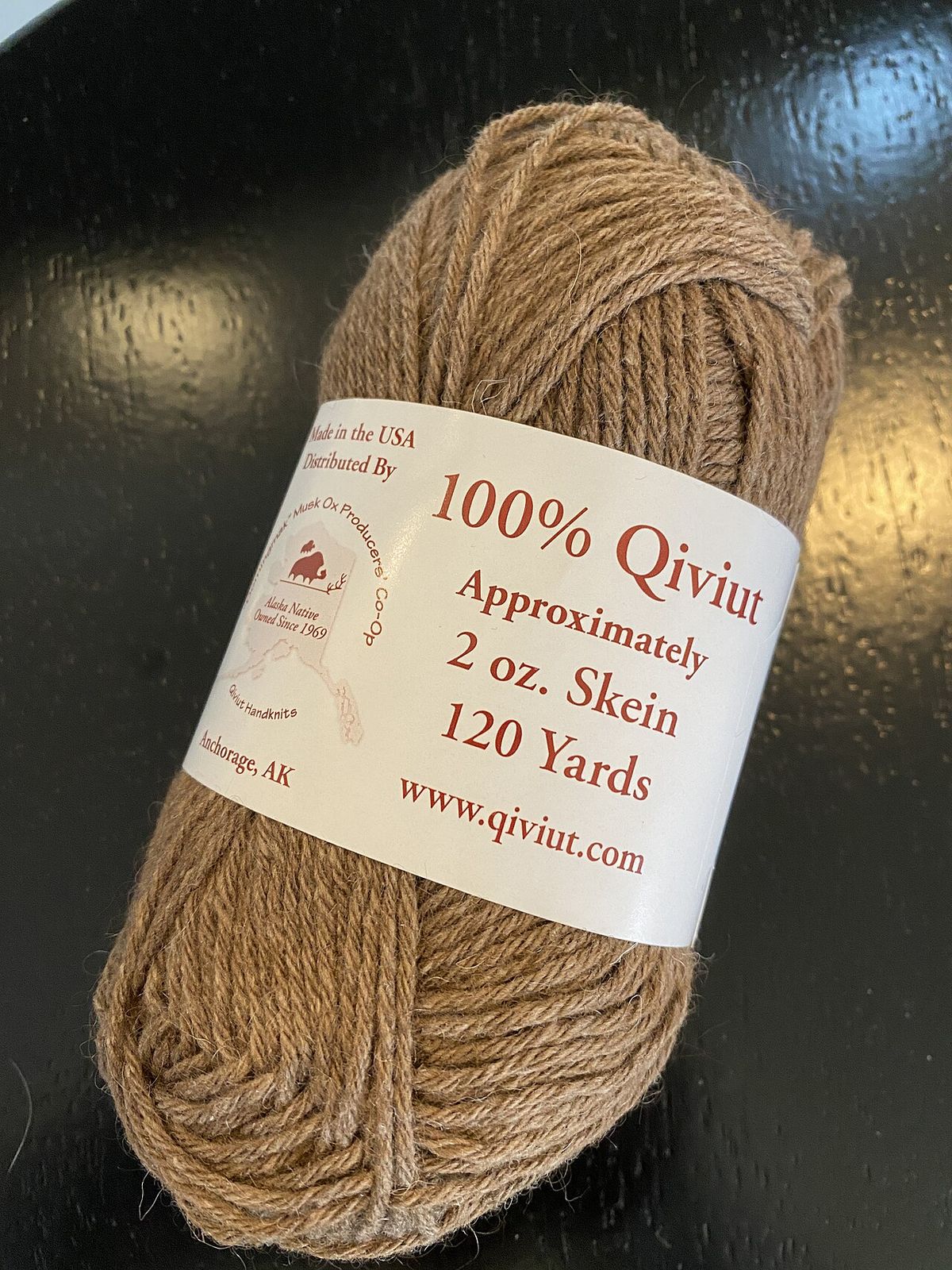
Natural qiviut is soft greyish brown in color, but it takes dye well. Bleaching weakens the fibre, so many spinners and knitters recommend using only overdyed natural qiviut. The yarn can be used in its pure form or blended with other fibres like superfine merino and silk. An adult muskox can produce 1.8 to 3.2 kg of qiviut a year. As of 2016, raw qiviut fibre was sold at $1.2 per gram, approximately twice the price of cashmere.
History and Domestication Efforts
Muskoxen were hunted to extinction in Alaska by the end of the 1800s. In 1917, an international agreement to protect them was launched when only a few hundred remained in Greenland and Canada. In 1930, the U.S. Fish and Wildlife Service brought 34 muskoxen from Greenland to Fairbanks. Five years later, the surviving animals were released on Nunivak Island, where they thrived.
John J. Teal, Jr. began domesticating muskoxen in 1954. He started with the Musk Ox Project in Fairbanks, Alaska, which is now the Large Animal Research Station. Teal aimed to create a fibre industry in the Arctic for Indigenous people. The Oomingmak Musk Ox Producer's Cooperative was formed in the late 1960s by Indigenous women on Nunivak Island with Teal's help and is still in operation today, owned by approximately 200 native Alaskans.
Key milestones in qiviut production include: 1930: 34 muskoxen reintroduced to Alaska from Greenland. 1954: John J. Teal Jr. begins domestication efforts, marking the start of the modern qiviut industry. Late 1960s: Oomingmak Musk Ox Producer's Cooperative is formed in Alaska. 2019: Qiviut Inc., a 100% Inuvialuit-owned business, is founded in Canada.
The Modern Qiviut Industry in Canada
Qiviut Inc. is a 100% Inuvialuit-owned small business in Nisku, Alberta, run by Tanis Simpson. It was founded in 2019 by Tanis Simpson and her brother, Bradley Carpenter, from Sachs Harbour, Northwest Territories. Bradley was inspired after noticing muskox hides from Banks Island being set aside for export. He asked why Inuit were not processing the valuable qiviut themselves.
Qiviut Inc. began operations after purchasing vintage fibre mill machines from Alaska. Tanis Simpson leads the business, joined by mill manager Robby Inuktalik from Ulukhaktok, NWT. The company manufactures high-quality qiviut yarns, knitwear, and hand warmers. It also runs Arctic Indulgence, a boutique featuring Indigenous-made jewelry and artwork.
Nunavut Qiviut sources its fibre from the hides of wild-harvested muskox used for meat and fur by Inuit. This is a main source of qiviut in the world. Nunavut Qiviut also blends muskox qiviut with other Arctic fibres, like Arctic fox and Arctic hare. The qiviut of Arctic fox and hare is not long enough to be spun into pure yarn but can be blended.
Uses, Care, and Cultural Significance
Qiviut is most commonly used for hats and scarves. It is among the softest and warmest wools. It is very expensive. A high quality knitted scarf can cost more than $300 U.S. Many in the fashion industry describe muskox qiviut as a 'noble' fibre.
Qiviut does not shrink in water at any temperature. This also means it is not useful for felting. A qiviut scarf will last over 20 years with good care. The fibre's lack of elasticity helps garments retain their shape.
Qiviut is an Inuit word describing the finest and warmest layer of fur or down on Arctic animals, including muskox, Arctic Hare and Arctic Fox. Inuinnaqtun uses the same word for any down, like bird feathers. Traditionally, Inuit used qiviut in children's mitts and boots for warmth. Today, qiviut production provides income for Indigenous communities, such as through the Oomingmak cooperative.
Comparison with Other Luxury Fibres
Qiviut is a type of specialty hair fibre, similar to cashmere from goats or camel hair. It is stronger and warmer than sheep's wool, and softer than cashmere wool. Wild muskoxen have qiviut fibres approximately 18 micrometres in diameter. Its properties and rarity make it a unique luxury fibre.
| Fibre | Source Animal | Average Fibre Diameter | Notable Properties |
|---|---|---|---|
| Qiviut | Muskox | 17-18 μm | ~8x warmer than wool, non-shrinking, no lanolin |
| Camel Hair | Bactrian Camel | 18-24 μm | Soft, warm, often used in blends for coats |
Qiviut fibres are finer than cashmere, with muskox fibres about 18 micrometres. It is eight times warmer than wool and does not shrink. Unlike sheep's wool, it lacks barbs, making it unsuitable for felting. Its rarity and harvesting challenges make it one of the most expensive natural fibres.
Questions about Qiviut
What is qiviut and where does it come from?
Qiviut is the soft, downy underwool of the muskox, an Arctic mammal. The muskox has a two-layered coat, and qiviut is the fine, insulating layer beneath the longer, coarser guard hairs. The term 'qiviut' is an Inuit word that can also refer to the warm underfur of other Arctic animals like the hare and fox, though it is most commonly associated with muskox wool. The fibre is shed naturally by the animal each spring during its annual moult.
How is qiviut harvested?
Qiviut is harvested primarily by combing it from live muskoxen during their spring moult, a method used on farms and research stations that yields clean fibre with few guard hairs. It can also be gathered from the ground or vegetation after animals rub against them, though this yields lower-quality fibre. A significant commercial source is as a byproduct of the sustainable wild harvest, where fibre is shaved from the pelts of muskoxen hunted by Inuit for meat and fur. This method integrates qiviut collection into traditional subsistence practices.
Why is qiviut so expensive?
Qiviut is expensive due to its extreme rarity, limited supply, and labour-intensive processing. Each adult muskox produces only 1.8 to 3.2 kilograms of the fibre per year. The harvesting process is meticulous, often done by hand-combing, and the subsequent cleaning and dehairing stages require skilled labour. The finished knitted goods, such as scarves, can cost several hundred dollars but are known for their durability and longevity.
How does qiviut compare to sheep's wool or cashmere?
Qiviut is stronger, softer than cashmere, and significantly warmer than sheep's wool, being approximately eight times warmer by weight. Unlike sheep's wool, qiviut contains no lanolin, does not shrink in water, and cannot be felted due to its smooth fibre structure. It is also less elastic than wool. These properties make qiviut garments lightweight, incredibly warm, and easy to care for, though they come at a premium price compared to other luxury fibres.
Are there Inuit-owned qiviut businesses?
Yes, there are Inuit-owned businesses that process and sell qiviut products. A prominent Canadian example is Qiviut Inc., a 100% Inuvialuit-owned company founded in 2019 and based in Nisku, Alberta. It was started by siblings Tanis Simpson and Bradley Carpenter to add value to the fibre within Inuit communities. In Alaska, the Oomingmak Musk Ox Producer's Cooperative, formed in the late 1960s by Indigenous women with the help of John J. Teal Jr., is owned by approximately 200 Native Alaskans and continues to sell knit qiviut goods.
How should I care for qiviut garments?
Caring for qiviut is relatively simple due to its stable nature. Garments can be hand-washed gently in cool water with a mild detergent. They should never be agitated or wrung out. After washing, press out excess water and lay the item flat on a towel to dry, reshaping it as needed. Qiviut will not shrink or felt. With proper care, these garments can last for over twenty years, and the fibres often become even softer with time and use, a process referred to as 'blooming.'
Sources and further reading
- Qiviut (Wikipedia)
- Our Story (qiviutinc.com)
- Qiviut: Luxury Arctic yarn that almost went extinct (adn.com)
- What is Qiviut? (nunavutqiviut.com)
Checked by the Novello Desserts desk. Last updated 2026-10-25.