Skookum
Skookum is a versatile term from Chinook Jargon that has become deeply embedded in the language and culture of western Canada, particularly British Columbia and the Yukon. The word functions as an adjective, noun, and place name element, conveying meanings of strength, reliability, and significant size. Its usage extends from historical descriptions of people and places to modern cultural references, including festivals and literary awards. For Canadians, especially in the Pacific Northwest, skookum represents a unique linguistic and cultural touchstone that connects Indigenous trade language with contemporary regional identity.
Etymology and Core Meanings
The term skookum entered the lexicon of the Pacific Northwest through Chinook Jargon, a trade language that developed among Indigenous peoples and European settlers. In its original context, the word is a verb auxiliary similar to 'can' or 'to be able'. Its adoption into regional English transformed it into a highly flexible adjective and noun. As an adjective, skookum most commonly means strong, powerful, or monstrously significant. When applied to a person, as in 'he's skookum', it connotes not just physical strength but also reliability, a hard-working nature, and a formidable character. The Dictionary of Canadianisms on Historical Principles classifies skookum as a Type 4 Canadianism, recognizing its cultural significance within Canada. This classification highlights words that are emblematic of Canadian life and identity, a status skookum has earned through over a century of widespread use. The word can also function as a noun, where it refers to a specific type of monster or giant, linking its meaning of great strength to supernatural beings.
Derivative Words and Phrases
From its core meaning, skookum spawned several compound words and phrases that further enriched regional speech. Skookum house became a common term for a jail or prison, essentially a 'strong house'. The phrase skookum tumtum, translating literally to 'strong heart', was used to describe someone who was brave or good-hearted. Another compound, skookum lacasset or 'strongbox', referred to a secure container for valuables, though this term has fallen out of common use. The most geographically significant derivative is skookumchuck, formed from skookum and chuck, the Chinook Jargon word for water. It means 'strong water' or 'turbulent water', specifically describing rapids in a stream or the powerful tidal-exchange rapids found at the mouths of inlets along the Inside Passage. This term is so prevalent it appears in dozens of placenames across the region. The use of these derivatives shows how the concept of strength was applied to institutions, personal character, secure objects, and natural forces within the daily language of the Pacific Northwest.
Place Names and Geographic Legacy
The imprint of skookum on the map of western North America is substantial. Dozens of geographic features bear the name, either alone or as part of skookumchuck. In British Columbia, Skookumchuck Narrows is a famous set of tidal rapids. The short form 'Skook' appears in personal names attached to landmarks, such as Mount Skook Davidson near the Kechika and Gataga Rivers and Mount Skook Jim near the Stein River. This practice of naming places after notable individuals with the nickname was common. Local lore across British Columbia might reference a Skookum Charlie or a Skookum Brown, figures remembered in community stories. Beyond British Columbia, the term appears in Alaska for a glacier, river, creek, and road. The widespread use of skookum in toponymy demonstrates its role as a descriptive tool for the powerful and often rugged environment of the Pacific Northwest. The term provided a ready vocabulary for settlers and mapmakers to label the formidable features they encountered, from violent waterways to imposing mountains.
Specific places named using the word include dozens of placenames throughout the Pacific Northwest. A short form, 'Skook', is found in British Columbia at Mount Skook Davidson and Mount Skook Jim. Local lore in British Columbia may include a Skookum Charlie or a Skookum Brown. The most famous such nickname was Skookum Jim, a co-discoverer of the Klondike goldfields. In Alaska there is a Skookum Glacier, River, Creek, and Road.
- Skookumchuck Narrows, British Columbia (tidal rapids)
- Mount Skook Davidson, British Columbia (near Kechika and Gataga Rivers)
- Mount Skook Jim, British Columbia (near Stein River, Lillooet Ranges)
- Skookum Glacier, Alaska
- Skookum River, Alaska
- Skookum Creek, Alaska
- Skookum Road, Alaska
These names collectively anchor the word skookum to the physical geography of the Pacific Northwest. The term occurs in dozens of placenames throughout the region and beyond. This ensures its persistence on official maps and in local navigation. It is a common placename in British Columbia, Washington, and Idaho.
Cultural and Historical Figures
The most famous historical bearer of the name was Skookum Jim, born Keish, a member of the Tagish First Nation. His nickname, meaning 'strong' or 'reliable' Jim, reflected his physical prowess and character. His legacy is commemorated in the Skookum Jim Award, a contemporary literary prize. The name also adorned a notable piece of industrial history, the Skookum, a 1909 Baldwin 2-4-4-2 Mallet type logging locomotive. This engine, Columbia River Belt Line Number 7, was the first Mallet built by Baldwin for logging and was famously saved from scrapping after an accident stranded it in the woods, allowing for its eventual preservation. In literature, author Ernest Thompson Seton used Skookum as the name for a series of pet dogs in his book Rolf in the Woods. The application of the word to people, machinery, and animals shows its versatility as a descriptor of valued strength and character across different aspects of frontier and settler life.
The Skookum Doll
A unique cultural artifact derived from the 'monstrous' meaning of skookum is the Skookum doll. Mary McAboy first began producing these souvenir dolls in 1913 and received a patent for them in 1914. They were factory-made dolls designed to resemble Indigenous people and were sold primarily to tourists at trading posts across the western United States and Canada from the 1920s through the 1960s. The dolls evolved in their materials and construction over the decades. The earliest versions had heads made from dried apples, with bodies of wood and stuffing of leaves, straw, or grass inside a muslin sack. Later models were composition dolls with mohair wigs, and eventually they were made from plastic with plastic brown shoes. A key part of their attire was an 'Indian style' blanket, which wrapped the body and suggested arms, as the dolls never had defined limbs. Some dolls featured added details like beaded necklaces, earrings, or feathered headdresses. Authentic Skookum dolls are identified by the word 'Skookum' stamped on the plastic shoe or on a tag attached to the foot of older versions, which helps collectors distinguish them from imitations like Minnetonka or Milbros dolls.
The dolls came in a wide range of sizes, from small cradle-board babies to large, human-sized store display models. As a general rule, the larger the doll, the rarer and more valuable it is today, with the most common sizes ranging from about seven to twelve inches tall. While widely imitated by other manufacturers producing similar 'Indian' dolls, true Skookums have specific characteristics. Key identifying features of an authentic Skookum doll include:
- The word "Skookum" stamped on the brown plastic shoes or on a foot tag.
- A body wrapped in a blanket with no visible arms.
- A face that typically looks to the right.
- An absence of gray hair, as dolls did not depict elders.
- Heads made of dried apples (early) or composition/plastic (later).
- Mohair wigs on composition models.
- Common sizes between seven and twelve inches tall.
Skookum dolls were a commercial product sold to tourists. They were factory-made dolls that resembled Native American people. The dolls were sold at trading posts in the western United States. This transformed the word skookum into a brand for souvenirs.
Modern Usage and Cultural Presence
Skookum remains a living part of contemporary Canadian culture, appearing in various new contexts. The SKOOKUM Festival in Vancouver is a major music and arts event that brands itself as a 'wildly civilized weekend', directly invoking the word's energetic connotations. In the literary world, the Skookum Jim Award is an active prize, with recent winners including Joshua Goudie for 'Lonely Planet' in 2026. The term also appears in the names of charitable organizations, such as Skookum Kids, a foster care support group that runs initiatives like Camp Skookum. The concept of telling a 'skookum story' is promoted as a project about crafting strong narratives drawn from one's own roots and culture. This enduring presence shows how the word has transitioned from a historical trade term to a modern marker of regional identity, strength, and community. The word's adaptability allows it to name a music festival, a children's camp, and a literary prize, each drawing on its core meaning of something substantial and good, which resonates with contemporary values of creativity and support.
Recent winners and finalists for a contest illustrate ongoing relevance. The winner was 'Lonely Planet' and the runners-up were 'Tourists' and 'Appa'. Another winner was the poem 'Polycarbonate Dream'. A runner-up was the poem 'After Catullus'.
- 2026 Winner: Joshua Goudie for "Lonely Planet" (fiction)
- 2026 Runners-up: "Tourists" and "Appa" (fiction)
- Poetry winner: Claire Gordon for "Polycarbonate Dream"
- Poetry runner-up: David Ehmcke for "After Catullus"
- Other noted entries: Sasha Pickering for "Weather 1-10" and Lisa Bird-Wilson for "Berry Season"
Mythological and Supernatural Associations
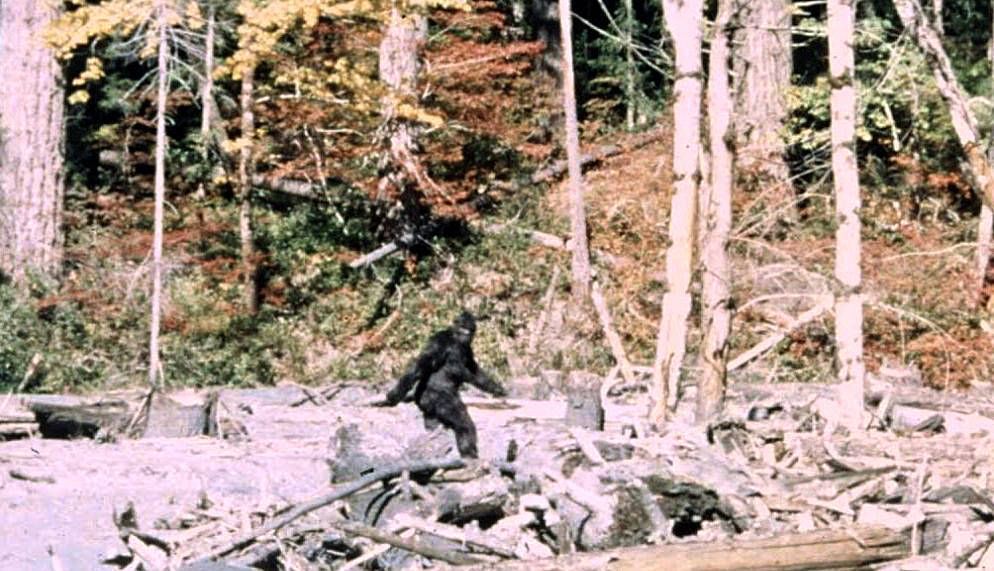
Beyond its everyday meanings, skookum carries a layer of mythological significance. In some traditions, a skookum refers to a variety of mountain giant or monster, similar to the Sasquatch or Bigfoot. This usage connects to the word's connotations of monstrous size and power. In the surviving Chinuk-Wawa language spoken in Grand Ronde, Oregon, this monstrous variant is pronounced 'skoo-KOOM', though in English it is pronounced the same as the other meanings. Historically, skookums were also understood as bad spirits or devils that could inhabit representations in the natural world, such as crows, eagles, owls, blue jays, and various reptiles. These spirits were believed capable of inhabiting people and causing serious illness. This darker, supernatural dimension of the word's meaning adds to its cultural complexity and reflects the blend of practical and spiritual worldviews present in the Chinook Jargon. The idea of a skookum as a dangerous spirit shows the word could describe not just admirable physical strength but also feared supernatural power that required respect and caution in daily life.
Skookum in Daily Life and Inspiration
The concept of skookum, meaning something strong and significant, finds a parallel in modern exercises aimed at creativity and observation. Projects like daily drawing challenges for 2026 encourage participants to find inspiration in their immediate surroundings, much like early settlers used skookum to describe the powerful elements of theirs. Prompts for such challenges direct people to draw everyday items like their morning coffee, a houseplant, their most comfortable chair, or the contents of their pockets. These activities focus on observing daily life with fresh eyes, celebrating ordinary rituals and objects. This practice of valuing the immediate and the tangible mirrors the original, practical use of skookum to label what was substantial, reliable, or formidable in one's environment. Whether describing a powerful rapid, a strong person, or a well-made doll, the word grounds itself in the concrete reality of experience. The drawing prompt for January 1, for example, is 'Your Morning Coffee Ritual', asking artists to capture the steam and the unique design of their mug, turning a daily routine into a subject worthy of attention and artistic strength.
Questions about Skookum
What does the word skookum mean?
Skookum is a Chinook Jargon word that carries a range of related meanings. Most commonly, it functions as an adjective meaning strong, powerful, reliable, or monstrously significant. When describing a person, it implies strength, a hard-working nature, and dependability. It can also be a noun referring to a type of mythical monster or giant, similar to Sasquatch.
What is a Skookum doll?
A Skookum doll is a souvenir doll. Mary McAboy first started making them in 1913 and received a patent in 1914. They were popular from the early 1920s until the 1960s. They were factory-made dolls that resembled Native American people and were sold to tourists. They are wrapped with blankets and have the suggestion of arms. Most were made so they look to the right. They have the word 'Skookum' stamped on their shoes or on a tag.
What does skookumchuck mean?
Skookumchuck means 'turbulent water' or 'rapids in a stream or river'. It literally means 'strong water'. It is a common placename in British Columbia, Washington, and Idaho. The term is used for tidal-exchange rapids at the mouths of inlets and bays.
How is skookum used in modern Canadian culture?
Skookum continues to be used in modern Canadian culture as a marker of regional identity and strength. It is the name of the SKOOKUM Festival, a major music and arts event in Vancouver. It also appears in the Skookum Jim Award for literature and in the name of organizations like Skookum Kids, which supports foster care. The word maintains its core meaning of something substantial and significant.
Where did the term skookum originate?
The term skookum originated in Chinook Jargon. It has been in widespread historical use in British Columbia, the Yukon, and the Pacific Northwest. The word has a range of meanings commonly associated with an English translation of strong or monstrous. It can mean strong, greatest, powerful, ultimate, or brave. When used in reference to a person, it conveys connotations of reliability, strength, or a hard working nature. DCHP 3 classifies skookum as a Type 4 Canadianism by virtue of its cultural significance.
Who was Skookum Jim?
Skookum Jim was one of the co discoverers of the Klondike goldfields in the Yukon. His nickname is the most famous example of a personal name using the term. The name Skookum Jim is also found on the map of British Columbia at Mount Skook Jim near the head of the Stein River. The nickname follows a pattern of local lore in British Columbia having names like Skookum Charlie or Skookum Brown. His story is part of the broader historical use of the word skookum in the region.
Sources and further reading
- Skookum (Wikipedia)
- 2026 Winners (grainmagazine.ca)
Checked by the Novello Desserts desk. Last updated 2026-10-28.