Victoria Day
Victoria Day is a federal Canadian public holiday observed annually on the last Monday preceding May 25. It honours Queen Victoria, who reigned from 1837 to 1901 and is known as the "Mother of Confederation" for her symbolic role in Canada's founding. The holiday, a distinctly Canadian observance, also serves as the official birthday of the currently reigning Canadian monarch. Informally regarded as the start of the summer season, it provides a long weekend marked by parades, fireworks, and the opening of many seasonal businesses.
Historical Origins and Development
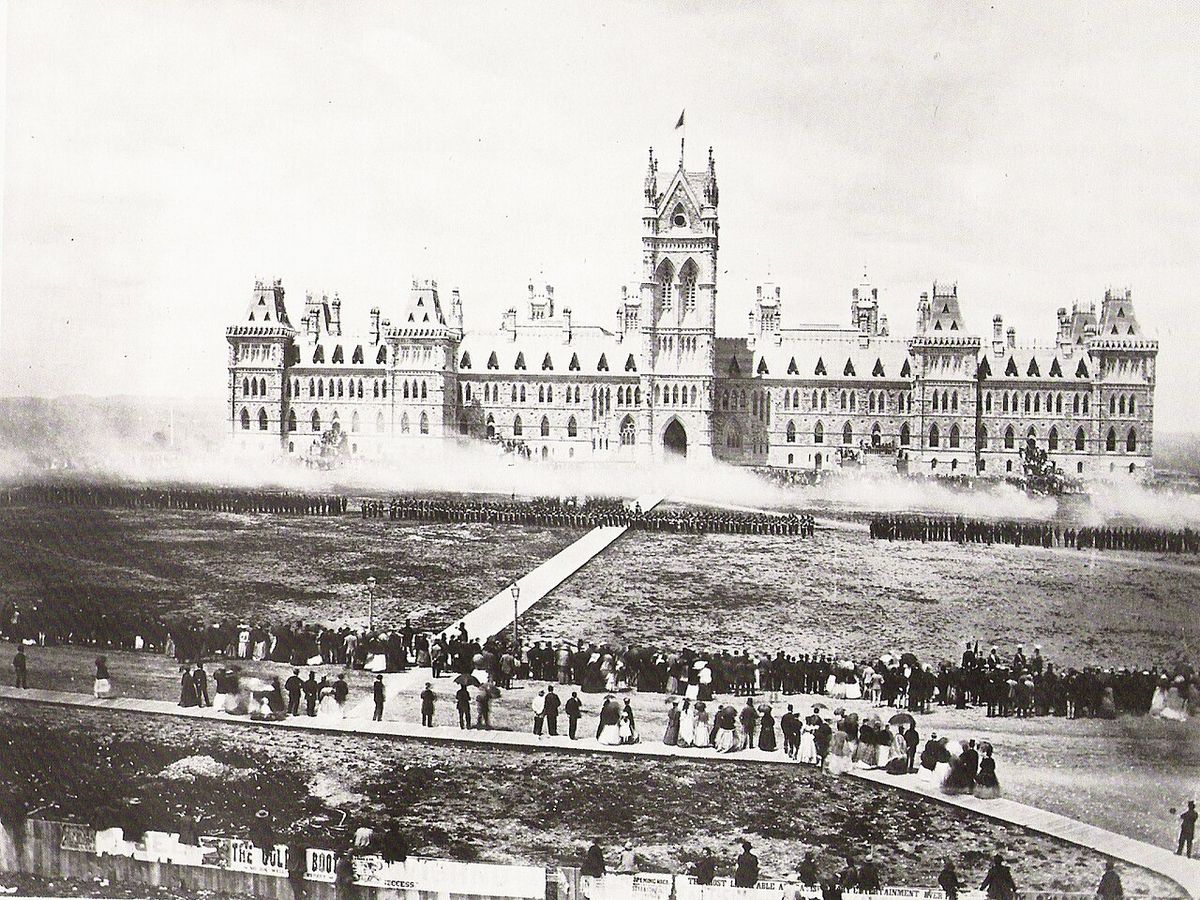
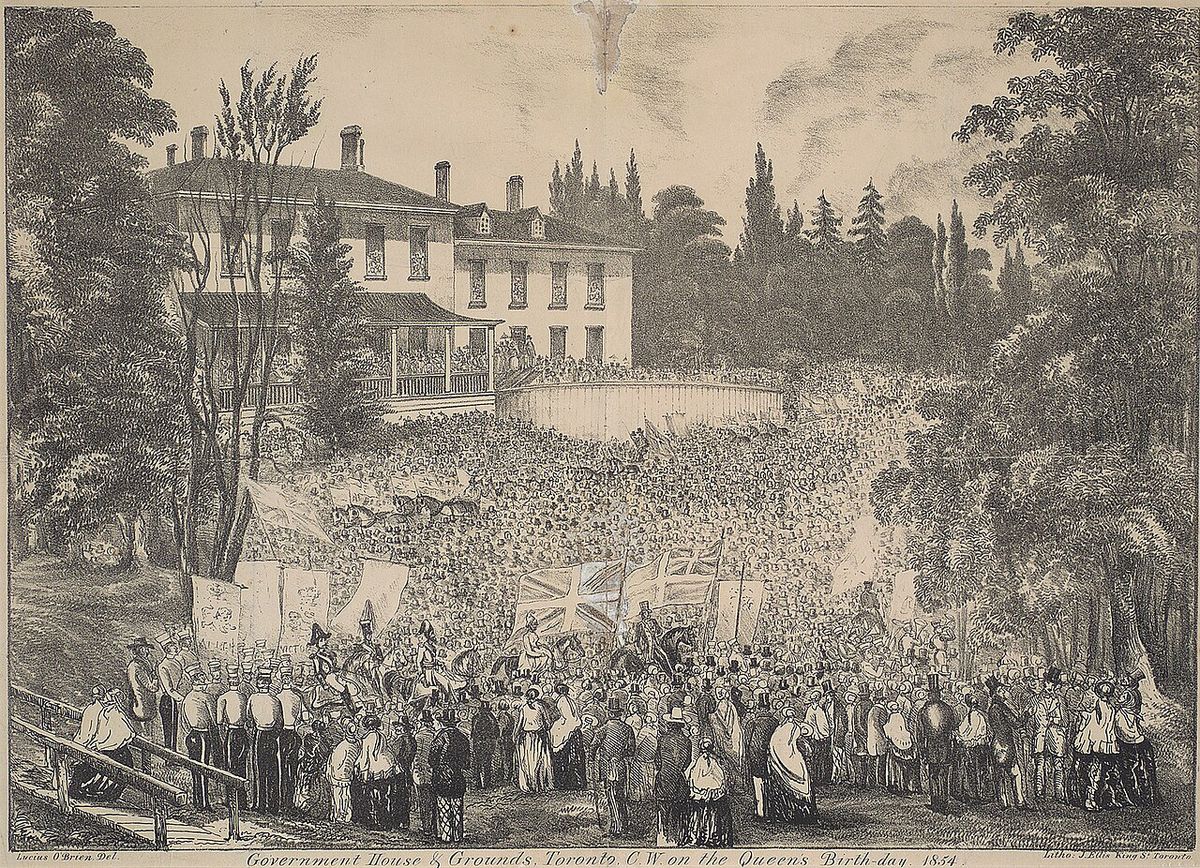
The tradition of commemorating royal birthdays in Canada dates to the 17th century, with early celebrations often being military musters and reviews. Following the union of Upper and Lower Canada, Parliament sought a unifying public holiday and, in 1845, passed legislation making Queen Victoria's birthday, May 24, an official public holiday. This transformed the day from a military event into a civilian celebration, creating Canada's oldest official holiday. Celebrations on Victoria's 35th birthday in 1854 drew some 5,000 residents to Government House in Toronto, and by Confederation in 1867, communities in Ontario and Quebec regularly held festivities. The holiday became a "patriotic holiday" by the 1890s, and after Queen Victoria's death in 1901, it was made a perpetual statutory holiday to remember her. Prime Minister Wilfrid Laurier selected the name Victoria Day to avoid an imperialist title that might alienate French Canadians.
The link between Victoria Day and the official birthday of the reigning monarch evolved over the 20th century. For King George VI's 1939 tour, his official birthday was moved to May 20 so he could be present for festivities, aligning it with Victoria Day. A permanent link was established in 1957 by royal proclamation, which also followed a 1952 change that made the holiday date variable. From that year, Victoria Day was moved to the last Monday before May 25, creating a consistent long weekend for Canadians while permanently aligning it with the celebration of the current monarch's official birthday. The holiday has always been a distinctly Canadian observance, separate from celebrations in other parts of the British Empire.
Provincial and Territorial Observance
As most workplaces are regulated provincially, the status of Victoria Day as a paid day off varies across the country. It is a statutory or general holiday in Alberta, British Columbia, Manitoba, Ontario, Saskatchewan, the Northwest Territories, and Yukon. In Newfoundland and Labrador, Nova Scotia, and Prince Edward Island, it is not a paid public holiday for all workers, though it may be recognized as a government holiday. In New Brunswick and Nunavut, the date is set as a general holiday to mark the sovereign's official birthday, with New Brunswick requiring most retail businesses to close. Quebec's observance has followed a distinct path. Beginning in the 1920s, the holiday was unofficially known as Fête de Dollard, commemorating an early colonist. In 2003, provincial legislation officially replaced this with National Patriots' Day, which honours the patriotes of the Lower Canada Rebellion of 1837, though it falls on the same Monday.
The legal status of the holiday directly affects retail and business operations. In provinces like Ontario, recent legislative proposals have considered allowing retail businesses to stay open on Victoria Day and other select holidays while maintaining worker protections. In contrast, New Brunswick's designation of the day as a prescribed day of rest mandates retail closures. This patchwork of regulations means that for many Canadians, the long weekend is a time for leisure, but for others, particularly in the retail and service sectors, it may be a regular working day unless governed by federal rules. The holiday's status is a reminder of the division of powers between federal and provincial jurisdictions in Canada.
Traditional Ceremonies and Public Events
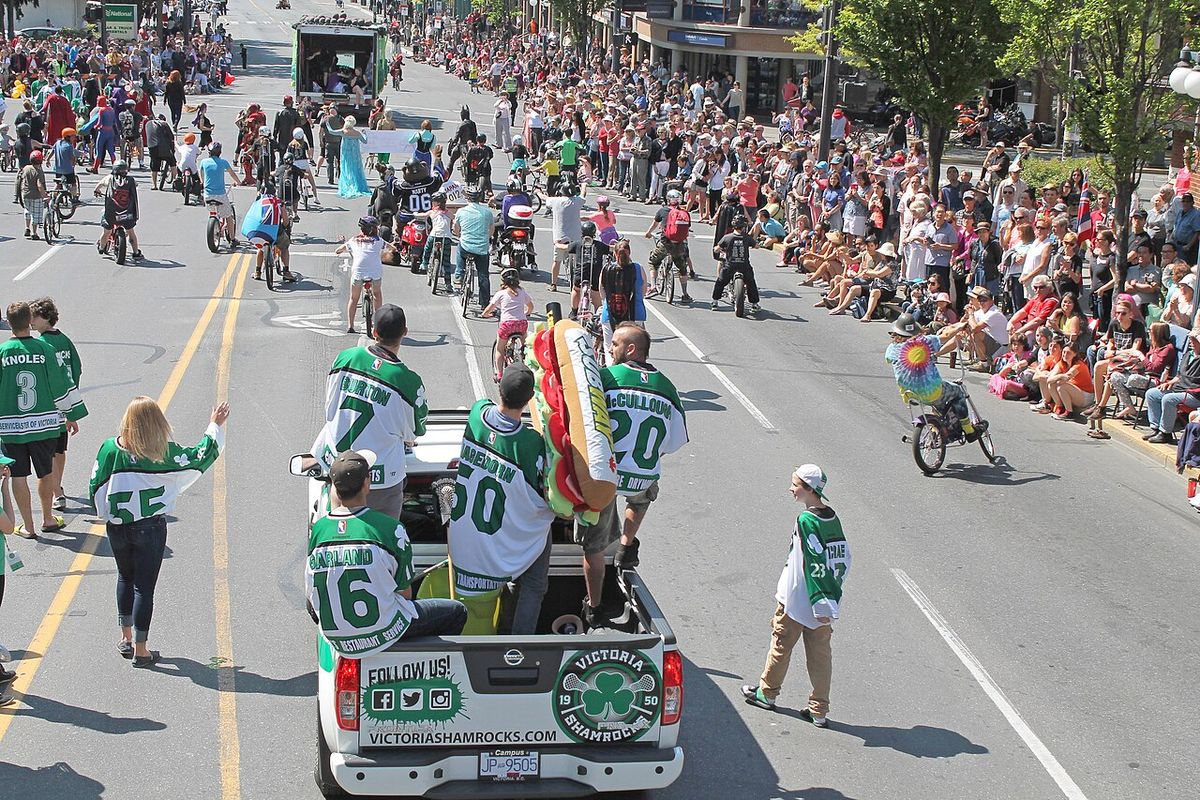
Official protocol for Victoria Day includes flying the Royal Union Flag alongside the national flag at federal buildings where a second pole exists, such as airports, military bases, and other Crown property. Several cities host parades, with the most prominent being the Thrifty Foods Victoria Day Parade in Victoria, British Columbia, an annual event since 1898 that attracts tens of thousands of spectators. In New Westminster, the unique Hyack Anvil Battery Salute is performed, a colonial era tradition where gunpowder between two anvils is ignited to hurl the top anvil skyward as a surrogate for a gun salute. Ottawa hosts the Trooping the Colour ceremony on Parliament Hill or at Rideau Hall, featuring the Ceremonial Guard with the Governor General's Foot Guards and The Canadian Grenadier Guards. The reviewing officer is typically the monarch, governor general, or senior defence official.
Fireworks displays are a major part of evening celebrations in many communities. Major shows have been held at Ashbridge's Bay Beach and Ontario Place in Toronto, and similar displays light up skies across the country. The holiday weekend is also a major event period for cultural festivals. For example, Victoria, BC, often hosts events like the Victoria Highland Games and a multicultural celebration in the city centre. Community markets, such as the Orchard Market at Junction Orchard and Cidery or the Spring Witches Market in Metchosin, offer local shopping and seasonal festivities, capitalizing on the warmer weather. The range of events highlights the holiday's role as a community gathering point and a driver of local tourism during the long weekend.
- Thrifty Foods Victoria Day Parade: Held in Victoria, BC, this parade began in 1898 and features approximately 150 entries including marching bands and floats.
- Hyack Anvil Battery Salute: A tradition in New Westminster, BC, using gunpowder and anvils to create a loud salute.
- Trooping the Colour: The official ceremony in Ottawa involving the Governor General's Foot Guards and The Canadian Grenadier Guards.
- Victoria Highland Games: A multi day festival in Victoria, BC, featuring pipe bands, heavy events, and dance, marking its 163rd year in 2026.
- Ashbridge's Bay Fireworks: A major annual fireworks display held in Toronto, Ontario.
- Multicultural Celebration: A community event in Victoria, BC, with music, dance, and food from diverse cultures.
Cultural Significance and Seasonal Marker
Victoria Day is widely considered the unofficial start of summer in Canada, triggering a shift in social and commercial activities. Many seasonal businesses, including parks, outdoor restaurants, tour operators, and bicycle rentals, open for the summer on this long weekend. It also marks the beginning of the cottage season, when owners prepare their properties for summer use. In gardening circles, the weekend is traditionally seen as a safe date after which the risk of frost has passed, allowing for the planting of tender annuals. A traditional fashion rule, though less rigidly followed today, held that lighter coloured summer clothing could be worn from Victoria Day through to Labour Day.
The holiday is embedded in Canadian vernacular through several colloquial names. "May Two-Four" is a common double entendre referencing both the date of May 24 and a case of twenty four beers. Other names include "May Long," "May Long Weekend," and, in areas like Timmins, "May Run." The day is also referenced in popular culture, notably in the 1975 Rush song "Lakeside Park," which mentions gathering on the 24th of May to watch fireworks. A traditional children's rhyme about the holiday states: "The twenty fourth of May / Is the Queen's birthday; / If they don't give us a holiday / We'll all run away!" The holiday's association with leisure and the start of warmer weather is a deeply ingrained part of the Canadian calendar, influencing social patterns and commercial rhythms each year.
Related Observances and Historical Incidents
Victoria Day was historically linked with Empire Day, an educational observance championed by Clementina Trenholme after Queen Victoria's Diamond Jubilee. Empire Day was set for the weekday before Victoria Day to allow schools to teach about the British Empire. By imperial decree in 1904, May 24 was made Empire Day throughout the empire. In 1958, it was renamed Commonwealth Day, and in 1977, it was moved to the second Monday in March, severing its direct connection to the Victoria Day weekend in Canada. The holiday has also been marred by tragedy. In 1881, the passenger ferry Victoria capsized in the Thames River near London, Ontario, drowning about 182 people, many of them children returning from Victoria Day picnics, in an event known as the Victoria Day disaster. Another tragedy occurred in Victoria, BC, on May 26, 1896, when the Point Ellice Bridge collapsed under a streetcar overloaded with passengers heading to holiday celebrations.
These incidents show how large public gatherings for the holiday could, in earlier eras, lead to catastrophe through overcrowding or structural failure. The 1881 ferry disaster involved a vessel carrying an estimated 600 to 800 people, which was three times its capacity, leading to one of the worst maritime accidents in Ontario's inland waters. The 1896 bridge collapse in British Columbia similarly resulted from a streetcar overloaded with celebration goers. These events remain sombre footnotes in the history of the holiday's public celebrations, and they illustrate the risks associated with mass public events in the late 19th century.
Modern Celebrations and Community Activities
Contemporary Victoria Day celebrations blend tradition with community focused activities. Many municipalities organize free family oriented events for the long weekend. For example, in 2026, communities planned offerings such as free recreational swimming, craft workshops, badminton, family open gym sessions, Zumba, and science workshops. The weekend is a peak time for tourism in many regions, with cities like Victoria, BC, promoting a full slate of attractions including parades, museum visits, garden tours, and farm visits for families. The holiday also coincides with special sporting events, such as the Pacific NW Offshore yacht race, which finishes near Victoria Harbour, providing a spectacle for spectators. For newcomers to Canada, Victoria Day presents an opportunity to engage with Canadian heritage and community life through these accessible public events.
Common ways to participate include attending local parades or fireworks displays, visiting parks for a picnic or barbecue, and joining in community festivals. The holiday's emphasis on outdoor activity and communal celebration makes it an accessible entry point into Canadian seasonal traditions. The long weekend provides a welcomed break, with the 2026 holiday falling on May 18, offering a three day respite that many use to travel, open seasonal properties, or simply relax with family and friends. The following are examples of specific events and activities that typify the modern Victoria Day weekend in various communities, drawing directly from planned festivities for the 2026 season.
- Free Recreational Swimming and Gym Access: Many municipal centres offer free access to pools and gyms on Victoria Day.
- Orchard Market at Junction Orchard & Cidery: A community market in Victoria, BC, on May 17, 2026, featuring local growers and artisans.
- Spring Witches Market in Metchosin: A market on May 16 & 17, 2026, with handcrafted goods and a mystical theme.
- Pacific NW Offshore Yacht Race: A sailing race from Oregon finishing near Victoria, BC, on May 16 & 17, 2026.
- Victoria Highland Games Tartan Parade: A parade through downtown Victoria on May 9, 2026, as part of the Highland Games.
- Cherry Blossom Viewing in Mississauga: Suggested as a seasonal activity to enjoy during the Victoria Day period.
The holiday's economic impact is notable as it prompts the opening of many summer businesses and an increase in tourism spending. For example, Banff's Sunshine Village ends its lengthy ski season on Victoria Day. It is during this long weekend that many summer businesses such as parks, outdoor restaurants, bicycle rentals, and city tour operators will open. The holiday also marks the beginning of the cottage season, when owners reverse the winterization of their property. This blend of recreation, commerce, and tradition ensures Victoria Day remains a fixture of Canadian life, connecting historical remembrance with contemporary summer leisure.
Questions about Victoria Day
Why is Victoria Day celebrated in Canada?
Victoria Day is celebrated to honour Queen Victoria, who is known as the "Mother of Confederation". The holiday has existed in Canada since at least 1845, originally on Victoria's natural birthday of May 24. It was created to be a unifying public holiday for English and French Canadians. Since 1957, the date has also been permanently designated as the official birthday of the currently reigning Canadian monarch.
Is Victoria Day a statutory holiday everywhere in Canada?
No, the status of Victoria Day as a paid public holiday varies by province and territory. It is a statutory holiday in British Columbia, Ontario, and Saskatchewan, and a general holiday in Alberta, Manitoba, the Northwest Territories, and Yukon. In New Brunswick and Nunavut, it is a general holiday marking the sovereign's birthday. However, it is not a paid public holiday in Newfoundland and Labrador, Nova Scotia, or Prince Edward Island, though it may be recognized as a government holiday. All federal employees and those in federally regulated workplaces receive the day off.
What is Victoria Day called in Quebec?
In Quebec, the holiday is officially called National Patriots' Day (Journée nationale des Patriotes). This official name was established by provincial legislation in 2003. The day commemorates the patriotes of the Lower Canada Rebellion of 1837. Before 2003, the same date was unofficially known as Fête de Dollard, a commemoration of the early colonist Adam Dollard des Ormeaux initiated in the 1920s. The holiday falls on the Monday preceding May 25 each year, aligning with the timing of Victoria Day in the rest of Canada.
What are some common Victoria Day traditions?
Common Victoria Day traditions include parades and fireworks displays. The most prominent parade has been held in Victoria, British Columbia since 1898. Fireworks shows are held in locations like Ashbridge's Bay Beach in Toronto. Official ceremonies include the Trooping the Colour on Parliament Hill in Ottawa and the unique Hyack Anvil Battery Salute in New Westminster, British Columbia. The holiday is also informally considered the start of the summer season, marking the beginning of gardening, the cottage season, and the opening of many summer businesses and parks across the country.
What does the term 'May Two-Four' mean?
The term 'May Two-Four' is a colloquial Canadian name for the Victoria Day long weekend. It is a double entendre with two meanings. First, it references the date of May 24, which was Queen Victoria's natural birthday and the original date of the holiday. Second, it refers to a case of twenty-four beers, commonly called a 'two-four' in Canadian slang. This nickname highlights the holiday's association with social gatherings and celebrations during the long weekend, which is also sometimes called the 'May long weekend'.
When is Victoria Day in 2026?
Victoria Day in 2026 will be observed on Monday, May 18. The date is determined as the last Monday preceding May 25, which ensures a long weekend for Canadians. This means the holiday can fall on any Monday between May 18 and May 24 inclusive. In 2026, May 18 is the penultimate Monday of May, which is the latest possible date for the holiday before May 25.
Sources and further reading
- Victoria Day (Wikipedia)
- Embracing Canadian culture, Celebrating Victoria Day 2026 (windmillmicrolending.org)
- Victoria Day Weekend (tourismvictoria.com)
Checked by the Novello Desserts desk. Last updated 2026-10-25.