Sarku Japan
Sarku Japan is an American-Canadian quick-serve restaurant chain specializing in Japanese-inspired cuisine, most famously its made-to-order teriyaki dishes. Founded in 1987 by a group of entrepreneurs with ties to the Canadian chain Manchu Wok, the company established its headquarters in Markham, Ontario, in 2002, giving it a significant corporate presence in Canada. The chain became a ubiquitous fixture in shopping mall food courts across North America, known for its sizzling teppanyaki grills and customizable meals. While the COVID-19 pandemic precipitated a period of financial restructuring, the brand has continued operations, with recent data indicating over 180 locations in the United States and a notable presence in the U.S. restaurant sales rankings.
Founding and Early Expansion
The Sarku Japan chain was founded in 1987 by four businessmen: James Chim, Daniel Chim, Richard Ko, and Alex Pang. The founders had previously worked together at the Canadian quick-serve restaurant chain Manchu Wok, which provided the inspiration and experience for their own venture. They opened their first restaurant in Boston, Massachusetts, with a concept centred on fast, teppanyaki-style cooking prepared in front of customers. The combination of fresh ingredients, visible preparation, and a focused menu proved successful with patrons from the outset. The chain experienced rapid growth in its first decade, expanding from a single location to over 25 stores across eight states by 1991.
This expansion accelerated quickly, with the number of restaurants doubling to more than 50 across the Eastern Seaboard and Midwest by 1992. The company's 100th location opened in 1999, an event that coincided with its expansion to the West Coast of the United States. This period established Sarku Japan's primary operational model, with the vast majority of its outlets situated within the food courts of shopping malls. The founders' strategy of offering consistent, customizable Japanese-style meals in high-traffic environments was key to this early nationwide growth.
Corporate Moves and International Growth
In April 2002, Sarku Japan relocated its corporate headquarters to Markham, Ontario, solidifying its status as a Canadian-American enterprise. The late 2000s and early 2010s saw the company begin a significant expansion campaign aimed at diversifying its footprint. A central part of this strategy was the development of a new "Teriyaki and Sushi Express" concept, designed for street-front locations rather than traditional mall food courts. The company also pursued international franchising opportunities, signing a contract with Frisby Corp to open more than 20 locations in Colombia over a decade. The first Colombian restaurants opened in Pereira, Medellín, and Cali in October 2011, with five additional locations in Medellín, Cali, and Bogotá opening by the end of that year.
During the late 2000s and early 2010s, the company also looked to expand to Vietnam, Asia, Europe and the Middle East. There is no indication that these ventures were ever undertaken. At the time, the company was forecasting the chain would reach 1,000 locations by the end of the decade. This target was ultimately not achieved. The Colombian expansion was a substantial move outside of North America, with the first stores opening in Pereira, Medellín and Cali in October 2011.
Menu and Dining Experience
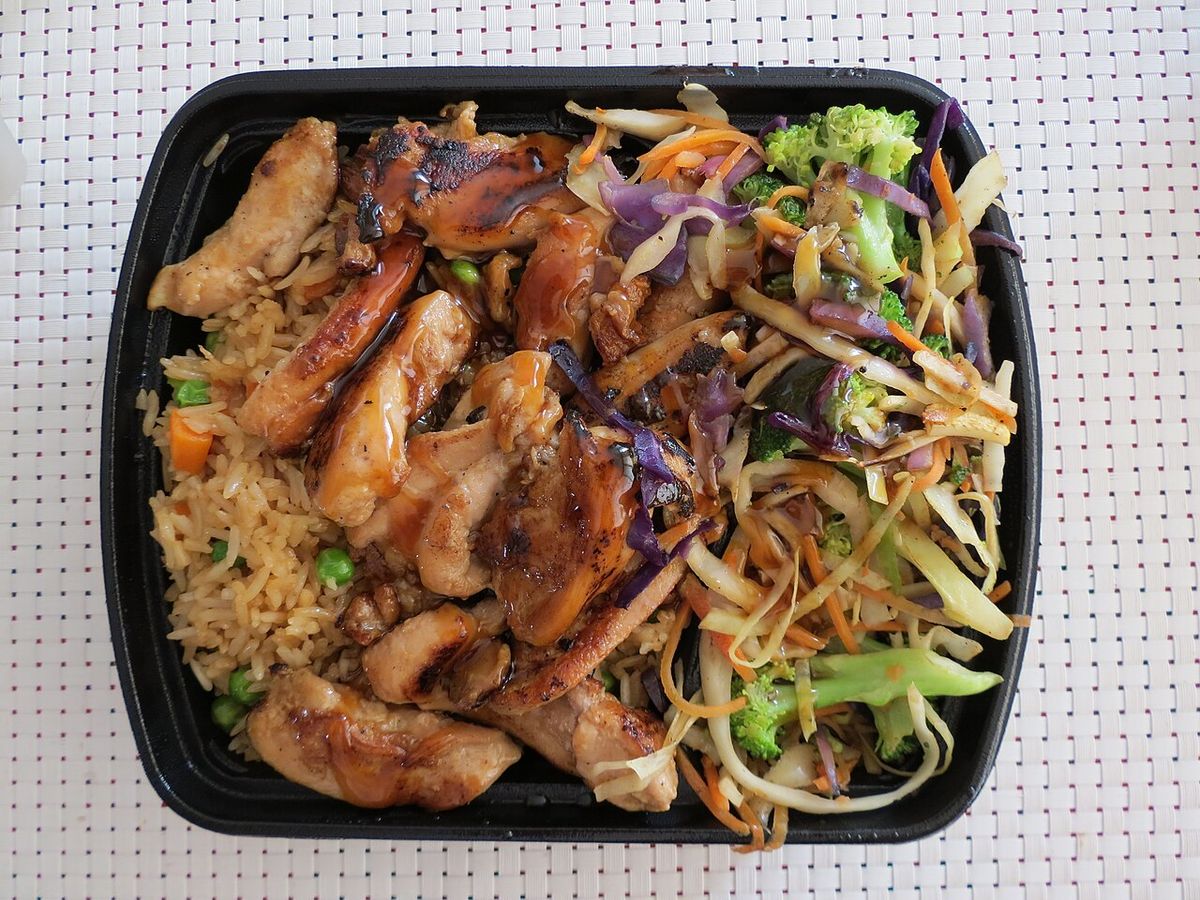
Sarku Japan's menu is built around its signature teriyaki dishes, which are prepared fresh on a teppanyaki grill in full view of customers. The core proteins are chicken, beef, and shrimp, each cooked to order and glazed with the chain's proprietary teriyaki sauce. Every teriyaki meal is served with a choice of steamed rice or pan-fried noodles and a side of mixed vegetables, allowing for a degree of customization. Beyond teriyaki, the chain's offerings have expanded to include other Japanese and Asian-inspired items to cater to broader tastes.
The chain also provides bento box combinations, vegetable dumplings, shrimp tempura, and a variety of sushi rolls, such as the California Roll, Shrimp Tempura Roll, and Chicken Teriyaki Roll. The made-to-order process is a key part of the brand's identity, with chefs preparing meals on sizzling grills that often create a distinctive aroma in food courts. This theatrical cooking style, combined with the ability for customers to request extra protein or sauce, has contributed to the chain's popularity and the often-noted long lines at its counters. Many customers specifically seek out the chain for its Chicken Teriyaki, which is frequently promoted during events like National Chicken Teriyaki Day.
Financial Challenges and Restructuring
The COVID-19 pandemic in 2020 presented a severe challenge to Sarku Japan, a chain heavily reliant on mall foot traffic. In March 2020, the company was forced to temporarily close nearly all of its locations due to public health restrictions. The extended closures had a devastating financial impact, causing the company's yearly sales for 2020 to decline by 46 percent compared to the previous year. By January 2021, only 184 of its 226 locations had managed to reopen, leaving the chain in a precarious financial position.
On January 26, 2021, Sarku Japan entered creditor protection under the Companies' Creditors Arrangement Act in Canada and Chapter 15 bankruptcy in the US. This followed extended closures during the COVID-19 pandemic which led to a 46% decline in yearly sales. By January 2021, only 184 of 226 locations had reopened and many may have permanently shuttered. As of 2026, the chain continues to operate with tracking data indicating over 180 stores and US sales of an estimated $308 million.
Recent Performance and Sales Data
Following its restructuring, Sarku Japan has maintained a substantial presence in the U.S. quick-service restaurant sector. According to industry reports, the chain was ranked among the highest-grossing brands in Technomic's Top 500 Chain Restaurant Report for 2025 and 2026. The report listed the chain's U.S. sales for 2026 at approximately $308 million. Independent tracking data from 2026 indicates the chain operates 164 to 180 tracked locations across 34 or 35 U.S. states, ranking it 54th among over 77,900 tracked restaurant chains by card spend. The company has continued to open new locations and promote its brand through marketing initiatives. For instance, in June 2026, it opened a new free-standing Teriyaki and Sushi Express location in Capitol Heights, Maryland. The chain also engages in promotional campaigns, such as giveaways for National Chicken Teriyaki Day, and maintains a customer loyalty program called Sarku Rewards.
| Year | Reported U.S. Sales (in millions) |
|---|---|
| 2025 | Data in report |
| 2026 | $308 |
Associated Restaurant Brands
Beyond its flagship brand, Sarku Japan has owned and operated two other quick-serve restaurant concepts. The first is Kato's Cajun, a chain that served a fusion of Cajun and Chinese cuisine. At its peak, Kato's Cajun had locations in several states, including Wisconsin, Illinois, Georgia, and Pennsylvania. As of 2021, only one location was reported to be open, situated in the East Towne Mall in Madison, Wisconsin, with the status of this single outlet remaining unclear in subsequent years. The second associated brand was Ming Tree, a Chinese quick-serve restaurant chain. Listings for Ming Tree locations have been found for closed restaurants in malls in Delaware, Maryland, and North Carolina.
Sarku Japan owns and operates the Chinese quick serve restaurant chain Ming Tree. As of September 2021, the Ming Tree chain appears to be defunct as no location listings can be found. Listings can be found for closed locations at malls in Delaware, Maryland and North Carolina. The operation of this secondary brand demonstrated corporate experimentation beyond the core Japanese concept.
Franchise Model and Customer Base
Sarku Japan operates primarily through a franchise model, which facilitated its rapid expansion across the United States. The company provides franchisees with a proven operational system centred on its teppanyaki grill service and standardized menu. The financial requirements for prospective franchisees, as of 2026, include a minimum liquid capital of $105,000, a net worth of $175,000, and a total investment ranging from $292,300 to $598,500. The chain has cultivated a loyal customer base drawn to its fast, customizable, and freshly prepared meals. Its typical location in a busy mall food court attracts shoppers, employees, and families looking for a quick and satisfying meal. Data from card transaction tracking indicates that Sarku Japan customers frequently also patronize other major quick-service and fast-casual chains, showing their engagement with the broader restaurant market. The brand leverages social media platforms like Facebook and Instagram to promote new store openings, menu items, and engage with its community of customers, often highlighting the nostalgic appeal of its food court presence.
Questions about Sarku Japan
Is Sarku Japan a Canadian company?
Sarku Japan is an American-Canadian company. It was founded in the United States in 1987 by a group that included entrepreneurs with experience at the Canadian chain Manchu Wok. The corporate headquarters were moved to Markham, Ontario, in 2002, establishing a significant administrative and operational base in Canada. While the majority of its restaurants are located in the United States, its corporate structure and origins give it strong ties to Canada.
What kind of food does Sarku Japan serve?
Sarku Japan specializes in Japanese-inspired quick-serve meals, most notably its made-to-order teriyaki dishes. The core menu features chicken, beef, or shrimp teriyaki, cooked on a teppanyaki grill and served with rice or noodles and vegetables. The chain also offers a selection of sushi rolls, including California and Shrimp Tempura rolls, as well as bento boxes, dumplings, and tempura. The food is prepared fresh in front of customers, who can often customize their orders with extra protein or sauce.
How many Sarku Japan locations are there?
As of 2026, Sarku Japan operates over 180 locations across the United States, spanning approximately 34 or 35 states. The vast majority of these restaurants are traditionally located in shopping mall food courts, though the company has also developed a street-front concept called Teriyaki and Sushi Express. The chain also previously had a presence in Colombia through a franchise agreement, with several locations opening there in 2011. The total number of locations fluctuated following financial restructuring in 2021.
What happened to Sarku Japan during the COVID-19 pandemic?
The COVID-19 pandemic severely impacted Sarku Japan due to its reliance on mall foot traffic. In March 2020, the chain temporarily closed nearly all its locations, leading to a 46 percent drop in yearly sales for 2020. By early 2021, many stores remained closed, and on January 26, 2021, the company filed for creditor protection in Canada under the CCAA and for Chapter 15 bankruptcy in the United States. This process allowed it to restructure its debts, though it resulted in the permanent closure of some locations before the chain stabilized its operations.
What other restaurant chains does Sarku Japan own?
Sarku Japan has owned and operated two other restaurant concepts. The first is Kato's Cajun, a Cajun-Chinese fusion quick-serve chain, which as of 2021 had one known operating location in Madison, Wisconsin. The second is Ming Tree, a Chinese quick-serve chain that appears to be defunct, with no active locations listed as of 2021. These brands represented the company's efforts to diversify its portfolio beyond its core Japanese teppanyaki concept.
How much does a Sarku Japan franchise cost?
According to 2026 franchise information, the total investment to open a Sarku Japan franchise ranges from $292,300 to $598,500. Prospective franchisees are required to have a minimum liquid capital of $105,000 and a net worth of at least $175,000. The company offers a 20 percent reduction on the franchise fee for qualified military veterans as an incentive program for franchise ownership. These figures represent the financial commitment needed to establish a new location of this American Canadian quick serve restaurant chain. The franchise opportunity is part of the chain's business model, which has included expansion through various concepts over the years.
Sources and further reading
- Sarku Japan (Wikipedia)
- Sarku Japan | Japanese Fast Food Restaurants across the USA (sarkujapan.com)
- Sarku Japan | 2026 (restaurantbusinessonline.com)
- Sarku Japan Franchise Cost & Opportunities 2026 (franchisehelp.com)
- Sarku Japan Sales Trends & Store Network 2026 - Iceflower (iceflower.ai)
Checked by the Novello Desserts desk. Last updated 2026-10-25.