Columbia Icefield
The Columbia Icefield is the largest ice field in the Rocky Mountains of North America, spanning the Continental Divide within Banff and Jasper National Parks in Alberta and British Columbia. Covering approximately 325 square kilometres and reaching depths of up to 365 metres, it is a vast reservoir of ancient ice that feeds major river systems flowing to three different oceans. As a premier tourist destination, it offers visitors the unique opportunity to explore the Athabasca Glacier via guided Ice Explorer tours and experience the dramatic Glacier Skywalk. The icefield is a site of significant geological study and a fundamental part of the Canadian Rockies' natural heritage, drawing global interest for its alpine landscape and recreational opportunities.
Geological Formation and Characteristics
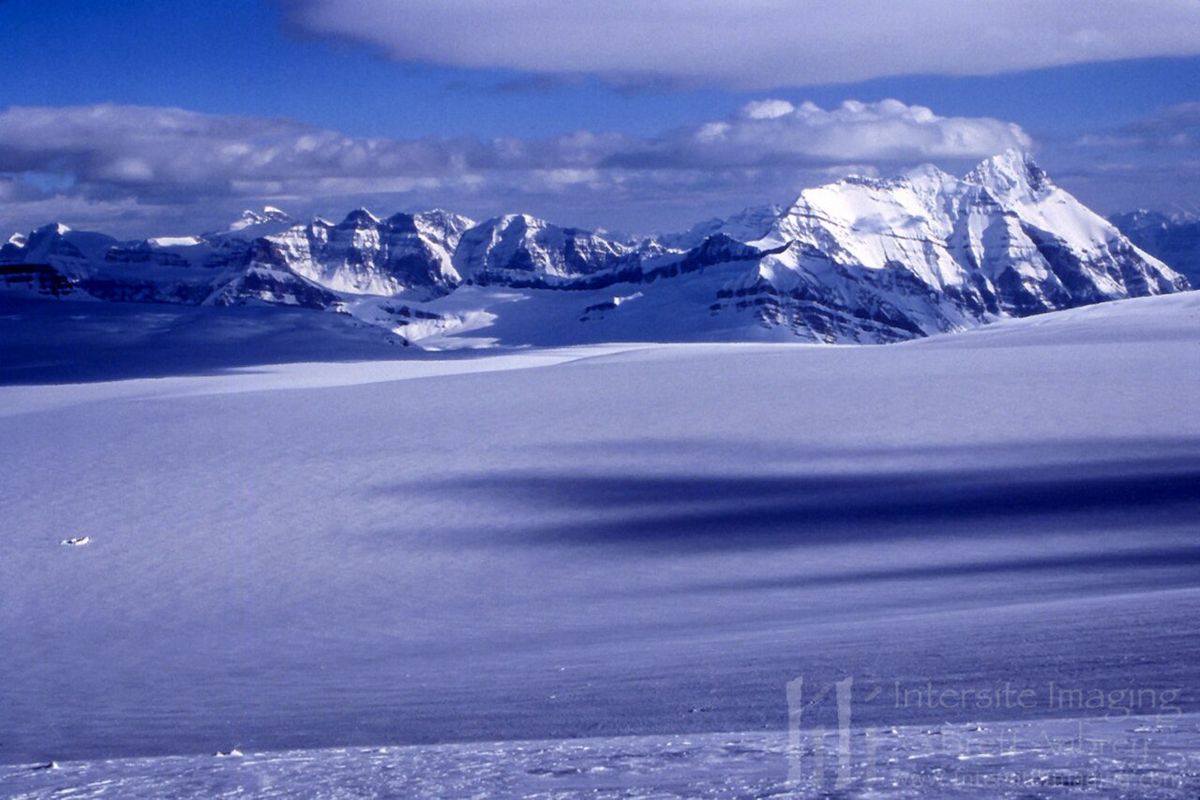
The Columbia Icefield is a monumental relic of the Pleistocene ice ages, formed during the Great Glaciation period between 238,000 and 126,000 BCE. Its persistence is due to its unique geological setting atop a broad plateau of relatively flat-lying sedimentary rock layers, which erode more slowly than the surrounding tilted strata, maintaining a high, cold elevation. The icefield experienced several major periods of advance and retreat, with significant growth during the Late Wisconsinan period around 18,000 to 9,000 BCE and again during the Little Ice Age from approximately 1200 to 1900 AD. Today, it measures about 325 square kilometres in area, with an ice depth ranging from 100 to 365 metres, and it receives an immense amount of precipitation, with up to seven metres of snowfall annually. This accumulation feeds six primary outlet glaciers, including the famous and accessible Athabasca Glacier, which has been in a general state of recession since its last advance peak around 1840.
The icefield's location astride the Continental Divide gives it a unique hydrological role as a triple continental divide. Meltwater from its glaciers is the ultimate source for three major river systems that drain into three different oceans. The Athabasca River flows north to the Arctic Ocean, the North Saskatchewan River flows east to Hudson Bay and the North Atlantic, and headwater tributaries of the Columbia River flow south and west to the Pacific Ocean. This makes the Columbia Icefield a critical hydrological hub and a stark indicator of climatic changes, as the documented retreat of its glaciers provides visible evidence of ongoing environmental shifts in the Canadian Rockies.
History of Exploration and Discovery
Due to its remote location and severe weather, the Columbia Icefield was among the last major geological features in western Canada to be documented by Europeans. The first recorded sighting by a European occurred in April 1827, when Scottish botanist David Douglas, while crossing the Athabasca Pass to the north, climbed a nearby peak and mistakenly estimated its height at 6,000 metres. The icefield itself remained unseen by outsiders until August 18, 1898, when British mountaineer J. Norman Collie and guide Herman Wooley, having made the first ascent of Mount Athabasca, gazed upon the vast ice expanse. Collie famously described the view as a new world, a vast icefield probably never before seen by human eye, surrounded by unknown and unclimbed peaks. The early 20th century saw a flurry of mountaineering firsts in the region as explorers sought to conquer its towering peaks, with James Outram making the first ascents of Mount Columbia and Mount Bryce in 1902. A landmark skiing feat occurred in March 1932 when Cliff White, Joe Weiss, and Russell Bennet completed a 500-kilometre ski journey from Jasper to Banff, including a continuous 50-kilometre downhill run from the summit of Snow Dome, which was the longest such run in Canadian history at the time. This accomplishment helped generate international interest in the Canadian Rockies as a destination for adventure and exploration. Today, mountaineers and skiers from around the world come to the Columbia Icefield to follow some of the classic routes established by these early pioneers.
The Modern Visitor Experience
The Columbia Icefield is now one of the most accessible high-mountain glacial environments in the world, managed as a key attraction within the national parks. The primary gateway is the Columbia Icefield Glacier Discovery Centre, located on the Icefields Parkway (Highway 93), which serves as a visitor hub with amenities, interpretive exhibits, and the departure point for tours. The flagship experience is the Columbia Icefield Adventure, which typically operates from early May to mid-October, though it was closed for the 2026 season with plans to reopen from May 1 to October 11, 2027. This tour involves a shuttle ride to a transfer bay where guests board massive, all-terrain Ice Explorer vehicles specifically designed for glacier travel, and these vehicles transport visitors directly onto the surface of the Athabasca Glacier.
Guests can disembark for approximately 30 to 35 minutes to walk on the 10,000-year-old ice, take photographs, and sample fresh meltwater. The vehicles are equipped with wheelchair lifts to ensure accessibility. Following the glacier tour, a shuttle takes guests to the Columbia Icefield Skywalk, a glass-floored interpretive walkway cantilevered 280 metres above the Sunwapta Valley. The Skywalk, open from May to October with daily hours generally from 10:00 AM to 6:00 PM, features panoramic views and educational displays about the region's geology, ecology, and Indigenous history. For younger visitors, the Rockies Rangers program offers activity guides and the chance to earn badges by learning about the glacial landscape.
- Ice Explorer Tour: Guided vehicle tour onto the Athabasca Glacier with time on the ice.
- Columbia Icefield Skywalk: Glass-floored walkway with valley views and interpretive signage.
- Glacier Discovery Centre: Visitor hub with exhibits, dining, and tour check-in.
- Rockies Rangers: Educational program with activities for guests aged 16 and under.
- Audio Tours: Available in nine languages including French, German, Spanish, Japanese, and Hindi.
- Package Deals: Bundled passes combining the glacier tour, Skywalk, and sometimes overnight stays at the Glacier View Lodge.
Ticket pricing for the Columbia Icefield Adventure varies, with discounts available for Alberta residents and for tours after 3:30 PM. A walking tour called the Icefield Parkway Glacier Walk was scheduled to run from May 16 to October 12, 2026. This tour offers an introduction to the glacial landscape on foot. The overall operation emphasizes education about glacial preservation and environmental change. The experiences are closed for the 2026 season but are scheduled to reopen from May 1 to October 11, 2027.
Surrounding Peaks and Glaciers
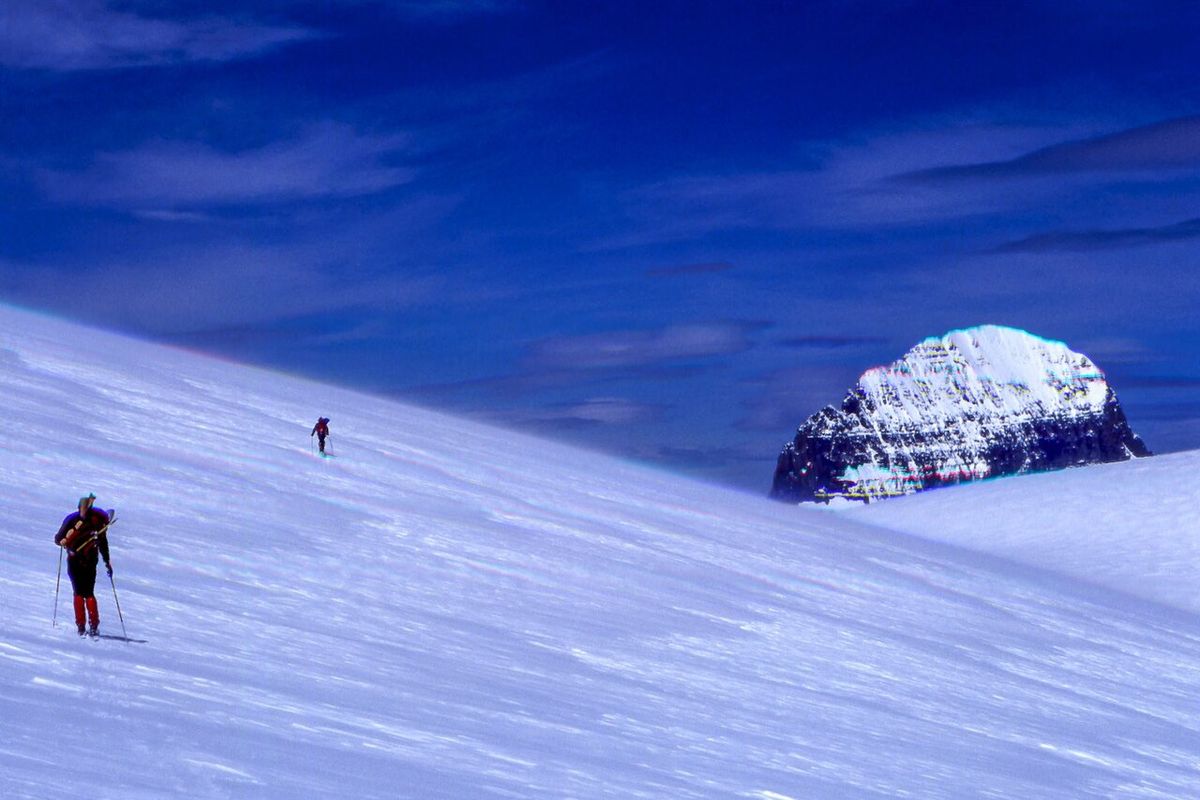
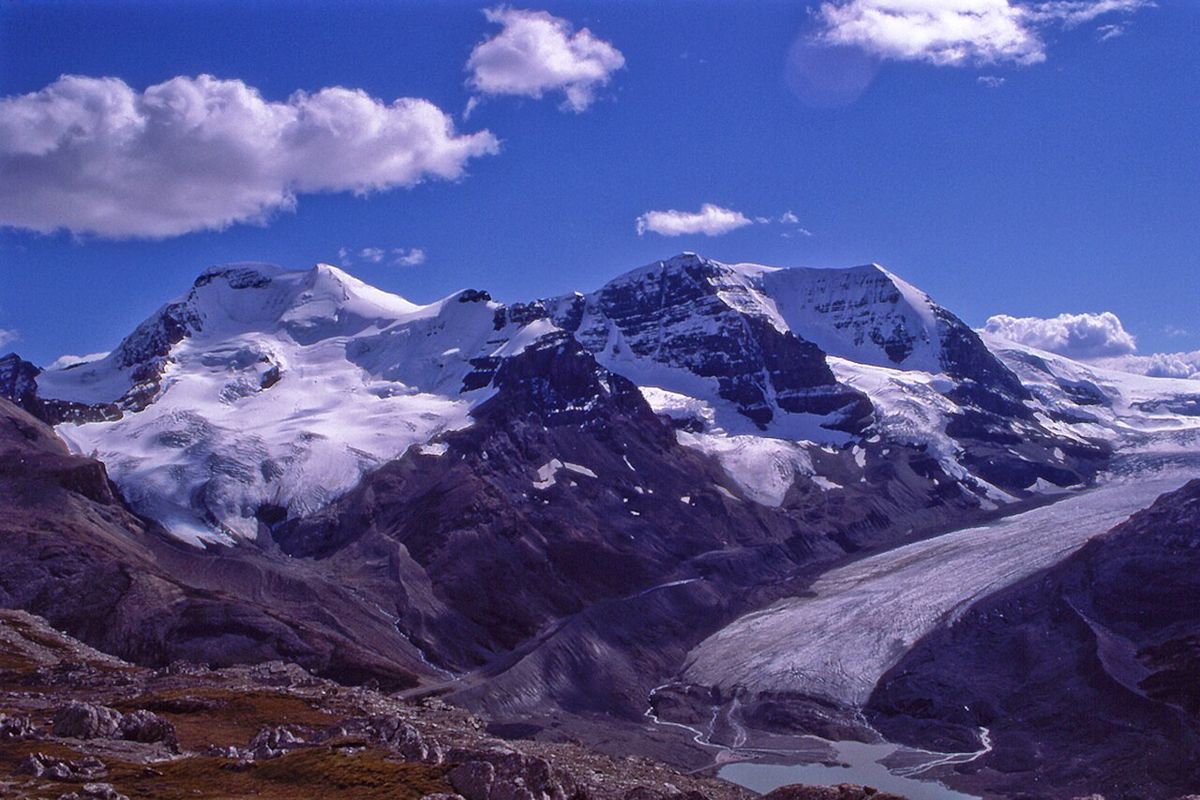
The Columbia Icefield is encircled by some of the most impressive and rugged peaks in the Canadian Rockies, creating a dramatic alpine amphitheatre. These mountains have long been objectives for mountaineers and provide a stunning backdrop for visitors. The highest is Mount Columbia at 3,747 metres, which is also the highest point in Alberta. Other notable summits include the formidable North Twin Peak (3,684 m), Mount Alberta (3,619 m), South Twin Peak (3,566 m), and the distinctive Snow Dome (3,456 m), whose summit is a hydrological apex. The icefield itself nourishes six principal outlet glaciers, which flow radially from the central ice cap, and these glaciers are vital sources for major rivers and key indicators of climate health.
| Glacier | Notable Characteristic |
|---|---|
| Athabasca Glacier | Most accessible. Terminus visible from Parkway. Site of Ice Explorer tours |
| Castleguard Glacier | Flows from Mount Castleguard. Part of the Castleguard Cave system |
| Columbia Glacier | Flows south from the icefield towards the headwaters of the Columbia River |
| Dome Glacier | Flows from the Snow Dome massif |
| Stutfield Glacier | Hanging glacier visible from the Icefields Parkway |
| Saskatchewan Glacier | Largest outflow glacier. Feeds the North Saskatchewan River |
Its visible recession is a central topic of the interpretive commentary provided during tours. The Columbia Icefield area is a high-mountain ecosystem characterized by glaciers and alpine tundra. This ecosystem supports wildlife such as mountain goats, bighorn sheep, marmots, and pikas. Observant visitors may spot this wildlife from the Skywalk or along the Icefields Parkway.
Access and Travel Planning
The Columbia Icefield is situated almost exactly midway between the towns of Lake Louise in Banff National Park and Jasper in Jasper National Park, along the world-renowned Icefields Parkway. The Columbia Icefield Glacier Discovery Centre is located directly on the Parkway, serving as the essential stop for all icefield activities. It is crucial for visitors to plan ahead, as there is no cellular service along most of the Parkway, and tour reservations are highly recommended, especially during the peak summer season. Several transportation options exist for reaching the icefield, including driving, guided tours, and shuttle services from major centres.
Visitors can drive themselves, though they should ensure their vehicle is fuelled and they have downloaded maps in advance. Tour companies offer guided bus tours from both Banff and Jasper, which include commentary and logistics. For independent travellers, shuttle services like SunDog Tour Co. provide transportation from Calgary to Jasper via Lake Louise and the Icefields Parkway, as well as links to Edmonton. Brewster Express offers services from Calgary to Banff and Lake Louise. Many visitors choose to stay overnight in nearby hubs to fully experience the drive. Recommended gateway communities include Lake Louise, Jasper, and Valemount, which offer a range of accommodations. The Altitude Restaurant within the Discovery Centre provides dining options with glacier views, and the centre also houses a Starbucks and other cafe services.
Scientific and Environmental Significance
The Columbia Icefield is an invaluable natural laboratory for glaciology, climatology, and geology. Its extensive ice mass, which has been accumulating for hundreds of thousands of years, contains a detailed record of past climate conditions within its layers. Scientists study the icefield to understand historical climate patterns and to model future changes, as the rapid retreat of its outlet glaciers provides clear, measurable evidence of contemporary global warming. This visible change is a powerful educational tool for the hundreds of thousands of visitors each year, making the icefield a site where scientific observation and public awareness directly intersect.
Beyond its climatic importance, the icefield is a keystone for regional hydrology and ecology. As the source of major rivers, its meltwater patterns affect water supply, agriculture, and ecosystems far downstream. The alpine environment around the icefield supports specialized flora and fauna adapted to extreme conditions, contributing to the biodiversity of the national parks. Management of the area by Parks Canada and tour operators emphasizes preservation and minimal impact, with guided tours designed to educate visitors on the fragility of the glacial environment and the importance of conservation efforts in the face of environmental change.
Questions about Columbia Icefield
How can I visit the Athabasca Glacier?
Visitors can walk on the Athabasca Glacier by taking the Columbia Icefield Adventure tour. This involves checking in at the Glacier Discovery Centre, taking a shuttle to a transfer bay, and boarding a specialized all-terrain Ice Explorer vehicle that drives onto the glacier. Guests are given about 30 to 35 minutes to walk on the ice. The tour operates seasonally, typically from May to October, and advance booking is strongly recommended.
What is the Columbia Icefield Skywalk?
The Columbia Icefield Skywalk is a glass-floored interpretive walkway suspended 280 metres above the Sunwapta Valley. It is included with the Columbia Icefield Adventure package or can be visited separately. The 400-metre long walkway offers panoramic views of the surrounding mountains and glaciers, and features educational displays about the region's geology, ecology, and history. It is designed to be accessible and is a family-friendly attraction.
When is the Columbia Icefield open for tours?
The Columbia Icefield experiences are seasonal, operating from early May to mid-October each year. For example, the Skywalk was scheduled to be open from May 3 to October 13 in 2025. The main Ice Explorer tours were closed for the 2026 season but are planned to reopen from May 1 to October 11, 2027. Specific hours vary, but the Discovery Centre and Skywalk are generally open daily from 10:00 AM to 6:00 PM during the operating season.
What is the best way to get to the Columbia Icefield?
The best way to reach the Columbia Icefield is by travelling the Icefields Parkway (Highway 93) by car or on a guided tour. The drive from either Lake Louise or Jasper is spectacular but remote, with no cell service. Tour companies offer bus tours from both towns. Independent travellers can use shuttle services like SunDog Tour Co. from Calgary or Edmonton. It is essential to have a full tank of gas, downloaded maps, and tour reservations made in advance.
Why is the Columbia Icefield important?
The Columbia Icefield is important for several reasons. It is the largest ice field in the Rocky Mountains of North America and a vital source of water for rivers flowing to the Arctic, Atlantic, and Pacific Oceans. Scientifically, it acts as a barometer for climate change, with its retreating glaciers providing clear evidence of warming trends. As a tourist destination, it offers distinctive access to a high-alpine glacial environment, fostering public understanding and appreciation of Canada's natural heritage and the impacts of environmental change.
Where is the Columbia Icefield located?
The Columbia Icefield is located within the Canadian Rocky Mountains astride the Continental Divide along the border of British Columbia and Alberta. It lies partly in the northwestern tip of Banff National Park and partly in the southern end of Jasper National Park. The icefield is accessible via the Icefields Parkway (Highway 93), where the Columbia Icefield Discovery Centre serves as a visitor centre and gateway. This positioning makes it a major natural feature within two of Canada's most famous national parks. Its location along the Continental Divide is significant for watersheds, as it feeds rivers that flow to three different oceans.
Sources and further reading
- Columbia Icefield (Wikipedia)
- Columbia Icefield Adventure | Ride the Ice Explorer Onto ... (banffjaspercollection.com)
- Jasper Columbia Icefield (jaspercolumbiaicefield.com)
- Columbia Icefields Discovery Centre Hours of Operation (columbiaicefieldsskywalk.com)
- Transportation & Tours (icefieldsparkway.com)
Checked by the Novello Desserts desk. Last updated 2026-10-29.