Old Montreal
Old Montreal, known as Vieux-Montréal in French, is a historic neighbourhood and the birthplace of the city of Montreal, Quebec. Founded in 1642 as Fort Ville-Marie by French settlers, it is one of the oldest urban areas in North America, featuring architecture that spans the French colonial, British, and Victorian eras. Designated a historic district by the Quebec government in 1964, the area is a major tourist destination, celebrated for its cobblestone streets, preserved buildings, and the scenic Old Port along the Saint Lawrence River. Its rich history as the original economic and cultural heart of Montreal makes it a site of national significance for Canadians, offering a direct link to the country's colonial past and its evolution into a modern metropolis.
Founding and French Colonial Era
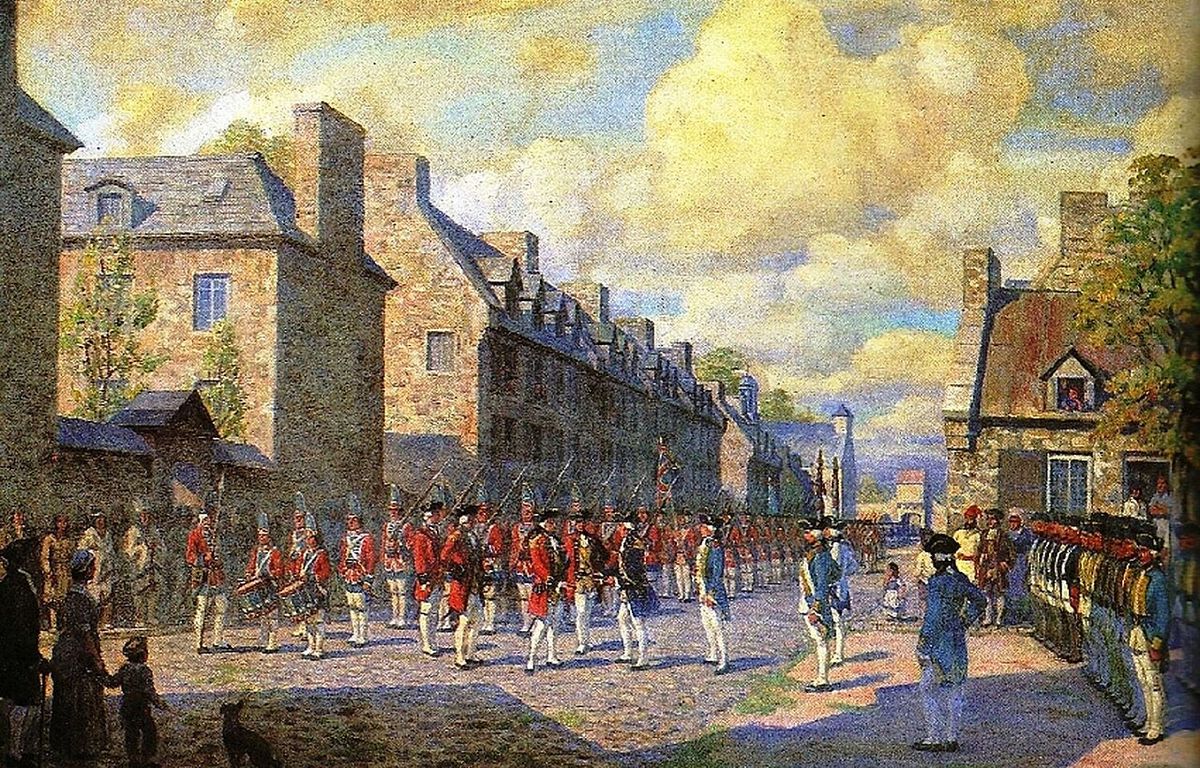
The origins of Old Montreal trace back to a fur-trading post established by Samuel de Champlain in 1605 at Place Royale, adjacent to present-day Place d'Youville and the Pointe-à-Callière Museum. The permanent settlement, however, was founded in 1642 by Paul Chomedey de Maisonneuve and was named Ville-Marie. Its mission, led by the Société Notre-Dame de Montréal, an organization founded by Sulpician Jean-Jacques Olier and Jérôme Le Royer, was to establish a Christian settlement and convert members of First Nations to Christianity. De Maisonneuve built a fort in 1643 which served as the headquarters for this endeavour. After the society dissolved on March 9, 1663, the Sulpician order, which had arrived in 1657, became the seigneurs of Montreal under the personal control of King Louis XIV, who took over the colony. The Sulpicians organized the seigneuries at the centre of the island and, under François Dollier Casson, laid out the first street grid following existing trails, which included Rue Notre-Dame, Rue Saint-Paul, and Rue Saint-Jacques. Key structures from this period include the original Hôtel-Dieu de Montréal hospital, the Saint-Sulpice Old Seminary, and the original Notre Dame Church, later replaced by the basilica. The arrival of religious figures like Marguerite Bourgeoys in 1657 and the Jesuits and Recollets in 1692 helped ensure the Catholic character of the settlement. The original fortifications of Montreal were erected in 1717 by Gaspard Chaussegros de Léry to secure the settlement from British invasion and to allow for future expansion inside the walls. In 1721, a royal order from France banned wood construction in favour of stone due to the risk of fire from the many wooden houses, but this ban was never fully enforced.
Transition to British Rule and 19th-Century Development
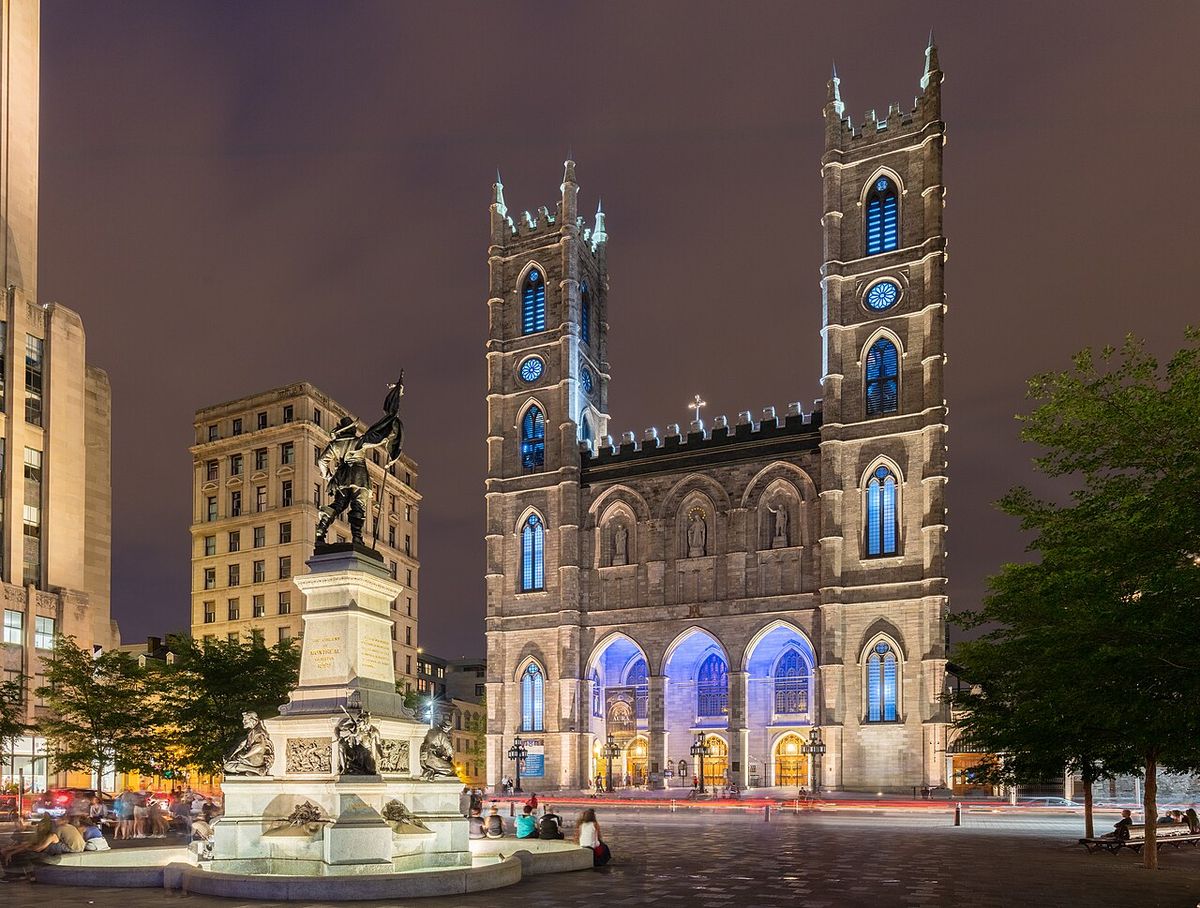
Following the Seven Years' War, New France became the British colony of Quebec in 1763. British rule brought radical changes, accelerated by a series of major fires that destroyed much of the old city and provided a mandate to rebuild. A fire in May 1765 destroyed about 110 houses, the old Hôtel de Callière, and the former General Hospital. Another fire in April 1768 burned 88 houses between rue Saint-Jean-Baptiste and Hotel Vaudreuil, including the Congregation Notre-Dame convent, and between them these fires destroyed nearly half the buildings in Montreal. The city was rebuilt even more densely in the following years. Another massive fire on June 6, 1803, destroyed the Jesuit church, prison, Château Vaudreuil, and a dozen houses, after which speculators bought the Château's gardens, gave one-third to the city, and divided the rest. This land later became the new market square, called Marché Neuf before assuming its present name of Place Jacques-Cartier in 1845. In 1809, Nelson's Column, the city's oldest public monument, was erected on part of this land given to the city. The 19th century saw the rise of a powerful, mostly Scottish merchant class, and the financial centre shifted to St. James Street, which housed large banks, insurance companies, and the stock exchange. This era also saw the construction of landmark buildings designed primarily by anglophone architects, representing a shift from French stone masonry to Victorian styles.
Key institutional and commercial structures from the French colonial period include the Hôtel-Dieu de Montréal, the Saint-Sulpice Old Seminary, and the original Notre Dame Church. The Sulpicians, who became the Seigneurs of Montreal in 1663, organized seigneuries at the centre of the island. François Dollier Casson established the first grid of streets in the colony, which included Rue Notre-Dame, Rue Saint-Paul, and Rue Saint-Jacques. The original fortifications of Montreal were erected in 1717 by Gaspard Chaussegros de Léry to secure the settlement from British invasion.
- The Old Court House and Customs House by John Ostell.
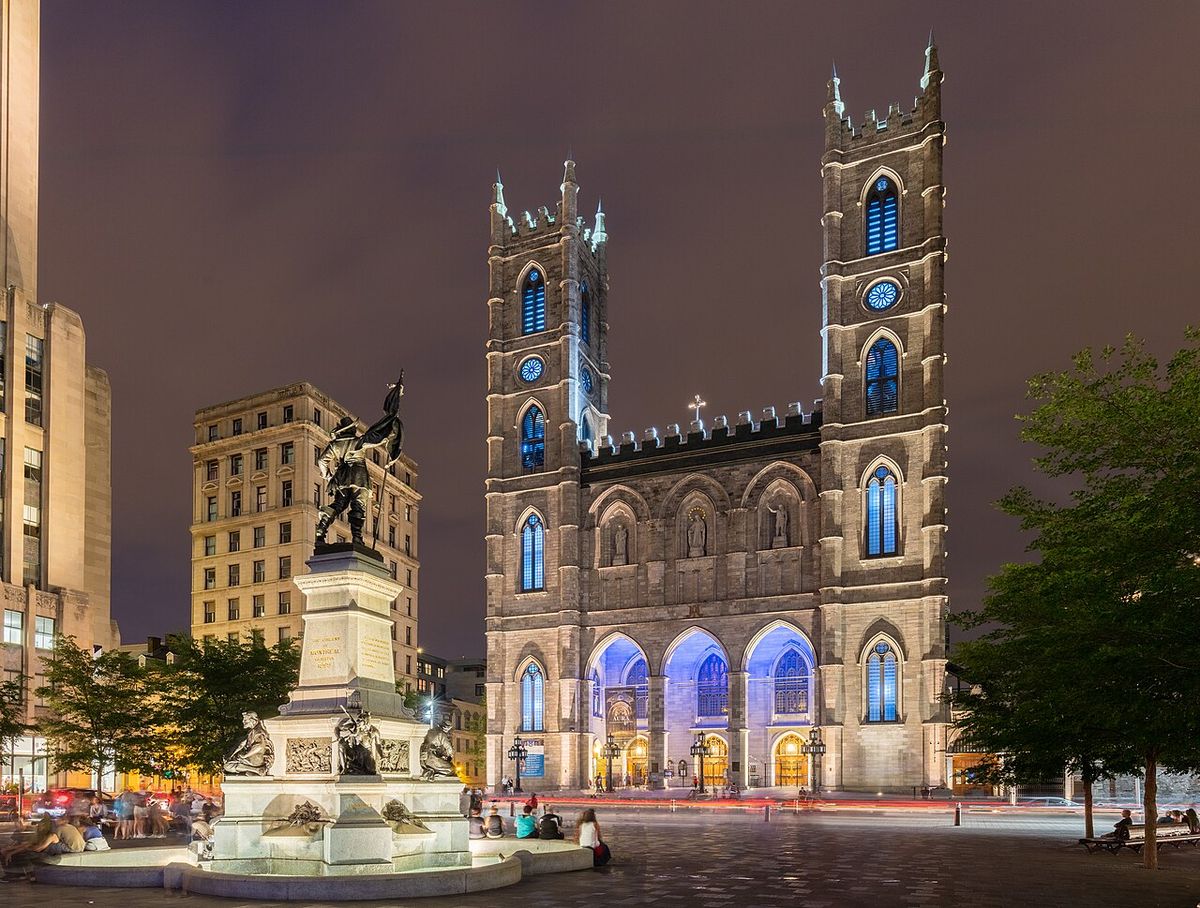
- The Notre-Dame Basilica, with its façade designed by Irish-American Protestant architect James O'Donnell, who converted to Catholicism after its design in 1824.
- Nelson's Column, erected in 1809.
- Montreal City Hall, built in 1873 on the old Jesuit gardens and inspired by the Hotel de Ville de Rennes.
- The first permanent theatre, the Royal Theatre, built by John Molson within the British-American Hotel after the Mansion House hotel burned in 1812.
Other significant events included the burning of the Parliament building by a Tory crowd in 1849 on Place d'Youville. The site of this fire later housed Montreal's first fire station in 1903, a building that now exists as the Centre d’histoire de Montréal. The 19th century witnessed the emergence of a bourgeoisie of mostly Scottish merchants. These wealthy merchants built extravagant homes closer to Mount Royal in what would become the Golden Square Mile. This shift made Old Montreal less residential as the century progressed.
20th-Century Decline and Preservation Efforts
The early 20th century saw continued growth with the construction of prestigious buildings like the Aldred Building (1929 to 1931), the La Sauvegarde Building (1913), and the first Stock Exchange building (1903 to 1904). Port activities, the financial sector, and the municipal government helped to maintain activity until the Great Depression began in 1929. During the Depression, the relocation of port facilities further east deprived Old Montreal of many companies related to the maritime trade, leaving many abandoned warehouses and commercial buildings. The downtown-area relocation several blocks to the north, and the near-complete absence of residents, with only a few hundred in 1950, had the effect of emptying the district when businesses closed at the end of the day, giving it a reputation for being dangerous at night. Mid-century city planning proposals considered wider streets and included a proposed highway along the river over rue de la Commune, which spurred a movement to preserve the district. Dutch-born architect and urban planner Daniel van Ginkel, as assistant director of Montreal's newly formed planning department, played a major role in the early 1960s by persuading authorities to abandon the expressway plan. This advocacy led to the area being declared a historic district by the Quebec government in 1964, though the government itself later razed several 19th-century buildings to construct a new courthouse. The late 20th century marked a period of renewal, with the return of a residential base and the conversion of old buildings into hotels. From having no major hotels in 1980, the area had about 20 by 2009, mostly in restored older buildings. Municipal investments redesigned Place Jacques-Cartier and part of Place d'Youville, began restoration of Place d'Armes, and implemented a lighting plan to highlight the different façade styles.
Architectural Landmarks and Attractions
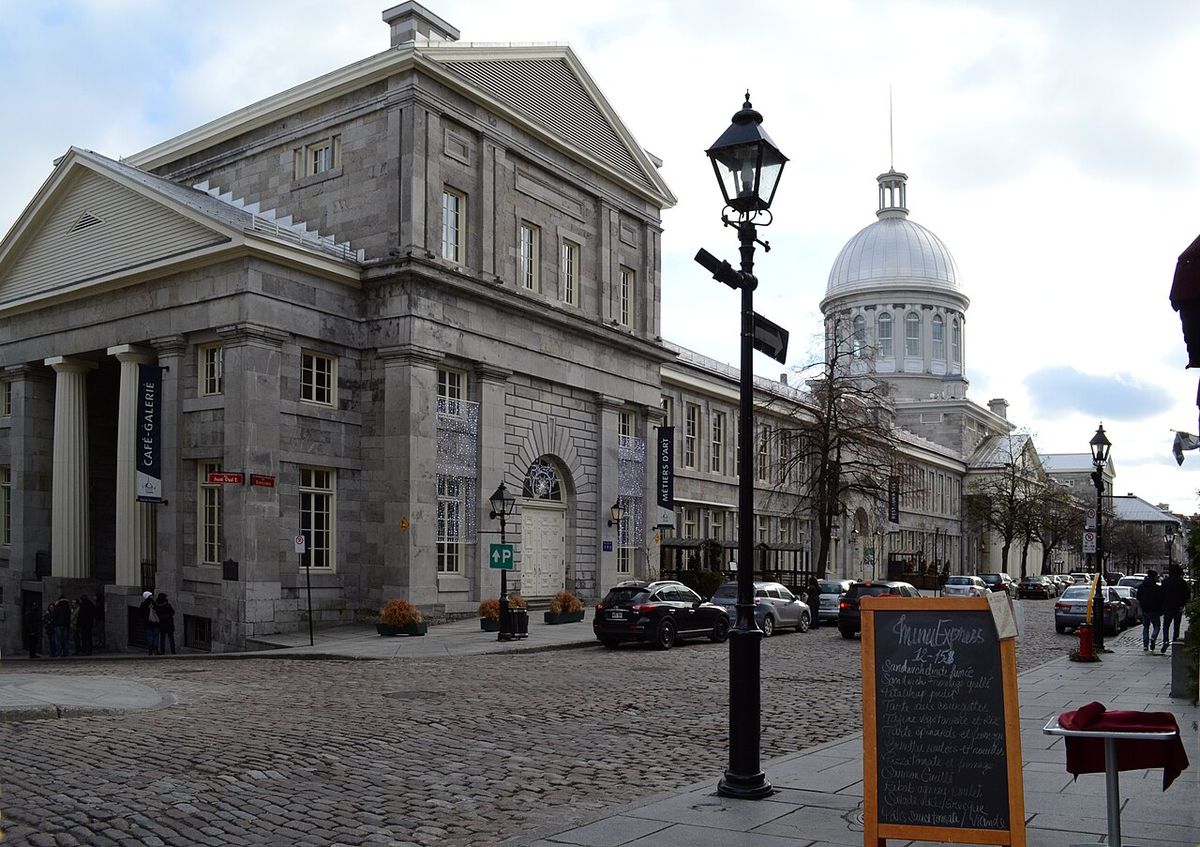
Old Montreal is a dense repository of historical architecture and a leading tourist destination, with some buildings dating to the 17th century. Its cobblestone streets and preserved buildings offer a walk through centuries of history, and horse-drawn calèches help maintain the image of the city's earliest days. The eastern sector near Place Jacques-Cartier features notable buildings like Montreal City Hall, the Bonsecours Market, the Notre-Dame-de-Bon-Secours Chapel, and preserved colonial mansions such as the Château Ramezay and the Sir George-Étienne Cartier National Historic Site. Further west, Place d'Armes is dominated by the Notre-Dame Basilica on its southern side, accompanied by the Saint-Sulpice Seminary, the oldest extant building in Montreal. The other sides of the square are devoted to commerce. To the north is the former Bank of Montreal Head Office and to the west, the Aldred Building and the 1888 New York Life Building, the oldest skyscraper in Canada. The rest of Saint Jacques Street is lined with old bank buildings like the Old Royal Bank Building from its heyday as Canada's financial centre. The southwest of the old city contains important archeological remains of Montreal's first settlement around Place d'Youville and Place Royale within the Pointe-à-Callière museum. The Old Port area has been transformed into a recreational space with museums and attractions, and the Iberville terminal on Alexandra Pier served as the cruise terminal for about 50,000 passengers annually from large cruise ships before the pandemic.
Prominent streets and sites for visitors include Rue Saint-Paul and Rue Saint-Jacques, which are among the oldest streets in the colony. Notable buildings near Place Jacques-Cartier include Montreal City Hall, Bonsecours Market, and the Notre-Dame-de-Bon-Secours Chapel. Place d'Armes is dominated by the Notre-Dame Basilica and the Saint-Sulpice Seminary, the oldest extant building in Montreal. The southwest of the old city contains important archaeological remains of Montreal's first settlement in the Pointe-à-Callière museum.
- Rue Saint-Paul, one of the oldest streets with cobblestones dating to 1672, which served as the city's main thoroughfare for many years.
- Place Jacques-Cartier, a historic market square that opened in 1804 as Marché Neuf.
- Place d'Youville, site of the 1849 Parliament fire, later housing Montreal's first fire station, now the Centre d’histoire de Montréal.
- The Old Port waterfront, offering views of the St. Lawrence River, the Clock Tower, the Biosphère, Jacques Cartier Bridge, and Habitat 67.
- The interior of Notre-Dame Basilica, featuring a deep blue ceiling adorned with thousands of golden stars, stained glass depicting Montreal's religious history, and a 7,000-pipe organ from 1891.
- Champ de Mars, a public space offering a view of downtown and containing two parallel lines of stone that are physical evidence of the 1717 fortifications.
Recent Developments and Tourism
In the 21st century, Old Montreal has solidified its position as Montreal's leading tourist destination with a consensus that its historical legacy is its major asset. The area has experienced a culinary rebirth, moving beyond overpriced tourist fare to host acclaimed restaurants and food tours offering items like fancy poutine, gluten-free sweets, and craft beers. The hotel industry has rebounded, with numerous boutique hotels operating in restored buildings, and a steady stream of tourists and new residents encourages nightlife and entertainment. Municipal authorities have invested large sums to renew the area's infrastructure, including redesigning public squares and implementing architectural lighting plans. The COVID-19 pandemic initially devastated tourism and led to civil protests and street celebrations in the district related to curfews and other public health measures. In June 2021, reports linked criminal activity to the closure of bars downtown and the area's many Airbnbs. In response, the Old Port of Montreal imposed a curfew from midnight to 6 a.m. for all properties south of De La Commune Street. Despite this challenge, tourism recovered, new restaurants opened including the waterfront terrasse Les Terrasses de la Marina, and in August 2021, the neighbourhood saw its first major supermarket chain open within walking distance when IGA opened on Robert-Bourassa Boulevard. The area continues to host immersive experiences, a light-up Ferris wheel, a floating spa, culinary delights, and events, maintaining its appeal for visitors of all ages.
Visitor Information and Accessibility
Old Montreal is highly accessible and best explored on foot to appreciate its historic charm, as driving is terribly unpractical due to narrow cobblestone streets and limited parking. The area is served by the Montreal Metro system, with key stations being Champ-de-Mars, Place-d'Armes, and Square-Victoria-OACI, which connect to the Underground City network. Several STM bus routes also service the neighbourhood, and during summer, ferries operate to the south shore city of Longueuil. An extensive network of bicycle paths is available, supported by the city's BIXI bike-share system, making it a cycle-friendly area. A 24-hour public transit pass costs approximately 11.50 Canadian dollars. For those with limited time, guided walking tours, including ghost tours and the Old Montreal Food Tour, are popular ways to experience the highlights and several landmarks. Major attractions like the Notre-Dame Basilica, which has a daytime entry cost of 5 dollars and an evening sound and light show called 'Aura' from Tuesday through Saturday, the Pointe-à-Callière Museum, and the Old Port are all within walking distance of each other. This proximity makes a comprehensive one-day itinerary entirely feasible, often starting from the Place-d'Armes Metro station to explore the most historic part of the city.
Cultural Significance and Role in Montreal
Old Montreal is the historic and symbolic core of Montreal, representing the city's evolution from a French missionary settlement called Ville-Marie to a British colonial hub and finally a modern financial centre. Its preservation was the result of a concerted effort that gained critical momentum in the 1960s, fundamentally changing how the city valued its architectural heritage and saving it from proposed highway construction. It is a primary venue for understanding Quebec's and Canada's colonial history, economic development, and cultural blending of French and English influences, evident in the anglophone design of most financial buildings on St. James Street. The area also plays a vital economic role through tourism, supporting hotels, restaurants, shops, and museums like the Château Ramezay and the Montreal Science Centre. Its mix of residents, businesses, and cultural institutions ensures it remains a dynamic part of the city, continuing to adapt while honouring its past, as seen in its culinary rebirth and new residential developments.
Historical Timeline of Key Events
The history of Old Montreal is marked by specific dates of foundation, destruction, and renewal. In 1605, Samuel de Champlain established a fur-trading post at Place Royale. The original settlement of Montreal was founded in 1642 and was known as Ville-Marie. Major fires in 1765, 1768, and 1803 destroyed many buildings in the city. In 1964, most of Old Montreal was declared a historic district by the Ministère des Affaires culturelles du Québec. This designation helped preserve the area from redevelopment plans.
| Year | Event |
|---|---|
| 1605 | Samuel de Champlain establishes a fur-trading post at Place Royale. |
| 1642 | Paul Chomedey de Maisonneuve founds Fort Ville-Marie, the settlement of Montreal. |
| 1663 | Société Notre-Dame dissolves. Sulpicians become seigneurs of Montreal. |
| 1717 | Construction of Montreal's first fortifications begins under Gaspard Chaussegros de Léry. |
| 1765 | A major fire destroys about 110 houses and key buildings like Hôtel de Callière. |
| 1804 | Demolition of the city's fortifications begins, enlarging Old Montreal's perimeter. |
| 1809 | Nelson's Column is erected, becoming the city's oldest public monument. |
| 1849 | The Parliament building is burned by a Tory crowd on Place d'Youville. |
| 1964 | Old Montreal is declared a historic district by the Quebec government. |
| 2021 | IGA supermarket opens on Robert-Bourassa Blvd. Old Port imposes a midnight curfew. |
This sequence shows the cycle of creation, destruction, and preservation that defines the area. The original fortifications were demolished between 1804 and 1815 to enlarge the perimeter. The district faced decline in the mid-20th century due to the relocation of port facilities and the downtown area. Preservation efforts in the 1960s saved the district from an expressway project. More recently, during the COVID-19 pandemic, tourism halted but later recovered, with new restaurants and a supermarket opening in 2021.
Questions about Old Montreal
What are the must-see attractions in Old Montreal?
Key attractions include the Notre-Dame Basilica, known for its stunning Gothic Revival interior, stained-glass windows depicting Montreal's history, and its 1891 pipe organ. The Pointe-à-Callière Museum is built on the archaeological site of the city's founding at Place Royale. A stroll down cobblestoned Rue Saint-Paul, a visit to the historic Bonsecours Market, and exploring the public squares like Place d'Armes and Place Jacques-Cartier are essential. The Old Port waterfront offers recreational space, views of the St. Lawrence River, and seasonal activities like the Ferris wheel and floating spa.
Is Old Montreal walkable?
Yes, Old Montreal is extremely walkable and is best experienced on foot, as 21st-century transportation does not suit the 17th-century charm. The historic district is compact, with major attractions, shops, and restaurants concentrated within a network of cobblestone streets. Driving is not recommended due to difficult parking and the desire to preserve the historic atmosphere. The area is also well-served by the Montreal Metro, with stations at Champ-de-Mars, Place-d'Armes, and Square-Victoria-OACI providing easy access from downtown and other parts of the city.
When was Old Montreal declared a historic district?
The majority of Old Montreal was declared a historic district by the Ministère des Affaires culturelles du Québec in 1964. This official classification helped preserve the area from proposed destructive projects, such as an raised highway along the river. The designation occurred following advocacy by figures like urban planner Daniel van Ginkel, who persuaded authorities to abandon expressway plans. Despite this historic status, the Quebec government still demolished several 19th century buildings to construct a new courthouse. Today, there is a consensus that this historical legacy is the district's major asset, making it a leading tourist destination.
What is the oldest building in Old Montreal?
The oldest extant building in Old Montreal is the Saint Sulpice Seminary. This stone building is located on the southern side of the Place d'Armes, facing the Notre Dame Basilica. It is a significant architectural remnant from the early French colonial period. The seminary's presence highlights the deep Catholic character of the original settlement, which was reinforced by the arrival of religious orders like the Sulpicians in 1657.
How did the COVID-19 pandemic affect Old Montreal?
The COVID-19 pandemic initially halted tourism in Old Montreal, transforming the district into a centre for both protests against health measures and street celebrations. In June 2021, reports of criminal activity linked to closed downtown bars and numerous Airbnbs led the Old Port to impose a midnight to 6 a.m. curfew for properties south of De La Commune Street. After the violence receded, tourism rebounded, though the overnight curfew remained. New businesses opened, including the waterfront Les Terrasses de la Marina restaurant and, in August 2021, an IGA supermarket on Robert Bourassa Boulevard, the area's first major grocery chain within walking distance.
Where was Montreal originally founded?
Montreal was originally founded in 1642 as Fort Ville Marie by French settlers led by Paul Chomedey de Maisonneuve. This settlement was located near the confluence of the Saint Lawrence River and the Petite Rivière St Pierre, adjacent to present day Place d'Youville and the Pointe à Callière Museum. This site was roughly the same location as an earlier 1605 fur trading post established by Samuel de Champlain, which had been abandoned due to Iroquois incursions. The 1642 fort served as the headquarters for the Société Notre Dame de Montréal, an organization aimed at converting First Nations and establishing a Christian settlement in New France.
Sources and further reading
- Old Montreal (Wikipedia)
- Experience Montréal (mtl.org)
- Best Things to Do in Montréal + One-Day Itinerary (2026) (stokedtotravel.com)
- 2026 Old Montreal Travel Guide (toeuropeandbeyond.com)
- What to Do in Old Montréal if You Have Just One Day (frommers.com)
Checked by the Novello Desserts desk. Last updated 2026-10-30.