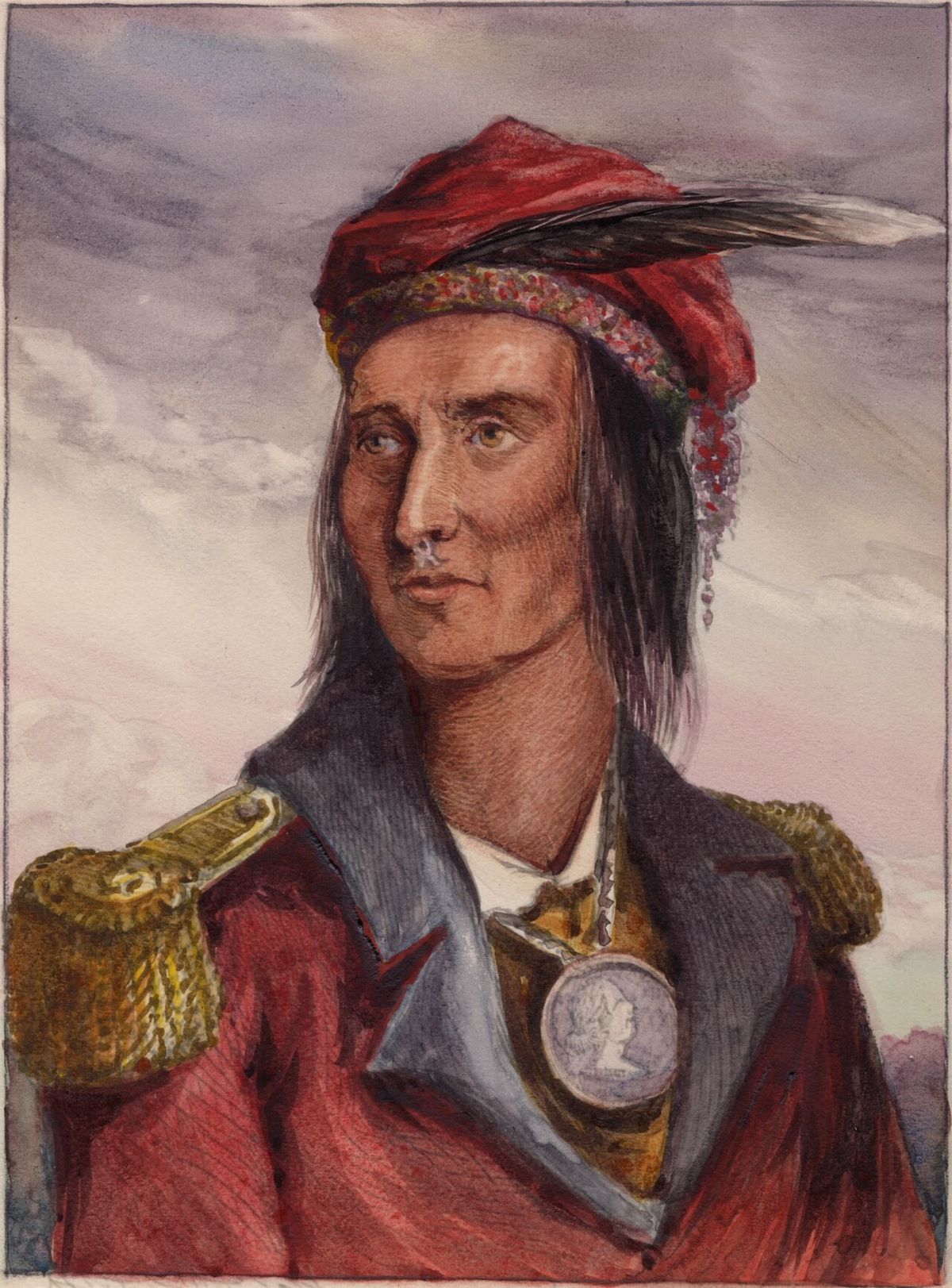
Samuel de Champlain
Samuel de Champlain was a French explorer, navigator, and cartographer whose founding of Quebec City on July 3, 1608, established the first permanent French settlement in North America, known as New France. His extensive voyages and detailed maps provided Europe with its first comprehensive understanding of the continent's northeastern geography and Indigenous peoples. Champlain forged crucial alliances with Innu, Algonquin, and Wendat nations, relationships that were essential to the colony's survival, though he also engaged in military conflicts against the Haudenosaunee Confederacy. Recognized as the 'Father of New France,' his legacy is commemorated across Canada through numerous place names, statues, parks, and a major bridge, reflecting his foundational role in Canadian history.
Early Life and Maritime Training
The details of Samuel de Champlain's birth are debated, with a 2012 discovery of a baptismal record for a Samuel Chapeleau on 13 August 1574 in La Rochelle presenting a compelling but unconfirmed possibility. He was the son of Antoine Champlain and Marguerite Le Roy, likely born in the French province of Aunis, possibly in the fortified salt port of Brouage. His family were mariners, and his education was practical, focusing on navigation, cartography, drafting, and report writing, rather than classical languages like Greek or Latin. As French ships required self defence, Champlain also learned to use firearms, and he gained direct military experience serving in the army of King Henry IV during the final stages of the French Wars of Religion in Brittany from about 1594 to 1598. He began as a quartermaster responsible for provisions and horse care, rising to the rank of captain commanding a garrison near Quimper by 1597, which provided him with essential leadership and tactical skills for future colonial endeavours.
First Voyages and Secret Report
Champlain's early travels began with a voyage to the Spanish West Indies from 1599 to 1601, accompanying his uncle-in-law who was transporting troops under the Treaty of Vervins. This two year journey took him through Spanish holdings from the Caribbean to Mexico City, where he made detailed notes and illustrations. Upon his return, he compiled these observations into a secret report for King Henry IV, who rewarded him with an annual pension for this intelligence. The report, later published as the 'Brief Discours' or 'Narrative of a Voyage to the West Indies and Mexico,' has been questioned by scholars for its inaccuracies, though recent scholarship suggests Champlain was likely its author. Following this, the death of his uncle Guillermo Elena in 1601 left Champlain a substantial inheritance including property near La Rochelle, commercial interests in Spain, and a 150 ton merchant ship. This financial windfall, combined with his royal pension, granted him significant independence from merchant investors for his future projects.
Initial Explorations and Acadian Settlement
From 1601 to 1603, Champlain served as a geographer in the court of King Henry IV, learning about North America from seasonal fishermen. His first voyage to the continent came in 1603 as an observer on a fur trading expedition led by François Gravé Du Pont, a lifelong friend who taught him navigation on the Saint Lawrence River. Arriving at Tadoussac, Champlain was eager to see the lands Jacques Cartier had described sixty years earlier and to go beyond them. He created a map of the Saint Lawrence and, after returning to France, published his account as 'Des Sauvages,' which included descriptions of meetings with Begourat, chief of the Montagnais. In 1604, he joined Pierre Dugua de Mons's expedition to establish a settlement in Acadia, south of the St. Lawrence. After a disastrous winter on Saint Croix Island, they relocated to Port Royal, which became the first permanent European settlement north of Florida. Champlain used this base until 1607 to explore the Atlantic coast as far south as Cape Cod, naming the area around present day Chatham, Massachusetts, 'Mallebar' or 'bad bar' after skirmishes with the Nauset people discouraged settlement there.
The Founding of Quebec and Internal Conspiracy
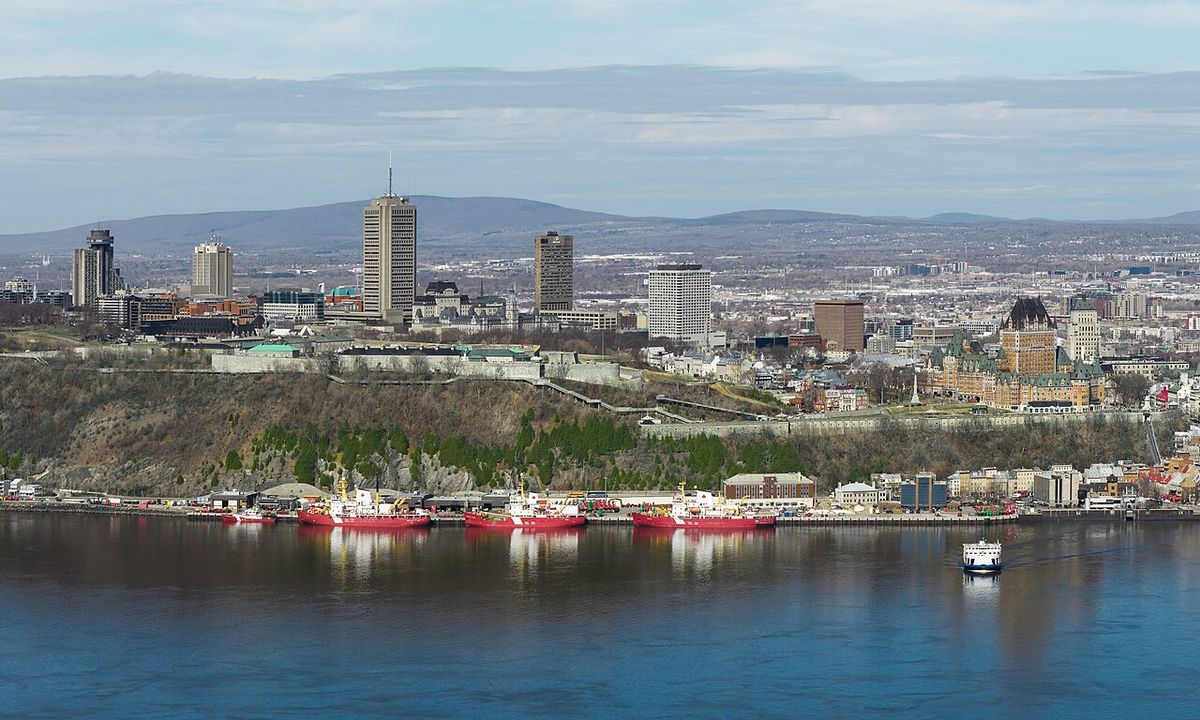
In 1608, financed by Dugua, Champlain led a fleet of three ships to establish a new fur trading centre and colony. He commanded the main ship, Don de Dieu, while his friend Du Pont commanded the Lévrier. The group arrived at Tadoussac in June and proceeded up the St. Lawrence in small boats to bypass the dangerous Saguenay River currents. Champlain selected the point of Quebec, named by the local Indigenous peoples and covered with nut trees, as the ideal site for settlement on July 3. His men immediately began cutting down the trees to build habitations. Shortly after arrival, a conspiracy led by Jean du Val aimed to assassinate Champlain and deliver the settlement to Basque or Spanish interests for personal gain. The plot was foiled when an associate confessed to Champlain's pilot. Champlain had Du Val and three co conspirators invited onto a boat under a pretext and arrested them. Du Val was executed by strangulation and hanging in Quebec, with his head displayed on the fort, while the other three were sent to France for trial, securing Champlain's command.
Indigenous Alliances and Military Engagements
Champlain's strategy for New France depended on forming and maintaining alliances with local First Nations, including the Wendat (Huron), Algonquin, Innu (Montagnais), and Etchemin. These relationships were economic, centred on the fur trade, and military, involving mutual defence agreements. In the summer of 1609, these allies sought his help in a war against the Haudenosaunee (Iroquois) Confederacy. Champlain set out with nine French soldiers and three hundred Indigenous warriors, exploring the Rivière des Iroquois, now the Richelieu River, and becoming the first European to map Lake Champlain. On July 30, near present day Ticonderoga or Crown Point, New York, his party encountered a Haudenosaunee war party. In the ensuing battle, Champlain's guides pointed out three chiefs, and he fired his arquebus, reportedly killing two with a single shot while one of his men killed the third, causing the Haudenosaunee to flee. The following year, on June 19, 1610, Champlain's forces engaged the Mohawk people at the Battle of Sorel. Armed with arquebuses, the French and their allies killed or captured nearly all of the Mohawk warriors, ending major hostilities with them for twenty years but cementing a long term enmity with the Haudenosaunee Confederacy.
Marriage and Family Life
On December 27, 1610, Champlain signed a marriage contract with Hélène Boullé, the twelve year old daughter of Nicolas Boullé, a court official, in a move likely designed to improve his access to the regent's court. The couple was married three days later, with the contract stipulating that the marriage would not be consummated for two years. The marriage faced early difficulties, with Hélène refusing to join him in New France when he attempted to bring her over in August 1613. Their relationship, while reportedly lacking a physical connection, later recovered into a companionship. Hélène did live in Quebec for several years but ultimately returned to Paris and entered a convent. The couple had no biological children. In the winter of 1627 28, demonstrating his commitment to his life in the colony, Champlain adopted three Montagnais girls, whom he named Faith, Hope, and Charity, integrating his personal family with the community of New France.
Later Explorations and Colonial Administration
Champlain returned to New France in March 1613 and set out in May to explore the Huron country and search for a rumoured northern sea, likely Hudson Bay. He traveled the Ottawa River, providing its first European description, and reportedly lost a brass astrolabe dated 1603 near present day Cobden, Ontario, though his ownership of this artifact is debated by modern scholars. In June, he met with Tessouat, the Algonquin chief of Allumettes Island, and offered to build a fort if his tribe relocated to the area of the Lachine Rapids. By August 1613, he was back in France, where he wrote and published an account of his life from 1604 to 1612, titled 'Voyages,' along with a new map. In 1614, he helped form the Compagnie des Marchands de Rouen et de Saint Malo and the Compagnie de Champlain to secure trade monopolies. He returned in 1615 with four Recollect missionaries to establish a religious presence, and the Catholic Church later received nearly thirty percent of all land granted by the French Crown in New France as seigneurial grants. In 1620, King Louis XIII ordered him to stop exploring and focus on administration. Although he never held the formal title of governor, Champlain effectively governed New France until his death in Quebec on December 25, 1635.
Cartographic and Written Legacy
Champlain was an accomplished cartographer whose work fundamentally changed European understanding of North America. He created the first accurate coastal charts of the continent's eastern shoreline from Acadia to Cape Cod, as well as detailed maps of the Saint Lawrence River and the Great Lakes region. His mapping methodology combined his own direct observations with geographic information provided by his Indigenous allies and guides. Alongside his maps, Champlain was a prolific chronicler, publishing detailed accounts of his voyages and the peoples he encountered. His first book, 'Des Sauvages' (1603), documented his initial journey and meetings with Indigenous leaders at Tadoussac. His later work, 'Voyages' (1613), covered his explorations and the founding of settlements up to 1612. These writings provided invaluable ethnographic observations of Innu, Algonquin, and Wendat societies, including their customs, political structures, and technologies, forming a crucial early record for historians and anthropologists.
Modern Commemorations and Legacy Sites
Samuel de Champlain's legacy is physically woven into the Canadian landscape through numerous monuments, parks, and infrastructure. A statue of the explorer stands prominently in the city, often included in guided tours. The Samuel De Champlain Bridge in Montreal is a critical piece of infrastructure, with approximately 50 million vehicles crossing it each year. Other commemorations include the Memorial Samuel de Champlain, which offers guided historical tours, and the Monument Samuel De Champlain in Quebec City. These sites, along with geographical features like Lake Champlain, collectively honour his role as the foundational architect of French Canada.
Questions about Samuel de Champlain
What did Samuel de Champlain accomplish?
Samuel de Champlain's foremost accomplishment was founding Quebec City on July 3, 1608, which became the first permanent French settlement in North America and the capital of New France. He created the first accurate coastal maps of northeastern North America and the Great Lakes region, combining his own surveys with information from Indigenous peoples. Champlain also established crucial trade and military alliances with Innu, Algonquin, and Wendat nations, which were vital for the colony's survival. His written accounts provided Europe with detailed knowledge of the continent's geography and Indigenous cultures.
Where is Samuel de Champlain buried?
Samuel de Champlain died in Quebec City on December 25, 1635. The exact location of his burial remains unknown, though it is believed to be within the precincts of the original settlement. Despite various theories and searches over the centuries, no definitive archaeological evidence has confirmed the site of his grave. This mystery adds a layer of historical intrigue to his legacy in the city he founded.
Are there any parks or monuments dedicated to Champlain in Canada?
Yes, numerous sites across Canada commemorate Samuel de Champlain. In Quebec, the Promenade Samuel De Champlain is a large riverside park with trails and gardens, and a statue of him stands in the city. The Samuel De Champlain Bridge is a major traffic artery in Montreal. In Ontario, Samuel de Champlain Provincial Park, located on the Mattawa River, offers camping and day use recreation. Other memorials include the Monument Samuel De Champlain in Quebec City and various historic plaques marking his exploration routes.
What was Champlain's relationship with Indigenous peoples?
Champlain's relationship with Indigenous peoples was built primarily on alliance and trade. He formed enduring partnerships with the Wendat (Huron), Algonquin, and Innu (Montagnais) to secure the fur trade essential to New France. He lived among these communities for extended periods, making detailed ethnographic observations. However, these alliances required him to participate in their wars, notably against the Haudenosaunee (Iroquois) Confederacy, engagements that included the 1609 battle at Lake Champlain and the 1610 Battle of Sorel.
Did Samuel de Champlain have any children?
Samuel de Champlain had no biological children with his wife, Hélène Boullé. However, in the winter of 1627 28, he adopted three Montagnais girls, whom he named Faith, Hope, and Charity. This act reflected his deep personal investment in the colony and its people. His marriage to Hélène, contracted when she was twelve, was strategic and reportedly remained platonic, and she eventually returned to France to enter a convent.
Sources: Wikipedia and current public reporting, checked by the Novello Desserts desk. Last updated 2026-10-20.