Royal Military College of Canada
The Royal Military College of Canada (RMC), located in Kingston, Ontario, is a degree-granting military university and a foundational institution for the Canadian Armed Forces. Established in 1874 and opening its doors to the first class of cadets in 1876, RMC is responsible for educating and developing future officers through a rigorous program balancing academics, officership, athletics, and bilingualism. As the first military college in the British Commonwealth to achieve degree-granting status in 1959, it holds a unique place in Canada's educational and defence landscape. The college's historic campus on Point Frederick, a peninsula rich in military history, is also a significant tourist destination, featuring museums, national historic sites, and guided tours that connect visitors to Canada's military heritage.
Historical Foundations and Evolution
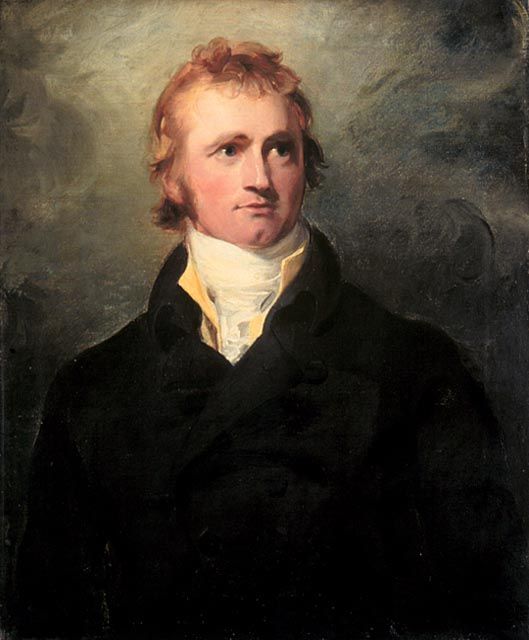
The establishment of a military college in Canada was debated for decades before the Parliament of Canada passed An Act to Establish a Military College in 1874 under Prime Minister Alexander Mackenzie. The Military College of Canada opened on June 1, 1876, on Point Frederick in Kingston with an initial class of 18 cadets, later known as the "Old Eighteen." In 1878, Queen Victoria granted the college the right to use the prefix "Royal," solidifying its status as the Royal Military College of Canada. Unlike its British counterparts, RMC adopted a four-year curriculum heavily focused on science and engineering, similar to the United States Military Academy at West Point. The college's early years were challenging due to high admission standards and a limited permanent army in Canada, which meant many graduates pursued civilian careers while maintaining service in the part-time Militia.
The college faced a period of decline in the early 1890s before Superintendent Gerald Kitson implemented reforms, including shortening the course to three years and improving staff quality. The military aspect of training was further emphasized after 1910, when attendance at a militia camp became a graduation requirement. During the First World War, the course was condensed to two years, and an overwhelming majority of former cadets, 86 percent of those eligible, served in the conflict. RMC graduates held a disproportionate number of senior staff appointments within the Canadian Expeditionary Force. The college suspended its regular cadet program in 1942 for the remainder of the Second World War, transforming into a specialized training facility for courses like the War Staff Course while its alumni again rose to senior ranks, including all four wartime Chiefs of the General Staff.
After the war, the future of RMC was uncertain until committees debated its role, ultimately leading to its reopening in 1948 as a tri-service institution with the "New One Hundred" cadets. A key moment came in 1959 when the Ontario legislature passed The Royal Military College of Canada Degrees Act, granting RMC the authority to confer its own degrees, a first for a military college in the Commonwealth. The college continued to evolve, becoming officially bilingual in 1969 and admitting its first cohort of 32 female cadets into the first-year program in September 1980. The institution marked its centennial in 1976 with a parade on Parliament Hill and looks ahead to its 150th anniversary of operation on June 1, 2026.
Campus and Visitor Experience
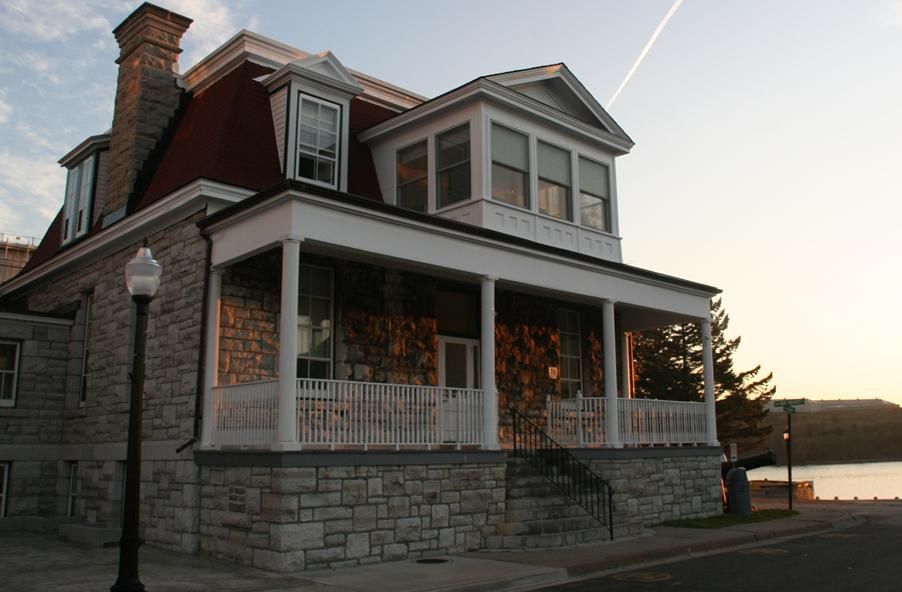
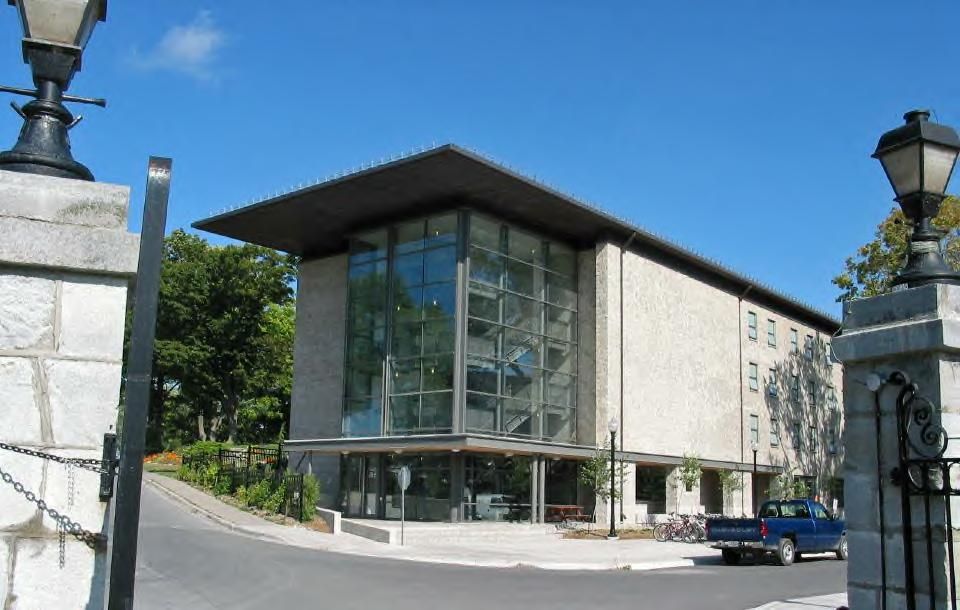
The Royal Military College of Canada occupies a 41-hectare peninsula known as Point Frederick in Kingston, Ontario, offering a blend of historic stone buildings and modern academic facilities with striking views of Lake Ontario. The campus itself is a key tourist attraction, featuring several sites of national historical significance. Central to the visitor experience is the Royal Military College Museum, housed within the Fort Frederick Martello Tower, which is both a National Historic Site and part of a UNESCO World Heritage Site. The museum's collections detail the history of the college, the Canadian Armed Forces, and the site's earlier role in the War of 1812. Guided campus tours are regularly available, providing insights into the college's operations, architecture, and the daily life of officer cadets.
For those interested in military history, a dedicated 1812 Walking Tour, established with support from Canadian Heritage, guides visitors through 13 interpretive signs across the campus, exploring the area's critical role in the defence of Canada. The tour concludes at a monument erected by the Historic Sites and Monuments Board of Canada, dedicated to those who served on Lake Ontario from 1812 to 1814. The college hosts Open House events that typically include campus tours, an information expo on the "Four Pillars" of RMC education, and interactive sessions for prospective students and the public. These events, along with virtual information sessions, make the institution's mission and history accessible to a wide audience.
Academic Structure and the Four Pillars
The education of an RMC officer cadet is built upon the integrated development of four pillars: academics, officership, athletics, and bilingualism. Academically, RMC offers 19 undergraduate degree programs across its three faculties: Social Sciences and Humanities, Science, and Engineering. All undergraduate students must complete a core curriculum designed to provide a broad foundation, including courses in economics, psychology, mathematics, English, calculus, Canadian military history, chemistry, Canadian history, physics, and civics. At the graduate level, the college provides 34 study opportunities, including 14 doctoral programs, many of which are defence-focused. The Division of Continuing Studies, established in 1997, extends university education through distance learning to members of the Canadian Forces, their spouses, and Department of National Defence employees.
The officership pillar focuses on developing leadership, military knowledge, and ethical conduct, preparing cadets for careers in the Royal Canadian Navy, Canadian Army, and Royal Canadian Air Force. The athletics pillar mandates a high standard of physical fitness through competitive sports and personal training. The bilingualism pillar ensures officer cadets develop functional ability in both English and French, reflecting Canada's official languages. This holistic model aims to produce well-rounded leaders capable of effective service. The college's research activities strongly support its academic and military missions, with over 90 percent of research being defence-related. Key research areas include information technology, environmental engineering, advanced materials, international security, and military history.
- Undergraduate Faculties: Faculty of Social Sciences and Humanities, Faculty of Engineering, Faculty of Science.
- Core Curriculum Subjects: Economics, Psychology, Mathematics, English, Calculus, Military History of Canada, Chemistry, Canadian History, Physics, Civics.
- Graduate Study Areas: Electrical and computer engineering, physics, chemistry, international security, governance, defence economics.
- Specialized Programs: Officer Professional Military Education (OPME), Army Technical Staff Officer Programme, Diploma in Military Arts and Sciences (DMASc).
- Research Centres: Centre for Security, Armed Forces and Society (CSAS-CESFAS), Institute for the Environment.
- Partnerships: Member of the University of the Arctic network, partnerships with OntarioLearn and the Canadian Defence Academy.
Admission and Training Pathways
Admission to the Royal Military College of Canada is primarily through the Regular Officer Training Plan (ROTP), a conditional scholarship program that combines a fully funded university education with military training and a monthly salary. The application process involves an aptitude test, a medical examination, and an interview, with academic performance from grades 9 through 12 being heavily weighted. Successful ROTP candidates enter the Canadian Military College System as officer cadets, obligated to serve in the Canadian Armed Forces for a period after graduation, typically a minimum of five years. For programs not offered at RMC, such as nursing or pharmacy, candidates may attend any Canadian university under the Civilian University ROTP while still receiving financial support.
Other admission routes include the University Training Plan for Non Commissioned Members (UTPNCM), which enables serving non-commissioned members to earn a degree and commission as officers, and the Initial Baccalaureate Degree Program (IBDP). The former Reserve Entry Training Plan was discontinued in 2017. Throughout their studies, officer cadets must maintain satisfactory performance in both academic and military domains. The Division of Continuing Studies provides part-time and distance learning options for professional development, recognizing prior military training for academic credit. This flexible structure ensures the Canadian Armed Forces can develop officers from a variety of backgrounds and career stages.
Specialized Units and Legal Education
Beyond its academic faculties, RMC hosts specialized units integral to the professional development of the Canadian Armed Forces. The Military Law Centre, located on the college grounds and staffed by 12 military lawyers, is responsible for the legal education of officers and troops. Its mandate covers instruction on the military justice system, the Code of Service Discipline, and the Law of Armed Conflict. The centre trains military lawyers, develops legal policy and doctrine for the Department of National Defence, and integrates legal training into the regular professional development of Forces members. This work highlights the importance of legal expertise within modern military operations.
RMC cadets have the opportunity to apply this legal knowledge in international forums. Selected cadets participate in the annual Law of Armed Conflict competition at the International Institute of Humanitarian Law in Sanremo, Italy, competing against counterparts from American service academies like West Point and the Naval Academy. This experience provides practical, hands-on understanding of international humanitarian law. The Department of Applied Military Science (AMS) also delivers specialized technical programs, such as the Army Technical Staff Officer Programme for captains and majors, and the Army Technical Warrant Officer Programme for senior non-commissioned members, bridging advanced technical knowledge with military application.
Significant Anniversaries and Commemorations
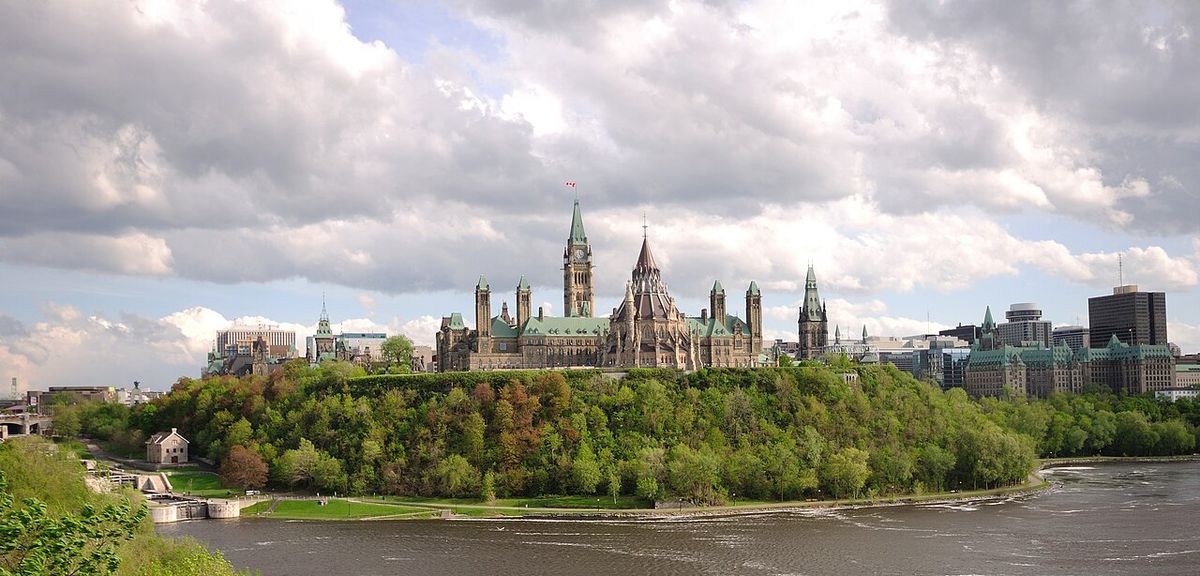
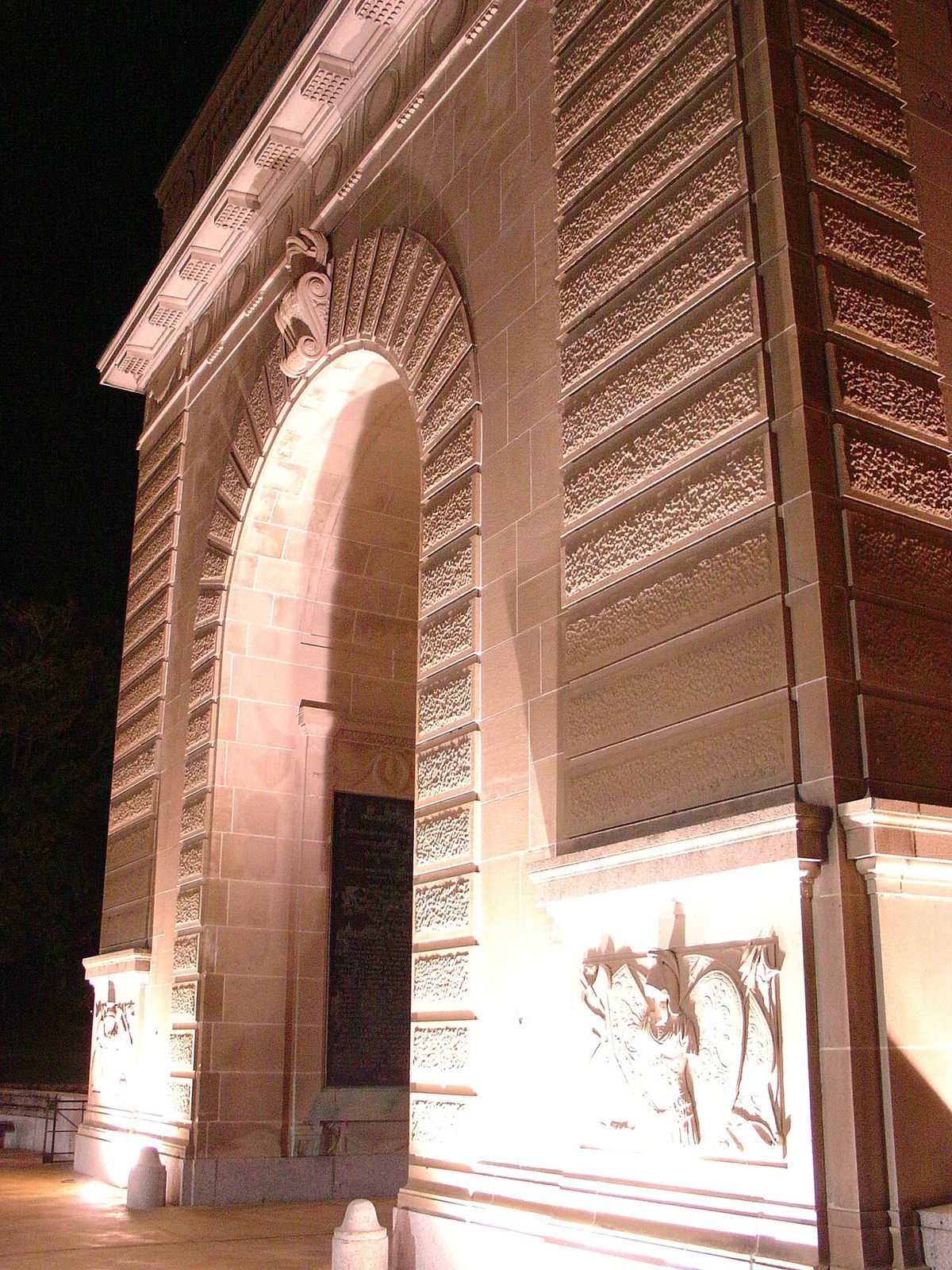
The Royal Military College of Canada has marked several major anniversaries that celebrate its service and contributions to Canada. The centennial of its opening in 1876 was commemorated in 1976, highlighted by the Cadet Wing parading on Parliament Hill on July 1. In 1967, over 500 cadets trooped the colours on Parliament Hill as part of Canada's centennial of Confederation celebrations. The college also observes the legacy of its earliest members, with all cadets today memorizing the names of the first 18 cadets, the "Old Eighteen." The campus itself serves as a living monument, with the Fort Frederick Martello Tower and the 1812 Walking Tour preserving the layered military history of Point Frederick from the War of 1812 through to the present day.
The next major milestone is the 150th anniversary of the college's operation, which will be observed on June 1, 2026. This sesquicentennial will be a significant event, reflecting on a century and a half of educating leaders for the Canadian Armed Forces. The college's history is further honoured through activities like the Mottershead Battlefield Tour, which in February 2023 provided RMC students with an opportunity to visit First World War battlefields in France and Belgium, connecting classroom history with the tangible landscapes of conflict. These commemorations and educational tours reinforce the institution's enduring role in shaping Canada's military heritage and its future leadership.
Questions about Royal Military College of Canada
Can the public visit the Royal Military College of Canada?
Yes, the Royal Military College of Canada in Kingston is open to the public for tours and visits. The campus hosts Open House events featuring campus tours and information sessions. Visitors can explore the Royal Military College Museum located in the historic Fort Frederick Martello Tower, a National Historic Site. A self-guided 1812 Walking Tour with interpretive signs is also available across the grounds, detailing the area's role in the War of 1812.
What degrees does RMC offer?
RMC is a degree-granting university offering 19 undergraduate programs across the faculties of Social Sciences and Humanities, Science, and Engineering. It also provides 34 graduate study opportunities, including 14 doctorate programs. Since receiving its university charter from Ontario in 1959, RMC has conferred its own degrees in arts, science, and engineering at both the undergraduate and graduate levels. All undergraduate students complete a core curriculum covering a wide range of subjects from mathematics and sciences to history and civics.
How do you become a cadet at RMC?
The primary pathway is through the Regular Officer Training Plan (ROTP), a conditional scholarship program. Applicants must undergo a selection process that includes an aptitude test, a medical examination, and an interview. Academic performance from grades 9 through 12 is heavily weighted in the assessment. Successful candidates receive a fully funded education, a monthly salary, and military training, with an obligation to serve as an officer in the Canadian Armed Forces for a period after graduation, typically at least five years.
What are the 'Four Pillars' of RMC?
The Four Pillars are the foundational components of an RMC officer cadet's development: academics, officership, athletics, and bilingualism. Academics involve a rigorous university education. Officership focuses on military leadership and ethics. Athletics ensures a high standard of physical fitness. Bilingualism requires functional proficiency in both English and French. This integrated model is designed to produce well-rounded leaders for the Canadian Armed Forces.
When did RMC start admitting women?
The Royal Military College of Canada began admitting women in 1979. This initial admission was for female officer cadets under the University Training Plan for Non Commissioned Members (UTPNCM) and for post graduate students. In September 1980, the first 32 female cadets were accepted into the first-year undergraduate program at RMC. This policy change opened the doors of the military college to women, allowing them to pursue the same education and training as their male counterparts. The integration of women was part of the college's evolution to meet the needs of the modern Canadian Armed Forces.
What is the significance of the 2026 anniversary for RMC?
June 1, 2026, marks the 150th anniversary of the Royal Military College of Canada. This date commemorates the sesquicentennial of the college conducting its first classes in Kingston, Ontario, which began on June 1, 1876. The anniversary celebrates a century and a half of operation and the service and contributions of the college and its graduates to Canada. RMC holds a distinguished history as the first military college in a colonial dependency and the first in the British Commonwealth to achieve degree-granting status in 1959. This milestone highlights its long standing role in educating and training officers for the Canadian Armed Forces.
Sources: Wikipedia and current public reporting, checked by the Novello Desserts desk. Last updated 2026-10-27.