Sankofa Square
Sankofa Square is a prominent public square and outdoor event venue located at the intersection of Yonge Street and Dundas Street East in downtown Toronto, Ontario. Encompassing one acre, it was completed in 2002 as the centrepiece of a major urban revitalization project for the Yonge Street corridor. The square is a defining landmark of the Downtown Yonge entertainment district, known for its illuminated advertising screens, interactive fountains, and constant stream of public events, drawing comparisons to global hubs like Times Square. Owned by the City of Toronto but operated through Canada's first public-private partnership for a public square, it is a major tourist attraction and a central community gathering place.
Design and Physical Features
Sankofa Square occupies an irregular pentagon-shaped plot bordered by Yonge Street, Dundas Street East, Victoria Street, and a small street named Dundas Square. The design by Brown + Storey Architects features a slight incline intended to evoke a theatrical stage, paved with dark, textured granite slabs measuring 35.125 by 35.125 inches each. A defining architectural element is the angled northeastern side known as the hypotenuse, supported by eleven round concrete pillars that create an industrial aesthetic without casting shadows on the main space. The square includes a movable plinth stage with a transparent canopy, a row of small trees along its southern edge demarcated by a diagonally running zinc canopy, and an entrance to the TMU subway station below. A series of low, circular stone planters was added to the western side in the summer of 2005. The entire space is designed for flexibility, accommodating everything from large concert stages to intimate art installations and community gatherings throughout the year.
The centrepiece of the square is its innovative water feature designed by Dan Euser of Water architecture. Two rows of ten fountains are embedded directly into the pavement, featuring 600 ground nozzles arranged in three rows of ten under each stainless steel grille. This installation is explicitly designed for water play, with a sophisticated filtration system that treats the water with bromine to maintain health standards for public interaction, and the water is tested daily by the Toronto health department between 9 a.m. and 10 a.m. The dark granite slabs absorb sunlight, passively heating the water that runs beneath them, so the fountain water is solar heated. The fountains operate 24 hours a day from approximately mid-April to the end of October, making it one of only two aquatic play areas in Toronto that opens early and closes late in the season. The jets are dynamically programmed over time, with the middle channel of ten nozzles per fountain capable of animation for eight-second intervals, while the outer channels provide a background water level.
Three curved lighting masts along the south edge, made of hollow structural steel with a high-gloss white finish, support six mercury vapour arc lamps each. These lamps are positioned to create evening light that approximates the direction of natural sunlight. The fountain design encourages specific interactions. The directionality of the middle channel's sequencer encourages bathers to run west, and the experience is optimized for joggers moving west at exactly 20 kilometres per hour. The architects, fountain creator, and original project proponents have all confirmed that water play was a primary intended use of the space, an intention realized by its frequent use by children and adults. The water treatment system is divided into three separate facilities under the square, each servicing different groups of nozzles, with the water flowing west under the raised granite floor to these facilities.
Surrounding Area and Urban Context
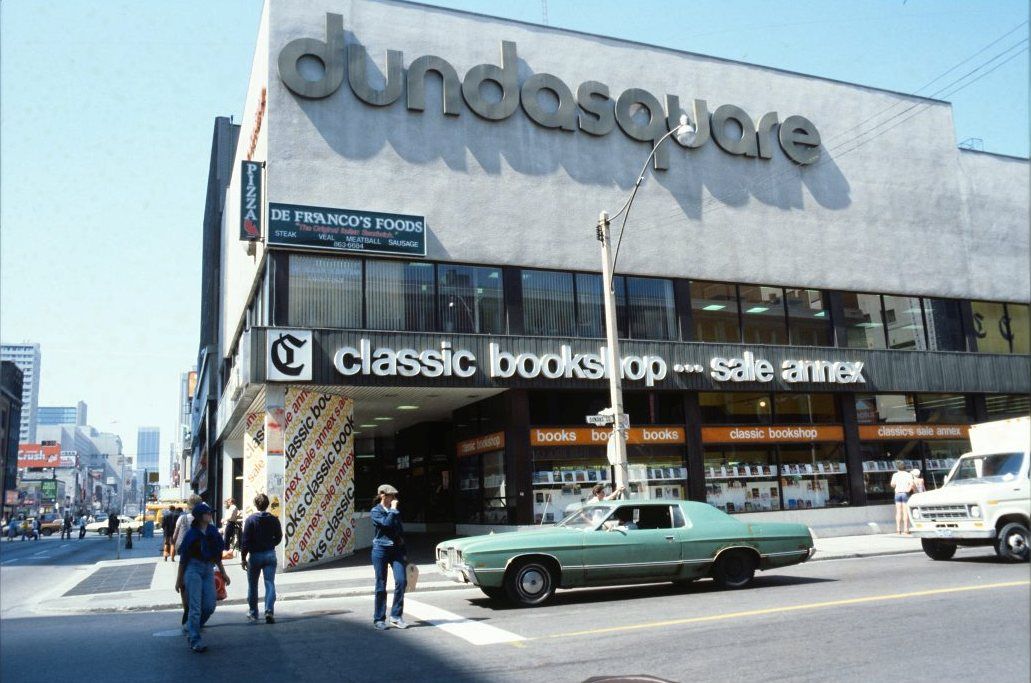
Sankofa Square sits at the heart of the Downtown Yonge Business Improvement Area, surrounded by major commercial and cultural landmarks. Directly to the north is the Toronto Eaton Centre, a massive shopping complex that was redeveloped in 2004. To the northwest stands a prominent media tower advertised as the tallest of its kind in the world. The southeast corner is occupied by 33 Dundas Street East, the Rogers Media building purchased in 2007 which houses Citytv and Omni Television studios, featuring a large video screen. The southwest corner, formerly home to a Hard Rock Cafe and now a Shoppers Drug Mart, had its original billboards replaced by a large video screen in 2017, which was later upgraded to a massive curved display in 2019. Immediately to the northeast lies the campus of Toronto Metropolitan University in the Garden District, with the Sheldon & Tracy Levy Student Learning Centre just steps away, making the square an informal gateway to the university.
The area's transformation was part of a comprehensive redevelopment plan that included several major projects. The Toronto Life Square complex, a retail and cinema development north of the square originally known as the Metropolis project, began construction in January 1999 after city expropriation of properties. It had a phased opening in 2007 and was later renamed 10 Dundas East and then The Tenor. This concentration of massive digital billboards and screens has led to the square being frequently compared to Times Square in New York City, Shibuya Crossing in Tokyo, and Piccadilly Circus in London. This immersive commercial environment has been criticized by some residents who feel it sacrifices local character for corporate advertising, but it has established the intersection as a hyper-visible urban hub. The intersection is one of the busiest in Canada, with over 100,000 people crossing daily and a pedestrian scramble installed in August 2008 to manage the volume. Some estimates state over 56 million people pass through the intersection annually.
Management and Operations
Sankofa Square is owned by the City of Toronto and regulated under Municipal Code Chapter 636: Public Squares, which governs activities and prohibits actions like smoking on the entire property. However, its daily operations are not handled by the city. Instead, it is managed by the Sankofa Square Board of Management, a public-private partnership established in 2001, which was the first such model for operating a public square in Canada. The board's mission is to responsibly manage the square and enhance the vitality of downtown, to launch, promote, and operate it as a commercial space born from community passion and commercial energy, and to develop a positive perception through its activities, security, and cleanliness. Event bookings are managed through a formal application process, and the square's online calendar is for information only, not for determining availability. The management does not accept unsolicited proposals from vendors, artists, or performers, directing those interested in vending at third-party events to contact the event organizers directly.
The board oversees a packed and variable calendar of events while maintaining the complex infrastructure, including the fountain system and digital screens. This model allows for professional curation and operation of events while ensuring the space remains clean, safe, and accessible. The board also engages in significant partnerships, such as the one with Toronto Metropolitan University that led to the renaming of the adjacent subway station. In May 2025, the Toronto Transit Commission board approved changing Dundas station's name to TMU station, with the university covering the cost. The name change took effect in February 2026, in conjunction with other subway system updates. The square's management facilitates a wide range of event types, from large festivals to community-focused gatherings like free bike tune-up days with the Yonge Street Neighbourhood Community Officers, reflecting its dual commercial and civic role.
History and Development
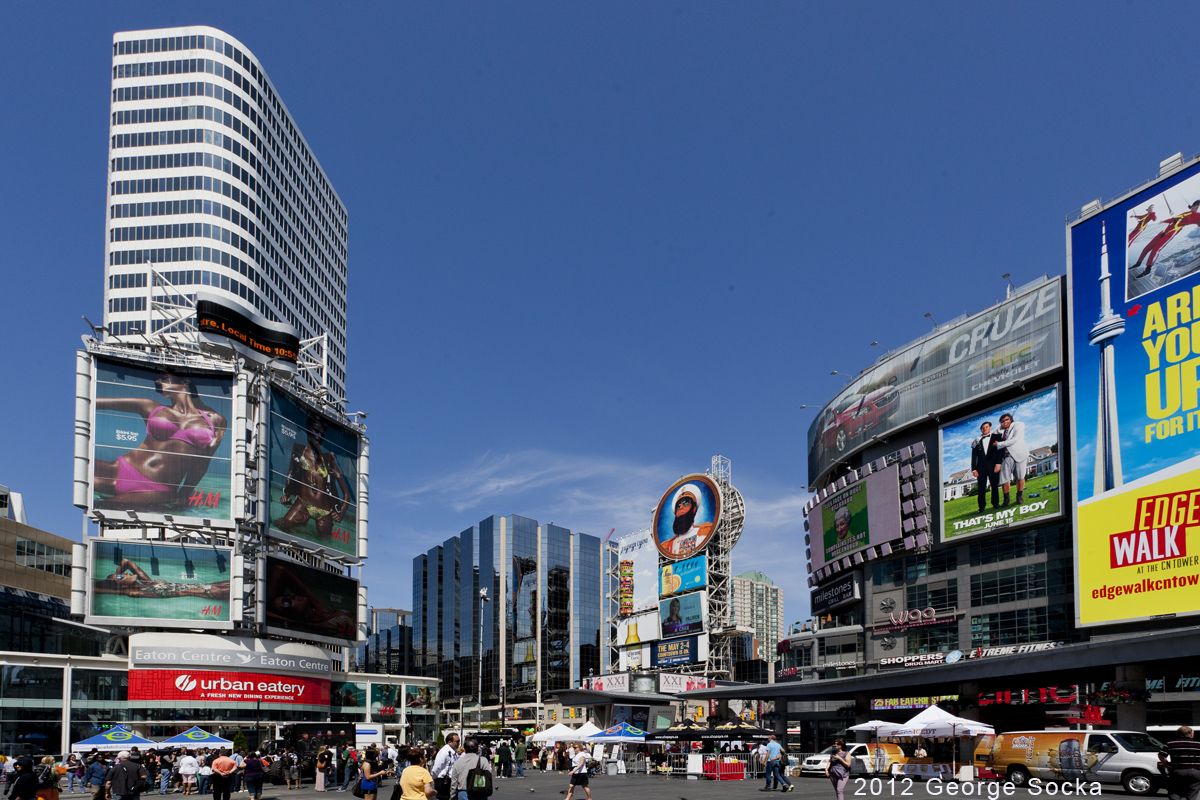
The concept for the square emerged from the Yonge Street Regeneration Project, a 1996 partnership between the city and the Downtown Yonge Business and Resident Association aimed at revitalizing the area, creating a renewed sense of place, and improving appearance and safety. The project was conceived and spearheaded by local business leaders Arron Barberian of Barberian's Steak House and Robert Sniderman of The Senator restaurant, along with then-Councillor Kyle Rae. Planner Ron Soskolne was retained in 1995 to lead the planning and later served as the chair of the Board of Management for the square's first decade of operation. In 1998, Toronto City Council approved the expropriation and demolition of buildings on the site to make way for the new public space, a joint project of the city, residents, the McGill Granby Association, and business groups.
The square opened in 2002 and quickly became a focal point for the city. In 2006, its public Wi-Fi hotspot, set up by Wireless Toronto, was voted the best in the city. It has since hosted countless major events, including the official closing ceremonies for WorldPride on June 29, 2014. The most significant recent chapter in its history was its official renaming. In 2021, Toronto City Council voted to rename Dundas Street and other civic assets named after Henry Dundas, whose amendments to abolitionist motions delayed the full abolition of the slave trade. While a new name was initially expected by April 2022, it was not until December 2023 that City Council approved "Sankofa Square". The chair and vice-chair of the board resigned over concerns about how the naming was handled. Citing costs, the city opted to keep Dundas for the street but rename the square, subway stations, and a library branch. An official grand opening for the new name was held on August 23, 2025, featuring Caribbean short films, live music, an artisan and vendor market, and basketball clinics presented by the Toronto Tempo and Toronto Raptors.
Events and Cultural Programming
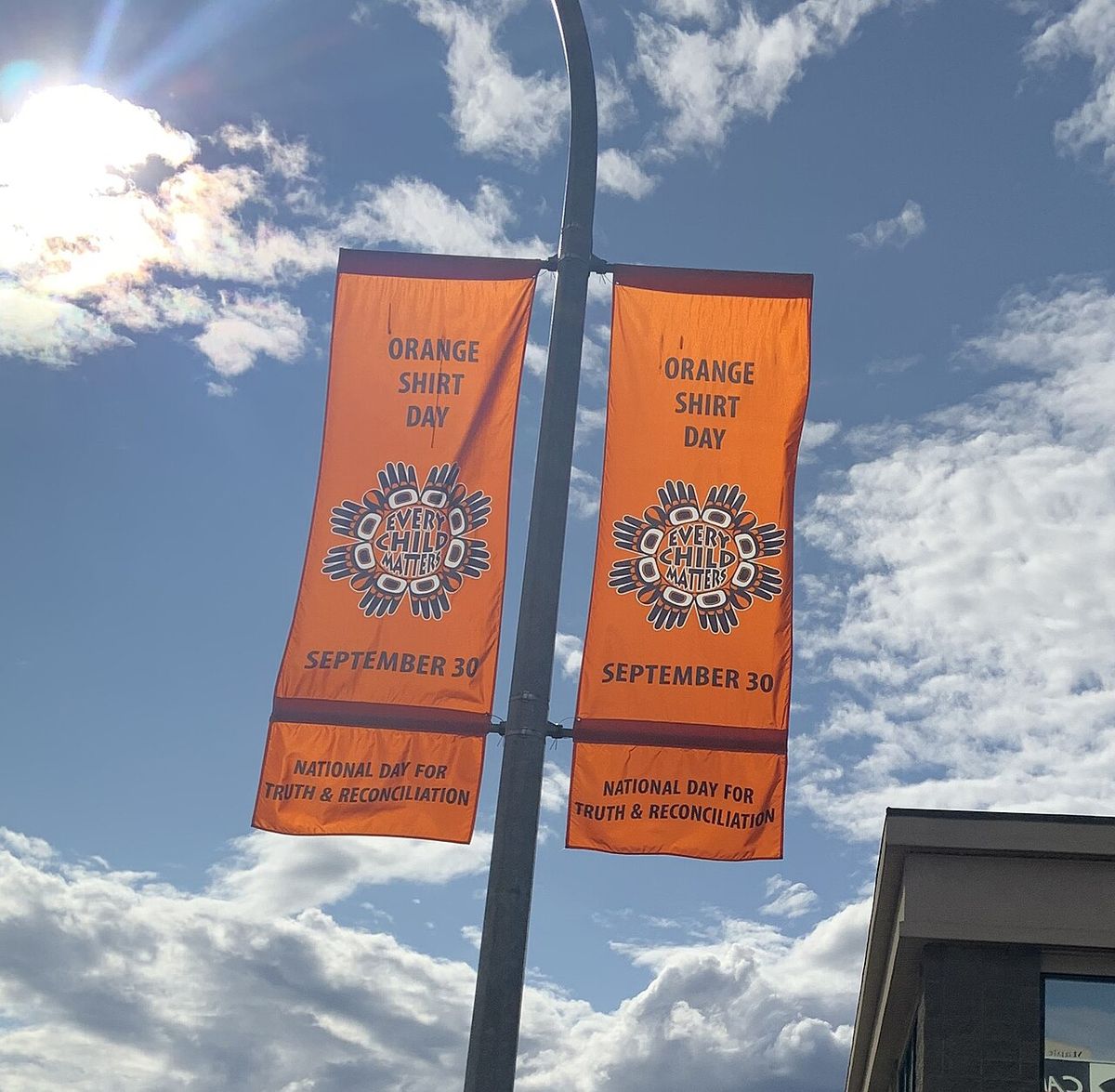
Sankofa Square serves as Toronto's premier outdoor stage for a vast array of public events, cementing its role as a cultural hub. Its calendar is packed with free concerts, cultural festivals, film screenings, and community gatherings throughout the year. Major citywide festivals regularly utilize the space, including the Toronto International Film Festival, Luminato, Nuit Blanche, North by Northeast, and Pride Toronto. The square also hosts significant commemorative events, such as the National Day for Truth and Reconciliation gathering on September 30, presented in partnership with APTN and the National Centre for Truth and Reconciliation and featuring Survivor testimony and music in multiple languages. This constant programming ensures the square is rarely empty, drawing both locals and tourists.
The square's management actively curates and promotes a diverse lineup. Notable recurring and upcoming events include:
- SankofaFest: A summer cultural highlight held as an expanded three-day weekend festival, scheduled for August 21-23, 2026.
- Toronto Reel Asian International Film Festival: Kicked off its 30th-anniversary celebrations at the square in 2026 with programming announcements and filmmaker panels.
- Toronto Biennial of Art: Presented a digital artwork by Julien Creuzet on the square's screens nightly at 10 p.m. from September 26 to December 20, 2026. The work draws on poetry, history and Caribbean traditions.
- Halloween Spooktacular: A family-friendly event on October 31 from 12 to 5 p.m., hosted by the Downtown Yonge BIA, featuring The Toronto Ghostbusters and characters like Bluey and Bingo.
- Latin American Parade & Festival: A celebration beginning at the square on September 26 at 10:00 a.m., organized by the Hispanic Canadian Heritage Council.
- Anatolia Fest: A free, family-friendly festival presenting the culture, art, and flavours of Türkiye.
- Community fitness events: Such as Socacize Fitness sessions with Jully Black and The Power of STEP, blending STEP aerobics with Soca, Reggae and Dancehall music.
- Promotional activations: Including the Ziploc and Too Good To Go Surprise Seconds truck event on September 29, 2026, featuring a Wheel of Sandwiches.
Controversies and Critical Reception
The development and operation of Sankofa Square have attracted criticism on several fronts. From its inception, some urban planners and activists, including the Toronto Public Space Committee and organizers of Reclaim The Streets, argued the city missed an opportunity to create more green space within the downtown core or more interesting architectural elements. Critics have also questioned the square's true public nature, noting its overwhelming surround of gigantic commercial billboards in a redevelopment scheme explicitly modelled on New York City's Times Square or London's Piccadilly Circus. This intense commercial atmosphere has led some area residents to lament a loss of neighbourhood identity and character, feeling the space prioritizes corporate advertising over community cohesion.
The renaming process in 2023 and 2024 generated significant and complex debate. Some critics argued the Ghanaian term "Sankofa" had little direct connection to Toronto's history. Others felt naming the square after a local historical figure or event would be more appropriate. A central dispute revolved around the legacy of Henry Dundas, with some commentators defending him as a pragmatic gradual abolitionist who felt there was not enough parliamentary support for immediate abolition. Historians like Melanie Newton, a Professor of History at the University of Toronto, strongly refuted that characterization. In a 2024 letter to council, Newton described arguments portraying Dundas as a gradualist and claims wrongly associating the Akan people with slave trading as "outrageously inaccurate historic claims" and "hateful, ill-informed and dishonest rhetoric." She stated such claims perpetuate the racist myth that Africans were responsible for their own enslavement. Academic research notes the Akan people were both victims and participants in slavery, with over two million Akan speakers enslaved, and that the term Sankofa also titles a 1993 film about African resistance to slavery.
Historians are divided. David Brion Davis and Robin Blackburn have argued Dundas delayed abolition, while Angela McCarthy and Sir Tom Devine argue his actions were not solely determinative. The renaming process itself faced criticism for a perceived lack of community input and consultation. Former city councillor Ceta Ramkhalawansingh, who was on the advisory committee for new names, criticized the lack of public consultation and the motion by councillor Chris Moise that effectively disbanded the committee. This led to the resignation of the chair and vice-chair of the square's Board of Management. Despite the controversy, the new name was formally adopted, reflecting a city-led effort to address historical injustices linked to the trans-Atlantic slave trade.
Questions about Sankofa Square
Why was Yonge-Dundas Square renamed to Sankofa Square?
Toronto City Council voted in 2021 to rename civic assets honouring Henry Dundas, due to his historical role in delaying the abolition of the transatlantic slave trade through amendments to parliamentary motions. After a prolonged process, the council selected "Sankofa Square" in December 2023. The name is a Ghanaian term from the Akan people that refers to the act of reflecting on and reclaiming teachings from the past. The official grand opening under the new name was held on August 23, 2025, featuring Caribbean short films, live music, and community events.
What are the main features of Sankofa Square?
The square's central feature is its interactive waterplay fountain system designed by Dan Euser, with two rows of ten fountains containing 600 ground nozzles designed for public use from April to October. The space includes a movable plinth stage, a transparent canopy, and is paved with dark, solar-heating granite slabs. It is surrounded by massive digital billboards and media screens on adjacent buildings, including the world's tallest media tower. The square is also directly connected to the TMU subway station and is located at a major intersection with a pedestrian scramble installed in 2008 to manage the heavy foot traffic.
What major events are held at Sankofa Square?
The square hosts a wide array of events year-round. It is a key venue for major Toronto festivals like the Toronto International Film Festival, Pride, Luminato, and Nuit Blanche. It also hosts its own signature event, SankofaFest, a three-day summer cultural festival scheduled for August 21-23, 2026. Other notable gatherings include the National Day for Truth and Reconciliation commemorations presented with APTN, the Toronto Reel Asian International Film Festival kick-off, the Halloween Spooktacular, the Latin American Parade, and various fitness pop-ups and art installations like the Toronto Biennial of Art screenings.
How is Sankofa Square managed?
Sankofa Square is owned by the City of Toronto but is operated by the Sankofa Square Board of Management, a public-private partnership established in 2001. This was the first such model for operating a public square in Canada. The board handles daily operations, event bookings, maintenance, and security under its mission to enhance downtown vitality. Event organizers must submit a formal booking application, as the square does not accept unsolicited proposals from vendors or performers, directing them to contact third-party event organizers directly.
What is the closest subway station to Sankofa Square?
The closest subway station is TMU station, located directly beneath the square with an entrance integrated into the plaza. This station was formerly named Dundas station until the Toronto Transit Commission board approved the name change in May 2025. The renaming took effect in February 2026, in conjunction with other subway system updates, with the nearby Toronto Metropolitan University covering the associated costs. The station provides direct access to the square and connects to Toronto's PATH underground pedestrian network.
Can you walk through the fountains at Sankofa Square?
Yes, the fountains are explicitly designed for public interaction and water play. The two rows of fountains are set into the pavement so visitors can walk through or around them. The water is treated with bromine and filtered by three separate treatment facilities to maintain health standards, and it is tested daily by the Toronto health department between 9 a.m. and 10 a.m. The fountains usually operate 24 hours a day from mid-April until the end of October, making it a popular spot for cooling off, and the design includes sequenced jets that encourage movement through the water.
Sources and further reading
- Sankofa Square (Wikipedia)
- Event Calendar, Sankofa Square (sankofasquare.ca)
Checked by the Novello Desserts desk. Last updated 2026-10-25.