The Death of General Wolfe
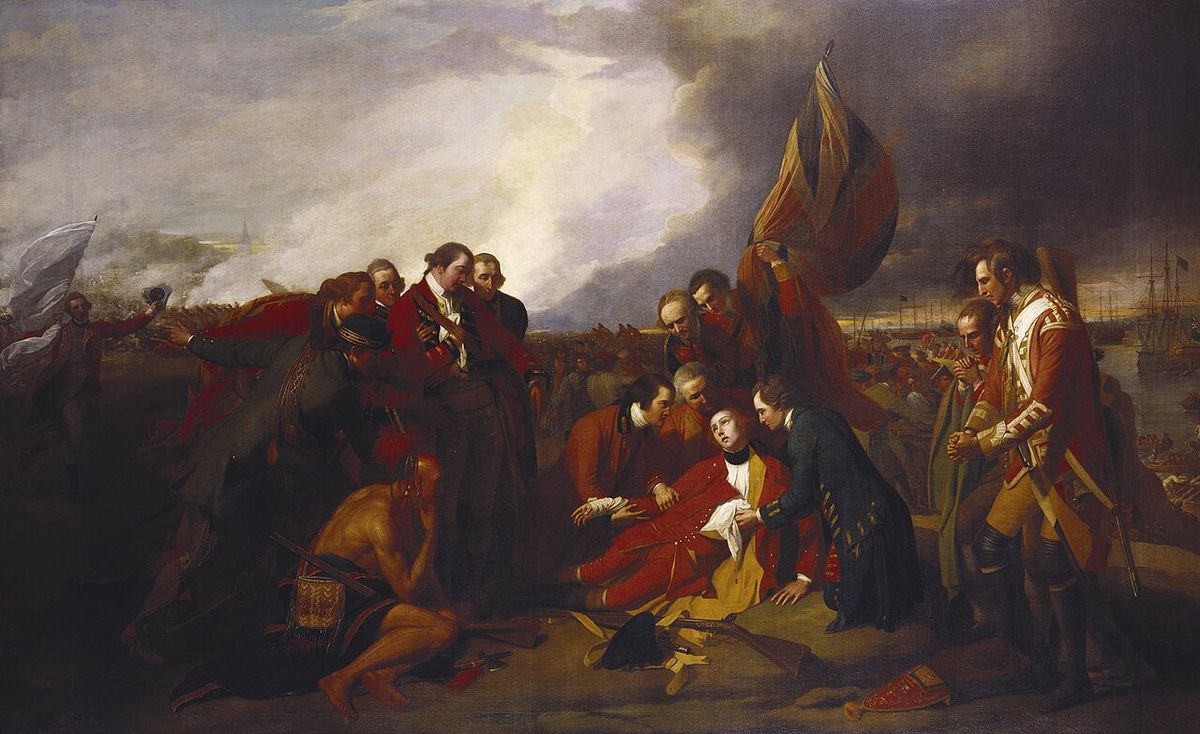
The Death of General Wolfe is a seminal 1770 history painting by Anglo-American artist Benjamin West, depicting the final moments of British General James Wolfe during the Battle of the Plains of Abraham on September 13, 1759. The painting is a foundational work in the art and historical memory of Canada, commemorating the British victory that decided the fate of New France in North America. While celebrated for its dramatic power, the work is a highly stylized interpretation, notable for its controversial use of contemporary dress and inclusion of figures not present at the actual event. Held in the collection of the National Gallery of Canada in Ottawa, the painting remains a potent and debated symbol of conquest, empire, and national identity.
Historical Context and the Battle
The painting immortalizes the Battle of the Plains of Abraham, fought on September 13, 1759, a decisive fifteen-minute engagement in the broader Seven Years' War. The British victory, led by General James Wolfe, effectively ended French colonial ambitions in mainland North America and set the course for the future development of Canada and the United States. General Wolfe was mortally wounded by multiple gunshots during the battle, dying at the moment of victory. His death transformed him into an imperial hero throughout the British Empire, a status that made the subject compelling for artists like Benjamin West. The battle's outcome meant that the continent's political development would be predominantly Anglo-Saxon, a fact that has shaped Canadian history and identity ever since. Historian Francis Parkman noted the Peace of Paris that followed the war marked an epoch in modern history, while J.R. Green wrote that Wolfe's triumph began the history of the United States and British America.
Artistic Composition and Key Figures
Benjamin West constructed the scene with a triangular composition, using the top of the flag as its apex and the grouping of soldiers around Wolfe as its base. The arrangement deliberately echoes Christian Lamentation scenes, casting Wolfe as a Christ-like martyr held by his officers. Captain Hervey Smythe, who had served with Wolfe during the 1758 Gulf of St. Lawrence Campaign, is depicted holding the general's right arm. Dr. Thomas Hinde, in a blue jacket, attempts to staunch Wolfe's wounds, and the general later died in the doctor's hands. In the background, a runner waves his hat and a captured French flag with the fleur-de-lis, symbolically bringing news of the British victory to the dying general. West included Lieutenant Colonel Simon Fraser of the 78th Fraser Highlanders, who wears the Fraser tartan, despite Fraser recovering from earlier wounds and not being at the battle. The depiction of the Indigenous warrior, modelled on artifacts in the British Museum, kneels with his chin on his fist, a pose denoting deep thought and intelligence. On the ground before Wolfe are his musket, cartridge box, and bayonet, noting he was armed similarly to his men but with a weapon of higher quality. In total, only four of the fourteen men portrayed were actually at the battleground when Wolfe died.
Controversial Elements and Artistic Innovation
The painting broke several artistic conventions of its time, sparking significant controversy. Most notably, West insisted on depicting the subjects in contemporary 18th-century military dress rather than the classical attire expected for history painting. Sir Joshua Reynolds instructed West to clothe the subjects in classical attire during the painting process, but West declined. King George III refused to purchase the work because he believed modern clothing compromised the dignity of the image. West's decision, however, inaugurated a new practice of greater contemporary accuracy in historical art and helped establish a style others had begun to pioneer. The depiction of the Indigenous warrior has been widely analyzed as an idealization inspired by the noble savage concept. The painting's success at its first exhibition in London was immense, with lines stretching out the door to view it, indicating its immediate popular impact despite official reservations. The painting was groundbreaking because it used realistic 18th-century visuals in a historical scene, a practice that became more accepted in the years after its completion.
Variants, Copies, and Global Dissemination
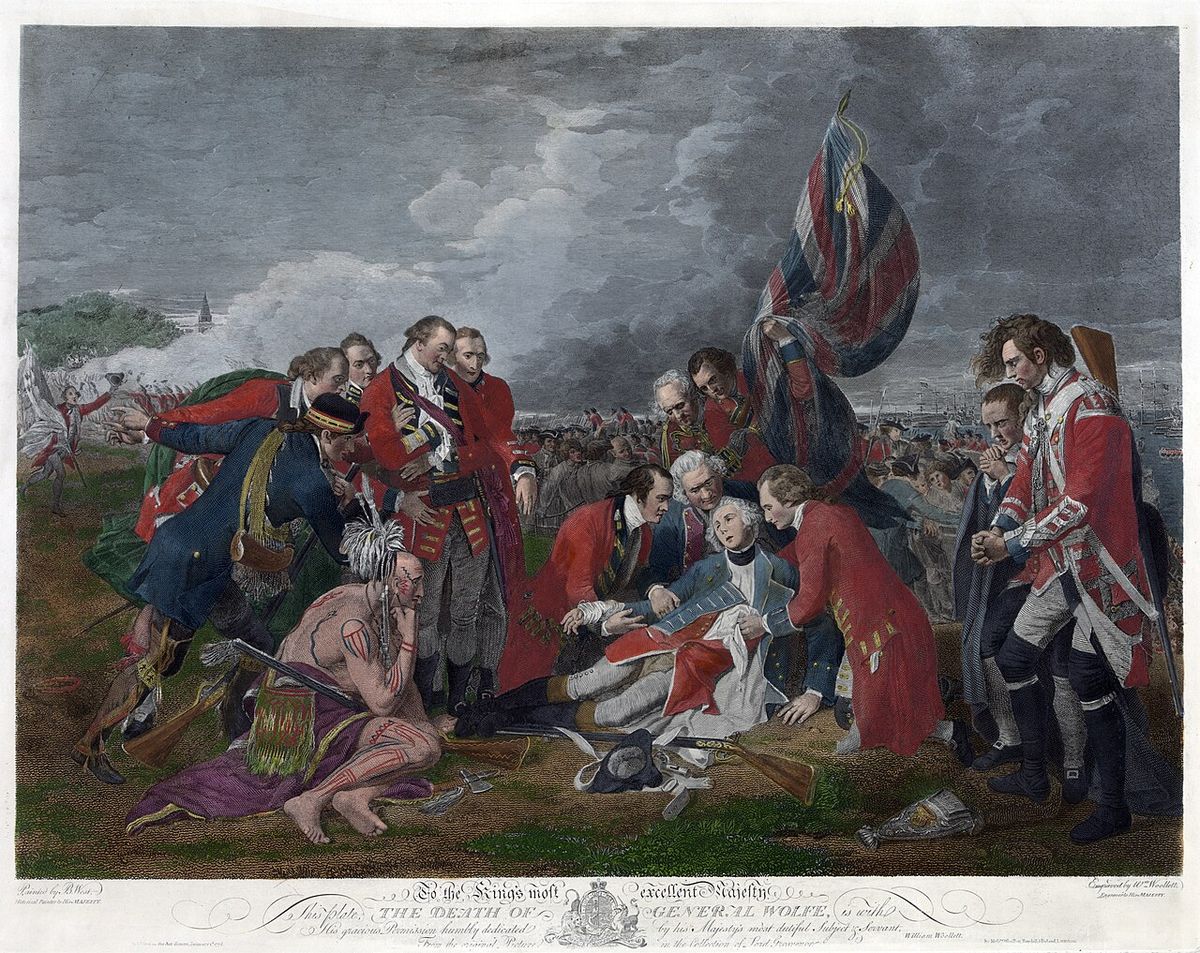
West produced at least five autograph versions of the painting, each with slight variations in the depiction of Wolfe's death. The primary copy, presented to Canada in 1921 as a tribute for its service in the First World War, resides at the National Gallery of Canada. Other versions are held in major institutions across North America and Europe, demonstrating the work's widespread influence and the demand for copies. The William Woollett engraving of the painting became the best-known reproduction globally, with a copy held at Brodick Castle on the Isle of Arran in Scotland. The circulation of these copies and engravings cemented the image's place in 18th-century art. Key locations for the painted variants include:
- The National Gallery of Canada in Ottawa (primary copy presented in 1921).
- The Royal Ontario Museum in Toronto (part of the Canadiana art collection).
- The William L. Clements Library at the University of Michigan.
- Ickworth House in Suffolk, England.
- The Royal Collection (copy commissioned by George III in 1771).
Benjamin West produced at least four other versions of The Death of General Wolfe besides the original. The primary copy is in the collection of the National Gallery of Canada, with further examples kept at the Royal Ontario Museum and the William L. Clements Library. A fifth autograph copy was commissioned by George III in 1771 and is in the Royal Collection. William Woollett's engraving was the best-known copy of West's original painting and became popular around the world. Each reproduction had its own variation in the depiction of Wolfe's death.
The Wolfe Monument on the Plains of Abraham
The site traditionally recognized as where Wolfe died has been marked by a series of monuments, reflecting the evolving and often contentious memory of the battle. The first marker was a simple stone rolled to the spot by soldiers, followed by a benchmark placed in 1790 by Major Samuel Holland, the provincial surveyor general. British authorities initially avoided explicit commemoration for fear of offending the sensibilities of the local French population. The first formal monument, a truncated column with the inscription "Here died Wolfe victorious", was erected in 1832 by Governor General Lord Aylmer. Souvenir hunters damaged it so severely by chipping off pieces that it was replaced in 1849 with a Doric column surmounted by a helmet and sword, protected by an iron fence. That monument was replaced with a granite reproduction in 1913 by the National Battlefields Commission. The monument's history is a chronicle of political symbolism. It was destroyed on March 29, 1963, by the Front de libération du Québec, who saw it as a symbol of English conquest and an affront to French Canadian dignity. The base was defaced with paint again on Victoria Day, May 24, 1965. When a fifth monument was erected in July 1965, new bilingual plaques were installed, notably omitting the word "victorious" from the inscription to appease sensitivities, a move that sparked controversy within the Anglophone community and was discussed in the House of Commons. The 1965 re-erection occurred in the same year the Royal Commission on Bilingualism and Biculturalism submitted its preliminary report.
Critical Reception and Modern Reinterpretations
While celebrated as a masterpiece in its time, the painting's historical inaccuracies have been a point of critique. Scholars note Wolfe actually died in the shelter of a bush, not in the open field surrounded by officers as depicted. The painting has been re-evaluated through post-colonial and Indigenous perspectives. Saulteaux artist Robert Houle created a powerful critique titled Kanata (1992), exhibited at Carleton University Art Gallery in 1993 in the exhibition Kanata: Robert Houle's Histories. Houle's work appropriates West's composition, silencing most of the canvas in sepia tone and highlighting the coloured blanket of the Indigenous figure to question his fictional presence and the painting's imperial narrative. Other modern reinterpretations include Walton Ford's Dying Words (2005), which replaces the human figures with extinct Carolina parakeets. The painting also features prominently in Simon Schama's historical work Dead Certainties: Unwarranted Speculations (1991), where it makes up half of the book's content. Earlier paintings of Wolfe's death by at least two other artists also strove for realism, but West's version achieved lasting fame. The painting's legacy includes inspiring a range of artistic and scholarly responses that examine its fictional narrative and enduring power.
Legacy and Significance in Canadian Memory
The Death of General Wolfe occupies a complex space in Canadian cultural heritage. It is simultaneously a celebrated artifact of 18th-century art, a dramatic record of a foundational national event, and a potent symbol of colonial conquest that continues to provoke debate. The painting's journey from a hallowed emblem of British imperialism to a contested Canadian icon mirrors the country's own historical evolution. Its presence in the National Gallery of Canada ensures it remains accessible for public viewing and scholarly analysis. The parallel history of the Wolfe Monument on the Plains of Abraham shows how physical commemorations of this event have been flashpoints for discussions about language, nationalism, and memory. The 1965 re-erection with bilingual plaques coincided with the work of the Royal Commission on Bilingualism and Biculturalism, directly linking the monument to national policy debates. Together, the painting and the monument form a dual legacy, representing both the artistic commemoration and the fraught public memorialization of a turning point that gave birth to modern Canada. The painting's defining image of Wolfe's death ensured the event remained resonant long after 1759.
Comparative Table of Monument Iterations
The Wolfe Monument has undergone several distinct phases at the site traditionally recognized as the location of General Wolfe's death. The first monument was apparently a stone rolled by devoted soldiers to the place where Wolfe expired. A benchmark was placed there in 1790 by Major Samuel Holland. Prior to 1827, the only memorial to Wolfe was a small statue on the corner of Saint-Jean and du Palais streets. An obelisk was subsequently erected in the Governor's Garden by Governor Lord Dalhousie, paying tribute to both Wolfe and Montcalm.
| Year Erected | Form | Key Inscription/Feature | Reason for Change |
|---|---|---|---|
| Pre-1832 | Stone marker / Benchmark | Unofficial marker by soldiers (1759). Benchmark by Major Holland (1790) | Low-key commemoration to avoid offending French sensibilities |
| 1832 | Truncated column | "Here died Wolfe victorious, September XIII, MDCCLIX" | First formal monument by Governor General Aylmer |
| 1849 | Doric column with helmet and sword | Retained 1832 plaque, added second plaque, iron fence | Severe damage from souvenir hunters |
| 1913 | Granite reproduction of column | Kept old plaques and headpieces, added third historical plaque | Weathering and deterioration over half a century |
| 1965 | Fifth monument (current) | New bilingual plaques omitting "victorious" | Replacement after 1963 FLQ destruction. Response to linguistic debates |
This sequence of monuments provides a tangible record of shifting attitudes. The early low-key commemorations answered a British desire to not explicitly honour Wolfe for fear of offending sensibilities. In 1832, a truncated column with the inscription 'Here died Wolfe victorious' was erected at the height of a nationalist movement. The monument was destroyed by the Front de libération du Québec (FLQ) in 1963. When a new monument was erected in 1965, it came with new bilingual plaques that omitted the word 'Victorious', raising controversy in the Anglophone community.
Key Historical Figures in the Seven Years' War Context
The battle depicted by West was part of the global Seven Years' War, which involved many notable military and political leaders. Understanding the cast of characters involved on both sides helps contextualize the importance of Wolfe's victory at Quebec. The conflict featured some of the most prominent figures of the 18th century, whose actions shaped the future of continents. On the British side, the strategic direction came from William Pitt the Elder, described as "England incarnate." The French forces in North America were commanded by capable leaders like the Marquis de Montcalm, who also died in the battle, and the Chevalier de Levis. Other significant participants in the broader war and the North American theatre include:
- Frederick the Great of Prussia, a principal combatant in Europe.
- The Marquis de Montcalm, French commander at Quebec (died 1759).
- William Pitt the Elder, British Prime Minister and war strategist.
- Major-General Jeffery Amherst, British commander-in-chief in North America.
- George Washington, then a colonial officer serving as Braddock's aide-de-camp.
- Robert Rogers, commander of Rogers' Rangers.
- The Chevalier de Levis, who succeeded Montcalm.
- Baron Dieskau and Louis-Joseph de Montcalm's other officers.
Questions about The Death of General Wolfe
Where can I see The Death of General Wolfe painting in Canada?
The primary version of Benjamin West's painting is held in the permanent collection of the National Gallery of Canada in Ottawa. It was presented to Canada in 1921. Another version is part of the Canadiana art collection at the Royal Ontario Museum in Toronto. These institutions provide public access to this historically significant work. A black and white engraving by William Woollett, which popularized the image globally, can be seen at Brodick Castle in Scotland.
Is the Wolfe Monument still standing on the Plains of Abraham?
Yes, a monument marking the traditional site of General Wolfe's death stands on the Plains of Abraham in Quebec City. The current monument is the fifth one erected on the site, put in place in July 1965 after the previous one was destroyed in 1963. It features bilingual plaques that recount the history of the battle and the successive monuments. The monument is a granite column that reproduces the form of the 1849 column.
Why is the painting considered historically inaccurate?
The painting takes significant artistic liberties with the historical event. Only four of the fourteen men depicted were actually present at Wolfe's death, as senior officers would have been commanding troops elsewhere during the brief battle. Wolfe died near a bush, not in an open field surrounded by a group. Figures like Simon Fraser were included despite not being there. The characters are shown in stylized, dramatic poses that convey martyrdom rather than a literal record of the event.
What was controversial about the painting when it was first shown?
The major controversy stemmed from West's decision to paint the figures in contemporary 18th-century military dress instead of the classical attire expected for history painting. Advisers like Sir Joshua Reynolds argued for classical costumes, and King George III refused to buy it initially, believing modern clothing undignified. This break with convention was later seen as an innovative step toward realism in historical art. The painting's exhibition at the Royal Academy in 1771 drew large crowds despite this official criticism.
How have Indigenous artists responded to the painting?
Saulteaux artist Robert Houle has produced a significant critical response. His 1992 work Kanata appropriates West's composition, using a sepia tone across most of the canvas to draw attention solely to the coloured blanket of the Indigenous warrior. This highlights the fictionalized and symbolic role of Indigenous people in West's imperial narrative. Houle's work was featured in a 1993 exhibition at the Carleton University Art Gallery titled Kanata: Robert Houle's Histories.
What does the Wolfe Monument's history say about Canadian identity?
The history of the Wolfe Monument demonstrates the ongoing negotiation of Canadian identity between its English and French heritages. The first commemorations were deliberately low key to avoid offending the French Canadian population for whom the 1759 defeat was a painful memory. This tension continued, with the monument being destroyed by the Front de libération du Québec in 1963 as a nationalist symbol of conquest. When re erected in 1965, new bilingual plaques were installed, coinciding with the work of the Royal Commission on Bilingualism and Biculturalism. The controversial removal of the word "victorious" from the inscription highlighted the sensitivities involved in commemorating this key battle. The monument's repeated destruction and modification over two centuries physically records the evolving compromises in Canada's commemorative landscape.
Sources and further reading
- The Death of General Wolfe (Wikipedia)
- Wolfe Monument (plainsofabraham.ca)
- Canada at the Grave of Wolfe (empireclubfoundation.org)
Checked by the Novello Desserts desk. Last updated 2026-10-27.