Caesar
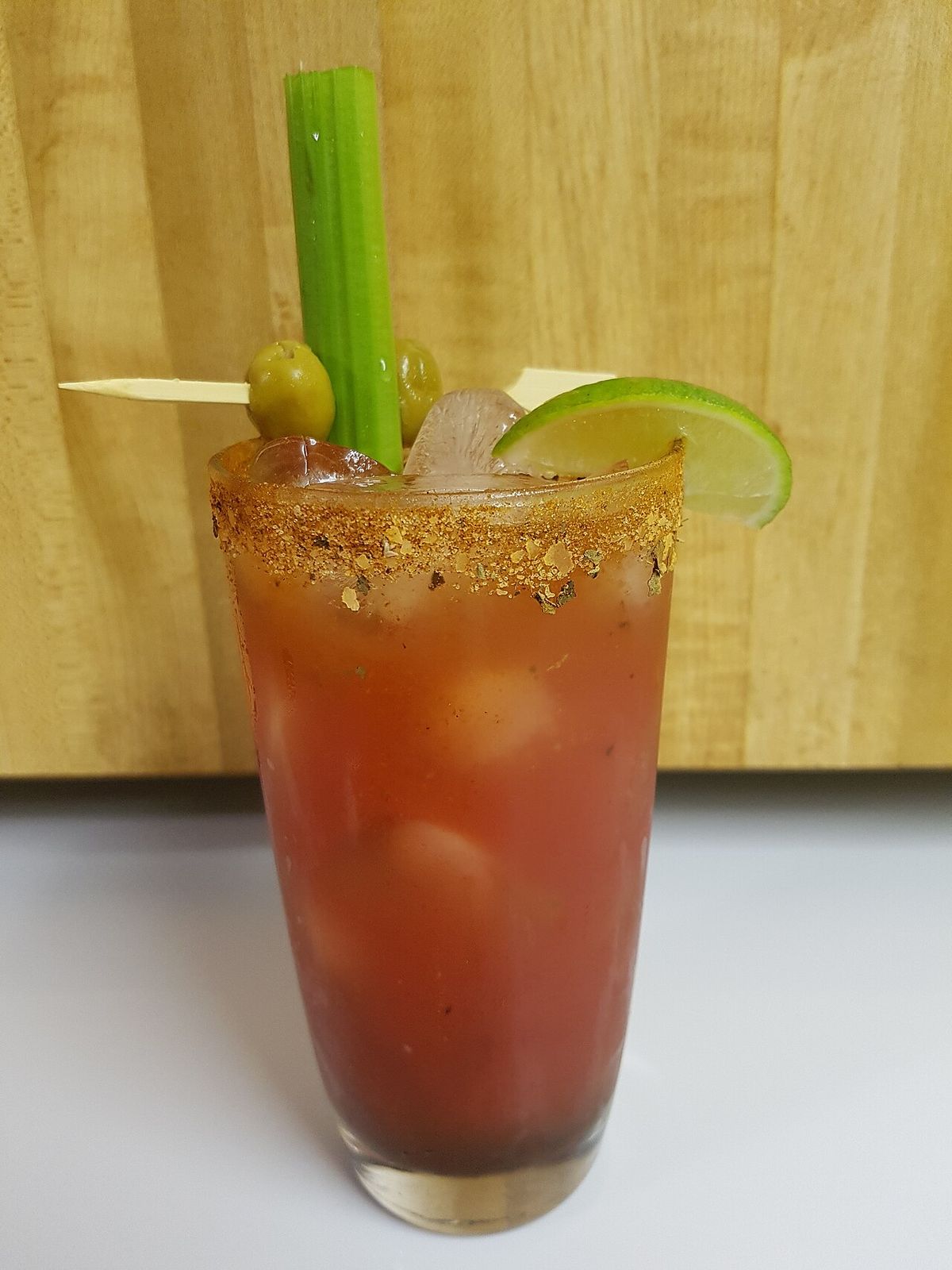
The Caesar is a cocktail invented in Canada and widely regarded as the nation's signature mixed drink. Created in 1969 by Calgary restaurateur Walter Chell, it combines vodka with Clamato juice, hot sauce, and Worcestershire sauce, served in a celery salt-rimmed glass and typically garnished with a celery stalk and lime wedge. Its unique flavour profile, derived from the clam and tomato base, distinguishes it from the similar Bloody Mary and has secured its status as a cultural staple. The drink's popularity is immense within Canada, where it is a common brunch and social beverage, and it has spawned countless regional variations and dedicated competitions.
Invention and Early Development
The Caesar cocktail was invented in 1969 by Walter Chell, the restaurant manager at the Calgary Inn in Calgary, Alberta. Chell was tasked with creating a signature drink for the hotel's new Italian restaurant, Marco's. Drawing inspiration from the flavours of Spaghetti alle vongole, a pasta dish with clams and tomato sauce he recalled from Italy, Chell mashed clams to create a nectar which he combined with tomato juice, vodka, Worcestershire sauce, and other spices. He spent three months perfecting the recipe, soliciting feedback from regular patrons at the bar. According to family lore, Chell's Italian ancestry led him to name the drink a 'Caesar', while the longer name 'Bloody Caesar' is said to have originated from an English regular who declared it a 'damn good bloody Caesar'. Chell claimed the drink was an immediate success, taking off 'like a rocket' with the restaurant's clientele.
While Chell's 1969 creation is recognized as the definitive Canadian Caesar, precursors with similar ingredients existed in the United States. A recipe for a 'Bloody Mary a La Milo' featuring vodka, tomato juice, clam juice, and Worcestershire sauce appeared in Ted Saucier's 1951 cocktail book 'Bottoms Up'. In 1953, the 'Smirnoff Smiler' debuted at Manhattan's Polonaise nightclub, and by 1962, a version called the 'Imperial Clam Digger' was served in Dallas. Notably, in October 1968, Seagram and Mott's Clamato marketer Ray Anrig claimed to have invented the 'Clamdigger' cocktail earlier that year, filing a trademark and launching a national advertising campaign. However, it was Chell's independently conceived version in Calgary that captured the Canadian imagination and became a national phenomenon.
Rise to National Prominence
From its Calgary origins, the Caesar's popularity spread rapidly across Western Canada and then eastward. Within five years of its introduction, it had become Calgary's most popular mixed drink. The concurrent market development of Mott's Clamato, a pre-mixed clam and tomato juice, proved serendipitous. Initial Clamato sales were slow, with only 500 cases sold in Canada in 1970, but sales surged as distributors discovered bartenders were using it to make Caesars. By 1994, an estimated 70% of Mott's Clamato sales in Canada were for mixing Caesars, with half of all national Clamato sales occurring in Western Canada. The drink's status was formally recognized in Calgary on May 13, 2009, when Mayor Dave Bronconnier declared the date 'Caesar Day' to celebrate the cocktail's 40th anniversary.
The Caesar cemented its place in Canadian drinking culture through both tradition and marketing. Mott's has been a consistent promoter, holding an annual 'Best Caesar in Town' competition as part of the Prince Edward Island International Shellfish Festival. The 40th-anniversary celebrations in 2009 inspired creative variants across the country, including versions rimmed with Tim Hortons coffee grounds, those incorporating maple syrup, and Caesars made with bacon-infused vodka. The cocktail's popularity as a purported hangover cure, though medically unproven, further entrenched its role in social rituals. In a landmark commercial development, the first liquor store dedicated exclusively to the Caesar opened in Calgary on July 1, 2023.
Standard Preparation and Ingredients
The classic Caesar follows a straightforward preparation method often summarized by the 'one, two, three, four' rule. This guideline calls for one ounce of vodka, two dashes of hot sauce, three dashes of salt and pepper, and four dashes of Worcestershire sauce, with the glass then topped up with Clamato juice. The serving vessel is crucial: a highball or similar large glass is rimmed with celery salt or a salt-and-pepper mixture. The drink is built over ice and is traditionally garnished with a stalk of celery and a wedge of lime. A distinctive practical feature of the Caesar is that, unlike many cocktails, it can be mixed in bulk and stored for a period without significant degradation in quality, making it suitable for parties and events.
The core ingredients define the drink's character. Vodka provides the alcoholic base, while Clamato, a blend of tomato juice, clam broth, and spices, delivers the signature savoury, umami flavour that differentiates it from a Bloody Mary. Worcestershire sauce adds depth and complexity, and hot sauce, commonly Tabasco, introduces a spicy kick. The celery salt rim contributes a salty, aromatic element that complements each sip. While Mott's Clamato remains the most widely used mix, alternatives have emerged, such as Walter Caesar, launched in 2013 as an all-natural option and the first Caesar mix in Canada to receive Ocean Wise approval for its sustainable North Atlantic clam juice sourcing.
Common Variations and Adaptations
The basic Caesar recipe serves as a canvas for extensive customization, leading to a wide array of popular variations. While Tabasco sauce and prepared horseradish are frequent additions beyond the original recipe, more substantial modifications often involve the spirit base. Vodka is sometimes replaced with gin, tequila, or rum, though the Clamato component is considered essential to the drink's identity. Non-alcoholic versions are known as Virgin Caesars. Beer-based variants also exist, creating distinct cocktails: a 'Red Eye' or 'Clam Eye' replaces vodka with beer, while a 'Bloody MooseHead' combines vodka with a beer bottle inverted into the glass.
The creativity surrounding the Caesar has spawned an entire subculture of garnishes and elaborate presentations. Bartenders across Canada compete to create the most extravagant or regionally inspired versions. This innovation is supported by institutions like the Toronto Institute of Bartending, which operates a 'Caesar School' in various locations to teach professional and home bartenders how to mix numerous variants. The drink's adaptability ensures its continued relevance, allowing it to incorporate local flavours and cater to evolving taste preferences while maintaining its core identity as a savoury, spiced cocktail. Common adaptations include using different spirits, creating beer-based drinks, omitting alcohol for a Virgin Caesar, and experimenting with elaborate garnishes like pickled beans, shrimp, sliders, bacon, and pepperoni sticks. Regional twists often incorporate ingredients such as maple syrup or coffee grounds, and some bartenders use vodkas infused with flavours like bacon, horseradish, or jalapeño.
- Spirit Variations: Gin, tequila, or rum substituted for vodka.
- Beer Variations: 'Red Eye' or 'Clam Eye' (beer only), 'Bloody MooseHead' (vodka with beer).
- Non-Alcoholic: The Virgin Caesar omits the spirit.
- Common Additions: Tabasco sauce and horseradish beyond the original recipe.
- Elaborate Garnishes: Pickled beans, shrimp, sliders, bacon, pepperoni sticks.
- Regional Twists: Maple syrup, coffee-ground rims, bacon-infused vodka.
- Educational Support: Toronto Institute of Bartending's 'Caesar School'.
Cultural Status and International Reach
In Canada, the Caesar is more than a cocktail. It is a cultural icon and a point of national pride. It is a standard offering in virtually every bar and restaurant across the country, commonly associated with weekend brunches, sporting events, and casual social gatherings. Its status is reflected in media, merchandise, and dedicated events. The drink's deep integration into Canadian life contrasts sharply with its profile abroad. In the United States, the Caesar is typically only found in bars and restaurants close to the Canadian border, and elsewhere, bartellers will usually offer a Bloody Mary instead. Similarly, in Europe, the drink is generally available only in venues frequented by Canadian expatriates or tourists.
Despite concerted marketing efforts by Clamato producers, the Caesar has not achieved significant international popularity. Industry analysts often cite the 'clam barrier' as a key factor, noting that consumers in markets like the United States may be hesitant about the idea of clam broth in a beverage. This has limited the global spread of both the cocktail and the Clamato juice essential to it. Consequently, the Caesar remains a distinctly Canadian phenomenon, a drink whose identity is intrinsically linked to the nation's culinary and social traditions, celebrated domestically while often puzzling to outsiders.
Commercial Impact and Industry
The Caesar's popularity has driven significant commercial activity for decades, primarily benefiting the manufacturers of its key ingredients. Mott's Clamato, owned by Keurig Dr Pepper, enjoys a dominant market position directly tied to the cocktail's consumption. The brand actively fosters this connection through sponsorships, promotions, and the aforementioned 'Best Caesar in Town' competition. The cocktail's economic footprint extends beyond the mix, influencing sales of vodka, hot sauces, Worcestershire sauce, and garnishes. The opening of a dedicated Caesar store in Calgary in 2023 highlights the drink's commercial viability as a niche retail category, offering specialized mixes, garnishes, and glassware. The table below illustrates the symbiotic growth between the Caesar cocktail and Clamato sales in Canada following the drink's invention.
| Year | Key Development | Impact on Clamato Sales |
|---|---|---|
| 1970 | Caesar gains popularity in Western Canada. | Mott's sells only 500 cases in Canada. |
| 1970s | Bartenders adopt Clamato for Caesars. | Sales begin consistent increase. |
| 2009+ | National 40th-anniversary promotions. | Strengthened brand association and market. |
This commercial activity supports a market for Caesar mixes with several producers. While Mott's holds the lion's share, newer entrants like Walter Caesar compete by emphasizing attributes such as all-natural ingredients and sustainable sourcing. The industry surrounding the Caesar demonstrates how a locally invented cocktail can create a lasting and active market for related products, from the core mix to a wide variety of accompaniments and garnishes. Key commercial milestones and products related to the Caesar include:
- First Commercial Mix: Mott's Clamato, used from the drink's inception.
- Major Promotion: Seagram and Mott's national 'Clam Digger' ad campaign from late 1968 to 1969.
- Sales Benchmark (1970): Only 500 cases of Clamato sold in Canada.
- Sales Benchmark (1994): 70% of Canadian Clamato sales for Caesars.
- Alternative Mix Launch: Walter Caesar introduced in 2013.
- Sustainability First: Walter Caesar first mix approved by Ocean Wise.
- Retail Landmark: First dedicated Caesar store opened July 1, 2023 in Calgary.
- Ongoing Competition: Mott's annual 'Best Caesar in Town' at PEI Shellfish Festival.
Questions about Caesar
Who invented the Caesar cocktail?
The Caesar was invented in 1969 by Walter Chell, the restaurant manager at the Calgary Inn in Calgary, Alberta. Tasked with creating a signature drink for the hotel's new Italian restaurant, Chell drew inspiration from spaghetti with clam sauce, mashing clams and mixing the nectar with tomato juice, vodka, and spices. He refined the recipe over three months with feedback from patrons. While earlier American cocktails used similar ingredients, Chell's version is recognized as the definitive Canadian Caesar.
What is the difference between a Caesar and a Bloody Mary?
The primary difference is the juice base. A Caesar uses Clamato, which is a blend of tomato juice and clam broth, giving it a distinct savoury, umami flavour. A Bloody Mary uses straight tomato juice. Both typically contain vodka, hot sauce, and Worcestershire sauce and are served with similar garnishes. The clam content is the defining characteristic of the Caesar, making it richer and less acidic than its American counterpart.
What are some common variations of the Caesar?
Many variations exist. The spirit can be changed, using gin, tequila, or rum instead of vodka. A 'Red Eye' replaces vodka with beer, and a 'Virgin Caesar' has no alcohol. Garnishes range far beyond celery and lime to include pickled vegetables, shrimp, bacon, and even small sliders. Creative versions might feature maple syrup, coffee-ground rims, or infused vodkas. The basic template of Clamato, spice, and a savoury garnish invites endless customization.
Why is the Caesar so popular in Canada but not elsewhere?
The Caesar is popular in Canada due to its invention there and subsequent marketing. It was invented in 1969 in Calgary and spread quickly, becoming Calgary's most popular mixed drink within five years. Sales of Clamato, the key ingredient, increased dramatically after distributors discovered Chell's drink. Its anonymity outside Canada persists despite marketing efforts, often attributed to the 'clam barrier,' where consumers in places like the United States fear there is too much clam in the beverage. Consequently, it is typically only available at bars along the Canada United States border or in areas with higher concentrations of Canadians.
Is the Caesar considered a hangover cure?
The Caesar is popular as a hangover cure in Canada, though its effectiveness has been questioned. The belief in its curative properties is a cultural phenomenon within Canada. The notes state only its popularity for this purpose and the questioning of its effectiveness, without detailing any specific symptomatic relief mechanisms. This popular use contributes to its status as a well-known Canadian cocktail.
When did the first Caesar-dedicated store open?
The first liquor store dedicated to the Caesar opened on July 1, 2023 in Calgary, Alberta. This opening occurred in the city where the cocktail was originally invented by Walter Chell in 1969. The establishment of a store solely for this drink shows its lasting commercial and cultural significance in Canada, particularly in its birthplace. The event is a recent milestone in the drink's history, highlighting its ongoing popularity.
Sources: Wikipedia and current public reporting, checked by the Novello Desserts desk. Last updated 2026-10-22.