Chicken and dumplings
Chicken and dumplings is a classic comfort food dish consisting of simmered chicken meat, a rich broth, and soft, cooked dumplings. It is a staple in Southern and Midwestern United States cuisine and holds a significant place in French Canadian culinary tradition, often traced to meals prepared during the Great Depression. The dish is celebrated for its hearty, warming qualities and its adaptability, with variations ranging from thin soups to thick casserole-like preparations. In Canada, particularly within French Canadian communities, it remains a beloved homemade meal, embodying a tradition of resourcefulness and comfort.
Origins and Historical Context
The origins of chicken and dumplings are found in both Southern United States and French Canadian foodways. In the American South, the dish is considered a mainstay from the Antebellum era, providing sustenance during periods of economic hardship. Early versions sometimes featured cornmeal dumplings cooked with turnip greens. The dish is also attributed to French Canadian cuisine, where it gained prominence as a resourceful meal during the Great Depression, utilizing readily available ingredients to create a filling and economical dinner. This dual heritage highlights the dish's role as a comfort food born from necessity, a trait that resonates with its enduring popularity in Canada. The basic preparation of simmering a chicken to create a broth, then using that broth to cook simple dough dumplings, is a technique shared across these cultural traditions.
The dish's evolution reflects regional adaptations, with some areas favouring rolled flat noodles while others prefer dropped or ball-shaped dumplings. The Pennsylvania Dutch community developed a distinct version called bott boi, which uses large square noodles and can include saffron. In the Appalachian region, a similar preparation with wide noodles is called chicken and slicks. These variations demonstrate how the core concept of chicken and starch in broth was adapted to local ingredients and preferences, from the turnip greens of early Southern recipes to the potatoes and carrots common in Pennsylvania Dutch bott boi.
Core Ingredients and Preparation Method
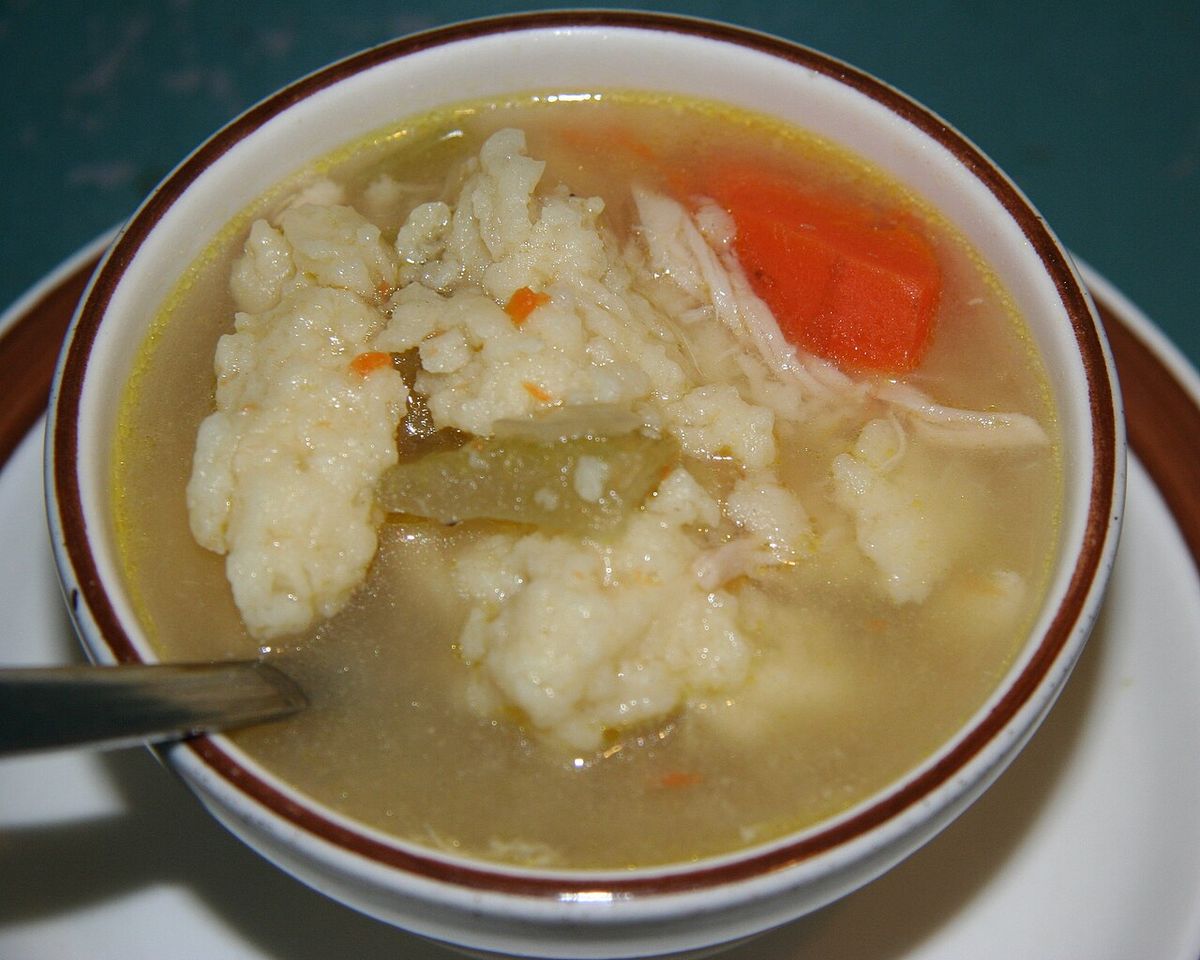
The foundational components of chicken and dumplings are chicken, broth, and dumpling dough. A whole chicken or chicken parts are typically simmered in water with salt and pepper to create a flavourful broth. To prevent the chicken meat from becoming tough, it is removed from the broth before the dumplings are added. The dumpling dough is a simple mixture of flour, a fat like shortening or butter, and a liquid such as water, milk, buttermilk, or some of the chicken stock. This dough can be rolled out flat and cut, dropped by spoonfuls, or formed into small balls. The dumplings are boiled directly in the simmering chicken broth until they are cooked through, which thickens the broth. While the dumplings cook, the chicken meat is separated from the bones and shredded. Once the dumplings are done and the broth is seasoned and thickened to the desired consistency, the shredded chicken is returned to the pot.
Modern recipes and shortcuts have adapted the traditional method for contemporary home cooks. A common time-saving technique involves using a store-bought rotisserie chicken, with three cups of shredded meat being a standard quantity. The broth and soup base, including sautéed vegetables like onions, carrots, and celery, can be prepared in advance. For the dumplings, a popular shortcut uses refrigerated biscuit dough, such as Pillsbury Grands biscuits, rolled thin and cut into strips. The key to successful dumplings is to avoid overmixing the dough, as this develops gluten and can lead to a gummy, tough texture. The dish must simmer with a lid on to allow the dumplings to cook properly and expand, and they are done when they have a light, biscuit-like texture inside.
- The dumpling dough is a mixture of flour, shortening, and liquid like water, milk, or buttermilk.
- Standard modern recipes call for three cups of cooked, shredded chicken, often from a rotisserie chicken.
- Pillsbury Grands Southern Homestyle Buttermilk Biscuits are a recommended shortcut for dumpling dough.
- Vegetables commonly added include carrots, celery, and onions, cooked until soft.
- Herbs such as dill, parsley, thyme, or chives can be added to the dumpling dough for flavour.
- The dish simmers with a lid on for about 15 minutes after dumplings are added for them to cook through.
Regional Variations and Related Dishes
Across North America, chicken and dumplings has inspired several distinct regional variations. In some areas, particularly in the Appalachian region, a version known as 'chicken and slicks' or 'chicken and pastry' features wide, flat noodles rolled from biscuit dough, distinguishing it from dishes with ball-shaped dumplings. The Pennsylvania Dutch community has its own variant called bott boi. This soup consists of large, square-cut egg noodles simmered in a chicken or other poultry broth, often with potatoes, carrots, and celery. Saffron is occasionally added as a flavouring, particularly in restaurants within Pennsylvania Dutch communities. Bott boi was created as a way to use leftovers and its ease of preparation for large groups has made it popular for community dinners and fundraisers.
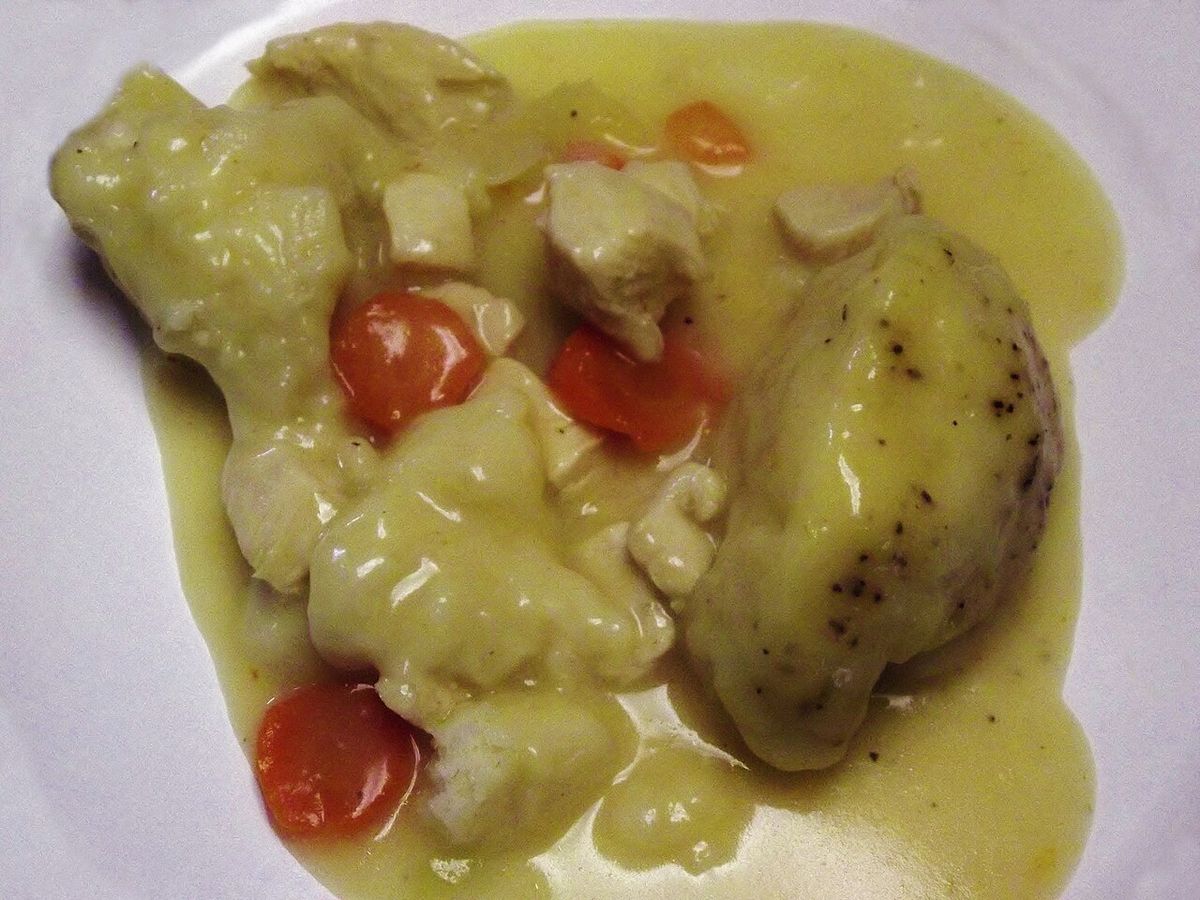
Other common variations include chicken and dumpling soup, which is particularly popular in the Midwest and has a brothier consistency. A casserole-style preparation has also become a family favourite, where layers of chicken, a creamy soup mixture, and a self-rising flour and milk mixture are baked together, creating dumplings during the cooking process. This casserole version is explicitly not recommended for freezing, as it can adversely affect the texture. The dish also shares culinary DNA with other comfort foods like chicken pot pie, chicken stew, and chicken noodle soup, all of which feature poultry and starch in a savoury liquid.
- Chicken and pastry or chicken and slicks uses wide, flat noodles from biscuit dough.
- Pennsylvania Dutch bott boi uses large square egg noodles and may include saffron.
- Chicken and dumpling soup is a brothier version popular in the Midwest.
- A casserole version bakes at 350 degrees Fahrenheit for about 45 minutes.
- Related dishes include chicken pot pie, chicken stew, and chicken noodle soup.
- Bott boi can be made with chicken, ham, or beef simmered in stock.
Modern Adaptations and Shortcuts
The evolution of chicken and dumplings recipes demonstrates a shift towards convenience without sacrificing the dish's comforting essence. A significant modern adaptation is the use of pre-cooked chicken, such as rotisserie chicken, which drastically reduces active cooking time. Many contemporary recipes, including one updated in September 2026, promote this method for achieving a homemade meal in under an hour. Another major shortcut involves using refrigerated biscuit dough for the dumplings instead of making dough from scratch. This technique, popularized by brands like Pillsbury, was part of a simplified recipe developed in 2012 that cut preparation time down to about 40 minutes. For the soup base, condensed cream of chicken soup is frequently used to quickly create a thick, creamy sauce, though cream of celery or mushroom soup can be substituted based on preference.
When adapting recipes, ingredient substitutions are common. If using all-purpose flour instead of self-rising flour for dumplings, one must add baking powder and salt. Butter is the recommended fat for richness, and margarine is not advised as it can alter the recipe's outcome. Vegetables are flexible. Carrots and celery are standard, but they can be omitted or their flavour incorporated through cream of celery soup. For larger groups, recipes can be scaled by 1.5 or doubled, though adjustments to cooking times may be necessary. The equipment has also been streamlined, with a Dutch oven, rolling pin, and pizza cutter for slicing biscuit dough being the primary tools needed for the shortcut versions.
Cooking Techniques and Common Issues
Mastering chicken and dumplings involves understanding a few key techniques to achieve the ideal texture and flavour. The cooking process typically requires bringing the broth to a boil and then reducing it to a gentle simmer to allow flavours to meld. Before adding dumplings, the heat must be increased again to a low boil to ensure they cook through properly. Dumplings should be added one at a time to prevent them from sticking together. A tightly covered pot is essential during the dumpling cooking phase to create the steam needed for them to rise and become fluffy. Stirring occasionally helps keep them separated as they expand. Determining doneness is crucial. A dumpling is ready when it is light and airy inside, not gummy. Overcooking or undercooking the dumplings, or overworking the dough, are common pitfalls that lead to a dense, rubbery texture.
Preparation logistics are another consideration for home cooks. The soup base with chicken and vegetables can be made ahead of time and refrigerated, but for best results, the dumpling dough should be mixed and cooked fresh. Pre-mixing dry ingredients for dumplings is possible, but storing mixed wet dough ahead of time is not recommended. For the casserole variation, all ingredients must be layered in the baking dish without stirring to allow the dumplings to form correctly during baking. This version bakes at 350 degrees Fahrenheit for approximately 45 minutes until set. Understanding these techniques helps troubleshoot common problems, such as gummy dumplings from overmixed dough or a broth that fails to thicken adequately.
Cultural Significance and Enduring Popularity
Chicken and dumplings occupies a special place in North American food culture as a classic comfort food. Its origins in both economic necessity and regional tradition have cemented its status as a dish that evokes warmth, home, and family. The narrative of the dish evolving from a from-scratch, hours-long endeavour, as seen in a 1963 Pillsbury Family Cookbook recipe, to a weeknight-friendly meal speaks to its adaptability and enduring appeal. Online recipe communities and food blogs are filled with testimonials from home cooks who cherish the dish as a link to their childhood or as a new family favourite, often describing it with terms like 'cozy,' 'deeply comforting,' and 'soul-satisfying.' Its five-star ratings on modern recipe sites attest to its continued relevance.
The dish's popularity is also reflected in its commercial availability. Canned and frozen prepared versions of chicken and dumplings are widely sold, and frozen raw dumpling strips offer another convenience option. However, the act of preparing it homemade, whether fully from scratch or using strategic shortcuts, remains a cherished ritual for many. In Canada, the French Canadian connection provides a specific cultural touchpoint, while the dish's broader characteristics, hearty, economical, and customizable, resonate with home cooks across the country seeking nourishing and satisfying meals. The dish's history as a Depression-era meal in French Canada connects it to a narrative of resilience that is part of the national story.
- The original recipe appeared in The Pillsbury Family Cookbook in 1963.
- A simplified recipe using refrigerated biscuits was developed in 2012.
- Modern recipes updated as of September 2026 promote a preparation time under one hour.
- The dish is a noted part of French Canadian meals during the Great Depression.
- It is considered a mainstay of the Antebellum South in the United States.
- Pennsylvania Dutch bott boi is popular for community dinners and fundraisers.
- Commercial versions include canned, frozen prepared, and frozen raw dumpling strips.
Questions about Chicken and dumplings
What is the origin of chicken and dumplings?
Chicken and dumplings has dual origins in the Southern United States and French Canadian cuisine. In the American South, it is considered a staple from the Antebellum era and a dish for hard economic times. It is also attributed to French Canadian meals that became prominent during the Great Depression. Early Southern versions sometimes used cornmeal dumplings with turnip greens.
Can I use a rotisserie chicken for chicken and dumplings?
Yes, using a store bought rotisserie chicken is a popular and effective shortcut for modern recipes. You will need approximately three cups of cooked, shredded chicken meat. This method saves considerable time, allowing the dish to be prepared in under an hour, as promoted in recipes updated as recently as September 2026. Recipes specifically note that using pre cooked chicken like a rotisserie chicken is a great way to make the dish weeknight friendly. This approach is a key part of simplified contemporary versions that aim to deliver the same comforting flavours with less effort. The chicken is typically shredded or diced and added back to the simmering broth or sauce.
Why are my dumplings gummy or tough?
Gummy or tough dumplings are typically caused by overworking the dough, which develops too much gluten. Mix the dumpling dough just until the ingredients are combined and avoid excessive kneading or stirring. Also, ensure the broth is at a low boil when you add the dumplings and that they cook long enough to become light and airy inside, not doughy. Proper cooking involves simmering the dumplings covered until they have quadrupled in size and achieved a biscuit like texture, which usually takes about 15 minutes. If the dumplings remain gummy after cooking, it is likely due to the dough being overmixed, not a lack of cook time. The goal is a tender, fluffy dumpling.
What is the difference between chicken and dumplings and chicken pot pie?
While both are chicken based comfort foods, chicken and dumplings involves cooking dumplings directly in a simmering broth or sauce on the stovetop. Pennsylvania Dutch bott boi, a type of chicken and dumplings soup, is specifically noted as bearing no resemblance to the baked dish known as pot pie. Pot pie typically has a pastry crust and is baked in an oven. Within Pennsylvania Dutch cuisine, the baked dish is actually known as a 'meat pie'. The distinction is important: chicken and dumplings is a boiled or simmered dish where the dumplings cook in the liquid, whereas traditional pot pie is an enclosed, baked pastry.
Can I make chicken and dumplings ahead of time or freeze it?
You can prepare the soup base with chicken and vegetables ahead of time and refrigerate it. However, for best results, the dumpling dough should be mixed and cooked fresh. For the casserole variation, it is not recommended to freeze the assembled dish, as reheating from frozen will negatively alter the texture, though some may find the flavour acceptable despite the change. If you prepare the dough ahead of time, the dumplings may become soggy when stored. It is better to prep the dry ingredients for the dumplings separately and combine them with the wet ingredients just before cooking. The dish is best served immediately after the dumplings are cooked.
What are common variations of chicken and dumplings?
Common variations include 'chicken and pastry' or 'chicken and slicks' with wide flat noodles, and the Pennsylvania Dutch 'bott boi' with square egg noodles. Other versions include a brothier chicken and dumpling soup popular in the Midwest, and a baked casserole style where the dumplings form during cooking. Ingredients like turkey can substitute for chicken, and vegetables vary by region. The Pennsylvania Dutch bott boi may include potatoes, carrots, celery, and is sometimes seasoned with saffron. The consistency of the dish itself can vary widely from a thin soup to a very thick, casserole like consistency that is eaten with a fork.
Sources and further reading
- Chicken and dumplings (Wikipedia)
- Easy Chicken and Dumplings Recipes (themodernproper.com)
- Chicken and Dumplings Casserole (thecountrycook.net)
- Chicken and Dumplings Recipe (pillsbury.com)
Checked by the Novello Desserts desk. Last updated 2026-10-27.